Best bait for walleye in deep water
Fishing for walleye can be one of the most rewarding experiences in Vermont, especially when you crack the code on those deepwater giants. But let's be real, it's not always easy. Sometimes you're staring at your sonar screen, seeing nothing but open water, or marking fish that just won't bite. It's enough to make you wonder if you're using the right bait, if you're even fishing in the right spot, or if those finicky walleye have gone on a hunger strike. This guide is here to cut through that frustration, offering a comprehensive look at the best baits and techniques to effectively target walleye holding in deeper water, helping you turn those "what ifs" into "fish on!" moments.
Understanding Deep Water Walleye Behavior in Vermont
Before we even think about what bait to tie on, we need to understand why walleye retreat to the depths in the first place, especially in big Vermont waters like Lake Champlain. It’s not just random; there’s a method to their madness, and once you grasp it, your chances of success skyrocket.
Why Walleye Go Deep
Walleye are fascinating creatures, known for their large, light-sensitive eyes. This is the primary driver for their deepwater preference. They're often called "low-light feeders" for a reason!
- Light Sensitivity: During bright daylight hours, especially in clear lakes, walleye will seek refuge in deeper, darker water to protect their eyes. Think about how your eyes feel on a bright sunny day without sunglasses – that's how a walleye feels in shallow water. They're built for dimmer conditions, which gives them an advantage over their prey when the sun isn't blasting down. This means humps, deep points, and even the main lake basin in 20, 30, or even 40+ feet of water can become prime real estate for them during the day.
- Temperature Regulation: While Vermont waters might not always get scorching hot, deeper water maintains a more stable, cooler temperature during the warmer months. Walleye are cold-blooded, and they seek out their preferred temperature range. In summer, the thermocline (the layer where water temperature changes rapidly) often holds a comfortable band for walleye, and this can be quite deep. In winter, during the ice fishing season, they might go deep to find slightly warmer, more stable water above the lake bottom.
- Forage Location: Just like any predator, walleye follow their food. Often, baitfish such as alewives, smelt, or yellow perch fry will congregate around deepwater structure, drop-offs, or suspended in the water column. If the bait is deep, the walleye will be right there with them, sometimes suspended right in the bait ball, waiting for an opportune moment to strike. Understanding these patterns is key to finding them. If you’re interested in learning more about their diet, you might want to check out our article on what walleye eat on Lake Champlain.
Reading Sonar for Deep Walleye
Modern electronics are an absolute game-changer for deepwater walleye fishing. Without a good fish finder, you’re essentially fishing blind. Learning to interpret what you see on your screen is like having X-ray vision into the underwater world.
- Interpreting Fish Arches: Walleye often appear as distinct, strong arches or lines on your sonar screen. The thickness and length of the arch can give you a clue about the size of the fish. A strong, consistent arch usually means a larger fish. Pay attention to whether these arches are hugging the bottom, suspending just above it, or even suspended higher in the water column within bait schools. When you see a "banana" arch, you've likely found a walleye.
- Identifying Structure: Walleye are ambush predators and love to relate to structure. This could be rock piles, humps, ledges, submerged timber, or even subtle changes in bottom composition. Your sonar will help you pinpoint these hidden gems. Look for abrupt depth changes, hard bottom readings (often shown as a thicker, brighter line), and irregularities on the bottom contour. Side imaging or down imaging on units from brands like Humminbird or Lowrance can be incredibly helpful for scanning wider areas and truly understanding the underwater landscape.
- Spotting Baitfish Schools: Don't just look for walleye; look for what they're eating! Baitfish schools often appear as dense clouds or masses on your sonar. If you see walleye arches directly below or around these baitfish schools, you're in a prime feeding zone. Sometimes, the walleye will even be mixed within the bait ball, indistinguishable at first glance. Targeting these areas is crucial for success, as walleye are often more aggressive when actively feeding on schools of bait. Our guide on How to Read Structure for Walleye on Lake Champlain offers even more detailed tips on using your electronics.
Top Baits for Deep Water Walleye
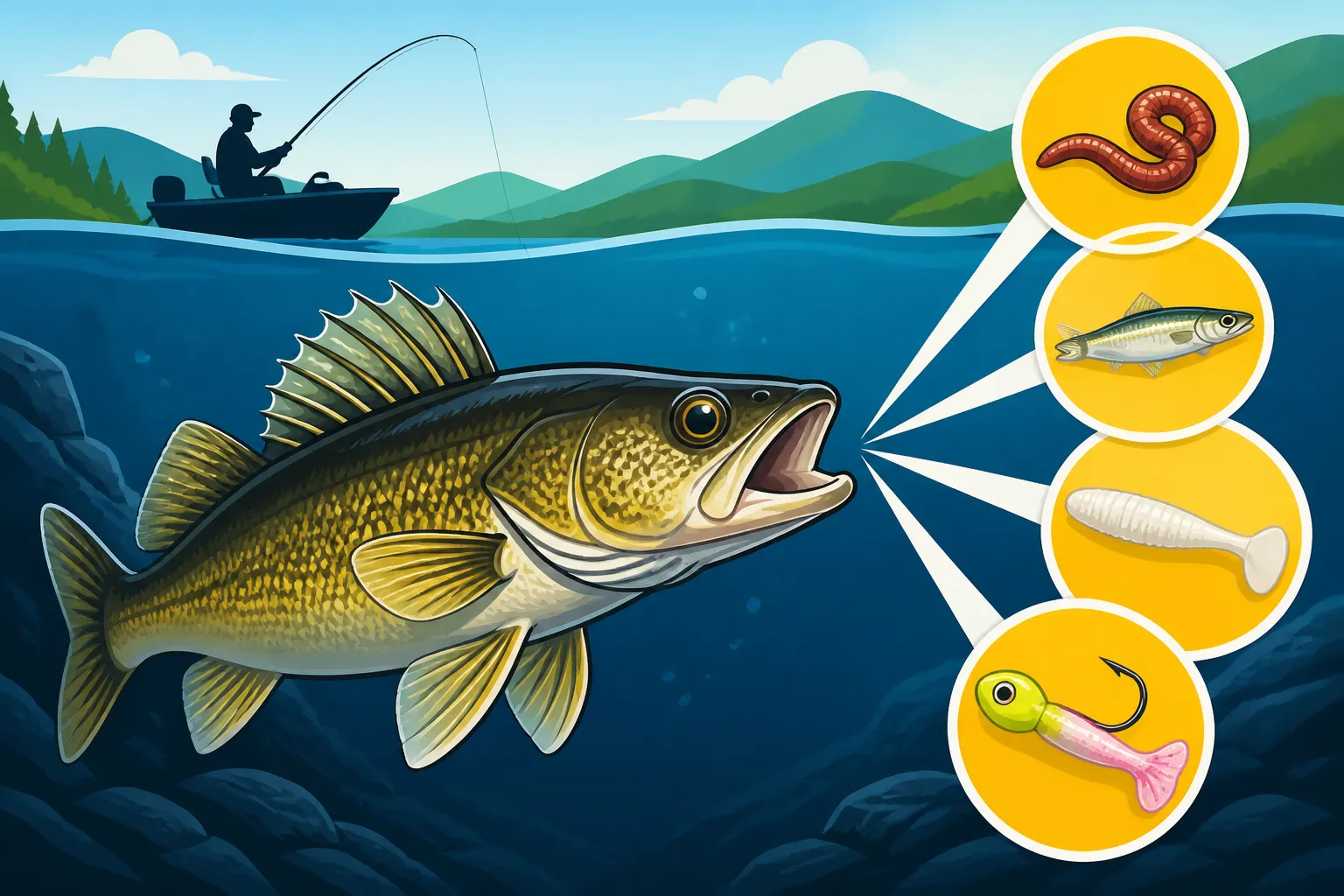
Now for the fun part: what to tie on! When walleye are holding deep, you need baits that can get down there efficiently, mimic their natural forage, and entice a strike. We’ll break this down into jigging, trolling, and live bait options.
Jigging Lures
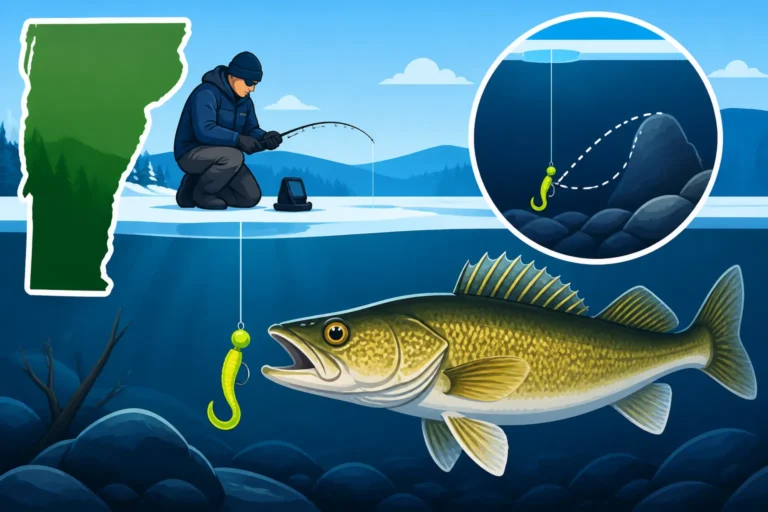
Jigging is a highly effective method for targeting deepwater walleye, offering a direct, vertical presentation that can be irresistible.
- Vertical Jigs and Spoons: These are absolute staples for deep walleye, especially when you're directly over fish marked on your sonar.
- Blade Baits: Think Cicada or Damiki Vault blades. These compact, heavy lures vibrate intensely on the lift and flutter on the fall, mimicking a dying baitfish. They're fantastic for provoking reaction strikes, even from hesitant fish. The key is a sharp snap of the rod tip, then letting it fall on a semi-slack line. They come in various weights, allowing you to match the depth and current.
- Jigging Spoons: Classics like the Swedish Pimple or even more modern designs like the VMC Tumbler Spoon are excellent. These flutter and flash as they fall, catching the light and drawing attention. They're particularly effective over hard bottom where they can kick up a bit of sediment when bounced.
- Jigging Raps (Horizontal Jigs): Rapala Jigging Raps, or similar baits like the Lindy Darter, are unique because they swim in erratic circles when lifted and dropped. This side-to-side darting action is incredibly appealing to walleye. They can cover a wider area than a traditional spoon with each jig, making them great for suspended fish or when walleye are spread out a bit.
- When shopping for these, you'll find a huge selection on sites like Amazon, making it easy to stock up on different sizes and colors.
- Soft Plastics on Jig Heads: Sometimes, a more subtle approach with soft plastics is what it takes to trigger a bite.
- Paddle Tails and Grubs: These plastics, like a Berkley PowerBait Ripple Shad or a classic Mister Twister grub, have tails that vibrate and swim with minimal movement. Rig them on heavy jig heads (1/2 oz to 1 oz or more, depending on depth and current) to ensure they get to the bottom quickly and stay there. The profile and action of a paddle tail can mimic a swimming baitfish, while a grub offers a more subtle, squirming presentation.
- Worm Imitations: Plastics designed to look like nightcrawlers (e.g., Berkley Gulp! Crawler) can be deadly, especially when tipped with a piece of real worm for added scent. The wavy action of these artificial worms, combined with scent, can be hard for a deep walleye to resist.
- The beauty of soft plastics is their versatility in color and profile. Match the hatch – if walleye are feeding on smelt, go with a silver or white paddle tail. If perch are the forage, a perch-patterned plastic is a smart choice.
Trolling Baits
Trolling allows you to cover vast amounts of water, which is essential for locating scattered walleye in deep, expansive lakes.
- Deep-Diving Crankbaits: These lures are designed with long, angled lips that dig into the water, pulling the bait down to impressive depths.
- Lip Designs and Depth: Different crankbaits have different diving curves. Some are designed to dive quickly and run at a consistent depth, while others have a more gradual descent. Brands like Rapala (Deep Husky Jerk, Down Deep Rattlin' Fat Rap), Berkley (Flicker Shad, Bad Shad), and Storm (ThunderStick Deep) offer a wide range of options. You'll need to experiment with specific models and how much line you let out to hit the desired depth. Consider how deep to troll for walleye on Lake Champlain to maximize your effectiveness.
- Color and Action: Match colors to water clarity and natural forage. Brighter colors for stained water, natural patterns for clear. The wobbling action of a crankbait is a powerful attractor, mimicking a swimming baitfish. Trolling speed is critical here; a too-fast or too-slow retrieve can kill the action.
- Pairing these with planer boards can allow you to spread your presentation, covering an even wider swath of water and avoiding spooking fish directly under the boat.
- Crawler Harnesses: These are arguably one of the most consistent deepwater walleye baits, especially when rigged with live nightcrawlers.
- Components: A crawler harness typically consists of a snelled hook (often two hooks to accommodate the length of a worm), beads for color and attraction, and a spinner blade. The blade is key, creating flash and vibration that walleye detect from a distance. Blades come in various shapes (Colorado, Indiana, Willowleaf) and colors, each with a different vibration and flash profile.
- Rigging with Live Bait: Thread a full or partial nightcrawler onto the hooks, leaving a bit of tail to wiggle. The combination of the spinner's attraction and the natural scent and action of a live worm is incredibly effective.
- Bottom Bouncers: To get these harnesses into deep water and keep them near the bottom, you pair them with a bottom bouncer. This L-shaped lead weight glides over structure, reducing snags. The weight of the bottom bouncer (typically 1 oz to 3 oz or more) depends on depth, current, and trolling speed. The goal is to feel the bouncer occasionally "bouncing" along the bottom.
Live Bait Rigs
Sometimes, nothing beats the real thing. Live bait offers natural scent, movement, and taste that artificial lures can't fully replicate.
- Slip Bobber Rigs (Deep Water Adaptation): While often associated with shallower fishing, slip bobbers can be adapted for deep water. The key is using a heavier weight (like a Lindy Rig walking sinker or an egg sinker) to get the bait down quickly and using a long leader.
- Presentation: This allows you to suspend a minnow, leech, or nightcrawler precisely at the depth where you're marking fish, or just above known structure. The slip bobber lets your line slide freely, so you can reel in your slack and cast easily, yet your bait remains at a set depth. It’s perfect for picking apart specific deep humps or rock piles where walleye are concentrated.
- Bottom Bouncers with Minnows/Leeches: Similar to crawler harnesses, bottom bouncers are excellent for presenting live minnows or leeches in deep water.
- Minnow Rigs: Use a single hook (like a short-shank wide gap hook) to lightly hook a minnow through the lips or dorsal fin. The minnow's natural swimming action, combined with the bottom bouncer keeping it in the strike zone, is a killer combination. This rig is often fished by slowly drifting or using a trolling motor to creep along structure.
- Leech Rigs: Leeches are incredibly tough and active, making them fantastic walleye bait. Hook them once through the sucker end. They'll squirm and stretch, attracting attention. Leeches are particularly good in warmer water when minnows can become sluggish.
- For live bait fishing, it's worth checking local bait shops in Vermont, as they often have the freshest and most appropriate bait for the local waters.
Essential Techniques for Presenting Deep Water Baits
Having the right bait is only half the battle. Knowing how to present it effectively in deep water is what truly separates successful anglers from the rest. This often comes down to precision, boat control, and understanding the underwater environment.
Precision Jigging and Boat Control
When you're jigging in deep water, especially on expansive lakes like Lake Champlain, boat control isn't just important—it's everything. It's the difference between your bait dancing enticingly in front of a walleye and it swinging aimlessly out of the strike zone.
- Maintaining a Vertical Presentation: The golden rule of deepwater jigging is to keep your bait as vertical as possible directly below your transducer. This allows your fish finder to accurately show you both your bait and the fish you're targeting. Wind and current are your biggest enemies here. Use your trolling motor, like a Minn Kota Ulterra with spot-lock, to hold your position precisely over a deep hump, a submerged rock pile, or a school of walleye you've marked. This constant adjustment is key. Without it, your line will scope out, making it harder to feel bites and less efficient to jig.
- Controlling Your Drift: Sometimes, a controlled drift is more effective, especially if fish are scattered along a long breakline or feature. Here, you'll want to use drift socks (also known as drift anchors or sea anchors). These fabric cones deploy in the water and create drag, slowing your boat's drift and making it more manageable. You can deploy one or two, depending on wind conditions, to fine-tune your speed and direction. This allows your jigs or bottom bouncers to maintain consistent contact with the bottom or a specific depth, mimicking natural bait movement along the structure. Practice these maneuvers on calmer days to get a feel for how your boat responds before tackling a windy day on a large body of water.
Dialing in Trolling Depth and Speed
Trolling is all about covering ground and presenting your bait at the exact depth where walleye are holding. It’s a game of inches and precise adjustments.
- The Role of Line Type and Diameter: Your choice of fishing line significantly impacts how deep your lures will run.
- Lead Core Line: This specialized line has a lead weight woven into its core, causing it to sink. Each color segment (typically 10 yards) represents a certain amount of depth at a given speed. This makes it incredibly effective for precisely controlling the running depth of unweighted crankbaits or spinner rigs without the need for downriggers. Many anglers use a short fluorocarbon leader at the end of the lead core to connect to the bait.
- Braided Line: While it doesn't sink like lead core, braided line has a very thin diameter for its strength and almost no stretch. This means less resistance in the water, allowing lures to run slightly deeper than with monofilament. Crucially, the lack of stretch provides incredible sensitivity, letting you feel every bump, bite, and even the subtle vibration of your lure. A fluorocarbon leader (say, 8-12 lb test) is almost always recommended when using braid, as walleye can be line-shy in clear water.
- Monofilament: Monofilament line stretches and has a larger diameter, which means more water resistance and a shallower running depth for a given lure compared to braid. However, its stretch can act as a shock absorber during violent strikes, and it's generally more forgiving for beginners.
- Speed Considerations for Different Baits: Trolling speed is dictated by the bait you're using and the walleye's mood.
- Crankbaits: Most crankbaits have an optimal speed range where their action is most enticing, usually between 1.5 to 3.0 mph. Too slow, and the bait won't wobble correctly; too fast, and it might blow out or look unnatural. Experiment until you find the sweet spot for a particular lure.
- Crawler Harnesses: These are typically trolled slower, often between 0.8 to 1.5 mph, to allow the spinner blade to turn properly and the nightcrawler to undulate naturally. Slowing down often elicits more strikes, especially when fish are lethargic. You may need to adjust your trolling speed for walleye in cold water, often opting for slower presentations.
Reading Current and Structure
Deepwater current, even in seemingly still lakes, can significantly affect your bait presentation and where walleye choose to hold. Understanding how walleye relate to structure in these conditions is paramount.
- Effect of Deepwater Current: Subsurface currents, often caused by wind pushing water across the surface or inflows from rivers, can be present even when the surface looks calm. These currents can push your boat off course, sweep your lures out of the strike zone, and force you to use heavier weights or adjust your trolling speed. Walleye will often position themselves down-current of structure, using it as an ambush point, much like a trout in a river. They expend less energy waiting for food to be swept to them. Always be aware of your boat's true direction and speed over ground, not just through the water, as indicated by your GPS.
- Connecting Structure to Walleye Holding Patterns: Walleye are creatures of habit and often relate strongly to specific deepwater structures.
- Humps and Deep Points: These are classic walleye magnets. The fish will sit on top, along the edges, or in the deeper water surrounding them, moving up to feed during low light or when baitfish are present.
- Ledges and Drop-offs: Walleye love to cruise along these vertical transitions, using the depth change as cover and a highway to move between different feeding areas. A sharp drop-off from 20 feet to 40 feet can be a high-percentage area.
- Submerged Timber and Rock Piles: These provide excellent cover and ambush points. They also attract baitfish, creating a natural feeding ground for walleye. However, these areas are also prime for snags, so be prepared to lose some tackle. Using your fish finder to mark these features accurately before fishing is crucial. Many anglers use their Best Fish Finders for Vermont Lakes to pinpoint these spots.
Gear Considerations for Deep Walleye Success
You wouldn't bring a butter knife to a deep-sea fishing tournament, right? The same goes for deepwater walleye. Having the right rods, reels, line, and especially electronics, makes a monumental difference in your success and enjoyment.
Rods, Reels, and Line
The right setup will enhance your sensitivity, fighting power, and overall control when fishing deep.
- Sensitive Rods: For jigging, a medium-light to medium power, fast or extra-fast action spinning rod (6'6" to 7'6") is ideal. The fast tip allows you to feel subtle bites, even in deep water where line stretch can dampen sensitivity. The backbone helps you set the hook and fight larger fish. For trolling with bottom bouncers or crankbaits, a longer, medium-heavy power rod (7' to 9') with a moderate action is often preferred. This allows for better line control and cushions the lunges of a big walleye. Many anglers find great options for Best Fishing Rods for Vermont Lakes that double as excellent walleye sticks.
- Appropriate Reels: For jigging, a reliable spinning reel in the 2500-3000 size range is perfect, offering a smooth drag and good line capacity. For trolling, a baitcasting reel with a line counter is incredibly valuable. This allows you to precisely repeat successful trolling runs by knowing exactly how much line you have out, ensuring your bait is at the right depth. Look for reels with a strong, smooth drag system, as deepwater walleye can put up a serious fight.
- Line Types and Leaders: As discussed in the techniques section, braided line (10-20 lb test) is a top choice for its sensitivity and low stretch, especially for jigging. Always use a fluorocarbon leader (6-12 lb test, 4-8 feet long) to your braid, as it's nearly invisible underwater and resistant to abrasion. For trolling with lead core, you'll still want a fluorocarbon or even monofilament leader for bait attachment. Understanding Best Fluorocarbon Line for Clear Lake Water can further refine your line choices.
Electronics and Mapping
If you're serious about deepwater walleye, consider your electronics your most important piece of gear after your rod and reel.
- Quality Fish Finders: A good fish finder is your window into the underwater world. Look for units with high-resolution screens and advanced features like CHIRP sonar, down imaging, and side imaging. These technologies provide crystal-clear views of fish, bait, and structure. Brands like Humminbird (Helix, Solix series) and Lowrance (HDS, Elite FS series) offer excellent options. Being able to distinguish a fish from a rock, or a bait ball from a thermocline, is crucial. If you're ice fishing, a flasher or a portable unit with a transducer cone optimized for ice fishing will be your best friend.
- Detailed Lake Maps: Your fish finder often integrates with detailed mapping software. High-definition lake maps (like Navionics or Lakemaster) show contour lines, depth changes, humps, and drop-offs. These maps are invaluable for identifying potential deepwater walleye hotspots before you even drop a line. You can pre-plan your trolling passes or jigging spots by studying the contours. Many units also allow you to create your own custom maps as you fish, marking waypoints for productive spots. This combination of real-time sonar and detailed mapping is what truly unlocks the mysteries of deepwater walleye. It helps you understand the Best Walleye Spots on Lake Champlain before you even get on the water.
Deep Water Walleye Bait Comparison Table
| Bait Type | Ideal Presentation | Key Characteristics | Best Conditions / Use Case | Pros | Cons |
|---|---|---|---|---|---|
| Vertical Jigs (Blades, Spoons) | Vertical Jigging | Aggressive flutter/vibration on fall/lift | Over marked fish, reaction bites, current | Excites neutral fish, fast to get to depth | Requires active boat control, can snag |
| Jigging Raps | Vertical Jigging | Erratic darting, circular swim | Suspended fish, scattered walleye | Covers more water vertically, unique action | Can foul easily if not jigged correctly |
| Soft Plastics on Heavy Jigs | Vertical Jigging, Drifting | Subtle action, scent (if applicable) | Finicky fish, post-front conditions | Versatile, natural look/feel, less snags | Slower fall than metal, less flash |
| Deep-Diving Crankbaits | Trolling | Wobbling action, dives to specific depths | Covering open water, searching for fish | Covers large areas, triggers aggressive bites | Requires specific depth calibration, prone to snags |
| Crawler Harnesses (with Bottom Bouncers) | Trolling, Drifting | Spinner flash, live worm scent/action | Bottom-hugging walleye, consistent bites | Highly effective, natural scent | Requires live bait, slower presentation |
| Minnow Rigs (with Bottom Bouncers) | Trolling, Drifting | Natural minnow action, scent | Finicky fish, colder water | Extremely natural, often irresistible | Live bait care, can be picked off easily |
Disclaimer
This article is for general informational purposes only and does not constitute professional advice. Laws, prices and regulations vary by location and change over time. Consult a qualified professional for guidance on your specific situation.