How to rig smelt for landlocked salmon trolling
Few things are as frustrating as spending a beautiful day out on a Vermont lake, trolling for elusive landlocked salmon, only to come back empty-handed because your bait just wasn't presenting right. These magnificent fish are picky eaters, and success often hinges on the subtle art of rigging their natural forage. This guide will meticulously walk you through the precise steps to rig smelt for landlocked salmon trolling, helping you improve your chances of landing that trophy fish.
Understanding Landlocked Salmon and Their Forage
Landlocked salmon, often considered one of Vermont's premier sportfish, are incredible predators that rely heavily on specific baitfish to thrive in our deep, cold lakes. Understanding what they eat and why a proper presentation is so critical is the first step to becoming a successful angler.
Why Smelt are King for Salmon
Imagine being a landlocked salmon in a vast body of water like Lake Champlain or Lake Willoughby. Your entire life revolves around finding and consuming the primary food source available: rainbow smelt. These small, silvery fish form the backbone of the salmon's diet, providing the necessary energy for their impressive growth and powerful fights. Salmon are highly tuned to the appearance, scent, and movement of smelt. When you're trying to fool a salmon into striking, presenting something that mimics a natural, healthy smelt is paramount. Anything that looks unnatural, swims erratically without purpose, or simply doesn't appear like their everyday meal will be ignored. It's not just about having a smelt on your line; it's about making that smelt look alive and vulnerable, just like one trying to escape.
This deep reliance on smelt is why artificial lures that imitate them are so popular, but nothing truly beats the real thing when salmon are being particularly finicky. The natural oils, scent, and subtle shimmer of a real smelt are incredibly attractive to a hungry salmon. They’ve evolved to key into these specific cues, making a perfectly rigged smelt an irresistible offering. To learn more about these fascinating fish, check out our guide on Landlocked Salmon Life Cycle in Vermont Lakes.
Smelt Varieties and Selection
Not all smelt are created equal when it comes to bait. The size, freshness, and overall condition of your smelt can make a huge difference. Generally, a smelt ranging from 3 to 6 inches is ideal for trolling, as this size is a common meal for actively feeding salmon. Larger smelt might tempt a true trophy, while smaller ones could be overlooked or attract smaller fish.
When choosing smelt, always prioritize freshness. Freshly caught smelt, kept on ice, are superior to frozen ones. They retain their natural oils, firmness, and lifelike appearance. However, fresh smelt aren't always available, so high-quality frozen smelt are a common and effective alternative. If using frozen smelt, make sure they were frozen quickly and properly to minimize freezer burn and maintain their texture. Avoid smelt that are mushy, discolored, or have a strong, unnatural odor, as these indicate poor quality and will likely deter fish. Many anglers find great success ordering quality frozen bait online through retailers like Amazon, ensuring a consistent supply.
Essential Gear for Rigging and Trolling Smelt
Before you even think about putting a smelt on a hook, you need to ensure you have the right tools and tackle for the job. Trolling for landlocked salmon isn't just about the bait; it's about the entire system working together seamlessly.
Rods, Reels, and Line
For successful landlocked salmon trolling, you'll want a rod and reel setup that can handle powerful fish while also providing the sensitivity and control needed for bait presentation. A medium-heavy action trolling rod, typically 7 to 9 feet long, is a great choice. The longer length helps spread out multiple lines and absorbs the shock of a strike, protecting your line and gear. Look for rods with a moderate tip that transitions into a strong backbone.
Pair your rod with a reliable baitcasting reel, preferably one with a line counter. A line counter is invaluable for replicating successful depths and ensuring your bait is precisely where you want it. Capacity is important; you'll want a reel that can hold a good amount of line, especially if you're deploying lead core or copper lines. Spool your reel with 15 to 20 lb monofilament or braided line. If using braid, a leader of 10 to 15 lb fluorocarbon is essential for its invisibility in clear water. Fluorocarbon's low stretch also provides better feel and hooksets. A smooth, dependable drag system on your reel is non-negotiable, as landlocked salmon are known for their explosive runs. You'll want to be able to tire them out without fear of snapping your line or having the drag stick. For more on getting set up, consider reading our guide on Best Fishing Rods for Vermont Lakes.
Terminal Tackle and Rigging Tools
This is where the magic happens for rigging smelt. You'll need a specific array of items to ensure your smelt presents naturally.
- Rigging Wire or Leader Material: This is the core of many smelt rigs. A fine, stiff rigging wire (often single strand wire, about 15-20 lb test) or even a heavier fluorocarbon leader (30-50 lb) can be used to impart spin to the smelt.
- Rigging Needle: A specialized rigging needle is crucial. These are long, thin needles with a small hook or eye on the end, designed to thread the rigging wire or leader through the smelt's body without tearing it. You can find excellent options on Amazon.
- Hooks: The type and size of hooks depend on your rigging method and smelt size. Often, a combination of a single hook (like a size 1 or 2 octopus hook) and one or two treble hooks (size 4 or 6) are used. The single hook often goes into the smelt's head or nose, while trebles are positioned along the body. Ensure your hooks are sharp and strong.
- Swivels and Snaps: Quality ball-bearing swivels are important to prevent line twist, especially with spinning bait. A good snap allows for quick changes of your smelt rig.
- Weights: Depending on your trolling setup, you might need inline weights (like banana weights or pencil weights), snap weights, or even specialized sinkers to get your bait to the desired depth.
- Cleats/Stops: Small plastic or rubber stops can be used to secure your hooks in place on the leader.
Having all these components readily available, perhaps organized in a tackle box like those mentioned in Best Tackle Box Setup for Vermont Anglers, will make rigging on the water much easier.
The Importance of a Trolling Setup
To truly fish smelt effectively for landlocked salmon, you need a way to present them at precise depths and speeds. Simply casting and retrieving won't cut it. This is where dedicated trolling setups come into play.
- Downriggers: These are mechanical devices that use a heavy ball to carry your line and bait down to a specific, controlled depth. Once a fish strikes, the line releases from a clip, allowing you to fight the fish directly without the weight. Downriggers offer unparalleled depth control and are often used on larger bodies of water like Lake Champlain.
- Planer Boards: These devices carry your line out to the side of the boat, allowing you to cover a wider swath of water and keep lines from tangling, especially when running multiple rods. They are fantastic for covering shallower areas or when fish are scattered.
- Lead Core or Copper Line: These specialized lines have an outer braiding with a heavy core (lead or copper) that sinks at a predictable rate per color (usually 10 yards). By deploying a certain number of colors, you can estimate your bait's depth without external weights or downriggers. This can be a simpler, but effective, method for many anglers.
Each of these systems has its own advantages and disadvantages, and the best choice often depends on the water you're fishing and your personal preference. For specific depths and strategies, articles like How deep to troll for lake trout on Lake Champlain can provide valuable insights.
Step-by-Step Guide to Rigging a Smelt for Trolling
Now for the main event: getting that smelt on the line in a way that truly fools a salmon. There are a couple of popular methods, and each aims to make the smelt look as natural as possible.
Preparing Your Smelt
Whether fresh or frozen, proper preparation is key. If you're using frozen smelt, thaw them slowly in a cooler with ice water. Avoid microwaving or rapidly thawing them, as this can damage their texture and make them mushy. Once thawed, keep them cold but don't re-freeze them. Handle smelt gently to avoid damaging their scales or internal structure. A healthy, firm smelt will rig and swim much better. If you have a choice, pick smelt that are shiny, intact, and relatively stiff, as these will hold up best to trolling speeds.
The Classic "Quick-Strike" or "Spin-Rig" Method
This is perhaps the most popular method for trolling smelt, as it's designed to make the bait spin enticingly through the water, mimicking an injured or fleeing fish.
- Prepare Your Rigging Wire/Leader: Cut a length of about 12-18 inches of your rigging wire or heavy fluorocarbon leader. Tie a small loop at one end or attach a small swivel. At the other end, tie on your main treble hook.
- Thread the Needle: Take your rigging needle and attach the looped end of your wire/leader to its eye or hook.
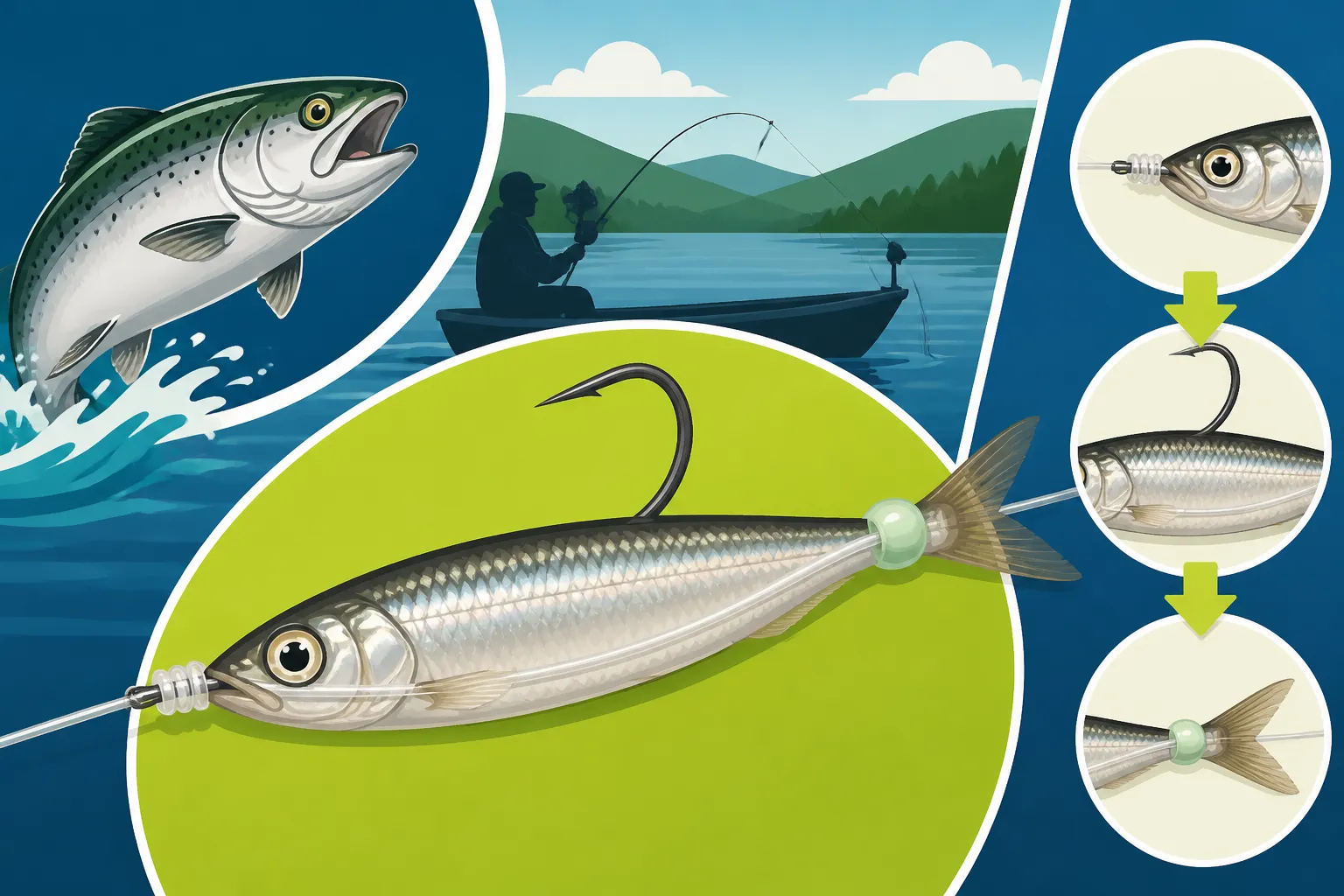
- Insert the Needle: Carefully insert the rigging needle into the mouth of the smelt. Push it straight down the throat and out through the vent (the anus) of the fish. Be precise and try not to tear the body cavity.
- Pull the Wire Through: Gently pull the rigging needle, and with it, your wire/leader, all the way through the smelt until the swivel or loop is just inside the smelt's mouth. The treble hook should now be trailing naturally along the belly or side of the smelt.
- Add a Second Hook (Optional): Many anglers add a second treble hook further up the wire, securing it with a small rubber stop or by wrapping the wire slightly. This allows for better hook-ups if salmon short-strike. Position this second hook so it lies naturally along the smelt's side.
- Form the Loop/Attach Swivel: Once the wire is through, create a small loop with the wire just outside the smelt's mouth, or secure the pre-tied loop/swivel if that was your starting point. This loop is where you'll attach your main trolling leader. Crucially, the wire running through the smelt's body, exiting the vent, should have a slight bend or kink in it. This is what creates the spin.
This method takes a bit of practice, but once mastered, it creates an incredibly lifelike presentation that drives salmon wild. Remember, a natural spin is key for success when using these rigging techniques for landlocked salmon.
The "Head-First" or "Nose-Hook" Method
This is a simpler rigging method, often used when trolling at slower speeds or when you want a more subtle, darting action rather than a strong spin. It's also great for slightly more fragile smelt.
- Prepare Your Leader: Use a fluorocarbon leader (10-15 lb test) about 3-4 feet long, with a strong swivel on one end and your main single hook (e.g., a size 1 or 2 octopus hook) tied to the other.
- Hook the Smelt: Gently insert the single hook through both lips of the smelt, from the bottom lip up through the top. Ensure the hook point is exposed and the smelt's mouth is closed around the hook.
- Add a Treble Stinger (Optional): If you're worried about short strikes, you can add a short piece of leader material (6-8 inches) to the bend of your main single hook, with a small treble hook tied to the end. Position this treble hook so it hangs naturally along the smelt's side or near its tail.
- Check Position: Ensure the smelt hangs straight and the hook doesn't impede its natural movement. This method results in a subtle wobble or darting action rather than a pronounced spin.
This "head-first" method, while simpler, still offers a very enticing presentation, especially when combined with subtle boat movements that impart a bit of extra action to the bait.
Achieving the Perfect Spin
This is the most critical aspect of rigging a smelt for trolling. A dead smelt must appear alive and distressed. The perfect spin is a slow, methodical rotation that mimics an injured baitfish.
- Test Your Rig: Before deploying your line fully, drop your rigged smelt next to the boat and watch its action. It should spin in a wide, natural spiral. If it's spinning too fast, tumbling, or not spinning at all, you need to adjust.
- Adjusting for Spin:
- Too Much Spin/Tumbling: This often means the rigging wire (in the quick-strike method) is too sharply bent, or the smelt itself is damaged. Try straightening the wire slightly, or if the smelt is torn, replace it. You can also try slowing your trolling speed.
- No Spin/Erratic Movement: The wire might be too straight, or not exiting the vent at the correct angle. Gently re-bend the wire inside the smelt to create a slight "S" curve. Ensure the rigging is symmetrical.
- Trolling Speed is Key: Your boat's speed directly impacts the smelt's action. Generally, 1.5 to 2.5 mph is a good starting point for landlocked salmon, but you'll need to experiment. Sometimes a subtle change of 0.1 mph can make all the difference. When learning, don't be afraid to pull up your lines and check your bait presentation often.
Mastering the perfect spin takes practice, but it's an invaluable skill for serious landlocked salmon anglers. Remember, a subtle, lifelike presentation is what triggers those strikes.
Trolling Techniques and Presentation Tips
Getting your smelt rigged correctly is a massive step, but it's only half the battle. Now you need to get that perfectly presented bait in front of the salmon, at the right depth, and at the right speed.
Depth and Speed Control
Landlocked salmon are highly sensitive to water temperature and light conditions, which directly influence their preferred depth. Often, they'll hold in the colder, oxygen-rich waters of the thermocline during warmer months, or suspend over deep water following baitfish.
- Electronics are Your Friend: A quality fish finder (you can find a wide range of options on Amazon) is indispensable. Use it to locate bait balls (schools of smelt), identify the thermocline, and mark suspended fish. If you see salmon holding at 40 feet, that's where you need to present your bait. For more on this, check out Best Fish Finders for Vermont Lakes.
- Targeting the Thermocline: During summer, the thermocline (the layer where warm surface water meets cold deep water) is often a prime zone. Monitor your fish finder to identify this depth and aim to run your smelt just above, in, or just below it.
- Vary Your Depth: Don't be afraid to run multiple lines at different depths to "pattern" the fish. Once you get a strike, adjust other lines to that successful depth.
- Trolling Speed: As mentioned, 1.5 to 2.5 mph is a common range. However, fish activity can dictate changes. On a bright, calm day, slower speeds might be better, presenting an easier meal. On overcast or windy days, a slightly faster speed might trigger a reaction strike. Watch your rod tip and the action of your smelt next to the boat to ensure it's spinning correctly at your chosen speed. Use your GPS or boat's speedometer to maintain consistent speed.
Reading the Water and Adjusting
Successful trolling isn't just about setting your lines and waiting; it's an active process of reading the water and adapting.
- Structure: While salmon often cruise open water, they'll also relate to underwater structure, points, humps, and drop-offs where baitfish might congregate. Use your charts and fish finder to identify these areas. Trolling along the edges of these structures can be very productive.
- Bait Balls: If your fish finder shows dense schools of baitfish, salmon are likely nearby. Focus your efforts on these areas, perhaps adjusting your depth to run your smelt just above or through the bait.
- Turns and S-Curves: Trolling in a perfectly straight line can be effective, but introducing gentle turns or S-curves with your boat can be a game-changer. As your boat turns, the inside lines will slow down and sink slightly, while the outside lines will speed up and rise. This change in speed and depth can often trigger a follow or a strike from hesitant fish. Experiment with these maneuvers.
- Wind and Current: Pay attention to wind direction and any current. These can affect your actual trolling speed and the action of your bait. Troll both with and against the wind/current to see which presentation the fish prefer.
Varying Your Presentation
Sometimes, the salmon just aren't interested in a constant, uniform presentation. Varying your technique can make a huge difference.
- Color Changes: While natural smelt are the main attraction, sometimes adding a small colored bead or a tiny flasher/dodger in front of your smelt can add extra appeal. Experiment with different colors if you're not getting bites.
- Intermittent Pauses: Briefly disengage your reel and let your bait flutter down a few feet, then re-engage and continue trolling. This "fall and retrieve" action can mimic a dying baitfish and elicit a strike.
- Leader Length: Experiment with longer or shorter leaders between your main line and your rigged smelt. Sometimes a longer, more subtle leader works best in clear water, while a shorter leader provides more direct action from an attractor.
- Attractors: Flashers or dodgers, when legal, can be used in front of your smelt rig to attract fish from a distance. These create flash and vibration that can draw salmon in, but they must be carefully matched to your trolling speed and smelt presentation to ensure they don't overpower the natural bait.
By constantly monitoring your equipment, paying attention to what's happening below the surface, and being willing to adjust, you'll significantly increase your success when trolling for landlocked salmon. This active approach is a hallmark of skilled anglers.
Common Mistakes to Avoid When Trolling Smelt
Even experienced anglers can make mistakes, and when it comes to the nuanced game of trolling smelt for landlocked salmon, small errors can lead to big disappointments. Being aware of these common pitfalls can help you avoid them and improve your overall success rate.
Improper Rigging Issues
This is probably the most frequent mistake, and it directly impacts whether a salmon decides to strike. If your smelt isn't rigged correctly, it simply won't look appealing.
- Lack of Natural Spin: As discussed, the perfect spin is crucial. A smelt that is tumbling erratically, wobbling awkwardly, or simply dragging dead in the water will be ignored. This usually stems from the rigging wire being too straight, improperly bent, or the smelt's body being damaged during rigging. Take the time to master the rigging process and always test your bait's action next to the boat before deploying. If it's not right, pull it in and fix it. Don't be lazy here; it's the difference between catching and not.
- Hooks Not Exposed: Many strikes happen when a salmon grabs the tail or mid-section of the smelt. If your hooks are buried too deeply within the bait or are too far forward, you'll miss a lot of fish. Ensure at least one treble hook is positioned where a salmon is likely to grab, and its points are fully exposed. This might mean having the hook barb just piercing the skin of the smelt to hold it in place.
- Damaged Smelt: Handling the smelt too roughly can cause tears in its flesh, especially around the mouth or vent. A torn smelt won't hold its shape or spin correctly. Be gentle during the rigging process, and don't try to salvage a badly mangled smelt; it's better to start fresh with a new one.
Wrong Depth or Speed
You can have the most perfectly rigged smelt in the world, but if it's not where the fish are, or if it's moving at the wrong pace, it's useless.
- Trolling Above or Below the Fish: Salmon often occupy a specific thermal zone. If your bait is consistently above or below this zone, you're missing opportunities. Rely heavily on your fish finder to locate fish and bait, and use your downrigger, lead core, or weighted lines to present your smelt precisely at that depth. Don't guess; confirm.
- Too Fast or Too Slow: Trolling speed is critical for achieving the desired action and matching the salmon's mood. Too fast, and the smelt might spin unnaturally or the fish won't have time to react. Too slow, and the bait might lack sufficient action to entice a strike. Experiment within the 1.5-2.5 mph range, watching your fish finder for reactions, and noting when strikes occur. Often, subtle speed changes of 0.1-0.2 mph can be highly effective.
Using Stale Bait
The scent and appearance of your bait are powerful attractors. Using poor-quality smelt can significantly reduce your chances.
- Mashed or Freezer-Burned Smelt: Smelt that have been poorly thawed, refrozen multiple times, or suffered freezer burn lose their natural firmness, color, and scent. They become mushy and unattractive. Always start with the freshest, best-quality smelt you can find.
- Lack of Scent: While the visual presentation is key, the natural scent of a fresh smelt is also a powerful attractant. Stale or washed-out smelt lack this appeal. If using frozen bait, ensuring it's of good quality and thawed properly helps preserve its natural oils. Some anglers even use commercially available bait scents on their smelt, but a fresh, naturally oily smelt is often enough.
By paying close attention to these details and continually refining your technique, you'll find yourself much more consistently successful in the pursuit of Vermont's magnificent landlocked salmon.
Essential Smelt Trolling Gear Checklist
Having your gear organized and ready makes all the difference when you're out on the water. Here’s a quick checklist of essential items for rigging and trolling smelt for landlocked salmon.
| Category | Item | Key Considerations |
|---|---|---|
| Rods & Reels | Trolling Rod (7-9 ft, Med-Heavy) | Moderate tip, strong backbone |
| Baitcasting Reel with Line Counter | Smooth drag, sufficient line capacity | |
| Line | Main Line (Mono or Braid) | 15-20 lb test, good abrasion resistance |
| Fluorocarbon Leader | 10-15 lb for main leader, 30-50 lb for rigging wire (if not using wire) | |
| Terminal Tackle | Rigging Needles | Sturdy, with hook/eye for threading |
| Single Strand Rigging Wire | 15-20 lb test for spinning rigs | |
| Treble Hooks (size 4 or 6) | Sharp, strong, for securing to smelt | |
| Single Hooks (size 1 or 2) | For nose-hooking, sharp | |
| Ball Bearing Swivels | To prevent line twist | |
| Snaps | For quick rig changes | |
| Rubber/Plastic Stops | To hold hooks in place on leader | |
| Bait | Fresh or Quality Frozen Smelt | 3-6 inches, firm, shiny, intact |
| Trolling Aids | Downriggers (optional) | For precise depth control in deep water |
| Planer Boards (optional) | To spread lines and cover wider areas | |
| Lead Core/Copper Line (optional) | For controlled depth without heavy weights | |
| Inline Weights / Snap Weights | For adjusting depth | |
| Flashers/Dodgers (optional) | For added attraction | |
| Electronics | Fish Finder / Chartplotter | To locate fish, bait, and structure |
| Miscellaneous | Cooler with Ice | To keep smelt fresh and cold |
| Pliers / Line Clippers | Essential for rigging and hook removal | |
| Net (large, rubberized) | To safely land salmon (and release them if desired) | |
| Ruler / Scale (optional) | For measuring and weighing catches, if regulations allow |
Remember, having a Dry Bag for Kayak Fishing can also be incredibly useful for keeping your phone, keys, and other essentials dry when out on the water, regardless of your boat type.
Successfully rigging smelt for landlocked salmon trolling is a rewarding skill that blends patience, precision, and a deep understanding of these magnificent fish. By carefully selecting your bait, employing the right rigging method, and fine-tuning your trolling presentation, you'll dramatically increase your chances of experiencing the thrilling strike and powerful fight of a Vermont landlocked salmon. It’s an art form, really, and every fish landed with a perfectly rigged smelt feels like a true accomplishment. Now get out there and enjoy the incredible fishing Vermont has to offer!
Disclaimer
This article is for general informational purposes only and does not constitute professional advice. Laws, prices and regulations vary by location and change over time. Consult a qualified professional for guidance on your specific situation.