How to read structure for walleye on Lake Champlain
Lake Champlain is an immense body of water, and trying to find walleye without a solid understanding of its underwater topography can feel like searching for a needle in a haystack. Many anglers get frustrated, casting aimlessly into open water. This guide is here to demystify the art of reading submerged structure, helping you pinpoint those elusive walleye hotspots and vastly improve your success rate on Vermont's biggest lake.
Understanding Walleye Preferences and Behavior on Lake Champlain
Before you can effectively "read" structure, it's crucial to understand what makes walleye tick, especially in a diverse fishery like Lake Champlain. These fish are masters of their environment, constantly adapting to conditions, but always looking for a tactical advantage.
Light Sensitivity and Prime Habitat
Walleye are notoriously light-sensitive, which is why they're often most active during low-light periods like dawn, dusk, or under cloudy skies, and why many experienced anglers find success with Night Fishing for Walleye on Lake Champlain. During brighter daylight hours, they’ll retreat to deeper water or seek out areas with overhead cover and shade. On Lake Champlain, this means they often relate to structure that provides depth and relief from direct sunlight. They're not generally "weed fish" like largemouth bass, preferring hard bottom like rock, gravel, and sand, especially where it meets softer mud or clay. These transitions are key ambush points.
Seasonal Movements and Forage
Walleye movements are heavily dictated by the seasons and their drive to feed and spawn. In spring, after the Walleye Spawning Season in Vermont, they'll linger around shallower, rocky areas where they laid their eggs, feeding aggressively to recover. As summer progresses, they often move deeper, seeking cooler, oxygen-rich water, typically congregating on deep humps, ledges, and drop-offs. Come fall, they’ll start to migrate back towards shallower, though still structured, areas, feeding heavily in preparation for winter. Throughout these movements, they're always following their primary forage, which on Lake Champlain often includes yellow perch, alewives, and rainbow smelt. Knowing What walleye eat on Lake Champlain helps you select the right lures and understand where the baitfish, and thus the walleye, will be.
Key Lake Champlain Structures That Hold Walleye
Walleye are structure-oriented fish, meaning they rely on changes in the lake bottom to hunt, rest, and hide. Lake Champlain offers an incredible array of such features. Learning to identify these distinct underwater formations is your first step to consistent success.
Submerged Humps and Reefs
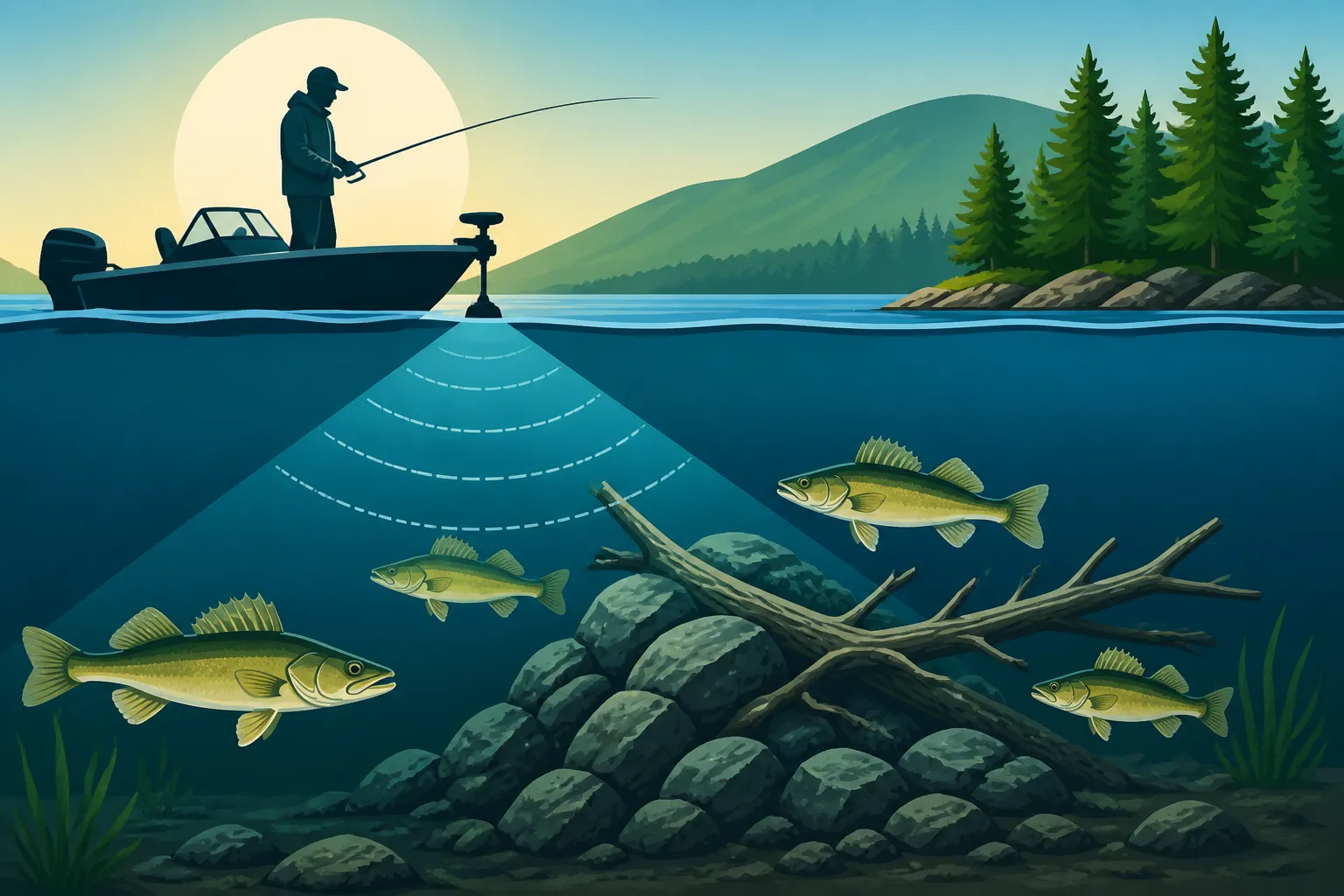
These are underwater mountains or elevated sections of the lakebed that don't break the surface. Humps and reefs are absolute magnets for walleye because they act as natural feeding grounds and ambush points. Walleye will position themselves on the sides or top of these structures, waiting for baitfish to swim by. The ideal humps are often those with a mix of gravel and rock, providing excellent holding cover. You'll find these spread throughout Lake Champlain, often away from shore, making them prime targets for anglers with good electronics. Pay close attention to the windward side of these structures, as current can push baitfish against them.
Points and Shoals
A "point" is any piece of land that extends out into the lake, whether it's above or below the water. "Shoals" are typically shallower, rocky areas. Both are crucial walleye structures because they disrupt current, provide depth transitions, and funnel baitfish. Think of a long, tapering point that drops from 10 feet down to 30 feet – walleye can move up and down that point, tracking bait or adjusting to light conditions. The intersection of different bottom types on a point, like rock transitioning to sand, can be particularly productive. These areas are excellent for casting or trolling, allowing you to cover various depths.
Drop-offs and Ledges
Drop-offs are sudden changes in depth, like a steep underwater cliff. Ledges are essentially shelves that protrude from these drop-offs, creating horizontal breaks in the vertical change. These are perennial walleye favorites. Walleye will often sit right on the edge of a drop-off, looking out into deeper water, or tuck themselves under a ledge. They offer quick access to deeper, cooler water for refuge and a perfect vantage point for ambushing unsuspecting baitfish. On Lake Champlain, some of the most consistent walleye spots are vast ledges and shelves that run parallel to the shore or delineate old river channels. Learning How deep walleye go in summer on Lake Champlain often involves targeting these specific features.
Weed Edges and Transition Zones
While walleye generally prefer hard bottom, they're not entirely averse to weeds, especially sparse, deep weed lines. The edge where a healthy weed bed meets open water or a hard bottom transition can be incredibly productive. These edges offer cover for both walleye and their prey, and they're often areas with significant insect activity. Look for points or fingers of weeds that extend into deeper water, or areas where rock and sand give way to healthy vegetation. These are particularly good targets during periods of lower light or slightly overcast conditions.
Channel Edges and River Mouths
Lake Champlain is fed by and flows into several rivers, and the mouths of these rivers, along with the edges of old river channels running through the lake, are prime walleye real estate. Channels provide consistent current, which concentrates baitfish and oxygenates the water. Walleye will often stage on the deeper edges of these channels, especially where there's a slight bend or an irregularity that creates a current break. River mouths, on the other hand, bring in fresh food and can be excellent post-spawn staging areas, or hotspots during periods of higher flow when baitfish are pushed out into the lake.
Tools and Techniques for Locating and Interpreting Structure
Finding these specific structures in such a vast lake can feel daunting, but modern technology has made it significantly easier. Combine your electronics with smart fishing techniques, and you'll be well on your way to success.
Sonar and Fish Finders: Your Underwater Eyes
Your fish finder is arguably the most critical tool for reading structure. Modern units, particularly those with Side Imaging (SI) and Down Imaging (DI) capabilities, provide incredible detail.
Understanding Your Display
- 2D Sonar: This traditional view shows you the water column directly beneath your boat. Look for distinct arches (which indicate fish), changes in the bottom line (harder bottoms appear thicker and brighter, softer bottoms thinner and duller), and baitfish schools that appear as clouds or masses of tiny dots.
- Down Imaging: DI gives you a photographic-like view directly below the boat, excellent for seeing vertical structure like submerged trees, rock piles, or sharp drop-offs. You can clearly distinguish individual rocks or sunken timber that might hold walleye.
- Side Imaging: SI is a game-changer for finding structure off to the sides of your boat. It allows you to scan a wide swath of the lake bottom, revealing humps, rock veins, or weed lines that you might otherwise drive right over. Learning to interpret the shadows and returns on your SI screen takes practice, but it's invaluable for locating fish-holding structure before you're directly on top of it. Many anglers find great deals on units like the Humminbird Helix or Garmin Echomap on Amazon, which offer excellent SI/DI capabilities.
GPS and Lake Mapping: Navigating the Underwater World
Your GPS unit, often integrated into your fish finder, is essential. Detailed mapping cards, such as Navionics or C-MAP, overlay contour lines onto your screen, visually representing the underwater topography.
How to Use Maps Effectively
- Study Contour Lines: Before you even launch, spend time studying the contour lines on your map. Look for areas where lines are tightly packed (indicating steep drop-offs), where they form distinct circles (humps or depressions), or where they "point" out into the lake (submerged points).
- Mark Waypoints: Once you identify a promising area on your map, or find a piece of structure with your sonar, mark a waypoint. This allows you to return to that exact spot, even if conditions change. Over time, your map will become a personal treasure trove of proven walleye spots. You can often purchase these detailed mapping cards directly from manufacturers or through retailers like Amazon.
Feeling the Bottom: The Art of Drifting and Jigging
While electronics are powerful, there's no substitute for "feeling" the bottom with your rod and line. This is especially true when drifting over suspected structure or when jigging vertically.
Interpreting Your Lure's Feedback
- Hard vs. Soft Bottom: When your lure hits bottom, a hard, rocky bottom will feel like a sharp "clunk" or "thud" through your rod, while a soft, muddy bottom will feel more like a dull "thump" or a slight sinking sensation.
- Identifying Structure Changes: As you drift or retrieve, pay attention to these changes in feel. A sudden shift from soft to hard bottom could indicate a transition zone or the edge of a rock pile – exactly where walleye might be lurking. This hands-on approach complements your electronics, providing confirmation and fine-tuning your understanding of the lakebed.
Putting It All Together: A Structure-Reading Strategy
Now that you know what to look for and how to use your tools, let's talk about a practical approach to reading structure for walleye on Lake Champlain. This isn't just about finding fish; it's about understanding why they're there.
Pre-Trip Research and Planning
Before you even leave the dock, pull up your lake map on your plotter or a mapping app. Identify a few promising areas based on the types of structure discussed. Look for:
- Intersections: Where a point meets a drop-off, or where a hard bottom transitions to soft.
- Irregularities: Not just uniform humps, but humps with smaller fingers, scattered rocks, or a nearby depression. These provide more complex ambush points.
- Depth Ranges: Consider the time of year and general Best Time of Year to Fish in Vermont for walleye. Are they likely to be shallow or deep? Target structure within those depth ranges.
On-the-Water Search and Confirmation
Once on the water, don't just speed to your spot and drop anchor. Utilize your electronics to systematically scan the area.
The "Grid Search" Approach
- Initial Scan with Side Imaging: Start by making wide passes over your chosen area, running your boat in a grid pattern. Keep an eye on your Side Imaging to locate humps, rock piles, or sharp breaks that weren't obvious on your map. This helps you paint a clearer picture of the actual underwater terrain.
- Pinpoint with Down and 2D Sonar: Once Side Imaging reveals a promising piece of structure, switch to a tighter scan with Down and 2D sonar to get a more detailed view. Look for fish arches directly on or near the structure, or signs of baitfish. Mark waypoints religiously.
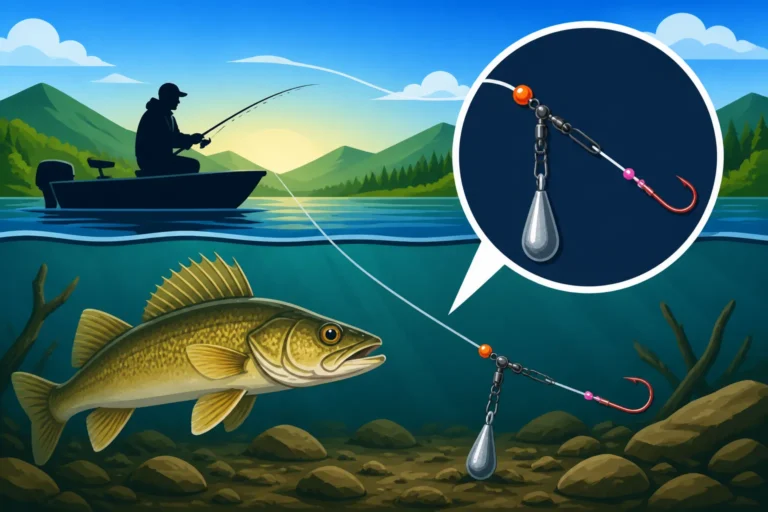
- Using Trolling for Exploration: Sometimes the best way to "read" a long piece of structure, like a channel edge or a lengthy drop-off, is by trolling. Use Best Trolling Gear for Lake Champlain Walleye with a bottom-contact lure. Your rod tip will tell you when you hit rock, gravel, or mud, and your fish finder will confirm the depth changes. This is also a great way to put some fish in the boat while you're still exploring.
Interpreting Fish Behavior Around Structure
Finding the structure is one thing; understanding how walleye are relating to it is another.
Where Are the Fish Positioning Themselves?
- On Top? If walleye are active, they might be on top of humps or shallower parts of points, aggressively feeding.
- On the Edges? Often, they'll sit right on the sharp edge of a drop-off or ledge, ambushing prey moving by.
- In the Shadow? During bright days, look for them tucked into the "shadow" of a large rock or the steep side of a hump, using the structure for cover from the sun.
- Near Baitfish? Always look for baitfish schools on your sonar. Walleye are rarely far from their food source. If you see bait clustered on a specific part of a hump or along a drop-off, that's where the walleye will be.
Structure Types and Sonar Signature Breakdown
To help you visualize what you're looking for, here's a quick guide to how different structures might appear on your fish finder and what they indicate for walleye.
| Structure Type | Common Sonar Signature | Walleye Behavior Implication |
|---|---|---|
| Submerged Hump/Reef | Gradual or steep rise from bottom; hard, bright returns; possible fish arches on top/sides. | Ambush points, feeding stations, especially where current hits. |
| Steep Drop-off/Ledge | Sharp, sudden depth change; often a "shelf" or vertical line on DI/2D. | Walleye stage here, using depth for comfort and quick access to deeper water. |
| Rock Pile/Boulder Field | Clumpy, broken returns on 2D; distinct shapes on DI/SI; hard bottom returns. | Excellent cover and ambush points for baitfish and walleye. |
| Weed Line/Edge | Vertical lines or "trees" on 2D/DI; distinct separation on SI. | Walleye may patrol the edge, especially if sparse or next to hard bottom. |
| Channel Edge | Deeper, flat bottom next to a rising slope; often distinct. | Current breaks and deep-water highway for fish movements. |
| Bottom Transition | Change in bottom thickness/color (hard to soft, or vice versa). | Natural feeding lanes, congregation areas where different food sources meet. |
Remember, every day on Lake Champlain is a learning experience. The more time you spend analyzing your electronics and relating what you see to what you catch, the better you'll become at reading structure and consistently finding walleye. Good luck out there!
Disclaimer
Fishing regulations can change frequently. Always consult the latest Vermont Fish & Wildlife Department regulations before heading out on the water. This guide is for informational purposes only and should not be considered a substitute for official regulations.