Best fluorocarbon leader length for spooky trout
For any angler chasing trout in Vermont, there's a unique challenge that comes with our pristine, often crystal-clear waters and the naturally cautious nature of wild fish: spooky trout. These elusive beauties can spot an unnatural presentation a mile away, leaving you wondering why your fly or lure just isn't getting any love. This guide is all about tackling that exact frustration by diving deep into one of the most crucial, yet often overlooked, aspects of your setup: the ideal fluorocarbon leader length to fool even the wariest of Vermont's trout.
Why Fluorocarbon Matters for Spooky Trout in Vermont
When you're dealing with trout that are easily spooked, every single detail of your presentation counts. From how you approach the bank to the color of your line, it all plays a role. But perhaps nothing is as critical as your leader material, and for stealth, fluorocarbon is a true game-changer, especially in Vermont's varied waters.
The Invisible Advantage: Refractive Index
The primary reason fluorocarbon shines, or rather, doesn't shine, is its refractive index. Without getting too scientific, this simply means that light bends through fluorocarbon at almost the same rate it bends through water. Think of it like a clear glass rod disappearing when submerged in water – it’s not truly gone, but it’s incredibly hard to see. This near-invisibility dramatically reduces the chance of a trout detecting your line, which is absolutely vital when you're fishing in the gin-clear sections of the Battenkill River or the smooth, calm surfaces of a high-country pond. Fly Fishing for Trout in Vermont becomes a whole new ballgame when your line practically vanishes.
Imagine you're casting to a beautiful brown trout holding in a slow, clear pool on the White River. If your monofilament leader, with its higher refractive index, catches the light and creates a visible shadow or shimmer, that trout is likely to dart away before your fly even lands near it. Fluorocarbon minimizes this risk, allowing your fly or lure to appear unattached, drifting naturally with the current. This makes all the difference between a frustrating refusal and a solid hookup, especially on those bright, sunny days that can make the water look like glass.
Abrasion Resistance in Rocky Vermont Streams
Vermont's trout streams, from the smallest mountain trickles to larger rivers like the Lamoille, are often characterized by their rocky bottoms, fallen logs, and other submerged structures. These features provide fantastic cover for trout, but they can be a nightmare for your leader. A snag on a sharp rock or a rub against a submerged branch can quickly fray or even break a weaker leader, costing you a fish and your precious tackle.
Fluorocarbon boasts superior abrasion resistance compared to standard monofilament. This resilience means your leader can withstand more punishment from the rough environment. When you're drifting nymphs along the bottom or retrieving a streamer through a logjam on Otter Creek, having a tough leader provides peace of mind. It allows you to fish more aggressively and confidently in prime trout habitat without constantly worrying about your line failing. This durability is particularly important when targeting larger, stronger trout that will naturally try to use structure to break free once hooked.
Sensitivity and Stealth in Clear Water
Beyond its invisibility and toughness, fluorocarbon also offers a higher density than monofilament, which translates into better sensitivity and a faster sink rate. For presenting nymphs or small streamers in deeper runs or swift currents, this means your fly gets down to the strike zone quicker and stays there longer. The increased density also allows for better feel, transmitting subtle bumps and takes directly to your rod tip.
In the clear, calm waters of many Vermont lakes or ponds where trout might be cruising just beneath the surface, the stealth of fluorocarbon is paramount. Whether you're targeting brook trout in a remote pond or trying for a holdover rainbow in a state park lake, a natural presentation is key. The low stretch of fluorocarbon also enhances sensitivity, giving you a better chance to detect those incredibly light bites from wary trout. It’s a delicate balance: you need something strong enough to land a fish, yet subtle enough not to scare it away, and fluorocarbon manages to hit that sweet spot beautifully. Many anglers find high-quality fluorocarbon leader material at retailers like Bass Pro Shops, ensuring they get reliable performance on the water.
Understanding Leader Length Dynamics: When Shorter Isn't Sweeter
Choosing the right leader length isn't just about avoiding detection; it's also about effective presentation, especially in fly fishing. A leader too short can be just as detrimental as one that's too visible, compromising your ability to turn over your fly and achieve a natural drift.
The Role of Leader Taper and Turnover
A leader isn't just a straight piece of line; for fly fishing, it's typically tapered, meaning it gets progressively thinner from the thick butt section that connects to your fly line down to the fine tippet where your fly is tied. This taper is crucial for transferring the energy from your fly line smoothly, allowing your fly to "turn over" gracefully at the end of your cast and land softly on the water.
When you extend your leader, especially with fluorocarbon, you're potentially adding more mass and stiffness, which can affect this delicate turnover. Too long of a leader for your rod and casting style can make it difficult to get your fly to land where you want it, sometimes piling up or failing to extend fully. Conversely, a leader that's too short might not give you enough distance between your brightly colored fly line and your fly, increasing the chances of spooking fish, particularly in clear, shallow water. Finding that sweet spot ensures your fly lands softly and naturally, making it much more appealing to hesitant trout. This is especially true when fishing for Brook Trout: Vermont's Native Trout in smaller, intimate settings.
Factors Influencing Optimal Length: Water Clarity and Pressure
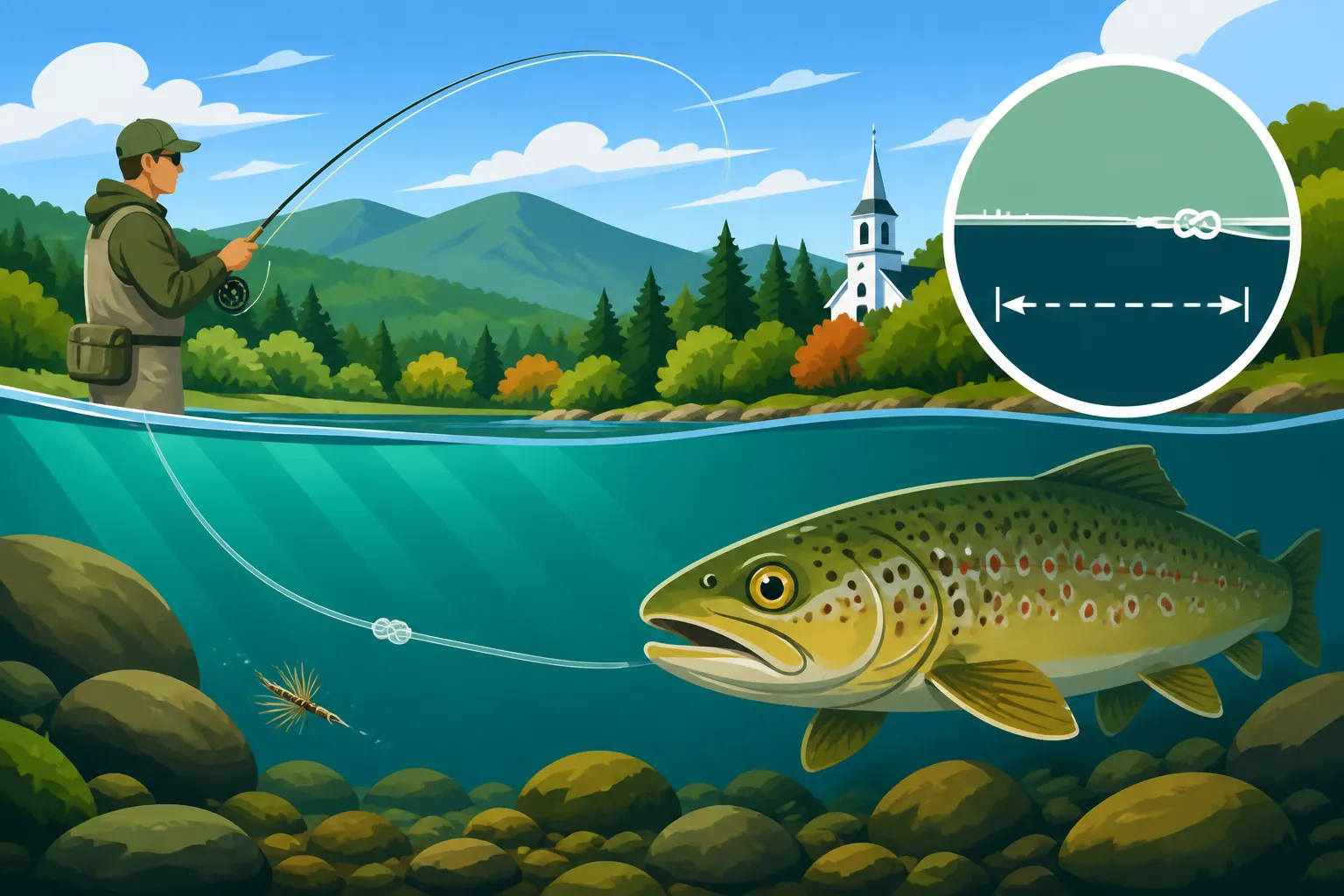
The "optimal" leader length is never a fixed number; it's a dynamic variable that changes with conditions. Two of the most critical factors are water clarity and fishing pressure. In Vermont, we often encounter pristine, clear rivers and lakes where visibility is excellent. In such conditions, a longer leader is almost always beneficial. The more distance you can put between the fish and your fly line, the less likely they are to see anything unnatural.
Conversely, in waters that are a bit murkier – perhaps after a rain shower – or when fishing very swift, turbulent water, you might be able to get away with a slightly shorter leader. The reduced visibility or chaotic surface breaks up the silhouette of your line, making it less conspicuous. Similarly, heavily pressured waters, where trout have seen countless flies and lures, almost always demand a longer, finer leader to minimize detection. On the flip side, if you're exploring a remote, seldom-fished pond, you might find trout to be less wary, allowing for a slightly more forgiving setup. Understanding How to Fish a River for Smallmouth Bass or even trout often involves adjusting leader length based on these subtle environmental cues.
Casting Considerations with Longer Leaders
While a longer leader generally equals more stealth, it's not without its challenges, particularly for fly anglers. Casting a very long leader can be more difficult to manage, especially in windy conditions or when you need to make precise casts. It requires a smoother, more controlled casting stroke to prevent tangles and ensure proper turnover.
Beginners often struggle with leaders exceeding 10-12 feet, finding them cumbersome. However, with practice, managing a longer leader becomes second nature. It's a skill worth developing, as the stealth it provides is invaluable for fooling discerning trout. For spin fishing, a longer fluorocarbon leader (attached to your main monofilament or braided line) still offers stealth, but the casting dynamics are less about turnover and more about managing the line on your reel and through your rod guides. If you're using a heavier lure, a very long leader might absorb some of the casting energy, slightly reducing distance. It's always a trade-off between stealth and practical casting efficiency, and finding your personal sweet spot is part of the angling journey. Many anglers grab their fluorocarbon spools from online retailers like Amazon for convenience and selection.
Recommended Fluorocarbon Leader Lengths for Various Vermont Scenarios
So, how long should your fluorocarbon leader actually be? There's no single answer, but we can break it down by common Vermont fishing scenarios to give you a solid starting point. Remember, these are guidelines, and you should always be prepared to experiment based on the specific conditions you encounter.
Small Mountain Freestones and Pocket Water
Vermont is blessed with countless small, intimate mountain streams, often referred to as "freestones," that tumble through rocky terrain, forming a series of small pools, riffles, and pockets. These streams are often home to native brook trout. The water here is typically very clear, but the turbulent nature of the currents and the broken surface can offer some natural camouflage for your line.
For these environments, a fluorocarbon leader in the 7 to 9-foot range is often ideal. While the water is clear, the short casting distances and the need for quick, accurate presentations into small pockets mean an overly long leader can be unwieldy. The broken surface tension also helps hide your line. You still want the invisibility of fluorocarbon, but a more manageable length allows for better control. When fishing a Best Trout Streams in Vermont that fits this description, being able to quickly present your fly in a tight window is often more critical than having an extra few feet of leader. A shorter leader also makes it easier to manage roll casts or short, powerful casts needed to get your fly into tight spots under overhanging branches.
Larger Rivers and Technical Tailwaters
When you move to larger Vermont rivers, like the Winooski, the lower Lamoille, or the technical tailwaters below a dam, the game changes. Here, the water can still be incredibly clear, but it's often wider, calmer, and the trout have more room to observe. Fish in these areas are typically larger and have seen more pressure, making them exceptionally wary.
For these more open and demanding waters, a longer fluorocarbon leader is usually your best bet. Think in the 9 to 12-foot range, and sometimes even longer, up to 15 feet, especially if you're sight fishing in very calm, clear water or need an extra-long drift. This extended length creates maximum separation between your fly line and your fly, giving the fish ample time to inspect your offering without being spooked by your main line. It requires a smoother casting stroke, but the payoff in terms of stealth is significant. When trout are particularly picky on a sunny day in a long, clear run, extending your leader can often turn a frustrating day into a successful one. For dedicated trout anglers, exploring Vermont Trout Season and Stocking Rules in these types of waters will often lead to bigger, more challenging fish.
Stillwaters and Pond Fishing
Lakes and ponds present a unique challenge because the water is often still and clear, offering no current to help hide your line. Trout in stillwaters, whether they're wild brook trout in a high mountain pond or stocked rainbows in a state park lake, can be incredibly line-shy. They have all the time in the world to inspect your presentation, and any unnatural element will send them fleeing.
For stillwater applications, particularly when targeting finicky fish, you'll want to lean towards the longer end of the spectrum, usually 10 to 15 feet, and even longer if you are fishing extremely clear water or a flat calm surface. The goal here is ultimate stealth. If you're using an indicator, a longer leader allows your fly to hang deep beneath it, creating maximum separation from the float and the fly line. When retrieving lures or streamers, the long leader ensures your offering appears to be swimming freely, unattached. This is especially true when pursuing Landlocked Salmon Fishing in Vermont in deep, clear lakes like Willoughby, where fish are accustomed to feeding on smelt in open water. Even for panfish, a longer leader can make a difference in heavily fished ponds.
Here's a quick reference table for fluorocarbon leader lengths in Vermont:
| Vermont Fishing Scenario | Water Type / Conditions | Recommended Fluorocarbon Leader Length | Key Considerations |
|---|---|---|---|
| Small Mountain Freestones | Clear, rocky, turbulent pockets, short casts | 7-9 feet | Manageability, quick presentations, broken surface helps. |
| Larger Rivers & Technical Tailwaters | Clear, wider, calmer runs, wary fish, longer drifts | 9-12 feet (up to 15 feet) | Maximum stealth, separation from fly line, smoother casting. |
| Stillwaters & Pond Fishing | Clear, calm, no current, very line-shy fish | 10-15 feet (or longer) | Ultimate invisibility, natural presentation, deep suspension. |
| Murky or Fast Water (Exception) | Reduced visibility or highly turbulent | 6-8 feet | Visibility less critical, focus on direct presentation. |
Tips for Rigging and Maintaining Your Fluorocarbon Leader
Having the right length of fluorocarbon leader is one thing, but rigging it correctly and maintaining it properly are just as crucial to its effectiveness and your success on the water. Even the best leader can fail if the knots are poor or it's been damaged.
Knot Selection for Strength and Streamlining
Fluorocarbon can be a bit stiffer and have less stretch than monofilament, which means some knots that work perfectly for mono might slip or break when tied with fluoro. It's essential to use knots designed for, or proven to work well with, fluorocarbon. For connecting your fluorocarbon leader to your main line (whether it's fly line, mono, or braid), the Albright knot, Surgeon's knot, or an FG knot are excellent choices for a strong, streamlined connection that passes smoothly through your rod guides. The FG knot, in particular, is incredibly strong and creates a very slim profile, which is great for casting efficiency.
When attaching your fly or lure to the fluorocarbon tippet, a Clinch knot (improved or standard) or a Palomar knot are generally reliable. Always moisten your knots with saliva before tightening them to prevent friction from weakening the line. Take your time, ensure the knot is seated correctly, and trim tags closely. A knot failure is one of the most disheartening things that can happen when you're connected to a good fish. Proper knot tying is a skill that will serve you well in Vermont Fishing Seasons by Month and beyond.
Checking and Replacing Your Leader
Fluorocarbon is tough, but it's not invincible. After every fish, or after several casts that involve hitting structure, it's wise to run your fingers along your leader, especially the last few feet near your fly or lure. Feel for any nicks, abrasions, or rough spots. Even a tiny imperfection can drastically reduce the leader's breaking strength. If you detect any damage, it's time to replace that section of leader or tie on a new piece of tippet.
It's also a good practice to replace your entire leader periodically, even if it doesn't appear damaged. Over time, UV exposure, stretching, and general wear and tear can weaken the material. Many anglers will change their main leader every few outings or at the start of a new season. Always carry extra spools of fluorocarbon in various breaking strengths (or "X" sizes for fly fishing) so you can quickly re-rig as needed. Having a reliable source like Bass Pro Shops or Amazon for your leader spools means you're always stocked up.
Combining Fluorocarbon with Monofilament or Braided Mainline
While we're talking about fluorocarbon leaders, it's important to remember that most anglers aren't spooling their entire reel with fluorocarbon – it's typically used as a leader or tippet material.
For spin fishing, you'll often have a main line of monofilament or braided line. When connecting a fluorocarbon leader to a braided main line, the FG knot is an excellent choice for a strong, smooth splice. For monofilament main lines, a double uni-knot or a blood knot can work well. The idea is to have a robust connection that transitions smoothly from your main line to the stealthy fluorocarbon, ensuring both strength and minimal visibility. The length of this fluorocarbon section typically ranges from 2 to 6 feet for most spin fishing applications, though for ultra-clear water and spooky fish, you might extend it to 8 or 10 feet if your rod allows for smooth casting.
For fly fishing, your fluorocarbon tippet is attached to a tapered monofilament leader, or you might build your entire leader from a combination of different fluorocarbon sections of decreasing diameter. When adding a tippet section to your main leader, a triple surgeon's knot is a popular and strong choice. This layered approach allows you to customize your leader to precise specifications for different flies and conditions, giving you incredible versatility when chasing trout in Vermont's diverse fishing spots.
Choosing the best fluorocarbon leader length for spooky trout in Vermont isn't an exact science, but by understanding the principles of invisibility, abrasion resistance, and proper presentation, you can significantly increase your chances of success. It's about paying attention to the details, adapting to the conditions, and always striving for the most natural presentation possible. Every cast to a wary Vermont trout is a puzzle, and the right leader length is often the missing piece.
Disclaimer
This article is for general informational purposes only and does not constitute professional advice. Laws, prices and regulations vary by location and change over time. Consult a qualified professional for guidance on your specific situation.