Best dry box for phone and keys on the water
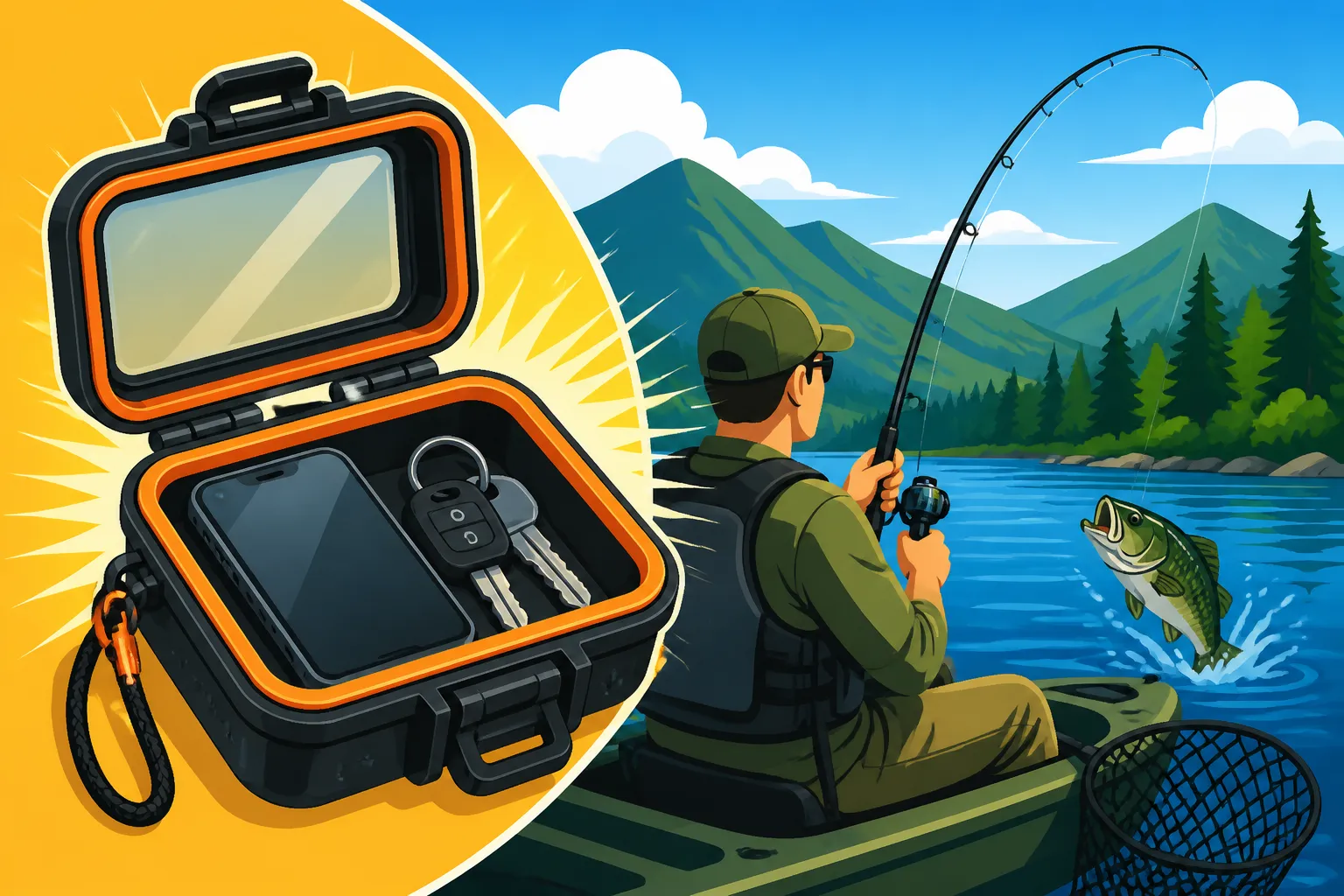
There's nothing quite like the feeling of reeling in a beautiful smallmouth bass on Lake Champlain, but that thrill can quickly turn to dread if your phone or car keys take an unexpected swim. For us Vermont anglers, protecting our essentials from the inevitable splashes, unexpected downpours, or even a sudden capsize is a constant worry. This guide is all about finding the absolute best dry box to keep your phone, keys, and other vital gear safe and sound, so you can focus on the fishing and the stunning Vermont scenery around you.
Why a Dry Box is Non-Negotiable for Vermont Anglers
Any seasoned angler in Vermont knows that the weather can change on a dime. One minute you're enjoying calm waters on Lake Dunmore, the next a squall rolls in, soaking everything in its path. Beyond the weather, there's the inherent risk of being on the water itself. A slippery dock, an unexpected wave from a passing boat, or even just setting your gear down in a puddle can turn a great day into a scramble to save your electronics and car keys.
The frustration of seeing your phone hit the water, knowing all your contacts, photos, and navigation apps could be gone, is a feeling no one wants to experience. Or imagine getting back to the launch after a fantastic day on the Missisquoi River, only to find your car keys corroded from an accidental dunk. These aren't just minor inconveniences; they can derail your entire trip and create significant headaches. A reliable dry box isn't just a nice-to-have accessory; it's a fundamental piece of safety and convenience gear for any Vermont angler.
The Perils of Vermont's Waters: More Than Just a Splash
When you're out enjoying the Best Fishing Lakes in Vermont or navigating a swift current on the White River, water is everywhere. It's in the air as mist, it's spraying over the bow of your boat, it's sloshing around in the bottom of your kayak, and it's certainly present when you're wading through a stream for trout. Even if you're the most careful angler, accidents happen.
Think about the unexpected. You might be reaching for your net, lose your balance, and suddenly, your pocket contents are submerged. A heavy downpour on Lake Champlain can drench everything in an open boat in minutes, seeping into backpacks and traditional tackle boxes not designed for true waterproofing. Or perhaps you're launching your kayak at a boat ramp and your keys slide out of your hand into the murky depths. These scenarios are all too common in the real world of Vermont fishing, making secure, dry storage an absolute necessity for peace of mind.
Protecting Your Lifeline and Essentials
In today's world, our phones are more than just communication devices; they're our cameras, our GPS, our emergency contact lists, and often, our access to important digital documents like a Vermont Fishing License Guide for 2026 if you carry it digitally. Losing a phone on the water isn't just about replacing a gadget; it's about losing your connection to the world and potentially crucial information.
Your car keys are another prime example. Modern car fobs, with their integrated electronics, are notoriously vulnerable to water damage. Without them, you're stranded. A dry box ensures that these absolutely critical items, along with your wallet, ID, and any prescription medications, remain perfectly dry and functional. It's about protecting your ability to get home safely, call for help if needed, and simply enjoy your time on the water without constant worry.
Key Features to Look for in a Quality Dry Box
When you're trying to choose the perfect dry box, it's easy to get overwhelmed by all the options out there. Many look similar, but the devil is in the details when it comes to true waterproof protection. Investing a little time in understanding the key features will pay off exponentially in the long run, ensuring your valuables are genuinely safe from Vermont's sometimes unpredictable elements.
From the material it's made of to the way it seals, every aspect contributes to its effectiveness. You want something that's not just water-resistant, but truly watertight, able to withstand being dropped in the water or enduring a torrential downpour. Let's break down what truly matters.
Watertight Seal and Durability: Your First Line of Defense
The absolute most critical feature of any dry box is its ability to keep water out, and this largely comes down to the quality of its seal and the materials used in its construction. Look for dry boxes that feature a robust O-ring gasket. This rubber or silicone ring, fitted into a groove in the lid, compresses when the box is latched shut, creating an impenetrable barrier against water. Single-latch designs might be convenient, but for maximum security, multiple secure latches distribute pressure evenly around the O-ring, enhancing its watertight performance.
Beyond the seal, consider the overall construction. Many top-tier dry boxes are made from high-impact resistant plastic, capable of shrugging off bumps, drops, and general abuse that inevitably happens during a fishing trip. You might see terms like "crushproof" or "airtight," which indicate a higher level of protection. Checking for an IP (Ingress Protection) rating is also incredibly helpful. An IPX7 rating, for example, means the device can be submerged in up to 1 meter of water for 30 minutes without harm, while IPX8 signifies even greater submersion capabilities. Always aim for at least IPX7 for fishing applications, especially if you're going to be in a kayak or smaller boat on waters like those in the Best Kayak Fishing Spots in Vermont.
Size, Capacity, and Organization: Fitting Your Essentials
While the primary goal is dryness, the dry box also needs to be practical for your specific needs. What exactly do you need to keep dry? For most anglers, this means a smartphone, car keys (perhaps a key fob), a wallet with your fishing license and ID, and maybe a small snack or prescription medicine. Consider the dimensions of your largest item – typically your smartphone – to ensure it fits comfortably.
You don't want a box that's too bulky, but also not one so small you have to jam everything in. A good rule of thumb is to measure your phone and key fob, then look for a box that offers a little extra space. Internal organization features are a huge bonus. Some dry boxes come with foam inserts that you can customize to fit your items snugly, preventing them from rattling around. Others might have small internal compartments or mesh pockets, which are fantastic for keeping smaller items like keys separate from your phone, preventing scratches and making them easier to find when you need them. Bass Pro Shops often carries a range of sizes, so you can compare what feels right for your specific gear.
Portability and Attachment Options: Keeping It Handy and Secure
A dry box is only useful if it's with you when you need it, and that means considering how you'll carry and secure it. For kayak fishing, especially if you're using a Best Kayak for Lake Champlain or a canoe on one of Vermont's rivers, a floating dry box is a game-changer. Imagine capsizing – a floating box means your essentials aren't sinking to the bottom. Many dry boxes also come with attachment points, like sturdy loops or D-rings, which allow you to secure them with a carabiner or lanyard.
This is invaluable for preventing accidental loss. You can clip it to your life jacket, a seat in your boat, or even a belt loop if you're wading. For larger boats, a dry box with a non-slip bottom or a wider footprint might be preferred so it doesn't slide around on a wet deck. Think about how you move around your fishing setup and choose a dry box that integrates seamlessly without getting in the way, but remains easily accessible when you need to grab your phone for a photo of your catch. Many options on Amazon will clearly display these features and dimensions, making it easier to compare before you buy.
Different Types of Dry Storage for Anglers
Just like there are different types of fishing, there are different types of dry storage designed to meet various needs and levels of protection. What works perfectly for a quick trip on a calm pond might not be sufficient for a multi-day excursion on Lake Champlain. Understanding the distinctions can help you make an informed choice that truly matches your Vermont fishing adventures.
From rigid, hard-shell cases built like tanks to flexible, roll-top bags that conform to your space, each type has its advantages and ideal uses. Let's explore the main categories so you can pinpoint the best fit for your gear and your fishing style.
Hard-Shell Cases for Maximum Protection
When you think of a dry box, a hard-shell case is often what comes to mind. These are the workhorses of waterproof storage, offering the highest level of protection against impacts, crushing, and, of course, water. Brands like Pelican, although often associated with camera gear, make fantastic small, robust cases that are perfect for phones and keys. They typically feature heavy-duty plastic construction, a thick O-ring seal, and often multiple strong latches that snap securely shut.
The beauty of hard-shell cases is their rigidity. They protect delicate electronics from being crushed if stepped on or jostled around in a crowded boat. They are ideal for situations where impact protection is as important as waterproofing, such as when you're transporting gear in a truck bed, or if your bag might get dropped or shoved around on a larger vessel like those used for Lake Champlain Walleye Fishing. While they can be a bit bulkier than other options, the peace of mind they offer is unparalleled, making them a favorite for serious anglers who demand the best for their most valuable items.
Soft-Sided Dry Bags and Pouches: Flexibility and Lighter Use
For those who prioritize flexibility, light weight, and ease of packing, soft-sided dry bags and pouches are excellent alternatives. These are often made from durable, coated fabrics with taped seams and a roll-top closure system. To seal them, you typically roll the top down several times and then clip the buckles together, creating a tight, waterproof seal. While not offering the same crush protection as a hard case, they are remarkably effective at keeping water out.
Soft dry bags are fantastic for Kayak Fishing Techniques for Vermont Lakes or canoeing because they can be easily stowed in tight spaces, are typically lighter, and if designed correctly, can even float if dropped. Many come with shoulder straps or D-rings for easy attachment. For minimalist anglers or those with limited space, a small soft-sided dry pouch might be just enough to hold a phone and keys. They are also usually more affordable, making them a great entry-level option or a supplementary piece of gear.
Specialty Electronics Cases: Touchscreen Friendly and More
In addition to general-purpose dry boxes, there's a category of specialty cases designed specifically for electronics, particularly smartphones. These often feature transparent, touch-sensitive windows that allow you to use your phone's screen while it's still inside the waterproof case. This is a huge advantage for checking maps, taking photos, or quickly looking up Vermont Bass Minimum Length Limits without exposing your phone to the elements.
These cases are usually smaller and designed for direct phone access. Some are essentially heavy-duty waterproof pouches with a ziplock-style seal and a roll-top or fold-over closure. While incredibly convenient for quick access, it's crucial to ensure the seal is robust and that the material is durable enough to withstand snags or punctures. Always test these cases before trusting them with your phone – a common practice is to put a piece of paper towel inside and submerge it in a sink for a while to check for leaks.
Choosing the Right Dry Box for Your Vermont Fishing Style
Deciding on the "best" dry box really boils down to how and where you fish in Vermont. An angler spending most of their time in a bass boat on Lake Bomoseen has different needs than someone fly fishing a remote section of the Battenkill River. Your fishing environment, the type of watercraft you use (or if you're on foot), and the level of risk you're comfortable with all play a significant role in making the right choice.
There’s no one-size-fits-all answer, but by thinking through your typical fishing scenarios, you can narrow down the options and pick a dry box that will truly serve you well. Let's consider some common Vermont fishing styles and the dry storage solutions that fit them best.
For Kayak and Canoe Anglers: Compact, Secure, and Floatable
If your fishing adventures mostly involve kayaks, canoes, or even paddleboards on waters like the Waterbury Reservoir or the Lamoille River, your dry box needs to be a compact, secure, and ideally, floatable companion. Space is often at a premium in these small crafts, so a bulky hard case might not be ideal unless it's designed to fit a specific hatch.
Soft-sided dry bags or small, purpose-built floating hard cases are often the top choice here. Look for integrated attachment points (D-rings, loops) that allow you to leash the dry box to your craft or yourself. This is critical if you capsize or accidentally drop it overboard while reaching for a paddle or net. Features like a clear window for phone use without removal are also highly convenient for checking depths on a Best Fish Finders for Vermont Lakes display or looking at a mapping app. Brands like Bass Pro Shops offer specialized kayak dry storage solutions that address these unique needs, often with features like internal padding or specific phone compartments.
For Boat and Shore Anglers: Larger Capacity, Less Mobility Focus
For those who fish from larger power boats on extensive lakes like Lake Champlain or Memphremagog, or spend their time bank fishing rivers or ponds, the requirements for a dry box shift slightly. While waterproofing remains paramount, factors like extreme portability or floatability might be less critical if your boat has ample storage and a stable platform.
Here, you might opt for a larger hard-shell case that can accommodate more than just your phone and keys – perhaps a pair of binoculars, an extra camera, or even a small first-aid kit. The emphasis moves from ultra-lightweight portability to robust protection and organizational capacity. Shore anglers, who might be setting their gear down on wet banks or sandy beaches, will also benefit from a durable, completely sealed hard case that prevents ingress of moisture and grit. For these situations, the ability to withstand impact and provide comprehensive protection for multiple items often outweighs the need for it to be ultra-compact or float.
Budget-Friendly vs. Premium Options: Balancing Cost and Peace of Mind
Like most fishing gear, dry boxes come in a wide range of price points. It's tempting to opt for the cheapest option, but when it comes to protecting your most valuable essentials, "you get what you pay for" often holds true. A truly reliable dry box, especially one with high IP ratings and durable construction, represents an investment in peace of mind.
However, a higher price doesn't always mean it's the right fit for you. A budget-friendly soft-sided dry pouch might be perfectly adequate for a casual day trip to a local pond if you're not planning on extreme conditions. On the other hand, if you're regularly on big, choppy water, using expensive electronics, or simply can't afford to lose your car keys, then a premium, heavy-duty hard case from a reputable brand is a worthwhile expense. Consider the value of the items you're protecting versus the cost of the dry box. Often, replacing a water-damaged smartphone or dealing with being stranded without keys far outweighs the cost of a good quality dry box. Many anglers find great deals and good quality on Amazon, but it's important to read reviews for actual water performance.
Comparing Popular Dry Box Features for Anglers
To help you visualize the different options, here's a quick comparison of features you'll commonly find across various types of dry boxes suitable for Vermont anglers. This isn't an exhaustive list of every product, but it highlights the general characteristics to consider.
| Feature Category | Hard-Shell Case (e.g., small Pelican-style) | Soft-Sided Dry Bag/Pouch | Specialty Phone Case (e.g., waterproof pouch) |
|---|---|---|---|
| Primary Advantage | Maximum impact & crush protection | Flexible, lightweight, packable | Direct phone usability while protected |
| Waterproofing | Excellent (often IP67/IP68) | Very Good (roll-top seal) | Good to Excellent (depending on seal) |
| Durability | Extremely High (tough plastic) | Moderate to High (coated fabric) | Moderate (plastic/TPU film) |
| Floatation | Often floats (check specific model) | Often floats (check specific model) | Usually floats (air trapped inside) |
| Internal Space | Fixed, may have foam inserts | Flexible, conforms to contents | Snug fit for phone, minimal extra space |
| Portability | Can be bulky, often has handle/latch points | Easy to carry, often has shoulder strap | Very compact, often has lanyard |
| Best For | High-risk environments, storing multiple items | Kayaking, canoeing, light use | Frequent phone use near water, minimalist |
| Typical Items | Phone, keys, wallet, small camera, meds | Phone, keys, wallet, snack | Phone, ID, credit card |
| Price Point | Mid to High | Low to Mid | Low to Mid |
Remember, this table provides a general overview. Always check the specific product's ratings and features before purchasing. The right dry box ensures your essentials are safe, allowing you to fully enjoy everything from Trout Fishing in Vermont to chasing Smallmouth Bass Fishing in Vermont without a care in the world.
Disclaimer
This article is for general informational purposes only and does not constitute professional advice. Laws, prices and regulations vary by location and change over time. Consult a qualified professional for guidance on your specific situation.