Best inflatable life jacket for kayak anglers
As a kayak angler, you know the struggle: you're out on the water, paddling to your favorite fishing spot, or perhaps casting aggressively, and that traditional, bulky life jacket feels like it's fighting you every stroke, every retrieve. It restricts your movement, overheats you on a warm Vermont summer day, and generally gets in the way of what you love to do. But safety is paramount, especially when navigating Lake Champlain's chop or the swift currents of a river. This guide is all about finding that perfect balance, exploring how inflatable life jackets can offer the unrestricted movement you crave while keeping you safe and compliant with Vermont's boating laws.
Why Inflatable Life Jackets are a Game Changer for Kayak Anglers
For years, many anglers just accepted that a life jacket meant sacrificing comfort and freedom. But the advent of inflatable personal flotation devices (PFDs) has revolutionized safety gear, especially for those of us spending long hours in kayaks, canoes, or even stand-up paddleboards. They address some of the most common frustrations, making your time on the water not just safer, but genuinely more enjoyable.
The Freedom of Movement You Deserve
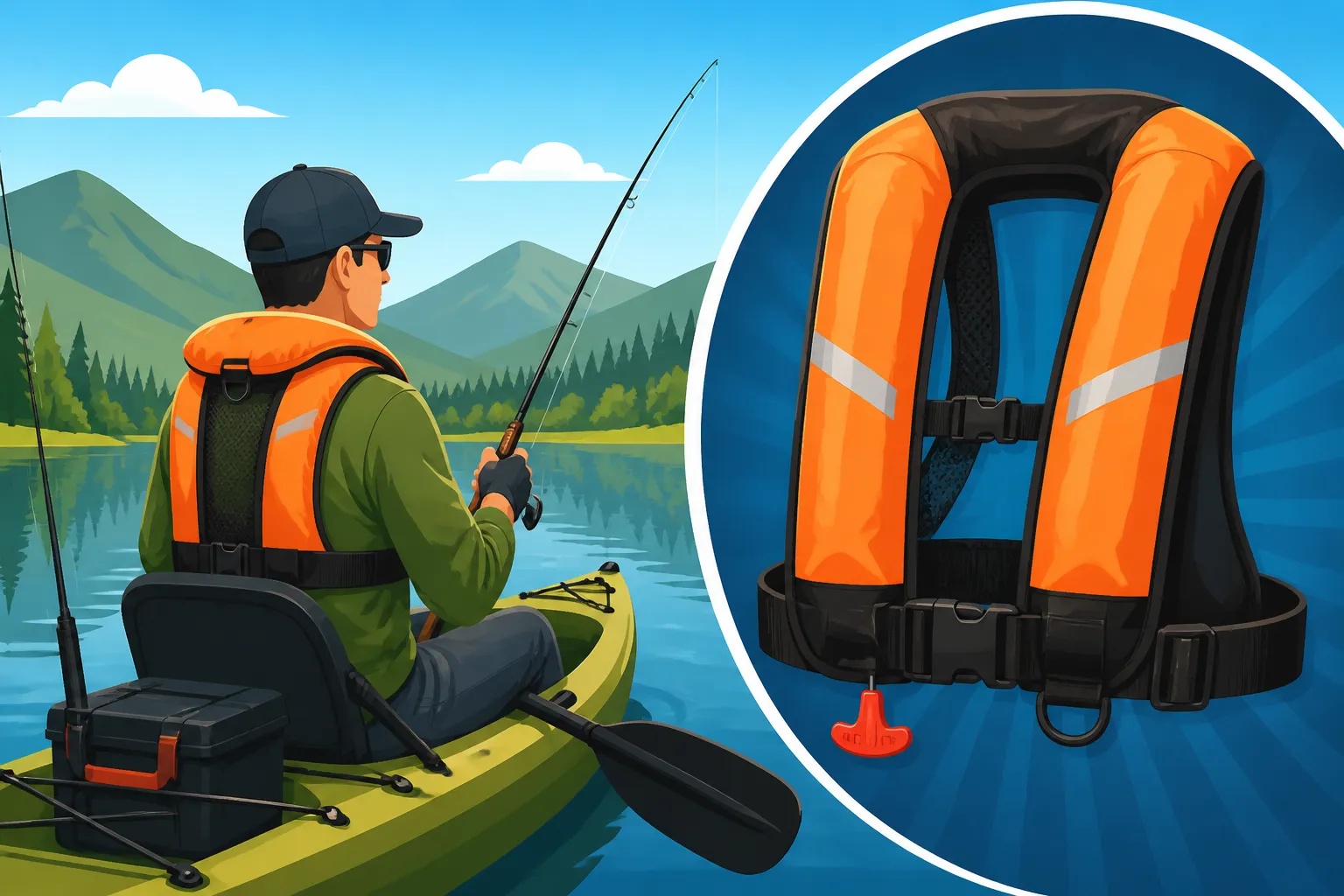
Let's be honest: one of the biggest complaints about traditional foam PFDs, especially for active pursuits like kayak fishing, is how much they get in the way. They can feel like a straitjacket, limiting your casting arm, making re-entry into a kayak after a capsize awkward, and generally adding to fatigue. Inflatable life jackets are different. They are designed to be low-profile and comfortable, often worn like a vest or a belt pack.
Imagine this: you're working a weed line on Lake Bomoseen, trying to coax out a largemouth bass. With a traditional PFD, every cast, every paddle stroke, feels a bit cumbersome. With an inflatable, you have a full range of motion. The design keeps the flotation device itself tucked away until it's needed, meaning you can twist, reach, and cast with much less resistance. This isn't just about comfort; it can actually improve your fishing performance and reduce the physical strain over a full day of angling. It feels like wearing almost nothing, which for those long summer days, makes a huge difference in comfort and preventing overheating.
Beyond the Bulk: How Inflatables Enhance Safety
It might seem counterintuitive that something so minimal could be just as safe, or even safer in some situations, than a bulky foam vest. But modern inflatable PFDs are incredibly reliable and offer excellent buoyancy when deployed. They typically provide more flotation than a Type III traditional PFD, meaning they can keep you higher in the water, which is a significant advantage in rough conditions or if you're wearing heavy clothing.
Crucially, many inflatable PFDs are designed to turn an unconscious person face-up in the water. While this is also a feature of some Type I and Type II foam PFDs, the sleek design of an inflatable means it's less likely to hinder your movement if you do end up in the water and need to swim or self-rescue. The immediate, high-volume flotation can be a psychological boost in a stressful situation. Plus, when deployed, they often feature bright colors and reflective tape, increasing your visibility to other boaters – a critical safety factor on busy waters like Lake Champlain. Just remember, these are generally US Coast Guard (USCG) approved as Type V PFDs, which means they are specifically designed for certain activities and must be worn to count as a legal PFD on board.
Understanding the Different Types of Inflatable PFDs
Before you dive into shopping, it’s good to understand the basic categories of inflatable PFDs, as they each have distinct advantages and ideal use cases for Vermont anglers.
- Manual Inflatables: These PFDs require you to actively pull a cord or lever to deploy the CO2 cartridge and inflate the vest. This is a popular choice for kayak anglers because it prevents accidental inflation from splashes, rain, or even just sitting down in a puddle in your kayak. You have complete control over when it deploys, which can be reassuring. The downside, of course, is that you must be conscious and able to pull the cord for it to work. If you were to be knocked unconscious, it wouldn't inflate on its own.
- Automatic Inflatables: These vests inflate automatically when submerged in water. A dissolving bobbin or a water-sensitive tablet triggers the CO2 cartridge. This offers a significant safety advantage for those who might be knocked out or unable to act. However, they come with the risk of accidental inflation if your kayak takes on a lot of water, you get thoroughly drenched, or even from heavy rain. For most active kayak anglers, the manual option is often preferred to avoid these false alarms, but for those concerned about unconsciousness, automatic provides extra peace of mind.
- Hydrostatic Inflatables: A more advanced type of automatic PFD, these deploy only when submerged to a certain depth (usually a few inches), reducing the chance of accidental inflation from rain or spray. They sense water pressure, not just the presence of water. This makes them a more reliable automatic choice, but they typically come with a higher price tag. They still require periodic re-arming kits, just like other inflatables.
Knowing these differences will help you decide which level of engagement and autonomy you want from your safety gear. For most Vermont kayak anglers navigating a variety of waters, a manual inflatable is a fantastic blend of comfort and control.
Key Features to Look for in a Vermont Kayak Fishing Life Jacket
Choosing the right inflatable life jacket isn't just about picking one off the shelf; it's about finding the one that truly fits your fishing style, the waters you frequent, and your personal comfort needs. There are several critical features that differentiate models and can significantly impact your experience.
Comfort and Fit for Long Days on the Water
This is often the primary driver for choosing an inflatable PFD, so don't overlook it. A PFD that doesn't fit well or is uncomfortable will end up stashed under your seat, useless when you need it most.
- Adjustability: Look for multiple adjustment points at the waist, shoulders, and chest. This allows for a snug, yet non-restrictive fit over different layers of clothing, from a light t-shirt in summer to a fleece in cooler spring or fall weather on the Vermont Trout Season and Stocking Rules. A proper fit ensures the PFD won't ride up or shift excessively when you're paddling, casting, or if you end up in the water.
- Material: The outer shell material should be durable, quick-drying, and relatively soft against your skin, especially if you plan to wear it with minimal clothing. Look for materials that resist snagging, particularly if you're frequently brush-busting on shore or getting in and out of tight spots. Breathable mesh panels can be a huge bonus for reducing heat build-up on hot days, which is a common complaint about traditional PFDs.
- Weight Distribution: A well-designed inflatable PFD will distribute its weight evenly, so it doesn't feel like it's pulling on your neck or shoulders. The best models are so light and well-balanced, you'll forget you're even wearing them.
Manual vs. Automatic: Choosing Your Deployment Method
We touched on this briefly, but for kayak fishing, this decision is paramount.
- Manual Deployment (Pull-Cord): For most kayak anglers, this is the go-to. If you’re actively fishing, especially in a sit-on-top kayak where splashes are common, a manual PFD prevents accidental inflation. You maintain control, only deploying it when you genuinely need it. This means you can get wet, paddle through rapids, or fish in light rain without worry. Just ensure the pull-cord is easily accessible and that you practice deploying it in a safe, controlled environment (like a swimming pool) so you know exactly what to do in an emergency.
- Automatic Deployment (Water-Sensing): While offering protection if you're incapacitated, the risk of accidental inflation in a kayak can be a nuisance. Imagine reeling in a trophy walleye on Lake Champlain, a big splash hits your PFD, and suddenly it inflates, startling you and potentially putting you in an awkward situation. If you fish in extremely calm conditions, or are particularly concerned about accidental unconsciousness, an automatic may be worth considering, but for the average active kayak angler, the manual offers more practical advantages.
Storage, Attachments, and Practical Angler Features
This is where inflatable PFDs can really cater to the angler, blending safety with utility.
- Pockets: While typically smaller than traditional fishing vests, some inflatable PFDs offer small, zippered pockets. These are invaluable for stashing a few essential items like your Vermont Fishing License Guide for 2026, a small box of flies, a multi-tool, or even a waterproof phone case. Look for pockets that are well-placed and don't interfere with the inflation mechanism.
- D-rings and Attachment Points: These are crucial for securing small tools, a whistle, a line cutter, or even a tether for your paddle. Think about where these points are located and if they're easily accessible.
- Knife Loops/Sheaths: Some angler-specific models will have dedicated loops or sheaths for a fishing knife, which can be critical for cutting tangled line or in an emergency.
- Reflective Tape/High Visibility Panels: While all deployed PFDs are generally visible, models with added reflective tape or bright color accents can significantly increase your visibility, especially during low light conditions (dawn, dusk, or foggy days) on large bodies of water.
USCG Approval and Vermont Regulations
This is non-negotiable. Any life jacket you purchase for use in Vermont, inflatable or otherwise, must be USCG approved. Look for the approval stamp clearly visible on the inside or label of the PFD. In Vermont, if you are wearing an inflatable PFD, it typically counts as one of the required PFDs on board your vessel, provided it is USCG approved as a Type V device.
However, there's a critical caveat: inflatable PFDs must be worn to be counted as legally required safety equipment. You can't just have it stowed in your kayak; it needs to be on your person. This is often the case with Type V PFDs, which are specific for certain activities. This actually plays into the advantages of inflatables – because they are so comfortable, you are far more likely to wear them consistently, ensuring you're always in compliance and, more importantly, always safe. Remember that Vermont Boating Laws for Anglers cover all PFD types, and knowing them is part of being a responsible boater.
Important Note for Children: Inflatable PFDs are not approved for children under 16 years of age. They also typically aren't approved for use on personal watercraft (PWCs) or for white water paddling. Always check the specific USCG approval label for any restrictions.
Top Considerations for Vermont's Diverse Waters
Vermont offers an incredible variety of fishing environments, from the vast open waters of Lake Champlain to the intimate, rocky stretches of mountain streams. Your choice of an inflatable life jacket should ideally reflect the specific conditions you'll encounter.
From Lake Champlain to Mountain Streams: Matching Your PFD to Your Environment
The demands placed on your gear can vary dramatically depending on where you launch your kayak.
- Large Lakes (e.g., Lake Champlain, Lake Memphremagog): On big water, conditions can change rapidly. A calm morning can turn into a windy, choppy afternoon, especially on Lake Champlain where significant waves can develop. Here, maximum buoyancy and high visibility once deployed are key. An inflatable that offers quick deployment (whether manual or hydrostatic) and has a substantial amount of flotation (often 22-26 lbs) is ideal. The increased surface area of these lakes also means other boaters might be moving at higher speeds, making visibility even more critical. You'll want something durable that can withstand spray and sun exposure.
- Medium to Small Lakes and Ponds (e.g., Lake Bomoseen, Waterbury Reservoir): These waters might be less prone to sudden severe chop, but you still want reliable safety. Accidental capsizes can still happen, especially if you hook into a large fish or lose your balance. A comfortable manual inflatable is usually perfectly sufficient here. The focus remains on freedom of movement for casting and paddling, as well as decent buoyancy. Consider one with extra attachment points for gear you might need within easy reach.
- Rivers and Streams (e.g., Battenkill, Winooski River): Kayaking or floating rivers for trout or smallmouth bass means dealing with current, obstacles like submerged logs, and potentially rocky bottoms. The risk of snagging your gear on branches is higher, so a PFD with a snag-resistant outer shell is a good idea. For river use, especially if there's any whitewater or strong current, manual deployment is preferred to avoid accidental inflation from turbulent water. The ability to swim and maneuver post-capsize is crucial, making the low-profile design of an inflatable advantageous. Remember to check local regulations for specific rivers, as some Vermont Catch and Release Fly Fishing Only Waters might have particular gear recommendations.
Cold Water Safety: What Inflatables Can and Cannot Do
This is a critical point for Vermont anglers who love to push the seasons into spring and fall, or even venture out for Vermont Ice Fishing Season Dates in open water. While inflatable PFDs provide excellent buoyancy, they offer virtually no thermal protection.
- Hypothermia Risk: Vermont waters can be dangerously cold for much of the year. If you fall into cold water (generally below 70°F), hypothermia is a serious risk. While an inflatable PFD will keep your head above water, it will not insulate you.
- Layering is Key: In cold water conditions, you need to dress in layers made of synthetic materials or wool, avoiding cotton entirely. A dry suit or wetsuit might be necessary for early spring and late fall fishing. Your PFD is just one piece of the safety puzzle.
- Re-Entry Practice: In cold water, the shock can be debilitating. Practice self-rescue techniques and re-entering your kayak in various conditions. An inflatable PFD makes re-entry easier than a bulky foam vest, but it's still a skill that needs practice, especially when shivering.
- Whistle: Always carry a whistle attached to your PFD. It's a small, inexpensive device that can make a huge difference in attracting attention if you're in distress, particularly if you're battling the effects of cold water shock.
Maintenance and Longevity: Keeping Your Inflatable PFD Ready
An inflatable PFD is an investment in your safety, and like any critical piece of gear, it requires proper care and maintenance. This isn't a "set it and forget it" item like a foam PFD.
- Regular Inspection: Before each outing, quickly inspect your PFD. Look for tears, holes, or frayed straps. Check the CO2 cartridge to ensure it's properly armed and hasn't been accidentally discharged. Many cartridges have an indicator (often green) that confirms it's ready.
- Re-Arming Kits: If your PFD inflates, whether accidentally or in an emergency, you'll need a re-arming kit. These kits contain a new CO2 cartridge and the mechanism (bobbin or tablet) required for inflation. Always carry a spare re-arming kit, especially if you're on a multi-day trip or far from civilization. These kits are specific to your PFD model, so make sure you purchase the correct one.
- Annual Servicing/Test Inflation: Most manufacturers recommend performing an annual test inflation. Inflate the PFD manually (using the oral inflation tube) and leave it inflated for 24 hours to check for slow leaks. This is a good way to ensure it's ready for a real emergency. After the test, deflate it completely, allow it to dry thoroughly, and then re-arm it with a fresh CO2 cartridge and bobbin.
- Proper Storage: Store your inflatable PFD in a cool, dry place, away from direct sunlight and extreme temperatures. Avoid leaving it crumpled up in a hot car for extended periods, as this can degrade the materials. When storing, ensure it's completely dry to prevent mold and mildew.
Taking these steps ensures your inflatable life jacket will be ready to perform when you need it most, giving you peace of mind on every Vermont fishing adventure.
Making Your Purchase: Where to Find Your Perfect Fit
Deciding on the best inflatable life jacket for your kayak angling adventures involves more than just reading reviews online. Getting a feel for the product, understanding its nuances, and ensuring it meets your specific needs can make all the difference.
Trying Before Buying: The Value of a Physical Store
While online shopping offers unparalleled convenience, there's a strong case to be made for visiting a physical retailer when purchasing an inflatable PFD.
- Fit and Feel: This is paramount. An inflatable PFD needs to fit snugly but comfortably over your typical fishing attire. In a store, you can try on different brands and models, adjust the straps, and even mimic casting motions to see how the vest feels. Does it chafe? Does it restrict your movement? Can you easily reach the pull-cord? These are questions only a physical try-on can answer.
- Expert Advice: Reputable outdoor and marine retailers often have staff who are knowledgeable about PFDs, local regulations, and the specific needs of kayak anglers. They can help you understand the differences between manual and automatic, explain re-arming procedures, and ensure you're choosing a USCG-approved model suitable for your activity. They might also be able to point you towards other useful accessories, like a Best Cooler for a Fishing Boat or appropriate wading gear.
- Brand Comparison: Seeing different brands side-by-side allows for a direct comparison of material quality, zipper strength, pocket placement, and overall construction. You might discover that a brand you hadn't considered online actually offers the best fit or features for your needs. Places like Bass Pro Shops, for instance, often have a good selection of fishing-specific PFDs where you can compare models from various manufacturers.
Online Shopping: Convenience and Selection
Of course, the convenience and vast selection of online retailers cannot be overlooked. Once you have a good idea of the type, brand, and features you want (perhaps after trying some on in a store!), online shopping can be a great way to finalize your purchase.
- Wider Selection: Online platforms, such as Amazon, offer an immense array of inflatable PFDs from various brands, potentially including models not carried by local stores. This can be particularly useful if you're looking for a very specific feature set or a niche brand.
- Detailed Reviews: Online reviews from other kayak anglers can provide invaluable insights into real-world performance, durability, and any quirks a particular model might have. Pay attention to reviews that mention fit, comfort during active use, and ease of re-arming.
- Competitive Pricing: The online marketplace is often highly competitive, which can sometimes lead to better prices or deals, especially during off-season sales. Just be sure to factor in shipping costs if applicable.
- Re-Arming Kits: Online is often the easiest place to stock up on brand-specific re-arming kits. It's crucial to buy the correct kit for your model, and online retailers typically list these clearly.
Whether you choose to shop in person or online, remember that the goal is safety and comfort. Don't rush the decision. A good inflatable life jacket is an essential piece of gear that will enhance your Vermont kayak fishing experiences for years to come. Make sure you also understand other vital gear, like selecting the Best Kayaks for Vermont Fishing for your specific angling needs.
Here's a quick comparison of common inflatable PFD types:
| Feature | Manual Inflatable PFD | Automatic Inflatable PFD | Hydrostatic Inflatable PFD |
|---|---|---|---|
| Deployment Method | Pull-cord | Submersion in water (dissolving bobbin/tablet) | Submersion to specific depth (water pressure) |
| Accidental Inflation | Low (only if cord pulled) | Moderate (splashes, rain, heavy drenching) | Low (less prone to splashes/rain) |
| Unconscious Protection | No | Yes | Yes |
| Re-Arming Complexity | Simple | Simple to Moderate (ensure all parts replaced) | Moderate (specific kit, often higher cost) |
| Typical Comfort Level | Excellent (low profile) | Excellent (low profile) | Excellent (low profile) |
| Best For Anglers Who | Want full control, fish actively, in splashes | Prioritize protection if unconscious, calmer waters | Want reliable auto-inflation without false alarms |
| USCG Approval | Type V (must be worn) | Type V (must be worn) | Type V (must be worn) |
Disclaimer
This article is for general informational purposes only and does not constitute professional advice. Laws, prices and regulations vary by location and change over time. Consult a qualified professional for guidance on your specific situation.