Are There Tiger Muskellunge in Vermont Waters?
There's a lot of chatter out there among anglers, especially those dreaming of a truly monumental catch, about the possibility of encountering tiger muskellunge in Vermont's diverse waters. It's easy to get confused with all the different esocid species—pike and muskies—and their sometimes similar appearances. Many folks wonder if these elusive, stripey hybrids are lurking in our lakes and rivers, ready to give the fight of a lifetime. This guide aims to clear up that confusion, diving deep into whether Vermont is home to these incredible fish and what you're most likely to find when you cast your line.
Understanding Muskellunge and Pike in Vermont
Before we tackle the tiger muskie question directly, it’s crucial to understand the two parent species that could potentially create such a hybrid: the northern pike and the purebred muskellunge. Both are formidable predators, apex hunters in their respective ecosystems, and they share some visual characteristics that can sometimes lead to mistaken identity. Vermont has a healthy population of one, and a very specific, limited population of the other.
Native vs. Non-Native Species
Let's start with what's most common here in the Green Mountain State. The Northern Pike (Esox lucius) is a well-established and widespread resident in many of Vermont's lakes and larger rivers. They're often recognized by their elongated bodies, duck-bill snouts, and a distinct pattern of light spots on a darker green body, though this can vary. Northern pike are prolific and provide fantastic angling opportunities, especially in waters like Lake Champlain. They're known for their aggressive strikes and powerful runs, making them a favorite target for many anglers. If you're fishing almost anywhere in Vermont with a healthy fish population, there's a good chance you'll encounter a pike.
The true Muskellunge (Esox masquinongy), often shortened to "muskie," is a different beast entirely. In Vermont, the muskellunge population is incredibly localized, with a notable, naturally reproducing population found predominantly in one specific body of water: Lake Memphremagog. Unlike pike, true muskies typically have dark markings (bars or spots) on a lighter body, and their scales don't extend all the way up their cheek and gill covers. They are also known for reaching much larger sizes than northern pike, making them a bucket-list fish for many anglers. The efforts to manage and conserve this unique Muskellunge Fishing on Lake Memphremagog population are significant.
The Allure of the Tiger Muskellunge
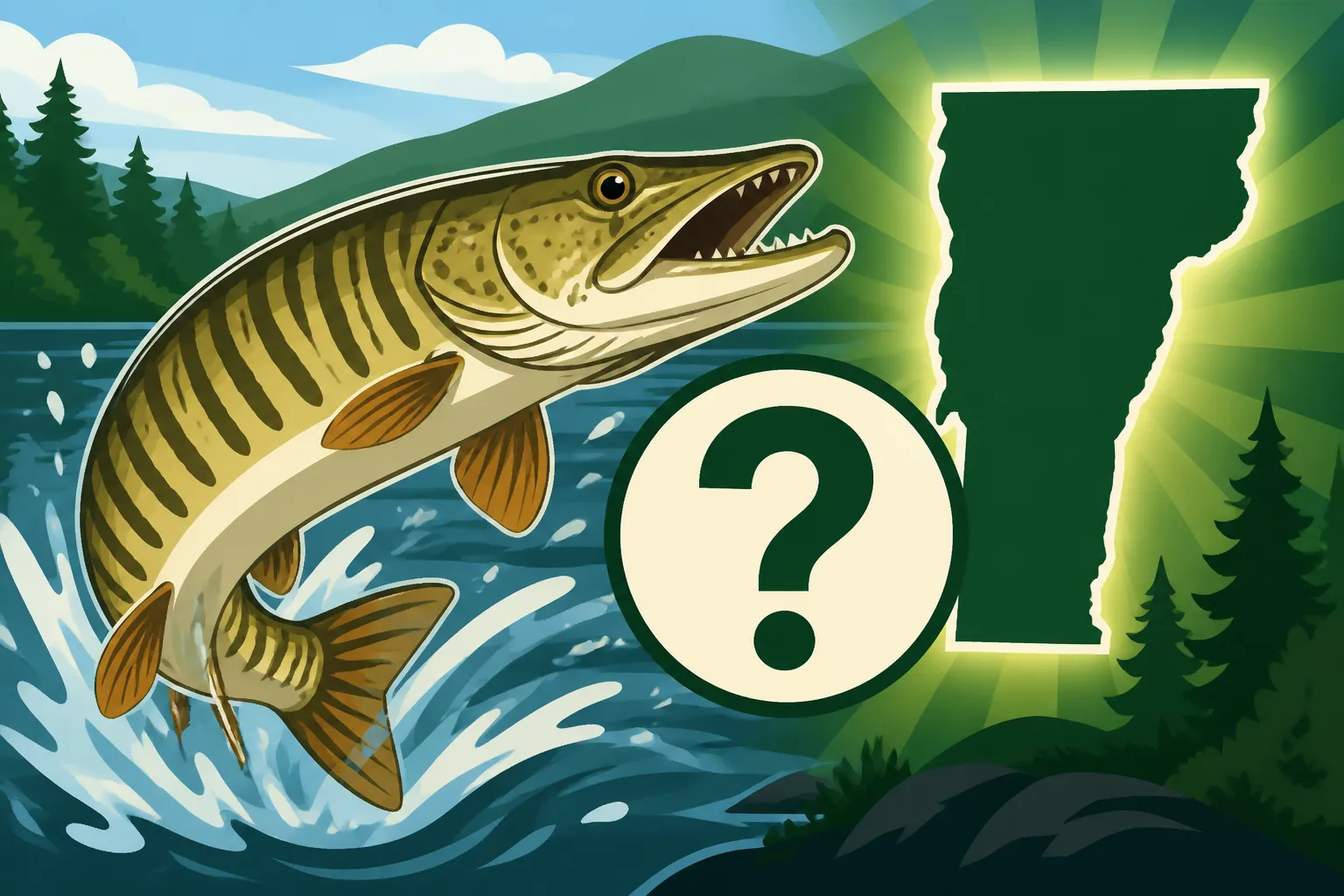
So, why all the excitement about the "tiger" muskie? The tiger muskellunge is a sterile hybrid, a cross between a true muskellunge and a northern pike. These hybrids rarely occur naturally and are often produced in hatcheries for stocking programs because they possess a unique combination of traits. They grow rapidly, often exhibiting "hybrid vigor," meaning they can be more robust and grow faster than either parent species. They're also known for their aggressive nature and incredible fighting spirit, which makes them a prized trophy for anglers. The distinctive pattern of dark, wavy, tiger-like bars or stripes on a lighter background truly sets them apart visually. For anglers, catching a tiger muskie represents a rare and exciting challenge, combining the best of both worlds in terms of size, fight, and beauty.
Are Tiger Muskellunge Found in Vermont Waters?
This is the million-dollar question for many Vermont anglers! The short answer, at least in terms of sustained, naturally occurring populations or extensive stocking programs, is generally no. Vermont does not have a widespread or managed tiger muskellunge fishery in the way that some other states might.
Historical Context and Stocking Efforts
Historically, there have been very few, if any, documented instances of deliberate tiger muskellunge stocking in Vermont by the state's fish and wildlife department. While some states have found success with stocking tiger muskies to create trophy fisheries, Vermont's management strategies have focused on supporting its native and naturally reproducing fish populations, including the unique muskellunge population in Lake Memphremagog and the widespread northern pike. The state agency tends to prioritize species that can sustain themselves or are critical to specific ecosystems. Introducing sterile hybrids on a large scale would require significant resources and could potentially interact with existing species in unforeseen ways, which is often a consideration for wildlife managers. Thus, any tiger muskie found in Vermont would be an extremely rare event, almost certainly not the result of official state stocking programs.
Natural Occurrence and Hybridization
Could a tiger muskellunge occur naturally in Vermont? Theoretically, yes, but it is exceedingly rare. For a natural tiger muskie to form, you need a male northern pike to successfully breed with a female true muskellunge, or vice versa. The genetic compatibility is there, but several factors make this unlikely in the wild:
- Limited Overlap: The primary challenge in Vermont is the extremely limited geographic overlap of the two parent species. As mentioned, true muskellunge are primarily found in Lake Memphremagog. While northern pike are also present in Lake Memphremagog, the conditions for successful interspecies breeding are usually not ideal. Pike and muskellunge typically spawn at slightly different times of the year and in somewhat different habitats. These reproductive barriers significantly reduce the chances of natural hybridization.
- Reproductive Success: Even if spawning overlap did occur, the resulting hybrid eggs often have lower viability compared to purebred eggs. While some may hatch, the survival rate to maturity is typically very low in unmanaged wild settings.
- Sterility: Any naturally occurring tiger muskellunge would, like their hatchery-bred counterparts, be sterile. This means they cannot reproduce themselves, preventing the establishment of any self-sustaining hybrid population.
Therefore, while the concept of a natural tiger muskie in Vermont isn't impossible in the strictest biological sense, it's so improbable that encountering one would be like winning the lottery twice in one day. Anglers should generally assume any "tiger-striped" fish they encounter is a northern pike with unusual markings, rather than a true hybrid.
Identifying Vermont's Esocids: Pike vs. Muskie vs. Potential Hybrid
Given the rarity of tiger muskellunge, it's really important for Vermont anglers to be able to tell the difference between a northern pike and a true muskellunge. Misidentification can lead to confusion about regulations, and more importantly, it means you might miss the chance to appreciate the unique characteristics of the fish you've caught.
Key Identification Features
When you land a long, toothy fish, here's how to tell if it's a pike or a muskie, or that incredibly rare tiger hybrid:
| Feature | Northern Pike | True Muskellunge | Tiger Muskellunge (Hybrid) |
|---|---|---|---|
| Body Markings | Light spots on a darker green background. Spots can be bean-shaped or irregular. | Dark spots or vertical bars on a lighter background. Pattern can be vague. | Dark, wavy, distinct tiger-like bars or stripes on a lighter background. |
| Cheek Scales | Fully scaled cheek (from eye to gill cover). | Upper half of cheek scaled, lower half bare. | Typically, upper half scaled, lower half bare (like muskie). |
| Gill Cover Scales | Fully scaled gill cover. | Upper half of gill cover scaled, lower half bare. | Typically, upper half scaled, lower half bare (like muskie). |
| Chin Pores | 5 or fewer pores on each side of the chin. Usually light-colored. | 6-9 pores on each side of the chin. Usually dark-colored. | Intermediate count (5-7) or can vary, often dark-colored. |
| Tail Fin Shape | More rounded or slightly concave. | More pointed and deeply forked. | Intermediate, can be slightly more pointed than pike. |
| Snout Shape | Shorter, more rounded "duck-bill" shape. | Longer, flatter, more shovel-like snout. | Intermediate between pike and muskie. |
The most reliable visual cues are typically the scale patterns on the cheeks and gill covers, and the chin pores. Remember, these fish are slippery and have sharp teeth, so handle them carefully if you're trying to make a precise identification. Many anglers will take a quick photo for later review if they're unsure.
What a True Tiger Muskie Looks Like
If by some miraculous chance you did hook into a tiger muskellunge in Vermont, its appearance would be quite striking and distinct. Unlike the light spots on dark green of a northern pike, or the darker spots/bars on a lighter body of a true muskie, a tiger muskie will boast bold, irregular, wavy dark bars or blotches against a lighter, often greenish-silver or yellowish background. Imagine a tiger's stripes, but a bit more broken and worm-like, running vertically or diagonally along its flanks.
This distinct pattern is the hallmark of the hybrid. They often combine the robust build of a muskie with some of the more streamlined features of a pike. Their jaws tend to be intermediate, not quite as long and flattened as a muskie, but not as short as a pike. For gear, many anglers find that heavier spinning or baitcasting setups, similar to those used for Muskellunge Fishing on Lake Memphremagog, work well for these powerful hybrids, often featuring sturdy reels available on Amazon and strong braided line.
Where to Find True Muskellunge in Vermont (and Why That Matters for Hybrids)
Understanding where true muskellunge exist in Vermont is key to grasping why tiger muskies are so rare. If the parent species aren't widely distributed together, their hybrid offspring simply aren't going to be either.
Lake Memphremagog: Vermont's Muskellunge Stronghold
For all intents and purposes, if you want to fish for true muskellunge in Vermont, you head to Lake Memphremagog. This massive, deep lake, straddling the U.S.-Canadian border, is home to Vermont's only significant, self-sustaining population of purebred muskellunge. These fish are native to the Lake Champlain and St. Lawrence River systems, and Lake Memphremagog represents a healthy, thriving extension of that natural range.
Anglers targeting muskellunge here are often committed "muskie hunters," using specialized gear like large bucktails, jerkbaits, and swimbaits, often requiring a dedicated rod and reel combo that can handle the sheer power of these fish. These are truly magnificent creatures, and catching one is often the culmination of many hours on the water. Conservation efforts are paramount to maintaining this unique fishery, so understanding and following specific Vermont Muskellunge Regulations on Lake Memphremagog is crucial.
Implications for Natural Tiger Muskie Formation
The fact that true muskellunge are primarily confined to Lake Memphremagog greatly reduces the likelihood of natural tiger muskie hybrids popping up across the state. While northern pike are also present in Lake Memphremagog, the conditions that would lead to successful interbreeding are sporadic at best. In most other Vermont lakes and rivers, where only northern pike (and no true muskellunge) are present, the formation of a tiger muskie is simply impossible. You need both parent species to be present and, critically, to attempt to spawn at the same time and in the same areas for even a slight chance of hybridization. This geographic isolation of the true muskie population is the primary reason why tiger muskellunge are essentially absent from Vermont's fishing landscape. So, while an angler might dream of a unique tiger-striped catch, focusing on either northern pike or the purebred muskies of Lake Memphremagog is a much more realistic pursuit.
Encountering a "Tiger-Striped" Pike (It's Probably a Pike!)
It's common for anglers to get excited when they reel in a fish that doesn't quite look like the textbook northern pike they're used to seeing. Sometimes, these fish might even have patterns that vaguely resemble stripes. This is where careful observation comes in, because what you're most likely seeing is just a variation of a northern pike.
Pike's Variable Coloration
Northern pike are known for their adaptability, and part of that includes a degree of variability in their coloration and patterning. While the classic northern pike has distinct, light, bean-shaped spots on a darker green background, environmental factors, water clarity, diet, and even individual genetics can influence how pronounced these patterns are. Some pike might exhibit more elongated spots or blotches that, to the untrained eye or in certain lighting conditions, could be mistaken for faint barring or "tiger stripes." For example, pike from very clear, rocky waters might have different patterns than those from stained, weedy environments. Their colors can also deepen or lighten to help them camouflage into their surroundings. So, when you see a pike with a slightly unusual pattern, your first thought should probably be "interesting pike!" rather than "tiger muskie!"
Many anglers use high-quality polarized sunglasses, like those available on Amazon, to help cut through glare and better observe fish in the water, which can sometimes help with identification.
The Importance of Accurate Identification
Accurate fish identification isn't just about satisfying curiosity; it's a fundamental part of responsible angling and conservation.
- Regulations: Different species often have different regulations regarding minimum length, daily bag limits, and possession limits. For example, Vermont Bass Minimum Length Limits are different from trout or pike limits. Misidentifying a fish could lead to inadvertently violating regulations. For instance, the regulations for muskellunge in Lake Memphremagog are specific and designed to protect that unique population. You can find detailed regulations in the Vermont Fishing Regulations Explained guide.
- Conservation: Knowing what you've caught contributes to a better understanding of fish populations. If an angler were to truly catch a tiger muskellunge, documenting it carefully with photos (and releasing it unharmed) would be important information for wildlife biologists, even if it's an anomaly. Releasing large predatory fish, especially those in unique situations, helps maintain ecological balance.
- Appreciation: Each species has its own charm and challenge. Learning to identify the subtle differences between a northern pike and a muskellunge, and appreciating the power and beauty of each, enhances the overall fishing experience. Instead of hoping for a tiger muskie that almost certainly isn't there, you can focus on mastering techniques for northern pike in Vermont or targeting the elusive Muskellunge Fishing on Lake Memphremagog.
So, while the dream of a tiger muskellunge in Vermont is a fun one, the reality points strongly to celebrating our fantastic populations of northern pike and the majestic true muskellunge of Lake Memphremagog. Focus on learning their habits, understanding their preferred habitats, and honing your techniques for catching these incredible Vermont fish. Whether you're chasing the spirited fight of a pike or the trophy potential of a muskie, Vermont offers phenomenal opportunities for memorable catches. Good luck out there, and tight lines!
Disclaimer
This article is for general informational purposes only and does not constitute professional advice. Laws, prices and regulations vary by location and change over time. Consult a qualified professional for guidance on your specific situation.