Best lakes for trophy muskellunge in Vermont
For many anglers, the pursuit of a true trophy fish is a lifelong quest, and when it comes to formidable freshwater predators in Vermont, the muskellunge stands in a league of its own. However, pinning down where to reliably target these elusive giants can feel like searching for a needle in a haystack, leaving many frustrated before they even cast a line. This guide is here to cut through the confusion, revealing the premier lake in Vermont where your dreams of landing a monster muskie have the best chance of becoming a reality.
Understanding Vermont's Muskellunge Landscape
Vermont isn't widely known as a muskellunge hotspot, and that's largely because these powerful predators have a very specific habitat preference and are quite rare across most of the state's waters. Unlike bass or trout, which are found in abundance in many lakes and streams, muskie populations are localized and often require unique conditions to thrive and reach trophy sizes. This rarity is part of their mystique, making the pursuit all the more rewarding for those dedicated enough to chase them.
These fish prefer large, often deep, clear-water lakes with ample forage and plenty of structure—think submerged islands, expansive weed lines, rock piles, and abrupt depth changes. They are ambush predators, and these complex environments provide the perfect cover for them to lie in wait for unsuspecting prey. Their growth potential is truly astounding; in the right conditions with a robust food source, muskie can live for many years and achieve impressive lengths and weights, making them a legitimate trophy fish. The challenge, of course, is that they are notoriously difficult to hook, earning them the nickname "the fish of 10,000 casts." Patience and persistence are not just virtues but necessities when targeting Vermont's muskie. For more on these incredible fish, check out Muskellunge Habits on Lake Memphremagog.
Lake Memphremagog: Vermont's Muskellunge Jewel
When serious anglers talk about trophy muskellunge in Vermont, one name immediately comes to mind: Lake Memphremagog. This vast, international lake, shared by Vermont and Quebec, is undeniably the top contender for anyone hoping to tangle with a true giant. It's not just a good spot; it's practically the spot in Vermont, and for very good reason.
Why Lake Memphremagog is The Spot
Lake Memphremagog boasts a naturally reproducing, well-established muskellunge population that benefits from the lake's immense size and diverse ecosystem. Unlike some fisheries where muskie might be stocked sporadically, Memphremagog provides a stable environment for these fish to mature. The lake offers vast expanses of deep, cold water, which muskie love, alongside numerous bays, points, and structural elements that provide ideal ambush points. Critically, Memphremagog has an abundant forage base. This includes a healthy population of alewives, smelt, and yellow perch, which are nutrient-rich food sources that allow muskie to grow to incredible sizes. The sheer volume of available prey means muskie don't have to work too hard to feed, conserving energy for rapid growth. This rich ecosystem is what transforms a "muskie lake" into a "trophy muskie lake."
The sheer size of Memphremagog, stretching over 30 miles long, means there's a lot of water to cover, but also countless hidden gems for muskie to call home. While navigating the international border requires awareness, the Vermont side offers ample opportunity, particularly in the southern portions and along key structural features that extend across the boundary. Many anglers launch from Newport, Vermont, gaining access to some prime muskie territory.
Key Areas and Trophy Potential on Memphremagog
Within Lake Memphremagog, certain areas tend to be more productive for muskie, especially when you're targeting that trophy-class fish. Look for significant structural changes, such as the mouths of larger bays, submerged rock reefs, deep points that drop off sharply, and extensive weed beds that can hold baitfish. The deeper channels and basins often hold the largest fish, particularly during warmer months when they retreat to cooler, more stable temperatures. Areas where rivers or larger streams feed into the lake can also be hotspots, as these inflows often bring in nutrients and baitfish, creating feeding frenzies for predators.
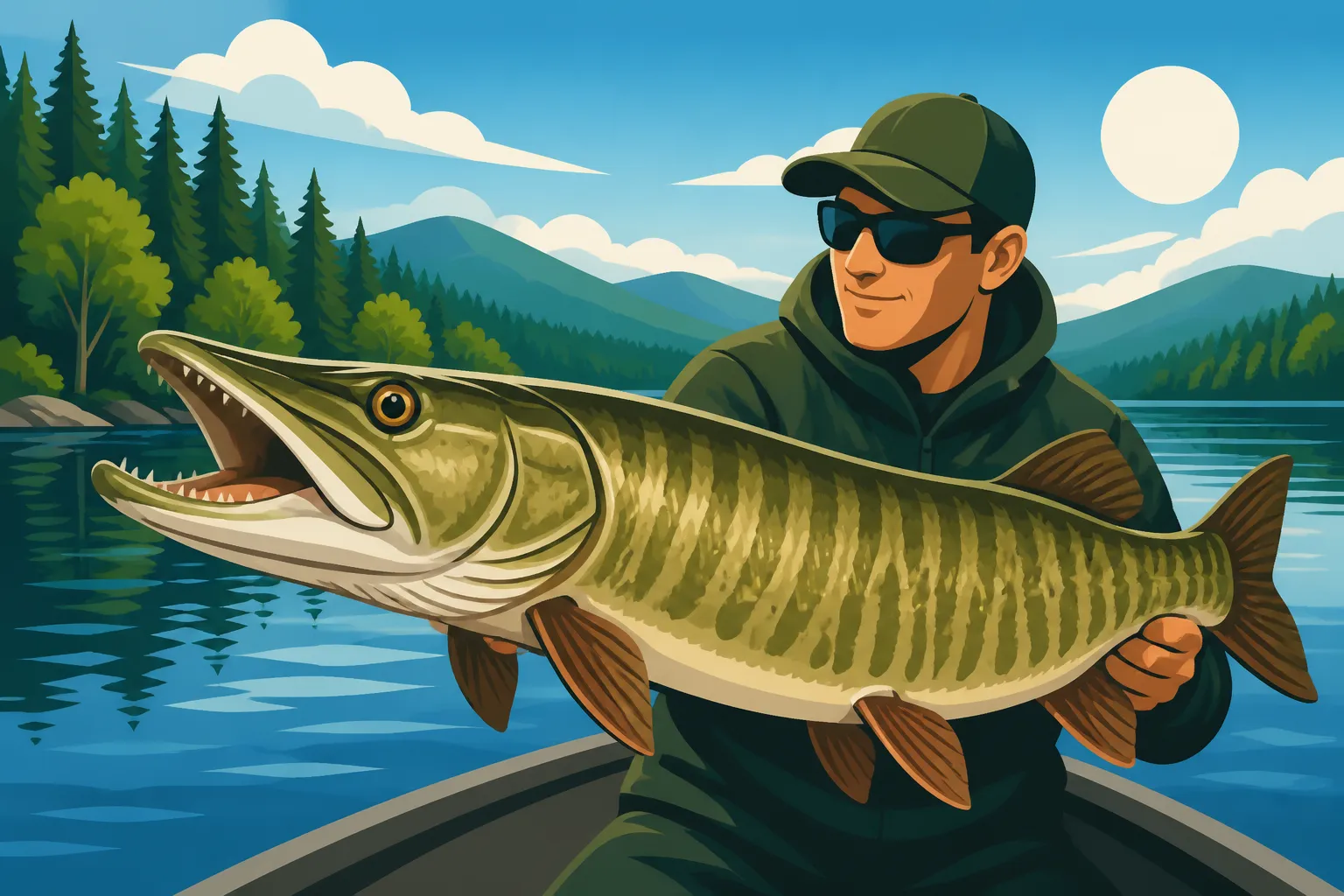
The trophy potential on Memphremagog is very real. Anglers regularly report muskie in the 40-inch range, with fish exceeding 50 inches caught annually by dedicated individuals. While the Vermont state record muskellunge weight is an impressive benchmark, Memphremagog continues to produce fish that push those limits. The dream of catching a state-record-contender muskie is very much alive here. Success stories often involve meticulous mapping, understanding seasonal patterns, and, of course, a healthy dose of luck. To dive deeper into specific tactics for this lake, you'll find useful information in Best Techniques for Muskellunge on Lake Memphremagog.
Beyond Memphremagog: Other Potential, Albeit Rare, Muskie Waters
While Lake Memphremagog is undoubtedly the shining star for trophy muskellunge in Vermont, it's worth acknowledging that the occasional muskie might be encountered in other waters, though not typically at the same trophy caliber or with the same consistency. These are generally isolated incidents, and it's important to set realistic expectations.
One such area is the Connecticut River. As a boundary water with New Hampshire, the Connecticut River holds various fish species, and very rarely, a muskie might be caught, typically as an incidental catch by anglers targeting other large predators like northern pike or even smallmouth bass. However, these are often transient fish, and the river system doesn't support a known, self-sustaining trophy muskie population on the Vermont side comparable to Memphremagog. While it's always exciting to hook into something unexpected, focusing your efforts here for a trophy muskie would be akin to finding a needle in a much larger, less specific haystack. It's more of a "you never know" scenario rather than a targeted fishery. This is also a good distinction to make when considering Do Vermont Lakes Have Northern Pike?, which are more widespread.
Other smaller lakes or river sections in Vermont might occasionally yield a muskie, but these instances are so rare that they don't constitute a reliable trophy fishery. These fish are generally either escapists from other systems, or very isolated individuals that have found a niche. For anglers serious about a trophy muskellunge, dedicating time to these incidental waters rather than Memphremagog would likely lead to significant disappointment. The pursuit of a muskie is challenging enough without adding the variable of an extremely low probability of encounter.
Gear and Tactics for Vermont Trophy Muskellunge
Pursuing trophy muskellunge is not for the faint of heart, and it certainly isn't a job for your standard bass rod and reel. These are apex predators, and they demand specialized gear and refined tactics to bring them to hand. Being properly equipped is half the battle; the other half is understanding how and where to deploy that gear effectively.
Heavy-Duty Gear is Non-Negotiable
When gearing up for muskie, think heavy-duty. Your rod should be a sturdy baitcasting model, typically 7'6" to 9' in length, with a heavy power and fast action. This provides the leverage needed to cast large lures and, more importantly, to set hooks into a muskie's bony mouth and control a powerful fish. Pair this with a robust baitcasting reel capable of handling heavy lines and providing significant drag pressure. Look for reels with a high line capacity, as muskie can make long, powerful runs. When shopping for these specialized items, many anglers find a good selection on online retailers like Amazon, often reading reviews to ensure durability.
Line choice is equally critical. Most muskie anglers opt for braided line, ranging from 80 to 120 pounds test. The high breaking strength and lack of stretch in braid are essential for handling brutal strikes and powerful fights. A heavy fluorocarbon or wire leader is absolutely mandatory. Muskie have incredibly sharp teeth, and anything less than a heavy leader (80-150 lb fluorocarbon or a good wire leader) will result in a quick bite-off and a lost lure, not to mention potentially harming the fish. For more on this, consult Best Line Weight for Muskellunge Fishing.
Lure Selection and Presentation
Muskie are drawn to large, flashy, and noisy lures that imitate their primary forage. Bucktails are perennial favorites, often 8-12 inches long with large blades that create significant vibration and flash. Brands like Musky Mayhem Tackle and Livingston Lures offer a range of effective bucktails that can be found through various online retailers, including Amazon, making it easy to experiment with different colors and sizes. Jerkbaits, particularly those with erratic subsurface action, are also highly effective, mimicking wounded baitfish. Look for models in the 6-10 inch range. Large swimbaits, both hard and soft plastic, that accurately imitate alewives or smelt can also be deadly. Best Bucktail for Muskellunge Fishing and Best Jerkbait for Muskellunge Fishing offer detailed insights into these lure types.
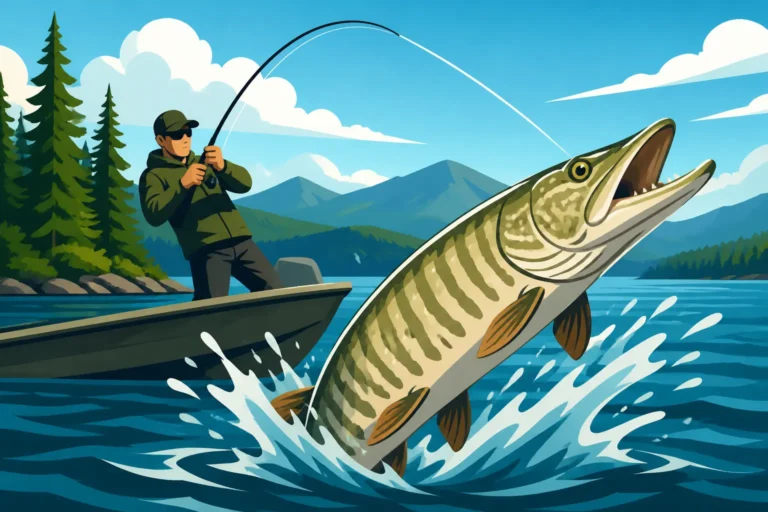
Presentation methods primarily involve either casting or trolling. When casting, target specific structures like weed edges, rock piles, and points. Make long casts, retrieve with varying speeds, and incorporate pauses or jerks to impart an erratic action. The "figure-eight" at the boat is a legendary muskie tactic: just before lifting your lure from the water, make a large figure-eight pattern beside the boat. Many muskie follow the lure to the boat and will strike at this last-ditch effort. Trolling, on the other hand, allows you to cover vast amounts of water and present larger lures at precise depths. This is often done with specialized trolling motors and sometimes even downriggers, targeting open water basins or deep breaks. Vary your trolling speed until you find what triggers bites. Information on effective trolling strategies can be found in Best trolling pattern for muskellunge on Lake Memphremagog.
The Importance of Catch and Release
Given the rarity and trophy status of muskellunge, practicing responsible catch and release is paramount. These fish take many years to reach trophy sizes, and their populations benefit immensely from being released to spawn and grow larger. Always use a large, rubberized landing net specifically designed for muskie to protect their slime coat and fins. Avoid handling the fish by its gills or eyes. Use long-nosed pliers or a jaw spreader to carefully remove hooks. Snap a quick photo if you wish, but get the fish back in the water as quickly as possible. Hold the fish gently in the water, supporting its belly, until it vigorously swims away. Consider reading Muskellunge catch and release survival tips to ensure you're prepared.
Here's a quick overview of key considerations for muskie fishing:
| Aspect | Lake Memphremagog | Other Vermont Waters (e.g., CT River) |
|---|---|---|
| Trophy Potential | Very High (50+ inch fish regularly caught) | Very Low (incidental catches, rarely trophy size) |
| Population | Self-sustaining, established, and healthy | Rare, transient, or isolated individuals |
| Forage Base | Excellent (alewives, smelt, perch) | Variable, less consistent for sustained muskie growth |
| Typical Depth | Deep, cold water (up to 300+ ft) | Variable, shallower river sections |
| Primary Structure | Large bays, deep points, rock reefs, expansive weed beds | River bends, current breaks, submerged timber |
| Best Fishing Method | Trolling, large baitcasting for structure | Opportunistic casting |
| Expectations | High chance of hooking a muskie with persistence | Extremely low chance, more about luck than targeting |
Remember, the pursuit of a trophy muskie is a journey of dedication. While success is never guaranteed, focusing your efforts on Lake Memphremagog and arming yourself with the right knowledge and gear will dramatically increase your odds of experiencing the thrill of a lifetime. Happy fishing, and may your next cast be the one that connects you with a true Vermont giant! For more on the impressive size these fish can attain, consider How big muskellunge get on Lake Memphremagog.
Disclaimer
This article is for general informational purposes only and does not constitute professional advice. Laws, prices and regulations vary by location and change over time. Consult a qualified professional for guidance on your specific situation.