Where brook trout still live wild in Vermont
There's something truly special, almost magical, about catching a wild brook trout. In Vermont, a state famed for its beautiful waters, many anglers dream of finding these native gems, but often wonder if they truly exist beyond the heavily stocked rivers. It can feel like searching for a needle in a haystack, especially with so much focus on hatchery fish and their more accessible locations. This guide is here to cut through that confusion, helping you understand exactly where these elusive, vibrant fish still thrive in their natural, untouched glory, and how you can experience the joy of finding them.
Understanding Vermont's Wild Brook Trout Habitat
Finding truly wild brook trout in Vermont means understanding their natural preferences and the delicate ecosystems they inhabit. These aren't your average stocked fish; wild brook trout are survivors, finely tuned to their environment.
The Ideal Environment for Native Brookies
Wild brook trout, often called "brookies," are native to Vermont and thrive in very specific conditions. They are lovers of the purest, coldest water, which is why you'll rarely find them in large, warm rivers or lakes. Think small, clear, spring-fed streams, particularly those with dense overhead canopy cover that keeps the sun's rays from warming the water. These streams often have a gravelly or rocky bottom, providing ample hiding spots and good spawning beds. Water temperatures consistently below 68 degrees Fahrenheit are crucial, and many prime brook trout streams will hover in the low 50s or 60s even on the hottest summer days. They need structure: fallen trees, undercut banks, large boulders, and thick vegetation are all essential for cover from predators and strong currents. You'll find these fish tucked into these pockets, waiting for an unsuspecting insect to drift by. Their very existence is a testament to the health and untouched nature of these specific waters.
Threats to Wild Brook Trout Populations
Despite their resilience, wild brook trout populations face numerous threats that limit where they can survive. Habitat degradation is a major concern; logging, agricultural runoff, and poorly managed development can destroy stream banks, increase sedimentation, and raise water temperatures. Climate change is another significant factor, leading to warmer water temperatures and more frequent extreme weather events like droughts or intense floods, both of which are detrimental to these cold-water species. Competition from non-native species, especially brown trout and rainbow trout, which are often stocked, also puts pressure on brookies. These introduced species can outcompete wild brook trout for food and space, or even prey on their young. Poaching and overfishing, even for small streams, can also quickly deplete localized populations that take years to recover. This is why many of the best wild brook trout spots are often remote and require a bit of effort to reach.
Distinguishing Wild from Stocked Trout
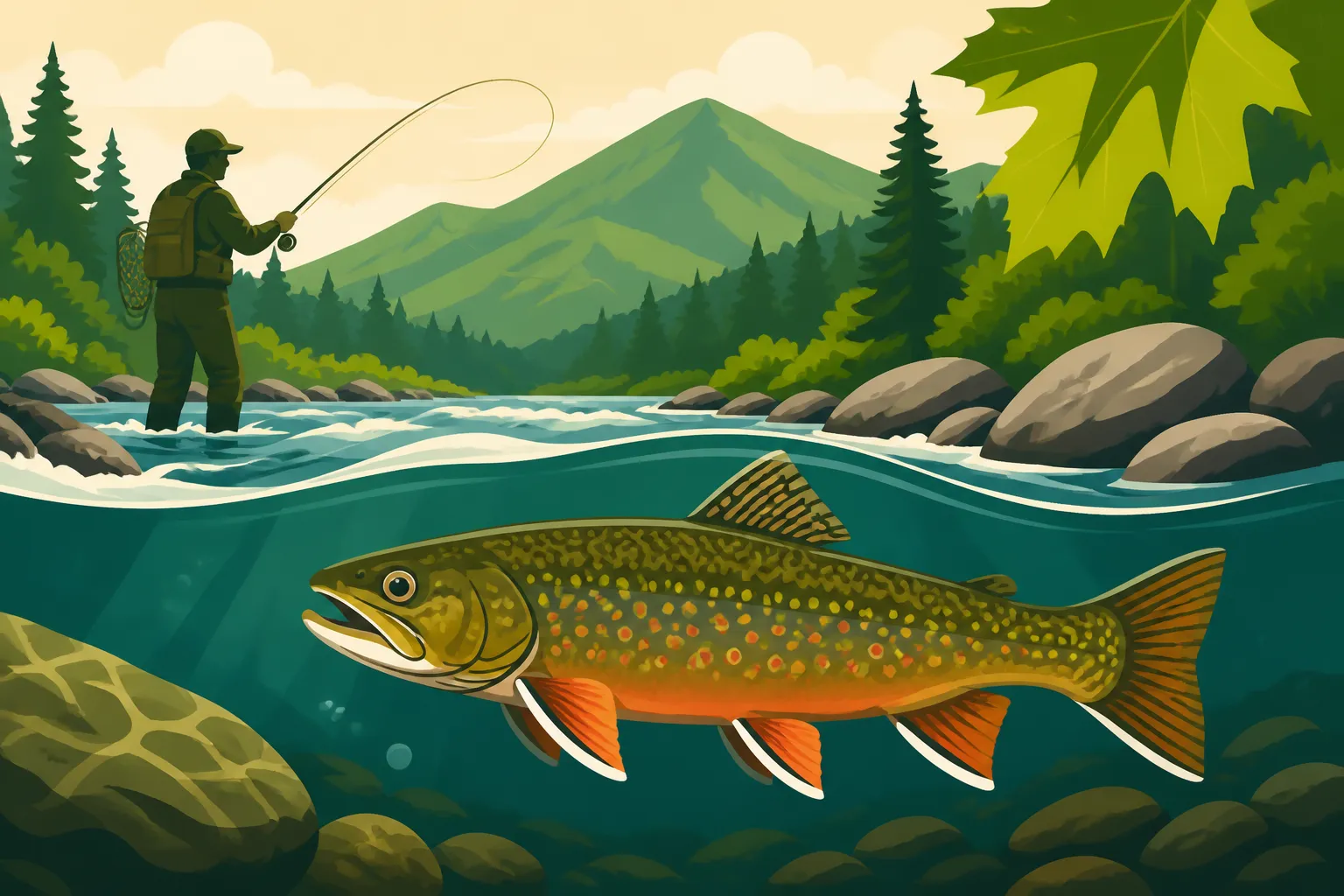
It's easy to spot the difference between a wild brook trout and a stocked one once you know what to look for. Wild brook trout are typically smaller, though they make up for it in vibrant color and feistiness. They have pristine fins, often with a white leading edge on their pectoral, pelvic, and anal fins, which is a key characteristic. Their bodies are usually brightly colored, with vermiculations (worm-like markings) on their backs, red spots with blue halos on their flanks, and often a deep orange or red belly, especially in males during spawning season. Stocked trout, on the other hand, often have worn or damaged fins due to hatchery conditions. Their colors are usually duller, and their markings less distinct. They might also appear heavier or have a more "pudgy" build from a diet of pellets. When you hook a wild brook trout, its energetic fight and pristine condition leave no doubt that you've found a true native. Take a moment to appreciate these living jewels before gently releasing them back to their home.
Here's a quick comparison:
| Feature | Wild Brook Trout | Stocked Trout (Brook, Brown, Rainbow) |
|---|---|---|
| Size | Generally smaller, lean, and streamlined | Often larger, plumper due to hatchery feeding |
| Coloration | Bright, vivid colors; distinct vermiculations | Duller, faded colors; less defined markings |
| Spots | Red spots with blue halos (brookies) | Varies by species (e.g., dark spots on browns) |
| Fins | Perfect, often with white leading edges | Worn, frayed, or stubby from crowded conditions |
| Tail | Forked, symmetrical, sharp | Often rounded or uneven, sometimes damaged |
| Behavior | Energetic, wary, strong fighters | Can be more sluggish or less wary initially |
| Diet | Natural insects, small fish, aquatic invertebrates | Hatchery pellets (initially), then natural forage |
Prime Locations for Wild Brook Trout in Vermont
If you're looking to connect with Vermont's wild brook trout, you need to think outside the box of easily accessible, heavily fished waters. These fish thrive where human impact is minimal and natural conditions prevail.
High-Elevation Mountain Streams
The backbone of Vermont, the Green Mountains, holds some of the state's most pristine wild brook trout habitat. These high-elevation streams are fed by snowmelt and cold springs, maintaining consistently frigid temperatures even during the dog days of summer. They are typically smaller, often tumbling over rocks and through dense forest, creating a series of pocket water, riffles, and small pools. Access often involves a hike, sometimes a strenuous one, but the reward is a truly wild experience. Think of streams flowing off peaks like Mount Mansfield, Camel's Hump, or along the Long Trail corridor. These are not waters you can just drive up to and cast a line. You'll need to study topographic maps, look for small blue lines that indicate perennial streams, and be prepared for bushwhacking. The remoteness helps protect these fragile populations, allowing them to flourish in their ancient territories. You might find guidance on specific public access points that lead to these areas, but the key is often to venture further than most.
Remote Backcountry Ponds
While streams are the classic image, Vermont also harbors hidden gems in its remote backcountry ponds. These are often small, spring-fed, and surrounded by dense forest, making them difficult to reach. Many of these ponds are designated as "wild trout ponds" and are managed specifically for their native brook trout populations, with special regulations like Vermont Catch and Release Fly Fishing Only Waters or size restrictions. They represent a different kind of wild brook trout fishing, where the fish can grow a bit larger due to more abundant food sources than in small streams. Getting to these ponds usually requires a significant hike, sometimes several miles into state forests or wildlife management areas. The effort involved acts as a natural filter, ensuring that these delicate ecosystems remain relatively undisturbed. These are true wilderness experiences, where the silence is broken only by the sounds of nature, and the brook trout you catch might be the only ones to have seen a fly or lure in weeks.
Headwaters and Tributaries
Focusing on the headwaters and smaller tributaries of larger river systems is another excellent strategy for finding wild brookies. While the main stem of a river might be too warm or degraded for wild trout, its smaller, higher-elevation feeders often retain the cold, clean water necessary for brook trout survival. These small streams might seem insignificant on a map, but they are vital nurseries and refuges. Many of these trickles eventually feed into more well-known rivers. For example, while the main stem of the Winooski River Fishing Spots or Lamoille River Fishing Guide might not hold wild brookies in its lower sections, their upper reaches and countless feeder streams often do. The key is to look for sections that are heavily shaded, have a steep gradient, and are relatively undeveloped. These areas are often overlooked by anglers who stick to larger, more popular waterways, making them perfect for a quiet day chasing native fish.
Conservation Efforts and How Anglers Can Help
Preserving Vermont's wild brook trout populations is a collective effort, and anglers play a crucial role in their future. Our actions on and off the water directly impact these delicate ecosystems.
Catch and Release Practices for Wild Trout
When you're targeting wild brook trout, especially in these fragile, low-pressure environments, practicing careful catch and release is not just a suggestion; it's an imperative. These fish grow slowly and their populations can be easily depleted. Always use barbless hooks, or pinch down the barbs on your regular hooks with pliers. This makes it much easier to remove the hook with minimal damage. Minimize handling; try to keep the fish in the water as much as possible. If you must handle it for a quick photo, wet your hands first to protect its delicate slime coat. This coat is its primary defense against infection. Support the fish horizontally, never vertically by the jaw or gills. Revive the fish gently, holding it facing upstream in the current until it swims away on its own. Releasing a wild brook trout unharmed ensures it can continue its life cycle, contributing to the health of the population and providing future angling opportunities. Consider investing in a good quality, rubber-mesh landing net, often available on platforms like Amazon, as these are much gentler on fish than traditional knotted nets.
Supporting Habitat Protection
Beyond careful angling, there are many ways to support the broader effort to protect wild brook trout habitats. Educating yourself about local conservation initiatives is a great start. Organizations focused on watershed protection, stream restoration, and land conservation are critical partners. You can volunteer for stream cleanups, tree planting projects along riparian corridors, or participate in citizen science programs that monitor water quality or fish populations. Advocating for responsible land use planning in your community, especially concerning development near sensitive waterways, also makes a difference. Purchasing fishing licenses and conservation stamps directly contributes funds to the Vermont Fish & Wildlife Department, which manages these precious resources and funds research and habitat work. Remember, a healthy forest and clean water benefit more than just trout; they benefit the entire ecosystem.
Navigating Access and Regulations
Before venturing out, it's crucial to understand Vermont's fishing regulations and respect land ownership. Many prime wild brook trout streams flow through private land, and respecting "No Trespassing" signs is paramount. Always seek permission from landowners before accessing private property. Public lands, such as state forests, wildlife management areas, and sections of the Green Mountain National Forest, offer vast opportunities, but even here, special regulations might apply. Always consult the current Vermont Fishing Regulations Explained or specific information on Special Regulation Waters in Vermont. Some areas may have restrictions on gear, bait, or even be designated as Vermont Catch and Release Fly Fishing Only Waters. These rules are in place to protect sensitive populations. Be aware of Vermont Boating Laws for Anglers if you plan to use a boat or kayak to access remote pond areas. A little research goes a long way in ensuring a legal and respectful fishing trip.
Gear and Techniques for Pursuing Wild Brook Trout
Tackling wild brook trout requires a slightly different approach than fishing for their larger, stocked cousins. Stealth, precision, and the right gear are your best allies.
Essential Gear for Backcountry Brookies
When you're heading deep into the woods for wild brook trout, lightness and functionality are key. A lightweight spinning rod, perhaps 5 to 6 feet long, with a sensitive tip is perfect for accurate casting in tight quarters. Pair it with a small spinning reel spooled with 2-4 pound test monofilament or fluorocarbon line. Fly anglers will want a light fly rod, typically a 2-weight or 3-weight, between 6 and 7.5 feet, paired with a matching floating fly line and a long, fine leader. Best Fly Rods for Vermont Trout Streams will likely focus on these lighter setups.
Beyond your rod and reel, consider the following:
- Wading Gear: Breathable chest waders are essential for cold water, paired with comfortable wading boots with good grip. For slippery, mossy rocks, felt soles can offer superior traction, though rubber soles are gaining popularity for their durability and environmental benefits. A sturdy Best Wading Staff for Fast Current is invaluable for stability. Many excellent options for these items can be found on retailers like Amazon.
- Tackle: A small tackle box or vest (if fly fishing) with a selection of tiny inline spinners, small spoons, and micro jigs for spin fishing. For fly anglers, a compact fly box with dry flies (attractors, caddis, gnats), nymphs (Pheasant Tail, Hare's Ear), and small streamers (Wooly Bugger) will cover most situations. Best Tackle for Vermont Trout Fishing often highlights these smaller presentations.
- Navigation & Safety: A good map, compass or GPS app, water filter, first-aid kit, and headlamp are non-negotiables for backcountry safety. Even a short hike can turn challenging if you lose your way or encounter an unexpected issue.
Stealth and Presentation in Small Streams
Wild brook trout are incredibly wary. They live in clear water and are easily spooked by sudden movements, shadows, or heavy footsteps. The key to success is stealth. Approach pools and runs from downstream, staying low to the ground and out of sight as much as possible. Use any available cover, like bushes or trees, to mask your approach. Make accurate, short casts that land your lure or fly gently on the water, minimizing disturbance. Often, the first cast into a promising lie is your best chance at catching a fish. If you miss, move on quickly and come back later, or try a different angle.
When fly fishing, a natural drift is paramount. Avoid drag by mending your line upstream as your fly drifts. For spin fishing, a slow, steady retrieve that mimics a struggling insect or baitfish is usually more effective than a fast, erratic one. Think subtle, natural, and unassuming. These fish aren't used to much pressure, so a subtle presentation will often entice a strike when a flashy, noisy one won't.
Lures and Baits for Wild Brook Trout
For these native fish, simple and small is almost always best.
- Artificial Lures: Tiny inline spinners, such as those weighing 1/32 to 1/16 ounce, in natural colors like silver, gold, or black, are incredibly effective. Small spoons, perhaps 1/16 ounce, in similar subtle finishes can also work wonders. Micro jigs, often tipped with a tiny piece of worm or scented soft plastic, are another great choice. The key is to match the size of natural prey items.
- Flies: For fly anglers, attractor dry flies like a Royal Wulff or a Parachute Adams in sizes 14-18 are often irresistible, especially if there's no specific hatch occurring. Terrestrial patterns like an Ant or Beetle can also be deadly during summer months when they fall into the water. Subsurface, simple nymph patterns like a Pheasant Tail or Hare's Ear in sizes 16-20 are consistent producers. Small stream flies should generally be on the smaller side. You can explore a vast array of fly patterns and small lures on Amazon, making it easy to stock up for your next adventure.
- Natural Bait: While many wild trout anglers prefer artificials, a small piece of a garden worm can be incredibly effective, especially in faster, deeper pockets where fish might be less picky. Just remember to use small hooks and practice catch and release carefully.
The pursuit of wild brook trout in Vermont is more than just fishing; it's an adventure into the state's most untouched natural spaces. It's about appreciating the pristine environment, understanding the delicate balance of nature, and connecting with a truly native species. While the fish may not be giants, the experience itself is enormous, leaving you with memories of vibrant colors, challenging hikes, and the profound beauty of Vermont's hidden wilderness.
Disclaimer
This article is for general informational purposes only and does not constitute professional advice. Laws, prices and regulations vary by location and change over time. Consult a qualified professional for guidance on your specific situation.