Digital vs paper fishing license in Vermont
It can be incredibly frustrating to keep track of all the rules and requirements when you just want to get out on the water and enjoy some peaceful fishing. One common point of confusion for many anglers in Vermont is whether they need a physical paper fishing license or if a digital version on their phone is perfectly acceptable. This guide is here to cut through that confusion, lay out the facts, and help you understand the nuances of carrying your Vermont fishing license, whether you prefer pixels or paper.
The Evolution of Fishing Licenses in Vermont: From Paper to Pixels
For decades, the ritual of getting your fishing license involved a trip to a general store, a bait shop, or a town clerk's office. You’d fill out a form, pay your fee, and walk out with a little green or white piece of paper, often tucked carefully into your wallet or laminated for safekeeping. This physical document was your undeniable proof, and without it, you risked a hefty fine from a game warden. But times change, and technology has brought a whole new level of convenience, even to the age-old practice of fishing.
The Convenience Factor of Modern Licensing
The biggest driver for the shift towards digital options has, without a doubt, been convenience. Imagine arriving at your favorite fishing spot, perhaps an early morning on Lake Champlain, only to realize you left your wallet, and thus your license, at home. That sinking feeling of knowing your day is ruined before it even begins is something many of us have experienced. With smartphones becoming ubiquitous, the idea of having instant access to official documents seemed like a natural progression. The Vermont Fish and Wildlife Department recognized this need, understanding that making it easier for people to comply with regulations ultimately benefits everyone and encourages more participation in outdoor activities.
Early Adoption and Lingering Hesitations
When digital licenses first became an option, there was a mix of excitement and skepticism. Younger anglers, or those more comfortable with technology, often embraced the digital format immediately, appreciating the ease of having their license on their phone alongside their digital wallet and other important apps. They saw it as one less thing to forget or lose. However, many seasoned anglers, used to the tangible proof of a paper license, remained hesitant. They worried about phone battery life, signal issues in remote areas, or simply preferred the traditional feel of a physical document. This is completely understandable; for some, the paper license is part of the tradition, a badge of honor even, that marks the start of the fishing season. Both approaches have their merits, and Vermont's system aims to accommodate both preferences while ensuring compliance.
Understanding Your Vermont Digital Fishing License
So, you're thinking about going digital? It's a fantastic option for many, offering flexibility and peace of mind. A digital fishing license in Vermont is essentially an electronic version of your official license, stored and displayed on your mobile device. It holds all the same legal weight as its paper counterpart, provided you can properly display it to an enforcement officer. This means you don't have to worry about accidentally running it through the wash or finding it disintegrated after a particularly wet fishing trip.
Accessing Your Digital License
Once you've purchased your license online through the Vermont Fish and Wildlife Department's official website, you'll receive an email confirmation that usually includes a link or instructions on how to access your digital license. Many states, including Vermont, utilize a platform that allows you to log in and view your license directly from a web browser on your phone. Some also offer dedicated apps, though a direct web access is common. It's crucial to ensure you've saved or favorited this link, or taken a screenshot of your license, especially if you plan to fish in areas with spotty cell service. For those who purchased their license online, understanding How to Buy a Fishing License Online in Vermont is the first step, and then knowing how to access that digital proof is key.
Benefits of Going Digital
The advantages of a digital license are numerous and compelling, especially for the modern angler.
- Never Leave it at Home (as long as you have your phone): This is perhaps the most significant benefit. Most of us rarely forget our phones when we leave the house. Having your license readily available on your device means one less item to remember.
- Durability and Longevity: Unlike paper, which can tear, get wet, or fade, a digital license is immune to physical wear and tear. You won't have to worry about replacing a lost Vermont fishing license due to damage.
- Environmental Friendliness: While not the primary driver for most, reducing paper consumption is a small, positive step for the environment.
- Easy Access to Information: Often, the digital portal where you access your license also provides quick links to important information, like Vermont Fishing Regulations Explained or specific Vermont Bag and Possession Limits by Species, which can be incredibly helpful when you're on the water and need a quick reference.
Imagine you're out on Lake Bomoseen, reeling in a beautiful largemouth bass. A game warden pulls up, and all you need to do is pull out your phone, tap a few times, and there's your valid license. No fumbling through a wet wallet or worried glances. It's truly a seamless experience.
Potential Pitfalls and How to Prepare
While digital licenses are incredibly convenient, they aren't without their potential downsides. Being prepared for these can save you a lot of hassle.
- Battery Life: This is the most common concern. If your phone dies, you can't display your license. Always ensure your phone is fully charged before heading out, especially for a long day of fishing. Consider carrying a portable power bank, like those readily available on Amazon, to top up your device.
- Signal Strength: Many prime fishing locations in Vermont, particularly in the Green Mountain National Forest or along remote sections of the Battenkill River, have limited or no cell service. If your digital license requires an internet connection to display, you could be out of luck. The best practice here is to take a screenshot or download an offline version of your license to your phone before you lose service.
- Screen Damage: A cracked or shattered phone screen can make your license unreadable. While less common, it's a possibility. Having a backup plan, such as a printed copy in your tackle box or truck, isn't a bad idea.
- Device Malfunction: Phones can freeze, crash, or simply stop working. This is rare but can happen.
The Vermont Fish and Wildlife Department's stance is clear: if you cannot display your valid license, you are considered to be fishing without one, regardless of whether you legally purchased it. This highlights the importance of having a reliable way to show your license at all times.
Navigating the Traditional Vermont Paper Fishing License
For those who prefer the tactile certainty of a physical document, the traditional paper fishing license remains a perfectly valid and popular option. It’s the familiar friend that many anglers have relied on for years, offering a direct, no-fuss way to prove your compliance. There’s something undeniably satisfying about holding that piece of paper, marking the beginning of another season of adventures.
Where to Acquire a Physical License
Getting a paper license is still very straightforward. While the convenience of online purchasing has grown, you can still visit numerous authorized agents across Vermont. These typically include:
- Sporting Goods Stores: Places like the classic Vermont Country Store in Weston, or larger retailers, often serve as licensing agents.
- Bait and Tackle Shops: Many local bait and tackle shops, the heart of the fishing community, will sell licenses. It's a great opportunity to get some local tips too!
- Town Clerk's Offices: Your local town clerk's office is another reliable spot to get your paper license.
- Vermont Fish and Wildlife Department Offices: You can also go directly to a regional office.
The process usually involves filling out a short form, showing proof of residency if applicable, and paying the fee. You'll walk out with a printed license that you can then fold, laminate, or simply tuck into your wallet. For a comprehensive list of where you can get one, check out Where and How to Buy a Vermont Fishing License.
The Enduring Appeal of Paper
Despite the rise of digital alternatives, the paper license holds a special place for many anglers for several reasons:
- Reliability: No battery life concerns, no signal issues, no cracked screens. A paper license just is. As long as you don't lose it, it's always there.
- Tangible Proof: For some, having a physical document feels more "official" and reassuring. It's a physical reminder of their right to fish.
- Simple Storage: Many anglers have dedicated slots in their wallets or tackle boxes for their license, making it a routine part of their gear check. This simplicity is often preferred, especially by those who want to disconnect from technology when they’re out in nature.
- Tradition: For some, it's simply tradition. The yearly ritual of obtaining the paper license is as much a part of the angling experience as tying the first knot of the season.
Consider a scenario where you're deep in the Northeast Kingdom, fly fishing a remote brook trout stream. Cell service is nonexistent, and your phone has been off to conserve battery. A warden approaches, and you simply pull out your laminated paper license from your vest pocket. No fuss, no technical glitches – just clear, immediate proof. This is where paper truly shines.
When Paper is Still Preferred
There are specific situations where a paper license might still be the superior choice, or at least a very strong backup:
- Remote Fishing Trips: As mentioned, if you're venturing into areas with unreliable cell service (which is common in many of Vermont's wilder regions), a physical copy is your most reliable option.
- Battery Concerns: For anglers who spend extended periods on the water without charging capabilities, or those with older phones, a paper license eliminates the stress of a dead battery.
- Youth and Elderly Anglers: Children and teenagers might not carry smartphones, and some elderly anglers might prefer the straightforward nature of a physical document over navigating digital interfaces. Remember to check Vermont Fishing License Age Requirements for specific age cutoffs for licenses.
- Combined Licenses: If you opt for a Vermont Combination Hunting and Fishing License Options, having a single, easily accessible paper document can simplify things, especially if you're switching between activities.
While the digital age offers many advantages, the paper license still serves a vital role, embodying reliability and tradition for a significant portion of Vermont's angling community.
Choosing Your Path: Which License Format is Right for You?
Ultimately, the choice between a digital and a paper fishing license in Vermont comes down to personal preference, fishing habits, and your comfort level with technology. Both are legally valid, and both have their own set of advantages and disadvantages. The best solution for many might even be a hybrid approach, combining the best of both worlds.
Situational Considerations for Your License Type
Think about where and how you typically fish in Vermont. Your fishing style and preferred locations should heavily influence your decision.
- Are you a tech-savvy angler who always has a fully charged smartphone with you, even on the water? A digital license might be perfect. You'll appreciate the convenience and environmental benefits. You can easily store it, along with a screenshot, on your device.
- Do you frequently venture into remote areas of the state where cell service is a myth? Then a paper license, perhaps laminated for extra durability, is probably your safest bet. Alternatively, ensure you have a saved, offline version of your digital license and a portable charger.
- Are you prone to losing small items, including paper documents? The digital license offers a solution where you only need to keep track of one primary device. However, if you're prone to losing your phone, that's another matter entirely!
- Do you prefer to disconnect completely from technology while fishing? Many anglers use fishing as an escape. If leaving your phone off or even in the car is part of your relaxation strategy, a paper license aligns better with that philosophy.
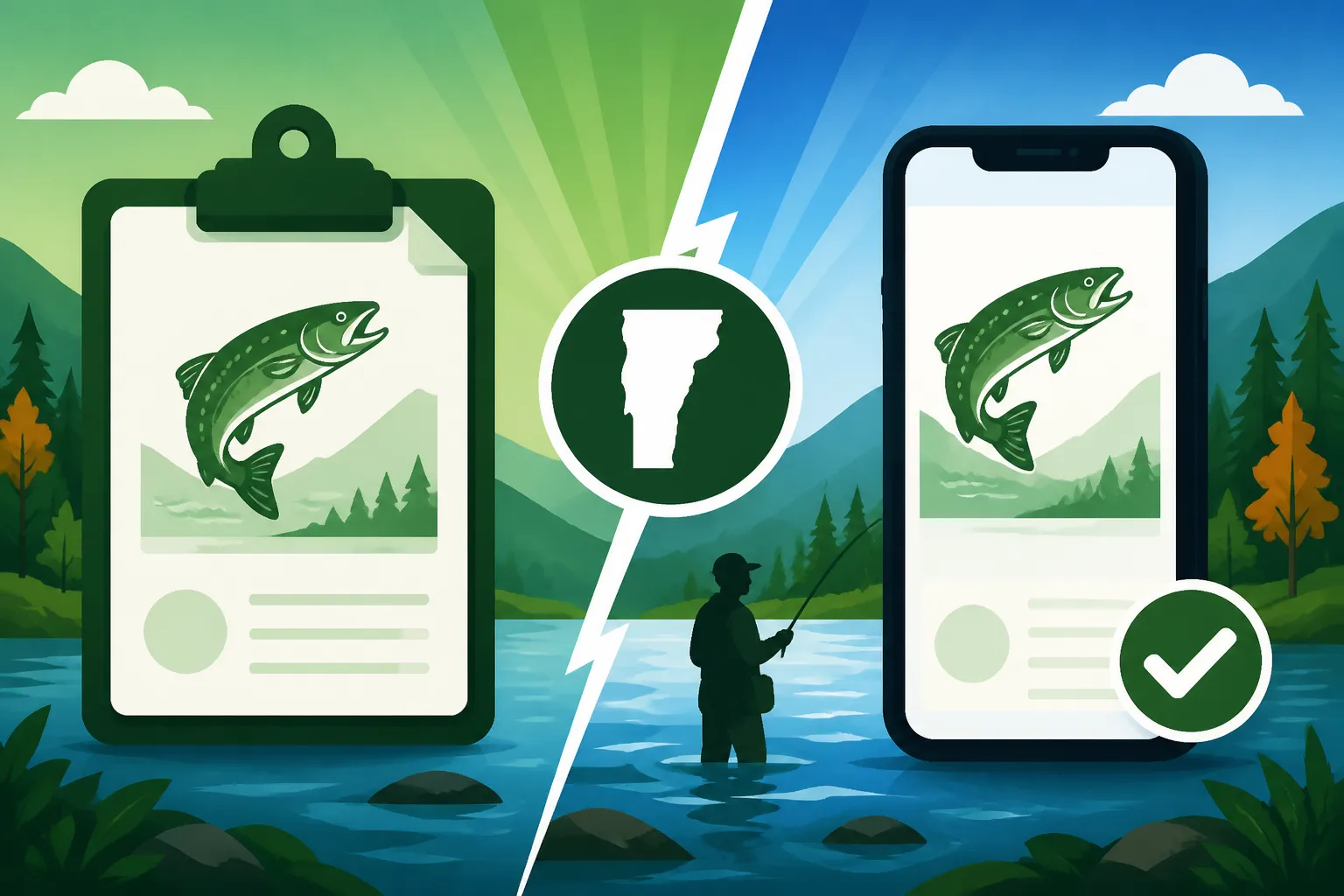
Here's a quick comparison to help you weigh your options:
| Feature | Digital Fishing License | Paper Fishing License |
|---|---|---|
| Accessibility | Via smartphone/device (online or saved screenshot) | Physical document, usually card-sized |
| Durability | Immune to water/tears (device dependent) | Susceptible to water, tears, fading |
| Reliability | Dependent on phone battery, signal, device function | Always available if not lost |
| Convenience | Always on hand (if phone is); easy to purchase online | Requires physical trip to vendor or printing at home |
| Proof | Display on screen | Present physical document |
| Backup Options | Screenshot, email copy, portable charger | Lamination, second copy (if allowed by Printing or Carrying a Digital Fishing License in Vermont guidelines) |
| Environmental | Paperless | Requires paper |
Legal Requirements and Best Practices
Regardless of whether you choose digital or paper, the most critical aspect is that you can produce a valid, legible copy of your fishing license upon demand by an enforcement officer. Failure to do so can result in a citation for Fishing Without a License in Vermont: Penalties.
Here are some best practices:
- For Digital Users:
- Always charge your phone before you go.
- Take a screenshot of your license and save it to your photo gallery.
- Consider downloading the license as a PDF to your phone if the option is available.
- Carry a portable power bank, especially for longer trips or remote areas. Brands like Anker or RAVPower (often found on Amazon) offer reliable, compact options.
- Ensure your phone's screen protector and case are robust enough to prevent damage that could obscure your license.
- For Paper Users:
- Laminate your paper license or use a waterproof holder, especially if you'll be on a boat or near water frequently. This is particularly important for those who follow Vermont Boating Laws for Anglers closely, as unexpected splashes can ruin a paper license quickly.
- Keep it in a secure, easily accessible place in your wallet, tackle box, or fishing vest.
- Some anglers even print a backup copy to leave in their vehicle, just in case.
Ultimately, both formats serve the same purpose: proving you're legally allowed to cast a line in Vermont. The "best" format is the one that best suits your personal fishing style and guarantees you'll always have it when you need it. Don't let a simple license issue keep you from enjoying the beautiful waters Vermont has to offer. Make your choice, prepare accordingly, and focus on the joy of the catch!
Disclaimer
Please note that fishing regulations and licensing requirements can change. While every effort has been made to provide accurate and up-to-date information, it is always your responsibility to consult the official Vermont Fish and Wildlife Department website or their most current printed regulations guide before heading out on your fishing adventures.