Best smallmouth bass spots on Lake Champlain
Lake Champlain is a monumental body of water, sprawling across Vermont and New York, and for many anglers, its sheer size can feel overwhelming when trying to pinpoint where the smallmouth bass are hiding. It’s a common frustration to motor out onto such vastness and feel like you're just guessing. This guide is designed to cut through that uncertainty, providing you with a detailed roadmap to the absolute best smallmouth bass spots on Lake Champlain, helping you target these aggressive fighters with confidence.
Understanding Lake Champlain's Smallmouth Bass Habitat
To consistently catch smallmouth bass on Lake Champlain, you first need to think like one. These fish aren't just randomly swimming around; they're creatures of habit, driven by instinct to find food, shelter, and suitable spawning grounds. Lake Champlain offers a fantastic diversity of environments, which is precisely why it’s such a premier smallmouth fishery, but also why it can be challenging to learn.
Key Structural Elements
Smallmouth bass are intrinsically tied to structure, especially rocky areas. Unlike their largemouth cousins who often prefer dense vegetation, smallmouth are built for chasing prey around hard cover. When you're scanning the lake, whether visually or with your electronics, always be on the lookout for these specific features.
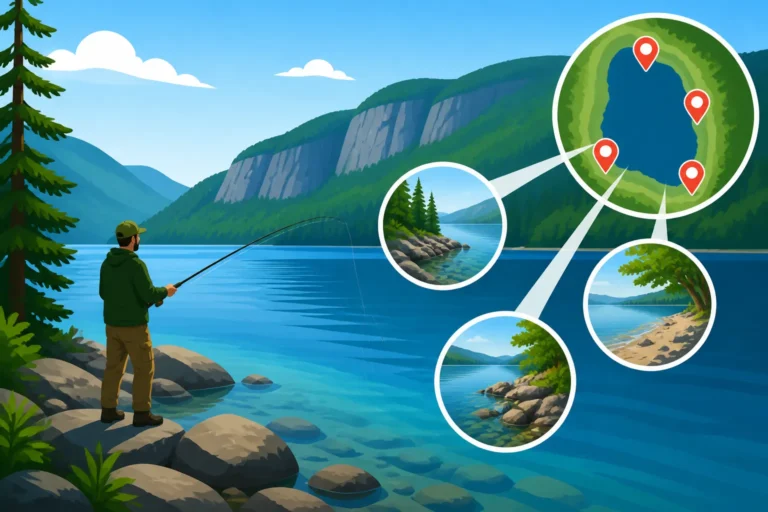
Rocky points that jut out into deeper water are classic smallmouth havens. These points often create current breaks and ambush opportunities, allowing bass to hide and dart out to intercept schooling baitfish. Think of them as underwater highways and diners all rolled into one. The sharp contours of these points can also mean varying depths, offering smallmouth a quick escape route to deeper, cooler water when needed, or a quick dash to the shallower, warmer water for feeding.
Underwater humps and ledges are equally critical. A hump that rises from 30 feet of water to 15 feet can be an absolute magnet for smallmouth, especially during summer months when they're seeking cooler, oxygen-rich water while still being close to feeding lanes. Ledges, particularly those with a sharp depth change, act as natural migration routes and holding areas. Smallmouth will often stage on the top or bottom edge of a ledge, depending on the time of day and baitfish activity, waiting for the perfect moment to strike. These features can be tricky to find without good sonar, but once located, they can be exceptionally productive year after year.
Don't overlook transition zones where different types of bottom meet. While smallmouth prefer rock, an area where a rocky bottom transitions into a sandy flat or a sparse weed bed can be incredibly productive. These zones offer the best of both worlds – the hard cover smallmouth love, combined with softer areas where crustaceans and insects might thrive, drawing in smaller fish that the bass prey on. These subtle changes can often be identified by a change in color in clear water or a different return on your fish finder.
Forage and Baitfish Influence
The presence and movement of baitfish are arguably the single most important factor dictating where you'll find smallmouth bass on Lake Champlain. Smallmouth are opportunistic predators, and they'll go wherever their next meal is easiest to acquire. On Lake Champlain, a diverse range of forage means the bass are rarely without food, but understanding what they're eating and where that forage congregates is key.
One of the primary forage species in Lake Champlain is rainbow smelt. These slender, silvery fish are a staple in the diet of many predatory species, including smallmouth. Smelt often school in open water and can be found in different depths depending on the season and water temperature. During spring, smelt runs into tributaries can draw smallmouth to river mouths and adjacent lake areas. Later in the season, understanding where smelt are schooling in the main lake basin will often put you right on top of actively feeding smallmouth.
Yellow perch and alewives also play a significant role. Perch are bottom dwellers, often found around weeds and structure, and they provide a meaty meal for bigger bass. Alewives, on the other hand, are open-water schooling fish, similar to smelt, and their movements can draw smallmouth away from traditional structures into more pelagic feeding patterns. Observing diving birds or surface boils can sometimes indicate a school of baitfish being pushed to the surface by hungry predators below.
Essentially, if you find the bait, you'll likely find the bass. Pay attention to your fish finder for bait balls, and consider casting lures that mimic the size and color of the dominant forage in the area. This isn't just about throwing a shiny lure; it's about matching the hatch, so to speak, to what the smallmouth are actively hunting. Learning about What walleye eat on Lake Champlain or Rainbow Smelt as Forage Fish in Vermont Lakes can also provide valuable insights into the broader ecosystem that influences smallmouth.
Water Temperature and Depth Preferences
Smallmouth bass are ectothermic, meaning their body temperature is regulated by the surrounding water, and this has a profound impact on their behavior and location throughout the year. Their ideal temperature range for activity is generally between 60 and 70 degrees Fahrenheit, but they will tolerate a wider range as seasons change.
In early spring, right after ice-out, smallmouth will begin to move from their deeper wintering grounds towards shallower, warmer rocky areas to feed and prepare for spawning. These shallow flats and rocky shorelines absorb heat faster, making them prime real estate for active bass. During the pre-spawn, you'll often find them cruising depths of 5-15 feet, especially on sunny days. This can be one of the Best Time of Year to Fish in Vermont for smallmouth.
As the water warms into summer, smallmouth will often retreat to deeper, cooler water during the heat of the day, particularly after spawning. They'll seek out offshore humps, deep ledges, and transition areas in 20-40 feet of water, often suspending over structure or near thermoclines if present. Early mornings, late evenings, and overcast days might see them push back into shallower feeding zones. Understanding Smallmouth Bass Habits on Lake Champlain across the seasons is crucial for consistent success.
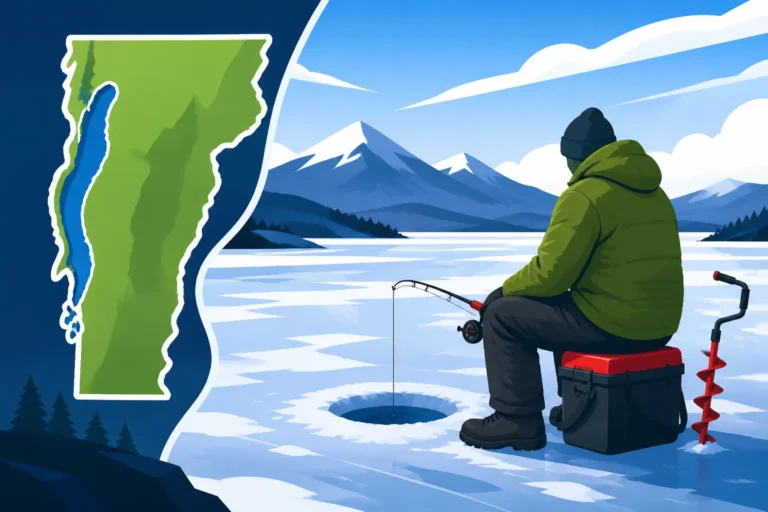
Come fall, as the water temperatures begin to drop, smallmouth will enter a "fall feeding frenzy" to pack on calories for the winter. They'll often move back to main lake points, steep breaklines, and offshore humps, actively chasing baitfish in depths ranging from 10 to 30 feet. This can be an incredibly productive time to target trophy smallmouth before they settle into their deep winter patterns, often in 40 feet or more, where they become less active.
Top Smallmouth Bass Hotspots on Lake Champlain
Lake Champlain's vastness means its smallmouth fishery isn't confined to just one area. From its narrow southern reaches to its wide northern sections, each region offers unique characteristics that attract smallmouth. Knowing these general zones can help you narrow down your search considerably.
Southern Lake Champlain's Productive Waters
The southern end of Lake Champlain, while narrower and often perceived as more riverine, holds some truly exceptional smallmouth bass fishing, especially around the areas accessible from the Vermont side near Addison and the overall region south of the Lake Champlain Bridge. This part of the lake features a mix of rocky shorelines, gradual sloping flats, and emerging weed lines that are perfect for smallmouth.
The rocky banks and points leading into the main channel near Addison, Vermont, can be incredibly productive. These areas warm up faster in the spring, drawing in pre-spawn bass, and continue to hold fish throughout the summer as deeper pockets and structure offer refuge. Anglers launching from the Addison Boat Launch have quick access to these varied structures. Focus on areas where rocks meet sparse weeds, as these transition zones are often ambush points.
Further south, near the Champlain Bridge, the fishing pressure tends to be higher, but for good reason. The depths and structures here are diverse, ranging from shallow rocky shoals to sharp drop-offs. While much of this region borders New York, the fishing quality is undeniable, and Vermont anglers often cross the channel to take advantage of these waters. The key here is to find less-pressured rocky outcroppings or ledges that break into deeper water, often 15-25 feet. Remember to check regulations if you cross state lines for Vermont Fishing Regulations Explained.
Even the slightly calmer, more sheltered bays in this southern section, provided they have a good rocky substrate, can hold impressive numbers of smallmouth. These bays often provide critical spawning habitat, and the bass will linger in the vicinity during the post-spawn period before moving to main lake structures. Throwing crankbaits or tubes around these rocky shorelines can yield excellent results.
Central Lake Champlain's Diverse Structure
Moving north, the central section of Lake Champlain, particularly around Burlington, Shelburne Bay, and Malletts Bay, offers a different flavor of smallmouth fishing with its diverse and abundant structure. This area is more expansive, with numerous islands, submerged reefs, and sharp contour changes that are ideal for smallmouth.
Shelburne Bay is a classic smallmouth haven. Its numerous rocky points, distinct drop-offs, and submerged humps make it a consistent producer. From the rocky shores of Shelburne Farms to the various ledges found throughout the bay, there are countless places for smallmouth to hide and ambush prey. This bay is a fantastic spot to learn How to Catch Smallmouth Bass in Vermont Lakes due to its varied habitat and accessibility. Trolling deep-diving crankbaits along the contours or casting tube jigs to the rocky points can be very effective here.
Malletts Bay, a massive bay located north of Burlington, is another prime location. It’s almost a lake within a lake, featuring numerous islands (like Butler Island and Providence Island), shoals, and extensive rocky bottom. The areas around the islands, especially where currents create eddies or where deep water meets shallow reefs, are particularly productive. The outer edges of extensive weed beds also hold smallmouth, especially during the colder parts of the fishing season when they might venture in for baitfish. Exploring these islands with a kayak, perhaps one of the Best Kayaks for Vermont Fishing, can give you access to less-pressured spots.
The main lake basin near Burlington itself, while busy with boat traffic, still offers excellent smallmouth opportunities. The deeper structures and main lake points near the city can hold large schools of bass, especially in summer. Anglers launching from the Burlington Waterfront can head out to offshore humps and rock piles that rise from deeper water. These spots often require good electronics to locate but can yield incredible fishing once found. Local knowledge from a guide booked via FishingBooker might also reveal some less obvious, but highly productive, urban-adjacent spots.
Northern Lake Champlain's Expansive Flats and Reefs
The northernmost reaches of Lake Champlain, especially around the Grand Isle and Alburgh regions, present a unique smallmouth bass fishing experience characterized by vast flats, extensive grass beds, and prominent reef structures. This area of the lake can be shallower in many places compared to the central basin, leading to different smallmouth behaviors.
Missisquoi Bay, located in the very northern part of the lake, is known for its extensive grass beds and a mix of sandy and rocky bottoms. While often associated with largemouth and northern pike, the deeper edges of the grass and the transition zones to rocky points can hold excellent smallmouth. The key here is often to fish the edges where the habitat changes abruptly. These areas provide cover for baitfish, which in turn attract hungry smallmouth.
The islands of Grand Isle, North Hero, and Isle La Motte are veritable smallmouth factories. The shorelines around these islands are often incredibly rocky, featuring ledges, boulders, and steep drop-offs into deeper channels. The passages between the islands, such as the Alburgh Passage or the Gut between Grand Isle and North Hero, often have strong currents and significant structure, concentrating baitfish and smallmouth alike. These currents, while sometimes challenging to fish, create ideal feeding lanes for active bass.
One particularly renowned spot in the northern lake is the area around the Isle La Motte ferry crossing. The rocky bottom and strong currents here create prime habitat for smallmouth. Submerged reefs and rock piles that don't quite break the surface are also critical. These offshore structures, often overlooked by those focusing on visible shorelines, can hold schools of impressive smallmouth, especially when they're feeding on open-water baitfish. A good Fish Finders for Vermont Lakes will be invaluable for locating these less obvious but highly productive spots.
Navigating and Accessing Prime Smallmouth Locations
Lake Champlain is a big place, and knowing where the fish might be is only half the battle. The other half is actually getting to those spots safely and effectively. Vermont offers a fantastic network of public access points, but understanding how to use them, and what gear to bring, is crucial for a successful smallmouth outing.
Public Boat Launches and Shore Access
Vermont provides numerous public boat launches scattered along Lake Champlain’s shoreline, offering access for everything from small kayaks to large bass boats. For the central lake, launches like the one in Burlington at the Waterfront Park, or the Charlotte Town Beach access, are popular starting points. The Burlington launch provides easy access to the deeper, central basin and the structures around the city. Charlotte offers a good staging point for exploring Shelburne Bay and points south.
Further north, the North Hero State Park launch and the Missisquoi Bay Wildlife Management Area launch provide excellent access to the northern island regions and Missisquoi Bay. These northern launches often have ample parking and good facilities. If you're looking for specific points, checking out Best public boat launches on Lake Champlain can give you an overview of facilities and locations. For those without a boat, shore access for smallmouth can be trickier, but not impossible. Public fishing piers, like the one in Burlington, can yield bass, especially during colder months when fish move shallower. Additionally, many state parks with shoreline access allow bank fishing, although reaching prime smallmouth structure might require a long cast or a bit of wading if regulations allow.
Kayakers and canoeists have a distinct advantage in accessing some of the more secluded smallmouth spots. Many smaller, unimproved launches or even roadside pull-offs can get you onto the water. Just be mindful of private property. For example, some of the smaller coves and rocky outcrops in Malletts Bay that are difficult for larger boats to navigate are perfectly accessible by kayak, offering a stealthy approach to untouched bass. Remember, even if you’re fishing from shore, a Vermont Fishing License Guide for 2026 is almost always required.
Using Technology for Spot Finding
In this day and age, modern technology is an angler's best friend on a lake as large and complex as Champlain. Relying solely on visual cues or historical knowledge can limit your potential, especially for offshore smallmouth. A good quality fish finder is almost indispensable. Look for units with strong sonar capabilities, including Down Imaging and Side Imaging, which allow you to literally "see" the underwater structure, humps, ledges, and even individual fish and bait schools that smallmouth relate to.
Beyond the sonar, detailed mapping chips and apps are critical. Navionics, C-MAP, or even the built-in mapping of your fish finder can provide incredible topographical detail of the lake bottom. These maps highlight depth contours, submerged humps, rock piles, and old creek channels – all prime smallmouth territory. You can pre-plan your fishing routes, mark potential hot spots from home, and then navigate directly to them on the water. Many anglers even use these maps to find changes in bottom composition that indicate those crucial transition zones.
Don't underestimate the power of local knowledge, even with all the tech. While you can find a lot of information online, a quick chat with staff at a local bait shop like Malletts Bay Boat & Tackle or L.L. Bean in Burlington can provide invaluable real-time insights into recent catches, baitfish movements, and specific patterns. Sometimes, the best use of technology is to find and book a local fishing guide. Platforms like FishingBooker allow you to connect with experienced captains who spend hundreds of days a year on Lake Champlain and can put you on fish faster than you ever could on your own, teaching you nuances of the lake and Best Bass Fishing Techniques for Lake Champlain.
Considerations for Kayak and Smaller Boat Anglers
Fishing Lake Champlain in a kayak or smaller boat offers unique advantages, but also requires careful consideration of safety and strategy. The lake can become rough very quickly, especially in the wider central and northern basins, making wind and wave forecasts critical. Always check the weather before heading out, and consider sticking to more protected bays or the narrower southern sections if high winds are predicted.
One major advantage of a kayak is stealth. You can approach shallow rocky points and weed lines with minimal disturbance, often getting closer to fish that might be spooked by a larger, noisier boat. This quiet approach is particularly effective during calmer conditions or in less-pressured areas. A quality paddle or pedal drive kayak (like those from Hobie or Old Town) can allow you to cover significant water while maintaining hands-free fishing.
Another benefit is access. Kayaks can be launched from many informal spots that larger boats cannot use, opening up untouched stretches of shoreline or remote coves. This can be especially useful for exploring the rocky shorelines of the larger islands in the northern lake. However, ensure you have appropriate Life Jacket Requirements for Vermont Boaters and safety gear, including a whistle, paddle leash, and a way to communicate in case of emergency. A Best Kayak for Lake Champlain is often one that is stable, tracks well, and can handle some chop.
| Lake Section | Primary Smallmouth Habitat | Key Features for Anglers | Best Time to Fish |
|---|---|---|---|
| Southern Lake | Rocky points, transition zones to weed lines, deep channels | Addison boat launch access, Champlain Bridge area | Spring & Fall |
| Central Lake | Shelburne Bay rocky points, Malletts Bay islands/shoals, offshore humps | Burlington Waterfront access, Charlotte Town Beach, numerous islands | All Seasons (Summer deep) |
| Northern Lake | Grand Isle/North Hero ledges, Missisquoi Bay grass edges, reefs | Alburgh Passage, Isle La Motte ferry crossing, state park launches | Spring, Summer (early/late), Fall |
Disclaimer
Fishing conditions and regulations can change. Always consult the latest Vermont Fish & Wildlife Department regulations before heading out on the water. Stay safe and respect the environment.