How to fish deep structure for summer lake trout
Summer in Vermont is absolutely glorious, but for many anglers, the rising water temperatures bring a unique challenge: where do those elusive lake trout go? They don't just disappear; they retreat to the cooler, darker depths. If you've ever felt frustrated chasing shadows in the heat, this guide is for you, revealing the secrets to successfully targeting and catching lake trout hunkered down on deep structure during the warmer months in Vermont's magnificent lakes.
Understanding Summer Lake Trout Behavior in Vermont
It's a common misconception that lake trout vanish once the heat sets in. The truth is, they're simply following their instincts, seeking out the cold, oxygen-rich water they need to thrive. Understanding this behavior is the first step to consistently finding them.
Why Lake Trout Go Deep in Summer
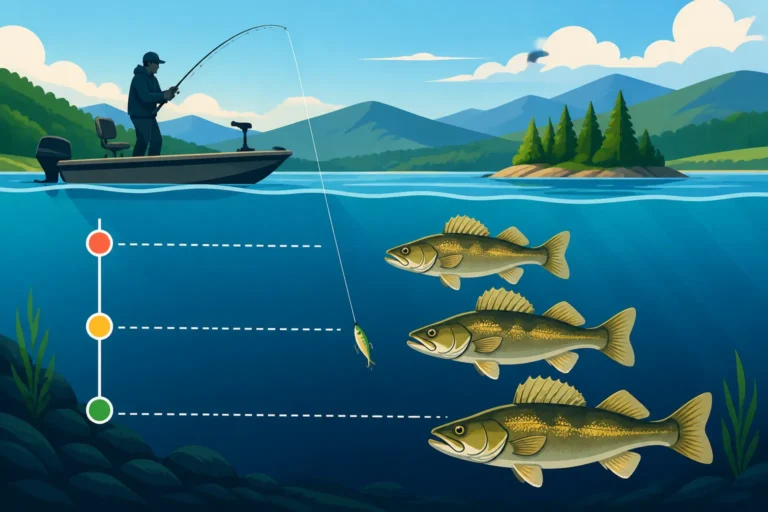
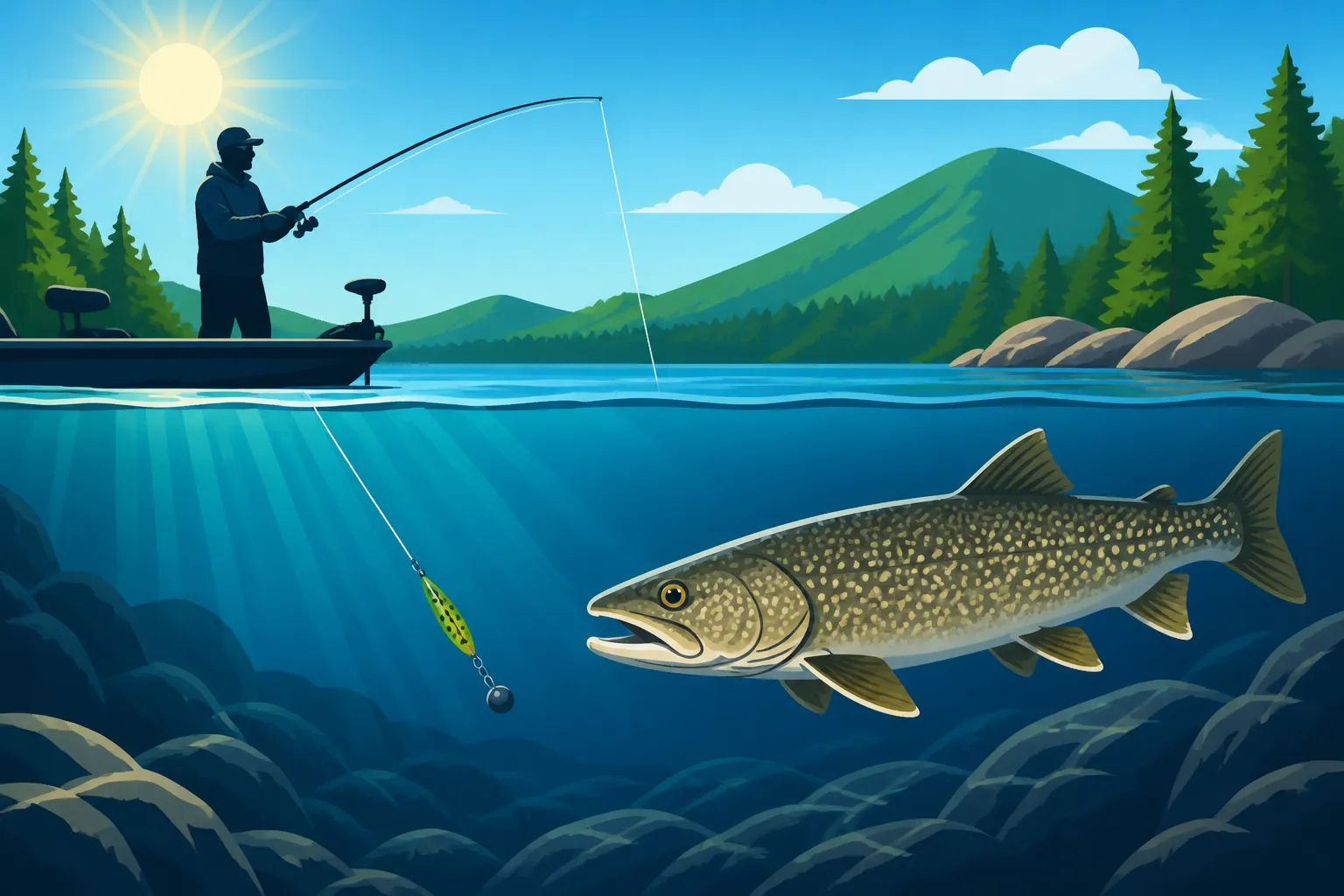
As the surface waters of Vermont's lakes warm up throughout late spring and into summer, lake trout, being a cold-water species, begin a migration to deeper, cooler zones. This isn't just about comfort; it's a matter of survival. Their metabolism is finely tuned to colder temperatures, and prolonged exposure to warm water can stress them significantly. They actively seek out what scientists call the "thermocline" – a layer in the water column where the temperature drops rapidly. Below this line, oxygen levels are usually sufficient, and temperatures remain consistently chilly, often in the 40s and low 50s Fahrenheit, which is perfect for them.
This move to the depths often means lake trout gravitate towards distinct underwater features. They aren't just suspended in open water; they're often relating to structure that offers both cooler temperatures and potential ambush points for baitfish. Think about it like a comfortable, air-conditioned den with a buffet nearby – that's what deep structure provides for a summer laker. Ignoring this natural drive is why many anglers struggle once Memorial Day passes.
Identifying Prime Deep-Water Habitat
So, what exactly constitutes "prime deep-water habitat" for lake trout in Vermont? It's typically a combination of depth, temperature, and underwater topography. Look for sudden drops, humps, underwater islands, rock piles, ledges, and steep breaks that extend down into the cooler thermocline. These features create currents and upwellings that concentrate baitfish, making them irresistible to hungry lake trout.
In a lake like Lake Champlain, these structures can be expansive, running for miles. On smaller, deeper lakes like Lake Willoughby, you might find more isolated but equally productive features. Understanding the Lake Trout Fishing in Vermont landscape is crucial. These deep-water structures act as highways and dining halls for lakers, giving them places to hide, ambush prey, and escape the warm surface water. If your sonar shows a flat, featureless bottom at 80 feet, you're probably barking up the wrong tree. Look for definition, changes, and anomalies – these are the hotspots.
Essential Gear for Deep Structure Lake Trout Fishing
Successfully tackling deep structure for lake trout demands a specialized approach to gear. You can't just use your everyday bass setup and expect to reach the depths and handle these powerful fish. The right equipment makes all the difference, turning frustration into fish on the deck.
Rods, Reels, and Line for Deep Trolling
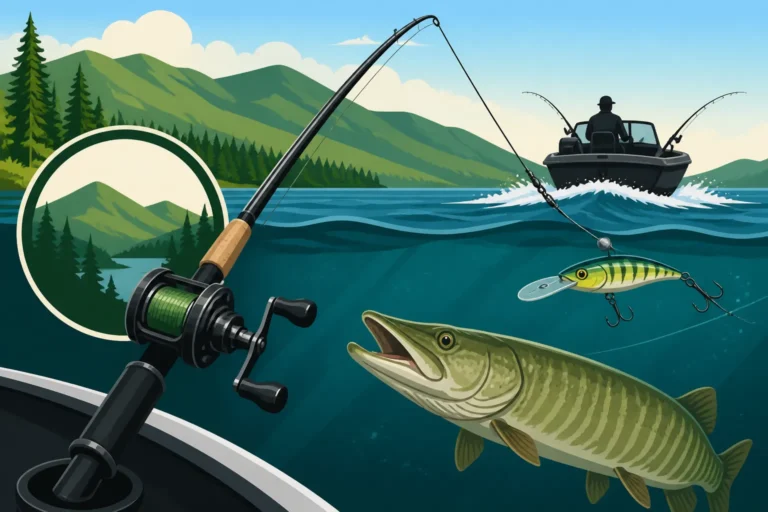
When you're trying to present a lure 80, 100, or even 120 feet down, your rod and reel setup needs to be up to the task. For deep trolling, many anglers opt for medium-heavy to heavy power rods, typically 7 to 9 feet long, with a moderate action. This length helps spread lines in a trolling spread and the moderate action acts as a shock absorber for the heavy pulls of a downrigger ball and a fighting lake trout. Look for rods with a sturdy backbone to handle the weight and fight, but enough tip flexibility to register subtle bites when a laker just "leans" on the lure.
Pair these rods with strong, high-capacity conventional reels, often referred to as "levelwind" or "round baitcasting" reels. These reels are designed to hold hundreds of yards of heavy line and offer the cranking power needed for deep fish. Line choice is critical: many swear by braided line as their main line for its zero-stretch properties, which provides excellent sensitivity for detecting subtle bites and superior hook-setting power at depth. A 30-50 pound test braid is common. You'll then attach a fluorocarbon leader, typically 15-25 pound test, to the braid. Fluorocarbon is nearly invisible underwater, offers good abrasion resistance against structure, and its slight stretch can be beneficial when fighting a strong fish close to the boat. You can find some excellent options for these setups, including Best Fishing Rods for Vermont Lakes, on platforms like Amazon.
Electronics: Your Eyes Below the Surface
In the realm of deep-water fishing, your fish finder and GPS unit aren't just accessories; they are absolutely indispensable. Think of them as your underwater eyes and navigation system. A quality fish finder with good resolution is crucial for identifying deep structure like ledges, humps, and isolated rock piles, as well as marking schools of baitfish and, most importantly, individual lake trout holding tight to that structure. Look for units with advanced sonar technologies like CHIRP and side-imaging to get the clearest picture of what's beneath and around your boat. This is where investing in one of the Best Fish Finders for Vermont Lakes really pays off.
Your GPS unit, often integrated with your fish finder, allows you to mark waypoints on productive structure, record successful trolling passes, and navigate precisely back to those spots. When you find a promising hump or a school of bait with fish suspended nearby, marking it on your GPS lets you make repeatable passes over that exact location. Without solid electronics, you're essentially trolling blind in a vast underwater world, hoping for a lucky strike. Many popular brands offer robust mapping features for Vermont's major lakes, allowing you to study contours and plan your attack before you even leave the dock.
Lures and Baits That Entice Deep Lake Trout
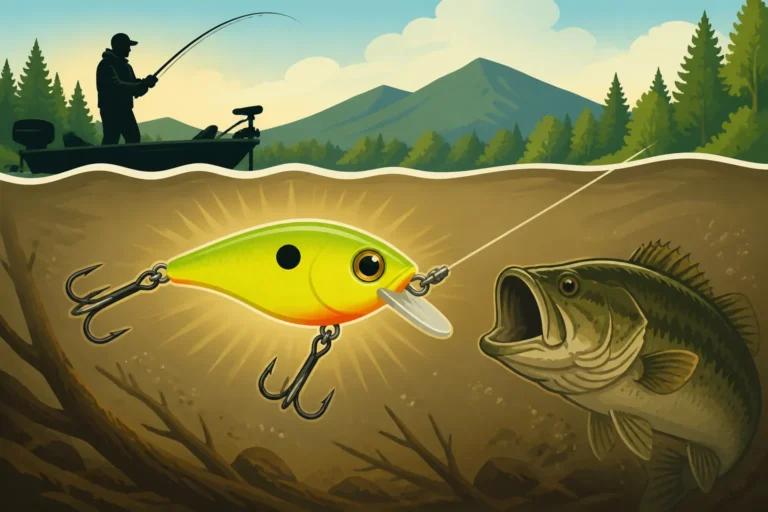
Deep lake trout are opportunistic predators, but presenting the right offering at the right depth is key. Spoons are arguably the most popular and effective lure for deep trolling. Their erratic, wobbling action mimics injured baitfish, and they come in a vast array of colors and sizes. Think silver, chartreuse, blue/silver, or even glow-in-the-dark patterns for deeper, darker conditions. The spoon's action is paramount; make sure it has a lively flutter even at slower trolling speeds.
Plugs and stickbaits that dive deep are also excellent choices, especially those with a tight wiggle that imitates smelt or other forage fish. Colors that mimic local baitfish, like alewives or rainbow smelt, are often highly effective. Some anglers also have success with bait rigs, particularly when fishing live or cut bait like smelt or suckers on a slow troll. The key is to match the hatch and present something appealing. Don't be afraid to experiment with different sizes and colors until you find what the lake trout are keying in on that day. Carrying a varied selection means you're prepared for whatever mood the fish are in.
Mastering Deep Trolling Techniques
Deep structure lake trout fishing isn't just about dropping a line and hoping for the best. It's a calculated dance between understanding your equipment, reading the water, and presenting your lures precisely where the fish are holding.
Downriggers and Dipsy Divers: Reaching the Depths
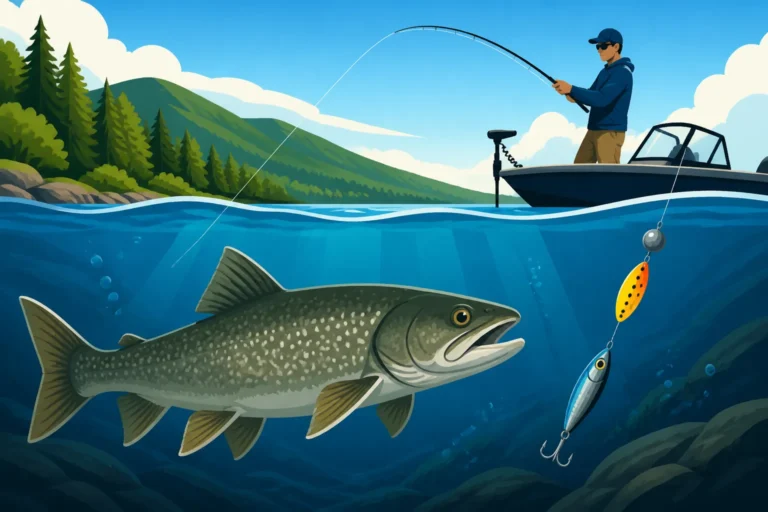
To consistently put your lures in front of deep lake trout, you need tools that can get them down there and keep them at a precise depth. This is where downriggers and dipsy divers shine. Downriggers are the gold standard for precision depth control. They use a heavy lead ball on a wire cable to carry your fishing line (which is temporarily attached via a release clip) down to a specific depth, allowing your lure to swim freely just above or within the thermocline. Once a fish strikes, the line releases from the clip, and you fight the fish directly on your rod. This method provides an incredibly accurate presentation.
Dipsy divers, on the other hand, are self-planing diving devices that use water pressure to pull your line down to a set depth. They don't offer the same pinpoint accuracy as downriggers, but they are a fantastic tool for getting multiple lines down without needing additional heavy equipment. They come in various sizes and can be adjusted to dive to different depths and even track out to the sides of the boat, helping you achieve a wider trolling spread. Combining these tools allows you to cover more water and present lures at various depths simultaneously. Knowing Trolling Techniques for Vermont Lake Trout is paramount to success.
Reading Your Sonar and Interpreting Structure
Your sonar is your most valuable asset when fishing deep structure. It's not enough to just see "fish." You need to learn how to interpret the images on your screen to understand the underwater world. Look for sharp, distinct bottom contours that indicate ledges, humps, or drop-offs. These are the structure. Then, look for baitfish schools. These will often appear as clouds or dense arches. Finally, look for the lake trout themselves. They will often appear as strong, distinct arches, frequently positioned right on the edge of the structure, or suspended just above it, waiting to ambush bait.
Pay close attention to where these elements intersect. A big arch near a baitball, tight to a submerged rock pile at 90 feet, is a prime target. Mark these spots on your GPS immediately. Also, observe how the fish are relating to the structure. Are they on top, along the side, or suspended off an edge? This tells you where to set your downrigger depths. The more you use your sonar, the better you'll become at discerning these subtle but critical details, making your efforts much more efficient than simply dragging lures through open water.
Effective Trolling Patterns and Speeds
Once you've located promising deep structure, your trolling patterns and speeds become crucial for triggering strikes. Lake trout are often triggered by changes in lure speed and direction. Instead of simply trolling in a straight line, try S-turns or gentle curves. When your boat turns, the lures on the inside of the turn slow down and drop slightly, while the lures on the outside speed up and rise. This change in action can often be exactly what's needed to entice a reluctant laker to bite.
Experiment with trolling speeds, typically ranging from 1.5 to 3.0 miles per hour. The ideal speed can vary based on the lure you're using, the water temperature, and the fish's mood. Watch your rod tips or downrigger releases for any indication of a strike. A sudden snap of the rod or the sound of the downrigger releasing means a fish has hit. Pay attention to what works on a given day, noting the depth, lure, and speed. Remember to keep an eye on the Best time to fish Lake Champlain in summer conditions and adjust your approach accordingly. Sometimes, a subtle change in speed is all it takes to turn a slow day into a successful one.
Locating Productive Deep Structures in Vermont Lakes
Vermont is blessed with some incredible deep-water fisheries that hold fantastic lake trout. Knowing where to start your search can save you hours of fruitless trolling. While Lake Champlain is the undisputed heavyweight, other jewels in the Green Mountain State offer exciting deep-water opportunities.
Lake Champlain: A Deep Water Haven
Lake Champlain is, without a doubt, Vermont's premier destination for deep structure lake trout fishing. This massive lake boasts incredible depths, diverse underwater topography, and a robust population of lake trout. The deep water on Champlain extends throughout much of the main lake, particularly in the central and northern sections, as well as parts of the southern lake with deeper channels. Look for areas with pronounced ledges, deep humps, and abrupt drop-offs. Popular spots that often hold fish include the "Gut" near the Champlain Bridge, the deep water off Thompson's Point, and around the many underwater islands and reefs that dot the lake.
The sheer size of Lake Champlain means you'll want to focus on specific areas rather than trying to cover everything. Use detailed contour maps – many quality fish finders come with pre-loaded charts for the lake, or you can purchase specific chart cards on platforms like Amazon. These maps will clearly show you the deep breaks, submerged islands, and other features that lake trout call home in the summer. Remember to consult Vermont Fishing Regulations Explained for any specific rules pertaining to Lake Champlain, as it's a border water with New York. The deeper basins of Lake Champlain offer ample opportunities for catching large lake trout, particularly if you can identify where the baitfish are congregating.
Exploring Other Vermont Deep Water Lakes
While Lake Champlain gets a lot of the spotlight, Vermont has other deep, cold lakes that support healthy lake trout populations. These often provide a more intimate fishing experience without the vastness of Champlain.
| Lake Name | Max Depth (Approx.) | Key Deep Structure Features | Notes |
|---|---|---|---|
| Lake Willoughby | ~320 feet | Steep drop-offs, underwater ledges | Known for clear water, potential for salmon |
| Lake Memphremagog | ~350 feet | Deep basins, humps, international waters | Excellent muskellunge fishing as well |
| Lake Averill (Big) | ~120 feet | Drop-offs, rocky bottom | Good for a quieter experience |
| Maidstone Lake | ~140 feet | Defined contour changes, cold springs | Remote, beautiful setting |
| Echo Lake (Charleston) | ~140 feet | Deep rock piles, ledges | Often overlooked, can be productive |
Lake Willoughby, in particular, is a stunning glacial lake with incredible depths and often crystal-clear water. Its steep walls plunge quickly into the depths, providing excellent habitat. Lake Memphremagog, straddling the US-Canada border, also has significant deep-water areas and supports good lake trout fishing alongside its famous muskellunge. When exploring these smaller, deep lakes, focus on topographical maps to identify the steepest drop-offs, sunken humps, and points that extend into deeper water. These lakes, while smaller, can be incredibly productive for those willing to put in the effort to learn their deep secrets.
Safety Considerations for Deep Water Fishing
Fishing deep water, especially on large lakes, comes with its own set of safety considerations. Conditions can change rapidly, and being prepared is paramount. Always check the weather forecast before heading out, paying close attention to wind predictions. Strong winds can create dangerous waves on large bodies of water like Lake Champlain, even in summer. Make sure your boat is in good working order, with a reliable engine, sufficient fuel, and all required safety equipment. This includes a full set of Life Jacket Requirements for Vermont Boaters for everyone on board, a sound-producing device, navigation lights, and a first-aid kit.
When you're far from shore, particularly in the vastness of Lake Champlain, a VHF radio or a satellite communication device can be a lifesaver, as cell phone service can be spotty. Let someone know your float plan – where you're going and when you expect to return. Consider taking a boater safety course, even if not strictly required for your vessel type, as it will equip you with valuable knowledge for navigating Vermont's waters safely. Deep water fishing is incredibly rewarding, but it's essential to respect the power and unpredictability of these large lakes. Stay safe out there!
Disclaimer
This article is for general informational purposes only and does not constitute professional advice. Laws, prices and regulations vary by location and change over time. Consult a qualified professional for guidance on your specific situation.