Best drop shot rig for Vermont smallmouth
It's incredibly frustrating when you know smallmouth bass are in a spot, maybe even see them on your sonar, but they just won't commit to a bite. They're often picky, especially in Vermont's clear, cold waters, and standard presentations can leave you empty-handed. This guide is all about mastering the drop shot rig, a finesse technique that can turn those finicky smallmouth into active biters, making your next outing on a Vermont lake far more successful.
Understanding the Drop Shot Rig for Finicky Vermont Smallmouth
The drop shot rig is a game-changer for targeting wary smallmouth bass, particularly when they're not actively chasing or are holding tight to structure. It offers a subtle, natural presentation that other rigs simply can't match. If you've ever felt like you're just dragging a lure through empty water, this technique might be the missing piece in your Vermont fishing arsenal.
What Makes a Drop Shot So Effective?
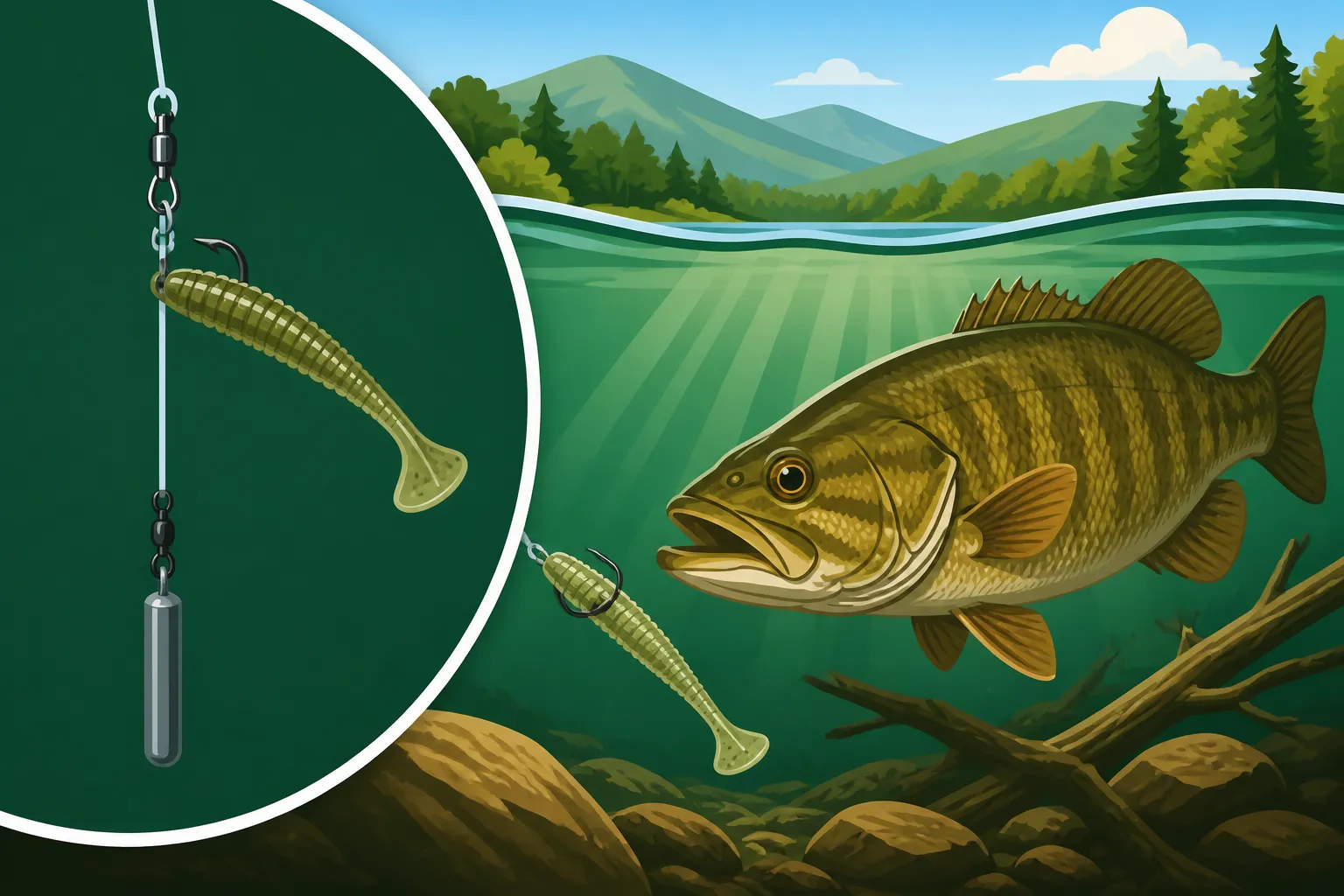
At its core, a drop shot rig presents your bait above the weight, rather than directly attached to it, like a traditional Texas or Carolina rig. This means your soft plastic bait is suspended off the bottom, hovering tantalizingly in the strike zone. Imagine a small baitfish or an injured worm just drifting naturally in the water column—that's the illusion you're creating. This natural movement is key for fooling smallmouth, especially in the pristine, clear lakes and rivers Vermont is famous for. The bait moves with the slightest current or rod tip twitch, mimicking live forage without the weight anchoring its action down.
Another huge advantage, particularly relevant in Vermont's often rocky bottom lakes like Lake Champlain or the many smaller, glacial lakes, is its snag-reducing design. Because the weight is at the very bottom, it's often the first thing to hit obstacles. The weight is designed to detach or slide through rocks and crevices, leaving your hook and bait less prone to getting hung up. This saves you valuable time re-tying and, more importantly, keeps your presentation in the water longer where the fish are. When smallmouth are hugging rocky ledges or deep humps, this rig can fish right in their face without constant hang-ups. For more general advice on hooking these feisty fish, check out our guide on How to Catch Smallmouth Bass in Vermont Lakes.
Ideal Conditions and Locations for Drop Shotting
The drop shot truly shines in specific scenarios that are abundant across Vermont's diverse fishing landscape. It's an absolute go-to when you're fishing clear water, where smallmouth can be very visual and easily spooked by heavy line or unnatural bait movement. Think of the crystal-clear depths of Lake Willoughby or the southern sections of Lake Champlain – these are prime drop shot territories.
When fish are holding to deep structure like submerged humps, rocky points, offshore ledges, or even deeper weed lines, the drop shot allows you to precisely target their depth. You can effectively "hover" your bait right in the fish's face, whether they're 10 feet down or 40 feet deep. It's also incredibly effective when smallmouth are "suspended" – not quite on the bottom, but hanging out above it, maybe chasing schools of baitfish. While primarily a lake technique, it can also be adapted for slower sections of rivers, like the deeper pools of the Winooski River, where current isn't too strong and smallmouth are tucked into eddies or behind cover. For general strategies in specific waters, our Lake Champlain Fishing Guide offers a wealth of information that can be adapted to this technique.
Essential Components of a Vermont Smallmouth Drop Shot Rig
To build an effective drop shot rig that gives you the sensitivity and control needed to trick Vermont's smallmouth, you need the right tools. Each component plays a crucial role in the overall success of the setup, from detecting the faintest bite to landing a hard-fighting bass.
Rod and Reel Selection for Sensitivity
When it comes to drop shotting, sensitivity is paramount. You're often dealing with subtle bites, sometimes feeling like nothing more than extra weight on your line. This calls for a specific rod and reel setup.
-
Rods: Opt for a spinning rod in the 6'6" to 7'2" range, typically with a light to medium-light power. The crucial element is the action, which should be fast or extra-fast. This means the rod bends mostly in the tip section, allowing for incredible sensitivity to detect those faint taps, while still having enough backbone to drive the hook home. A fast tip also helps you impart subtle action to your bait with minimal rod movement. Look for rods with high-modulus graphite construction, as these materials transmit vibrations exceptionally well. Many anglers find excellent options, including specialized drop shot rods, by browsing the fishing section on Amazon, often with detailed reviews from other finesse enthusiasts. For a deeper dive into rods, you might find our guide on Best Spinning Rods for Smallmouth Bass helpful.
-
Reels: A spinning reel in the 2000 or 2500 size is generally ideal. These reels are lightweight, balance well with lighter rods, and have a smooth drag system—which is critical when fighting a strong smallmouth on lighter line. The retrieve ratio isn't as critical as smoothness and consistency, as you're not usually cranking the bait back quickly. A good quality reel ensures no line twist and a consistent retrieve, letting you focus on the feel of your bait.
Line Choices: Braided Mainline to Fluorocarbon Leader
The right line combination maximizes sensitivity and stealth, two non-negotiables for drop shot success.
-
Braided Mainline: Your main line should be braided, typically 6 to 10 lb test. Braid has almost zero stretch, meaning every tick, every change in bottom composition, and every subtle bite is instantly transmitted up the rod. It also casts lighter weights and baits a country mile. The thinner diameter of braid for its test strength also helps it cut through the water, giving you better contact with your weight.
-
Fluorocarbon Leader: Because braid is highly visible in clear water, you'll need a fluorocarbon leader. Fluorocarbon is nearly invisible underwater, a massive advantage for wary smallmouth. It also offers excellent abrasion resistance, which is vital when fishing around rocky bottom or submerged timber. Your leader should typically be 6 to 10 lb test, matching or slightly lighter than your braid. The length can vary, but 6 to 10 feet is a good starting point. You'll connect your braided mainline to your fluorocarbon leader using a strong knot like a Double Uni knot or an FG knot, ensuring a smooth transition that won't impede casting. For more about specific line choices, you can check out Best Fluorocarbon Line for Clear Lake Water.
Hooks, Weights, and Baits
These are the business end of your drop shot rig, and selecting the right ones is crucial for presentation and hook-up ratios.
-
Hooks: Drop shot specific hooks are designed to keep your bait horizontal and minimize snags. Popular choices include straight-shank "Rebarb" hooks or octopus-style hooks, usually in sizes #1 or #2. The key is to nose-hook your soft plastic bait, which allows it to wiggle freely and naturally. Some anglers prefer to wacky rig their bait on a drop shot for even more action, threading the hook through the middle. Experiment to see what the smallmouth prefer on any given day.
-
Weights: Drop shot weights typically come in cylindrical, tear-drop, or round shapes. The cylindrical shape is excellent for slipping through rocks and weeds. Weights usually range from 1/8 oz to 1/2 oz, with 1/4 oz being a versatile starting point for many Vermont waters. Many drop shot weights feature a quick-release clip or swivel, allowing you to easily adjust the depth of your bait or change weights without re-tying your entire rig. This is a huge time-saver on the water.
-
Baits: The world of drop shot baits is vast, but smallmouth typically respond best to subtle, realistic presentations. Think small soft plastics like:
- Minnow Imitations: Flukes, small swimbaits, or stickbaits (2-4 inches) in natural colors like shad, emerald shiner, or clear with fleck.
- Worms: Straight-tail worms (4-6 inches) like the Yamamoto Senko or Berkley PowerBait MaxScent worms, in green pumpkin, black, or natural worm colors.
- Creature Baits: Small tubes or crawfish imitations can be deadly, especially when smallmouth are feeding on crayfish.
The specific colors can vary based on water clarity and light conditions. Generally, natural colors work best in clear water, while brighter or darker colors might be better in stained or low-light conditions.
Tying and Fishing Your Drop Shot Rig for Vermont Smallmouth
Putting the rig together correctly and then knowing how to present it effectively are the final pieces of the puzzle. A perfectly tied knot means nothing if you don't fish it right, and vice-versa!
Step-by-Step Rigging Guide
Tying a drop shot rig is simpler than it looks, and once you get the hang of it, you'll be able to set one up quickly on the water.
- Tie on the Hook: Start by taking your fluorocarbon leader and threading it through the eye of your drop shot hook. Use a Palomar knot – it's incredibly strong and easy to tie. Crucially, as you tighten the Palomar knot, pull it snug, but do not trim the tag end. You want to leave a long tag end, anywhere from 10 inches to 3 feet, depending on how high off the bottom you want your bait to sit. Once the knot is tight, pass the tag end back through the hook eye from the top, so the hook point faces upwards. This ensures your hook stands out horizontally from your main line, which is absolutely vital for a natural presentation and better hookups.
- Attach the Weight: Take that long tag end you left and tie your drop shot weight to its very end. If your weight has a quick-release clip, simply thread the tag end through the clip and secure it. This allows you to easily adjust the distance between your hook and weight, essentially controlling how high your bait floats off the bottom.
- Nose Hook the Bait: Now, take your chosen soft plastic bait. For most applications, you'll simply nose-hook it. This means inserting the hook point through the very tip of the bait's nose, just enough to secure it. This allows the rest of the bait to move freely and naturally in the water column. If you prefer a wacky rig presentation, simply hook the bait through its middle section.
- Adjust Leader Length: The length of your leader (the distance between your hook and your weight) is critical. If fish are hugging the bottom, a shorter leader (6-12 inches) might be best. If they're suspended higher or if you're fishing over taller weeds or structure, a longer leader (18-36 inches) will keep your bait in the strike zone. Don't be afraid to experiment throughout the day!
Drop Shot Techniques and Presentation
The beauty of the drop shot is its versatility in presentation. It's often referred to as a "finesse" technique because it rewards subtle movements over aggressive retrieves.
- Vertical Presentation: The most common way to fish a drop shot is vertically. Cast your rig out, let it sink all the way to the bottom, and then take up any slack line until you feel the weight resting on the lakebed. Now, with your rod tip slightly elevated, you can gently shake, quiver, or twitch the rod tip. This imparts a subtle, enticing action to your bait while the weight stays put on the bottom. The goal is to make the bait look alive without moving the weight too much.
- Dragging and Hopping: Sometimes, a slow drag or hop can trigger bites. After letting your rig sink, slowly drag the weight along the bottom for a few feet, then pause. You can also give a slightly more aggressive lift and drop, hopping the weight a short distance before letting it settle. This can imitate a bottom-feeding creature or a dying baitfish.
- Reading Your Sonar: A quality fish finder is your best friend when drop shotting. Use it to locate deep structure, baitfish schools, and most importantly, smallmouth bass. Once you pinpoint fish, you can adjust your leader length to present your bait exactly at their level. For finding those hidden honey holes, our article on Best Fish Finders for Vermont Lakes is a great resource.
- Setting the Hook: This is different from traditional bass fishing. With a drop shot, a violent, sweeping hookset is usually unnecessary and can often pull the small hook right out of the fish's mouth. Instead, when you feel a bite (which might be a light tap, a mushy feeling, or just added weight), simply reel down quickly to take up slack, then lean into the fish with a steady, firm lift of the rod. Keep pressure on and let your rod and reel's drag do the work.
Common Mistakes to Avoid
Even with the right gear and knowledge, a few common pitfalls can hinder your drop shot success.
- Overworking the Bait: The drop shot is a finesse technique for a reason. Often, less is more. Many anglers make the mistake of shaking the rod too vigorously or constantly moving the weight. This can make the bait look unnatural and turn off wary smallmouth. Let the bait do its subtle dance with minimal input.
- Using Too Heavy a Line or Tackle: While you want a strong enough leader to handle a feisty smallmouth, going too heavy on the fluorocarbon (e.g., 12-15 lb test) can reduce sensitivity and be more visible to fish in clear Vermont waters. Similarly, using an overly stiff rod will make it difficult to impart that subtle action. Stick to the light to medium-light range. Consider what is recommended in Best Tackle for Vermont Smallmouth Bass for general use.
- Not Paying Attention to Line Slack: Slack line is your enemy in finesse fishing. It dulls sensitivity, making it harder to detect bites and get a solid hookset. Always keep a relatively tight line, just enough to maintain contact with your weight and feel for those subtle takes. However, a little bow in the line can sometimes be beneficial as it allows the bait to drift more naturally. It's a fine balance.
- Ignoring the Retrieve Speed of the Bait: Drop shotting isn't about fast retrieves. It's about slow, methodical presentations. Smallmouth often need time to inspect the bait, especially when they're sluggish due to a cold front or other environmental factors. Remember to take your time and let the bait hover, enticing a strike. For more insight into how fish react to changing conditions, our article on Cold Front Fishing Tactics for Vermont Bass could be very insightful.
It's also worth noting that just like different lures work in different water clarities (as discussed in Best Lure Color for Muddy Water Bass Fishing), the subtle action of your drop shot needs to match the fish's mood.
Drop Shot Weight Types and Uses
Understanding the various types of drop shot weights available and their specific applications can significantly improve your fishing success, especially when adapting to Vermont's diverse aquatic environments. Each style offers unique advantages for navigating different bottom structures and presenting your bait effectively.
| Weight Type | Shape | Best Use Cases | Advantages | Disadvantages |
|---|---|---|---|---|
| Cylindrical | Pencil-like | Rocky bottoms, dense weeds, heavy cover | Slips through snags easily, good sensitivity | Can roll on steep slopes if not heavy enough |
| Tear-Drop | Pear-shaped | Open water, softer bottoms, sandy flats, moderate current | Good casting distance, good bottom contact | Can wedge in rocks more easily than cylindrical |
| Round | Ball-shaped | Deeper water, strong current, vertical presentations | Excellent for maintaining bottom contact, casts far | Prone to snagging in rocky terrain |
| Stick | Elongated | Finesse applications, light cover, subtle presentations | Very snag-resistant, delicate feel | Limited casting distance, can be too light in current |
Remember, adjusting your weight size and style isn't just about reaching the bottom; it's about how effectively you can feel the bottom and present your bait. If you're struggling to feel those subtle contours that How to Read Structure for Walleye on Lake Champlain describes (which applies to smallmouth too!), you might need a heavier weight.
Disclaimer
This article is for general informational purposes only and does not constitute professional advice. Laws, prices and regulations vary by location and change over time. Consult a qualified professional for guidance on your specific situation.