Best lure retrieve speed for smallmouth in fall
That crisp autumn air might feel wonderful to us, invigorating and beautiful, but for smallmouth bass in Vermont's lakes, it signals a dramatic shift in their world. As water temperatures drop, these feisty fighters become far less eager to chase down a meal, leaving many anglers scratching their heads about how to entice a strike. If you've found yourself struggling to get a bite from smallmouth once autumn sets in, you're not alone, and this guide is here to walk you through exactly how to adjust your lure retrieve speed to match their changing moods and keep you catching fish throughout the fall.
Understanding Fall Smallmouth Behavior in Vermont
Fishing for smallmouth bass in Vermont during the fall isn't just about throwing your favorite summer lure slower; it's about fundamentally understanding how these fish react to cooling water. Their entire world slows down, and if your retrieve doesn't match that rhythm, you'll be hard-pressed to find success. It's a challenging but incredibly rewarding time to fish, often yielding some of the biggest smallmouth of the year if you dial in your approach.
The Metabolism Shift
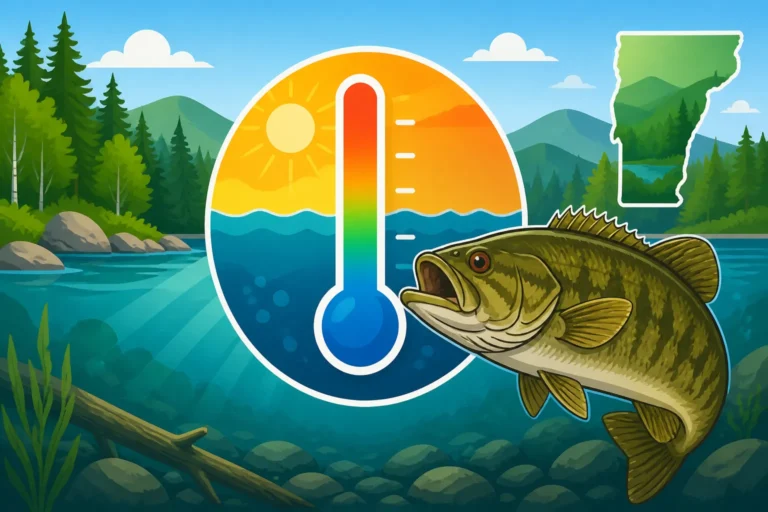
As the days shorten and those glorious Vermont foliage colors emerge, the water temperatures in lakes like Lake Champlain or Lake Memphremagog begin their inevitable descent. This cooling water directly impacts the smallmouth bass's metabolism. Think of it like a cold-blooded engine slowing down; their digestive processes, energy levels, and overall activity diminish significantly. They don't need to eat as often or expend as much energy to survive.
This metabolic slowdown means that the lightning-fast, aggressive chases you might see in July are a rare sight by late October. A smallmouth that would normally dart out from cover to smash a fast-moving topwater bait might now watch it pass by with indifference if it requires too much effort. They become more opportunistic, preferring an easy meal that doesn't demand a lot of energy expenditure. Your job as an angler is to present a lure in a way that is too tempting, and too easy, to resist.
Early Fall vs. Late Fall Patterns
The "fall bite" isn't a singular event; it's a dynamic progression that changes as the season deepens. Early fall, when water temperatures might still be in the 60s down to the low 50s Fahrenheit, can actually be one of the most exciting times to fish. Smallmouth are often still quite active, instinctively trying to gorge themselves and put on weight for the long, lean winter ahead. They'll chase baitfish aggressively, and you might still get away with some faster retrieves, especially if you're targeting areas where schools of alewives or smelt are active. This is often the time when you might still see some spectacular topwater action or powerful strikes on crankbaits.
However, as we push into mid-fall and late fall, with water temperatures consistently dipping below 50 degrees and eventually into the low 40s or even upper 30s, the game changes dramatically. The pre-winter gorging phase gives way to a more survival-oriented mindset. Smallmouth migrate to deeper waters, often congregating on structure like rocky points, ledges, or humps where they can find stable temperatures and easy access to deep-water forage. At this stage, they are conserving energy. A lure presented too quickly will almost certainly be ignored, as it signals too much effort for too little reward. Instead, you need to think "slow, slower, and then even slower." This transition is crucial, and understanding it will dictate your success.
Baitfish Movement and Foraging
Smallmouth bass are primarily piscivores, meaning they feed on other fish. As fall progresses, the behavior of their primary forage — minnows, shiners, perch, and particularly alewives or smelt in larger lakes like Lake Champlain — also changes. These baitfish, being cold-blooded themselves, seek out more stable, often deeper, water as the shallows cool rapidly. This means smallmouth will follow suit. You'll find them moving off shallower flats and points and relating more closely to deeper structure.
This migratory pattern of baitfish influences how smallmouth forage. Instead of scattered feeding across wide areas, they often become concentrated in specific zones where baitfish are holding. This can be a double-edged sword: harder to find them initially, but once you do, you might find a whole school. Your retrieve speed should not only mimic a vulnerable baitfish but also account for the smallmouth's reduced willingness to travel far for a meal. A slow, struggling presentation right in their strike zone is far more effective than a fast one passing meters away. For deeper insights into their feeding habits, check out our guide on What water temperature smallmouth bass prefer.
Matching Retrieve Speed to Water Temperature and Conditions
Adjusting your retrieve speed isn't a one-size-fits-all approach for fall. It's a nuanced dance with the prevailing water temperatures and the activity level of the bass. What works on a warm, sunny early October afternoon might fail miserably on a frigid late November morning.
Early Fall (Water Temps 60s-50s F)
When the leaves are just starting to turn, usually late September through mid-October, and water temperatures are still hovering in the 60s down to the mid-50s, smallmouth bass can still be quite active. This is often an aggressive feeding period as they bulk up for winter. You can still incorporate faster retrieves, especially if you're trying to elicit a reaction strike.
Think about covering water efficiently. Lipless crankbaits, faster-moving deep-diving crankbaits, or even moderate-speed retrieve spinnerbaits can be highly effective. The key is to keep them moving, making them seem like fleeing baitfish. If you're on a productive flat or a main lake point where you know fish are holding, a quick reel and pause can trigger violent strikes. Even topwater baits can still work during this window, particularly on calm, overcast days or around dawn and dusk, although the retrieve will be less frantic than in summer. Keep a keen eye on those bait balls on your fish finder; if the smallmouth are actively busting bait, a faster retrieve can really pay off. For more general advice on tackling these fish, our guide on How to Catch Smallmouth Bass in Vermont Lakes offers a great foundation.
Mid-Fall (Water Temps 50s-40s F)
This is where the slowdown truly begins. As water temperatures consistently fall into the 50s and then into the upper 40s, typically from mid-October through early November, smallmouth become noticeably less willing to chase. This is the sweet spot for many fall anglers who understand the art of the subtle presentation. Your retrieve should become slower, more deliberate, and incorporate significant pauses.
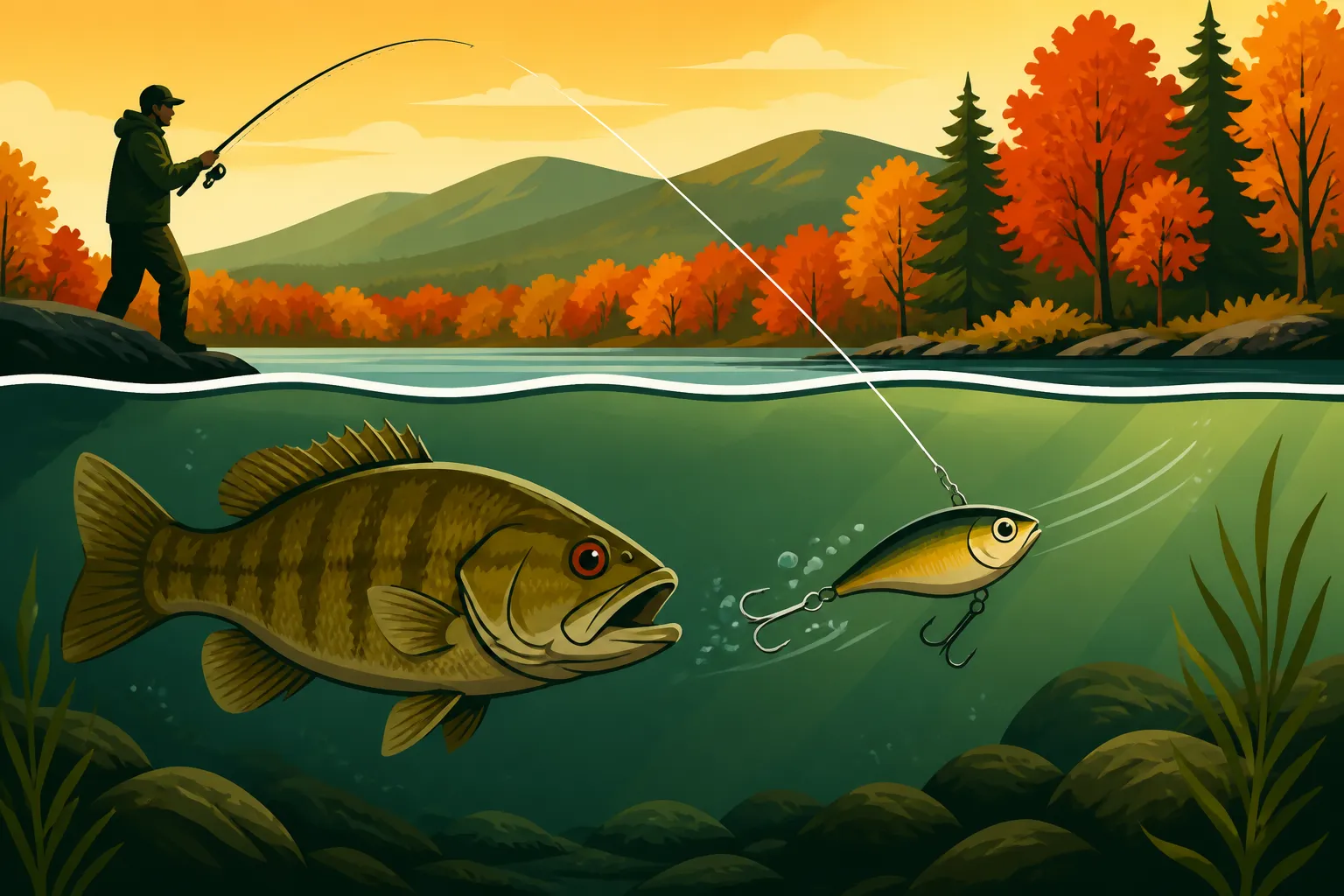
Suspending jerkbaits really shine here. Cast it out, twitch it a few times, and then pause. A long pause. Sometimes five, ten, even fifteen seconds or more. Let the lure hang motionless, mimicking a dying baitfish. The strike often comes on that pause or just as you start your next twitch. Slowly dragged jigs and slow-rolled spinnerbaits are also deadly. You're not trying to get a fish to chase; you're trying to put a meal right in front of its nose that requires minimal effort to eat. Experiment with the length of your pauses and the overall pace until the fish tell you what they prefer. Remember, patience is your best friend in mid-fall.
Late Fall (Water Temps below 40s F)
Once the water dips below 40 degrees Fahrenheit, usually from mid-November until ice-up, smallmouth bass are at their most lethargic. They've settled into their deep wintering holes, often congregating in large schools on the deepest parts of structure or in basins. This is when an extremely slow, often vertical or bottom-hugging, retrieve is paramount.
Jigs, especially football jigs, Ned rigs, or dropshot rigs, become your primary weapons. These are designed for subtle, bottom-oriented presentations. Think about "dragging" your bait rather than reeling it. Let your jig sit on the bottom for extended periods, then just barely move it, a slight lift, a small hop, or a short drag. The bites will often feel like a subtle "thump" or just added weight on your line, rather than a hard strike. Vertical jigging over deep schools, with very minimal lifts and drops, can also be highly effective. At this stage, fish are conserving every ounce of energy, and your lure needs to be presented in a way that is an absolute can't-miss opportunity. For specific locations where you might find these deep schools, check out Best Smallmouth Bass Spots on Lake Champlain.
Essential Lures and Their Ideal Fall Retrieve Speeds
Having the right lure is only half the battle; knowing how to work it at the correct speed for fall smallmouth is the other, often more crucial, half.
Jerkbaits: The Art of the Pause
When it comes to fall smallmouth, suspending jerkbaits are often the undisputed champions. Lures like the Rapala Shadow Rap, Megabass Vision 110, or Lucky Craft Pointer are designed to hang motionless in the water column when you pause your retrieve. This motionless pause is absolutely critical for triggering strikes from sluggish smallmouth.
In early fall (60s-50s F), you might start with a retrieve pattern of "twitch, twitch, pause (2-3 seconds), twitch, twitch, pause." The goal is to make the bait dart erratically, then stop suddenly, mimicking a disoriented baitfish. As you move into mid-fall (50s-40s F), those pauses get longer. Try "twitch, pause (5-7 seconds), twitch, pause (10 seconds)." The fish are inspecting the lure, and that long pause gives them time to decide to strike without feeling rushed. By late fall, you might be looking at "twitch, pause (15+ seconds), twitch." The patience required can be agonizing, but the reward of a big smallmouth on a cold day is immense. For specific techniques, refer to our deep dive on Best crankbait retrieve for Champlain smallmouth. If you're looking to stock up on some new jerkbaits before your next trip, you can often find great deals on a variety of suspending models on Amazon.
Jigs and Soft Plastics: Slow and Deliberate
Jigs and soft plastics are incredibly versatile for fall smallmouth because they excel at slow, bottom-oriented presentations. Football jigs, Ned rigs, and dropshot rigs are particularly effective as water temperatures drop.
- Football Jigs: These are fantastic for probing rocky bottoms and ledges where smallmouth often congregate. Your retrieve should be a slow drag across the bottom, with occasional short hops. Think about moving the lure just enough to trigger a reaction, but not so much that it's difficult for a sluggish bass to intercept. Let the jig sit for a few seconds after each move. The scent trails of soft plastic trailers can also be a big advantage when fish are less active.
- Ned Rigs: The Ned rig, often considered a finesse technique, is an absolute fall killer. Its buoyancy allows it to stand straight up off the bottom, presenting a tempting, easy meal. The retrieve is incredibly slow: cast it out, let it sink, and then either dead-stick it (let it sit completely still), drag it slowly with your rod tip, or impart tiny shakes to the rod tip without moving the lure much horizontally. The bites on a Ned rig are often subtle, just a slight increase in weight or a light tap. If you need to grab some specialized Ned rig jig heads and plastics, Amazon is a convenient place to find a wide selection.
- Dropshot Rigs: When smallmouth are suspended over deep water or hugging tight to specific pieces of structure, a dropshot rig is hard to beat. The beauty of a dropshot is that your bait is presented horizontally at a fixed depth above your weight. The retrieve involves very subtle rod tip wiggles or "shaking" to make the plastic quiver in place. You're not moving the weight much, just animating the bait. This can be deadly for extremely lethargic fish that won't move far from their comfort zone.
Crankbaits and Spinnerbaits: Speed Adjustments
While faster retrieves are generally out the window in late fall, crankbaits and spinnerbaits still have their place if used correctly. It's all about adjusting that speed and understanding the fish's activity.
- Deep-Diving Crankbaits: In early to mid-fall, especially when water temps are still in the 50s, deep-diving crankbaits can be fantastic for finding schools of smallmouth on deep points and humps. However, instead of burning them back to the boat, try a moderate, steady retrieve. Focus on getting the bait to deflect off bottom structure; these deflections are often what trigger strikes. The slower speed gives the fish more time to react to the bait as it "climbs" over rocks or stumps.
- Spinnerbaits: While often associated with power fishing, spinnerbaits can be highly effective in fall if slow-rolled. This means using a retrieve just fast enough to keep the blades spinning and the bait above any snags, often just barely. Target rocky banks, submerged timber, or weed lines (if any are still present). The slow, thumping vibration can appeal to less active fish. Consider larger blades for more throb and flash at slower speeds. The key is to avoid a fast, aggressive retrieve and instead present it as an easy target. When fishing deeper, cold water, a steady retrieve is often better than trying to make it too erratic. For robust, cold-weather apparel perfect for a day on Lake Champlain, you'll find a wide selection of brands on Amazon to keep you comfortable during those cooler fall days.
Here's a quick summary to help you plan your fall smallmouth strategy:
| Water Temp Range (F) | Fall Stage | General Retrieve Speed | Key Lure Types |
|---|---|---|---|
| 60s – 55s | Early Fall (Aggressive) | Moderate to Fast | Crankbaits, Lipless Cranks, Spinnerbaits, Topwater (dawn/dusk) |
| 55s – 45s | Mid-Fall (Transitioning) | Slow with Long Pauses | Suspending Jerkbaits, Slow-Rolled Spinnerbaits, Football Jigs |
| 45s – 30s | Late Fall (Lethargic) | Extremely Slow/Vertical | Ned Rigs, Dropshot Rigs, Football Jigs, Vertical Jigs |
This table provides a good starting point, but always let the fish tell you what they want on any given day. Conditions like bright sun versus overcast skies, or the presence of a cold front, can all influence how aggressive (or inactive) smallmouth will be. For more on adapting to these conditions, check out our insights on Cold Front Fishing Tactics for Vermont Bass.
Ultimately, fall smallmouth fishing in Vermont is a lesson in patience and adaptation. The key takeaway is simple: as the water cools, your retrieve needs to slow down, often dramatically. Forget those fast, erratic summer retrieves and embrace the art of the subtle, deliberate, and paused presentation. By matching your retrieve speed to the bass's metabolism and mood, you'll unlock some of the most rewarding and memorable smallmouth fishing experiences Vermont has to offer. Don't be afraid to experiment, and always pay close attention to the small details the fish are telling you.
Disclaimer
Fishing conditions and regulations in Vermont can change, and it's always the angler's responsibility to stay informed. Please consult the most current Vermont Fish & Wildlife Department regulations before heading out on the water. This guide is for informational purposes only and does not constitute legal advice. Stay safe and enjoy your time fishing!