Best lure color for muddy water bass fishing
We've all experienced that moment: you wake up excited for a day of bass fishing on your favorite Vermont lake or river, only to find the water is churned up, brown, and murky from recent rains or heavy runoff. It's frustrating, isn't it? You might wonder if it's even worth casting a line, let alone which of your meticulously organized lures stands a chance. This guide is here to cut through the confusion and help you understand exactly which lure colors give you the best shot at success when the water looks like chocolate milk.
Understanding Why Water Gets Muddy in Vermont (and Why it Matters for Bass)
Muddy water isn't just an inconvenience; it completely changes the underwater environment and, consequently, how bass hunt and behave. In Vermont, with our mix of agricultural lands, forested mountains, and often intense weather patterns, murky conditions are a common reality for anglers throughout the year.
Common Causes of Murky Water
Heavy rains are arguably the biggest culprit, washing silt, clay, and organic debris from shorelines and tributaries into our lakes and rivers. Think of the Winooski River after a solid downpour, or how parts of Lake Champlain near river mouths can get stained. This influx of sediment drastically reduces water clarity, often turning the gin-clear shallows into a cloudy mess in a matter of hours. Snowmelt in spring can also contribute, carrying similar particulate matter as it flows into waterways. Beyond natural events, human activity plays a role too; boat traffic can churn up shallow bottoms, especially in popular spots or narrower channels, creating temporary but significant turbidity. Construction runoff, though less common in pure fishing scenarios, can also contribute.
When the water gets murky, visibility plummets. What was once clear enough for bass to spot a subtle baitfish from several feet away might now only offer them a few inches of vision. This profound change means that the primary way bass hunt—sight—is severely hampered.
How Bass React to Reduced Visibility
Imagine trying to navigate and find food in a dark room. That's essentially what bass are doing in muddy water. Their reliance on sight diminishes, and other senses become incredibly important. Their lateral line, a sensory organ running along their sides, is paramount. This system detects vibrations and pressure changes in the water, allowing them to "feel" prey moving nearby, even if they can't see it. This is why a lure with a strong thump or rattle can be so effective.
Their sense of smell, while often underestimated by anglers, also plays a more critical role. Bass can detect subtle chemical cues in the water, helping them locate prey or track injured baitfish. Because of this, adding scent to your lures can be a game-changer.
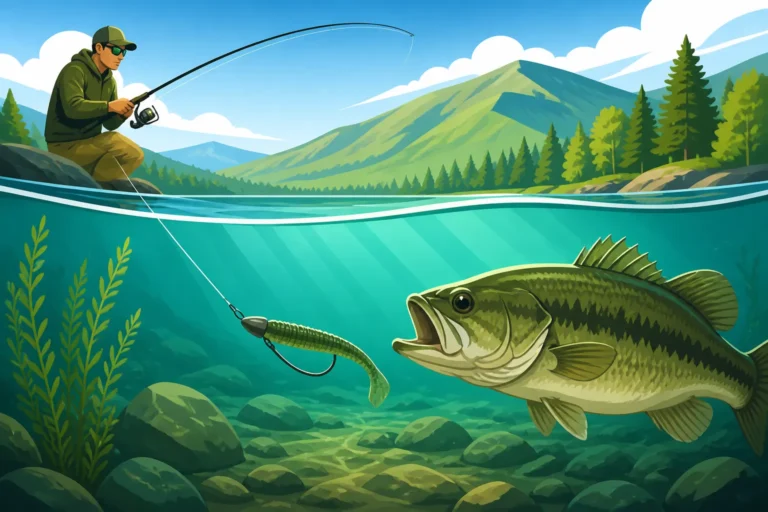
Behaviorally, bass might move. Instead of cruising open waters, they're more likely to hug cover tightly – submerged logs, rock piles, weed lines, or even docks. They do this for several reasons: it provides ambush points where prey might blunder past, and it can also offer slightly clearer pockets of water or areas where the current is less intense. They also tend to become less aggressive and more lethargic, conserving energy and waiting for an easy meal rather than chasing down fast-moving prey. Understanding these shifts is crucial for anyone hoping to be successful at How to Catch Largemouth Bass in Vermont or even How to Catch Smallmouth Bass in Vermont Lakes in these conditions.
The Science Behind Lure Colors in Murky Water
Choosing the right lure color isn't just guesswork; there's a good bit of science behind why some colors shine in muddy conditions while others fade into oblivion. It all comes down to how light behaves underwater and how bass eyes are designed.
Light Penetration and the Color Spectrum
Water, especially murky water, acts as a filter for light. As sunlight penetrates the surface, different wavelengths (which we perceive as colors) are absorbed at varying rates. Red is the first color to disappear, often becoming invisible just a few feet below the surface, even in relatively clear water. Orange and yellow follow, then green, and finally blue. In muddy water, this absorption happens much faster. The suspended particles scatter and absorb light even more aggressively, meaning that many colors effectively vanish almost immediately.
This is why traditional "natural" colors like subtle greens, browns, and lighter blues, which might be deadly in clear water, become completely ineffective in turbid conditions. They simply don't reflect enough light to be seen by a bass. Instead, we need colors that either stand out because they transmit a visible wavelength longer or create a stark contrast.
Bass Vision in Low Light
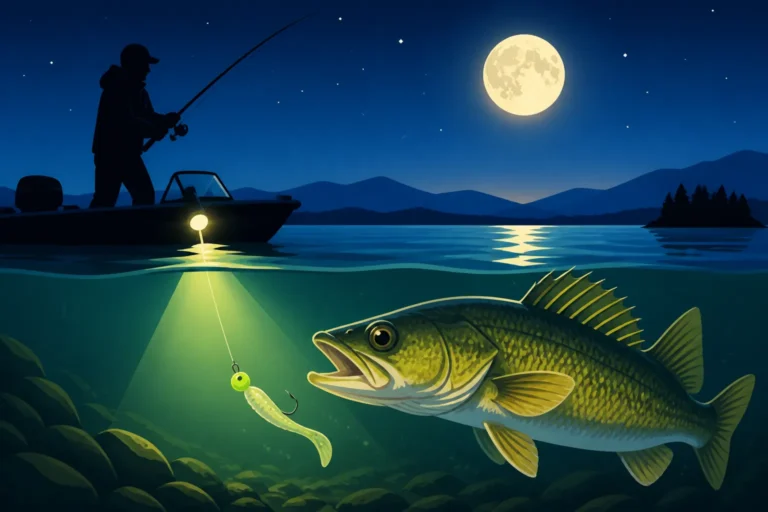
Bass aren't colorblind, but their vision is particularly adapted to low-light conditions. They have a higher concentration of rod cells in their eyes, which are responsible for detecting movement and contrast, especially in dim environments. While they can perceive color, their ability to discern fine color distinctions decreases as light levels drop.
This means that in muddy water, a bass is less likely to differentiate between two shades of green, for example. What they will notice is a sharp contrast or a color that's simply "bright" or "glowing" enough to register against the dull background. This is why fluorescence and strong, unnatural colors become so effective. They create a visual signal that stands out, even when the overall light is poor. This also explains why something that creates a stark silhouette can be equally as effective – it's all about making the lure detectable. This is particularly important when considering Best Bass Fishing Techniques for Lake Champlain when dealing with runoff.
Top Lure Colors for Muddy Water Bass in Vermont (and When to Use Them)
Now that we understand the "why," let's dive into the "what." When fishing for bass in murky Vermont waters, certain colors consistently outperform others. These aren't just random choices; they're colors that capitalize on how light penetrates turbid water and how bass perceive their environment in low visibility.
The Power of Bright, Contrasting Colors
When bass can't rely on sight, you need to give them something impossible to miss. Bright, fluorescent, and contrasting colors achieve exactly that.
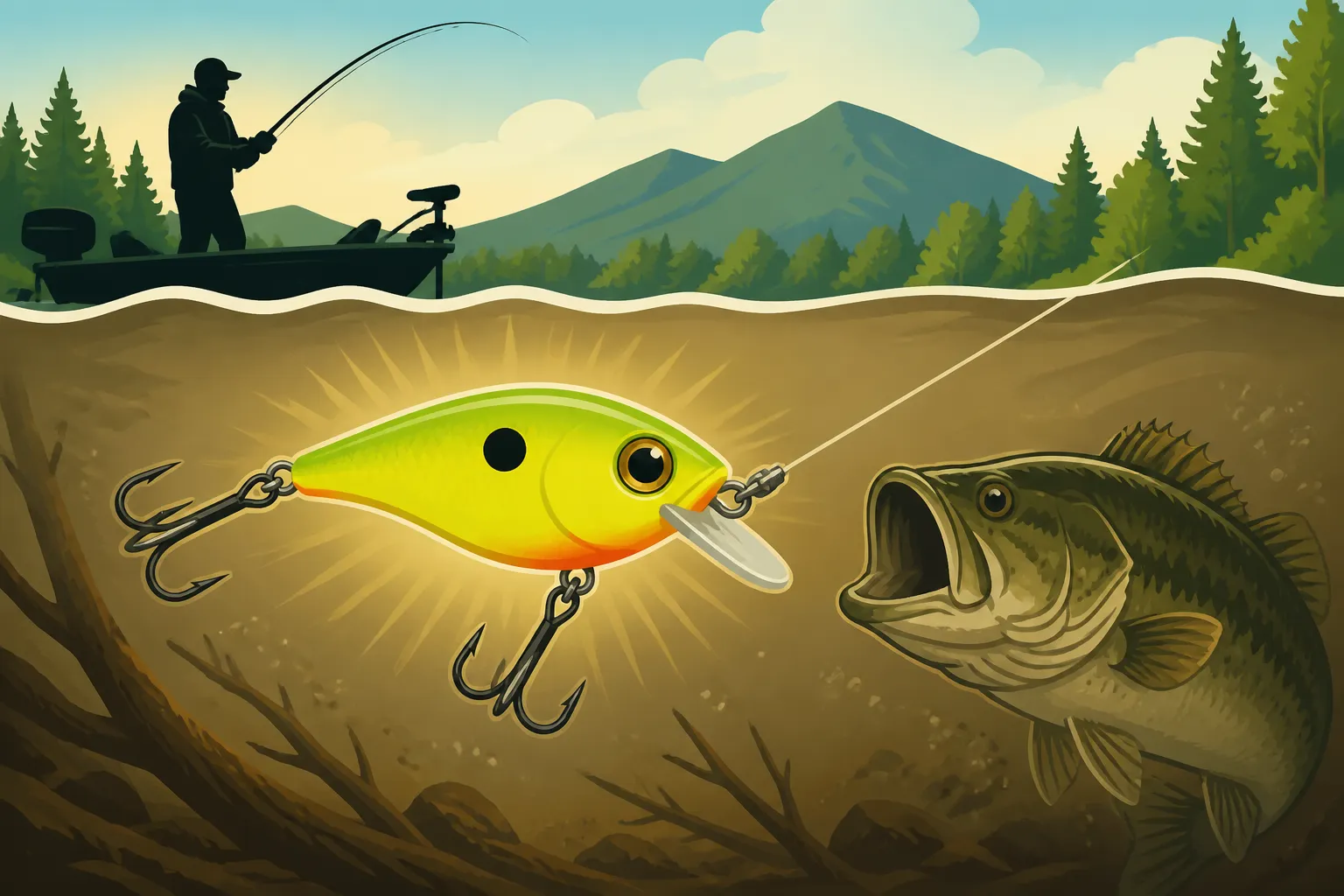
- Chartreuse: If there's one color that screams "muddy water bass fishing," it's chartreuse. This vibrant yellow-green hue is highly visible because it reflects a lot of light, even in low-light conditions. It doesn't disappear quickly in the color spectrum underwater, making it a beacon in stained water.
- Applications: Chartreuse shines on spinnerbaits, bladed jigs (like the popular ChatterBait), crankbaits, and even on the tails of jigs or soft plastics.
- Real-life Scenario: Imagine casting a chartreuse and white spinnerbait along a muddy shoreline on Lake Bomoseen after a heavy rain. The blades provide the critical vibration, and the chartreuse skirt offers that undeniable visual flash. Bass might not see the spinnerbait from far away, but as it passes their ambush point, that bright pop of color is often enough to trigger a reaction strike. You can find a wide range of chartreuse lures on platforms like Amazon, making it easy to stock up.
- Orange/Red: While pure red disappears quickly, vibrant oranges and fiery reds often have a surprising punch in muddy water, especially when used in conjunction with other colors. These colors can mimic crawfish, a primary food source for bass in many Vermont lakes and rivers, or the gills of an injured baitfish.
- Applications: Think red or orange on the underside of a crankbait, a reddish jig skirt, or even a punch skirt with red accents.
- Real-life Scenario: On a cloudy day with stained water on the Otter Creek, a lipless crankbait with a bright orange belly, retrieved with erratic pulls and pauses, can be irresistible. The flashes of orange mimic a struggling crawfish trying to escape, a visual cue that can cut through the murk and provoke an attack. Look for options on Amazon that combine these colors with strong rattles for double the effectiveness.
- White: Often overlooked in muddy water because it's not "bright" in the fluorescent sense, pure white offers incredible contrast, especially when paired with another color. It mimics shad or other silvery baitfish that might be struggling in the turbid water.
- Applications: White spinnerbaits (often paired with chartreuse), white swim jigs, or white soft plastic paddle tails can be incredibly effective.
- Real-life Scenario: Picture casting a white swim jig into dense cover in a muddy pond after a spring rain. The white color creates a distinct profile against the dark background, and the jig's subtle movements look like an easy meal to a lurking largemouth. Sometimes, adding a touch of chartreuse to the tail of the white jig can make it even more potent.
The Case for Dark Silhouettes
Sometimes, it's not about being bright, but about being bold. In extremely muddy or very low-light conditions (like an overcast day, or even night fishing), a strong silhouette can be more important than a bright color.
- Black/Blue: This combination is a mud-water classic for a reason. Against a dark, muddy background, black creates the starkest possible silhouette. When viewed from below against the lighter sky (even an overcast one), a black and blue lure looks like a large, easy-to-target meal. The blue adds a subtle contrast that bass seem to key in on.
- Applications: Black and blue excel in jigs (especially flipping and pitching jigs), creature baits, and larger soft plastic worms or swimbaits.
- Real-life Scenario: You're flipping a heavy black and blue jig into thick laydowns or dense lily pads on Lake Carmi, where the water is heavily stained. The bulky profile and dark color create a strong visual target for bass hiding in the shadows. The subtle movements of the jig skirt give off just enough vibration, and the dark color makes it appear larger and more substantial to a bass relying on its lateral line and silhouette vision. This combination is a go-to for many anglers, and many different styles are readily available on Amazon.
- Junebug/Plum: These are deep, purplish hues that, like black and blue, create excellent silhouettes. Junebug, in particular, often has flecks of green or blue glitter that can catch what little light penetrates the water, adding a subtle shimmer that mimics natural bait.
- Applications: Primarily used in soft plastics like worms, creature baits, and sometimes jig trailers.
- Real-life Scenario: When the water isn't quite chocolate milk, but a deep coffee stain, a Texas-rigged Junebug worm pitched into heavy brush or along a rock wall can be very effective. The dark color offers a strong outline, and the occasional glint from the glitter can draw a curious bass closer.
Hybrid and Two-Tone Options
Don't be afraid to mix and match! Many successful muddy water lures combine elements of bright contrast and strong silhouette. For example, a black and blue jig with a chartreuse trailer gives bass the option of keying in on the silhouette or the bright pop of color. This versatility can be a secret weapon when water clarity is highly variable or when you're unsure exactly how much light is penetrating the water column.
Beyond Color: Other Factors for Muddy Water Success
While lure color is crucial in muddy water, it's just one piece of the puzzle. To truly maximize your chances when the water's murky, you need to consider how bass are using their other senses and adjust your presentation accordingly. These techniques often go hand-in-hand with choosing the right lure color.
Vibration and Sound
As we discussed, the lateral line is a bass's superpower in low visibility. Therefore, anything that creates strong vibrations or sound underwater is going to be far more effective than a silent, subtle bait.
- Bladed Jigs (ChatterBaits): These are perhaps the quintessential muddy water lure. The hexagonal blade vibrates wildly, sending out an unmistakable thumping action that bass can feel from a distance. Pair a chartreuse or black/blue skirt with a vibrating blade, and you've got a winning combination.
- Rattling Crankbaits & Lipless Crankbaits: Lures with internal rattles produce distinct sounds that travel well through turbid water. The louder, the better sometimes! Their erratic swimming action also creates significant water displacement. This is a tactic that can be particularly useful when fishing Best Fishing Lakes in Vermont that have recently seen a lot of rain.
- Spinnerbaits: The spinning blades not only flash (providing a visual cue if any light penetrates) but, more importantly, create a strong vibration signature that bass can hone in on. Larger blades generally mean more vibration.
- Jigs with Rattle Chambers: Many flipping and pitching jigs come equipped with small rattle chambers or allow you to add them. This subtle sound can make a big difference when the bass are buried deep in cover.
When you combine a highly visible color with strong vibration, you're essentially shouting at the bass with two different senses, greatly increasing your lure's detectability. This is especially true after heavy rains, a topic often explored in discussions about Fishing after a heavy rain on Vermont rivers.
Scent and Profile
Since bass rely more on smell in muddy water, adding a scent to your lure can provide an extra layer of attraction. Scent sprays, gels, or even soft plastics infused with garlic or fish oils can give bass a reason to hold onto your bait longer, allowing you more time to set the hook.
A larger, bulkier profile also helps. A small, subtle bait that might be perfect in clear water will get lost in the murk. Opt for lures with a larger presence, whether it's a bulkier jig, a bigger soft plastic creature bait, or a crankbait with a wider wobble. This makes it easier for the bass's lateral line to detect the lure's presence.
Retrieve Speed and Presentation
Muddy water often means bass are less aggressive and holding tighter to cover. This calls for a slower, more deliberate retrieve. You want to keep your lure in the strike zone longer, giving the bass ample time to detect it with their limited visibility and heightened lateral line sense.
- Slow Roll: For spinnerbaits and swim jigs, a slow, steady retrieve that just barely keeps the blades turning or the paddle tail thumping is often ideal.
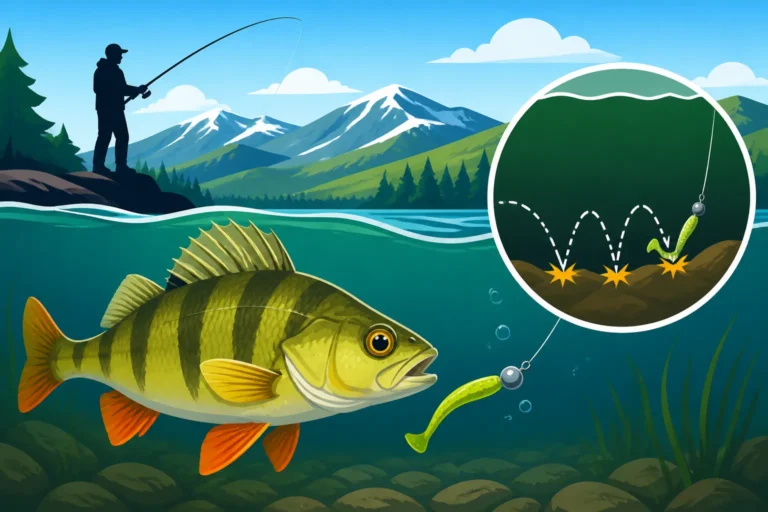
- Crawling Jigs: When fishing jigs, slowly drag or hop them along the bottom, pausing frequently. This mimics a crawfish or other bottom-dwelling prey moving sluggishly.
- Target Cover Precisely: Focus your casts on high-percentage areas: laydowns, rock piles, dock pilings, and dense weed edges. Get your lure right into the strike zone, almost bumping the cover, because the bass won't move far to intercept it. Don't be afraid to make multiple casts to the same piece of cover from different angles. This careful approach is key to understanding Cold Front Fishing Tactics for Vermont Bass, as these conditions can also make bass more lethargic.
By combining the right colors, strong vibration, appealing scents, and a thoughtful presentation, you can turn a seemingly hopeless muddy water day into a productive and exciting bass fishing experience right here in Vermont. Whether you're targeting smallmouth or largemouth, these strategies provide an edge. If you're looking for more general guidance, check out our guide on the Best Time of Year to Fish in Vermont, though muddy water tactics are often applicable outside of prime windows.
Summary of Muddy Water Lure Choices
Here's a quick reference table to help you pick your baits when facing turbid conditions:
| Lure Type | Best Colors | Why It Works | Key Attribute Beyond Color |
|---|---|---|---|
| Spinnerbait | Chartreuse, White/Chartreuse | High visibility, flash, distinct vibration | Blade vibration, flash |
| Bladed Jig | Chartreuse, Black/Blue | Extreme vibration, bold profile, high visibility or strong silhouette | Intense thump/vibration |
| Crankbait (rattling) | Orange, Red, Chartreuse | High visibility, erratic movement, sound attraction | Internal rattles, erratic wobble |
| Jig (flipping/pitching) | Black/Blue, Junebug, Red/Orange | Strong silhouette, bulky profile, crawfish imitation | Bulk, potential for rattles/scent |
| Soft Plastics | Black/Blue, Junebug, Chartreuse (accents) | Strong silhouette, can be scented, versatile for mimicking various prey | Scent, erratic action (Texas-rig) |
| Swim Jig | White, Chartreuse, Black/Blue | Creates clear profile, good for cover, subtle vibration with paddle tail | Profile, subtle paddle action |
When you're browsing for these, keep an eye out for brands that offer these specific colors and features. Sometimes, a quick search on Amazon for "chartreuse bladed jig" or "black and blue flipping jig" can yield exactly what you need.
Disclaimer
Fishing regulations, conditions, and best practices can change. Always consult the latest Vermont Fish and Wildlife Department regulations before heading out. This guide provides general information and recommendations, and success in fishing is never guaranteed. Always prioritize safety on the water.