Best landlocked salmon trolling spots on Lake Willoughby
Trying to find landlocked salmon on Lake Willoughby can feel like searching for a needle in a haystack, especially with its immense depth and crystal-clear waters. These powerful fish aren't just swimming anywhere; they have distinct preferences for temperature, baitfish location, and specific structural elements that make a huge difference in your success. This comprehensive guide will peel back the layers of Lake Willoughby, revealing the prime trolling spots where you're most likely to hook into some impressive landlocked salmon.
Understanding Lake Willoughby's Unique Salmon Fishery
Lake Willoughby isn't just another body of water in Vermont; it's a geological marvel often referred to as the "Lucerne of America" due to its stunning fjord-like characteristics and incredible depth. This unique environment creates very specific conditions that landlocked salmon absolutely thrive in, but also conditions that make them challenging to locate.
Why Lake Willoughby is a Landlocked Salmon Gem
First off, Lake Willoughby boasts incredible depth, plunging over 300 feet in its deepest sections. This massive volume of cold, oxygen-rich water is precisely what landlocked salmon, which are essentially Atlantic salmon that no longer migrate to the sea, need to survive and grow. Unlike some shallower lakes where summer heat pushes salmon into a narrow, uncomfortable thermocline, Willoughby offers vast expanses of ideal habitat year-round.
But depth isn't the only factor. The lake also supports a robust population of rainbow smelt, which are the primary forage fish for salmon and lake trout here. Without this abundant food source, the salmon wouldn't grow to the impressive sizes they do. They follow these baitfish schools diligently, meaning if you can find the smelt, you're usually not far from the salmon. However, this also means that if the smelt move, so do the salmon, making pattern fishing a constant learning process. The clear water, while beautiful, also means that salmon can be spooky, requiring subtle presentations and longer leads, particularly on bright, sunny days.
The Elusive Nature of Landlocked Salmon
Landlocked salmon are inherently a bit enigmatic. They're constantly on the move, chasing their food source and seeking out that perfect water temperature. They generally prefer water in the mid-50s Fahrenheit, which can be near the surface during cooler spring and fall months, or deep down in the thermocline during the heat of summer. This constant quest for comfort and food makes them a challenge for even seasoned anglers.
Unlike some fish that hold tight to structure, salmon often roam in open water, suspending over great depths. This makes them tricky to target without a good understanding of their seasonal movements and the lake's unique underwater topography. When you find them, they often hit hard and fight with incredible acrobatics, making them a truly prized catch. For this reason, many anglers seek out experienced local guides who've spent countless hours unraveling their patterns. Platforms like FishingBooker can connect you with guides specializing in Lake Willoughby, who often have decades of experience reading the lake and its salmon. Understanding their movements throughout the season is key to consistent success.
Prime Trolling Locations for Landlocked Salmon on Lake Willoughby
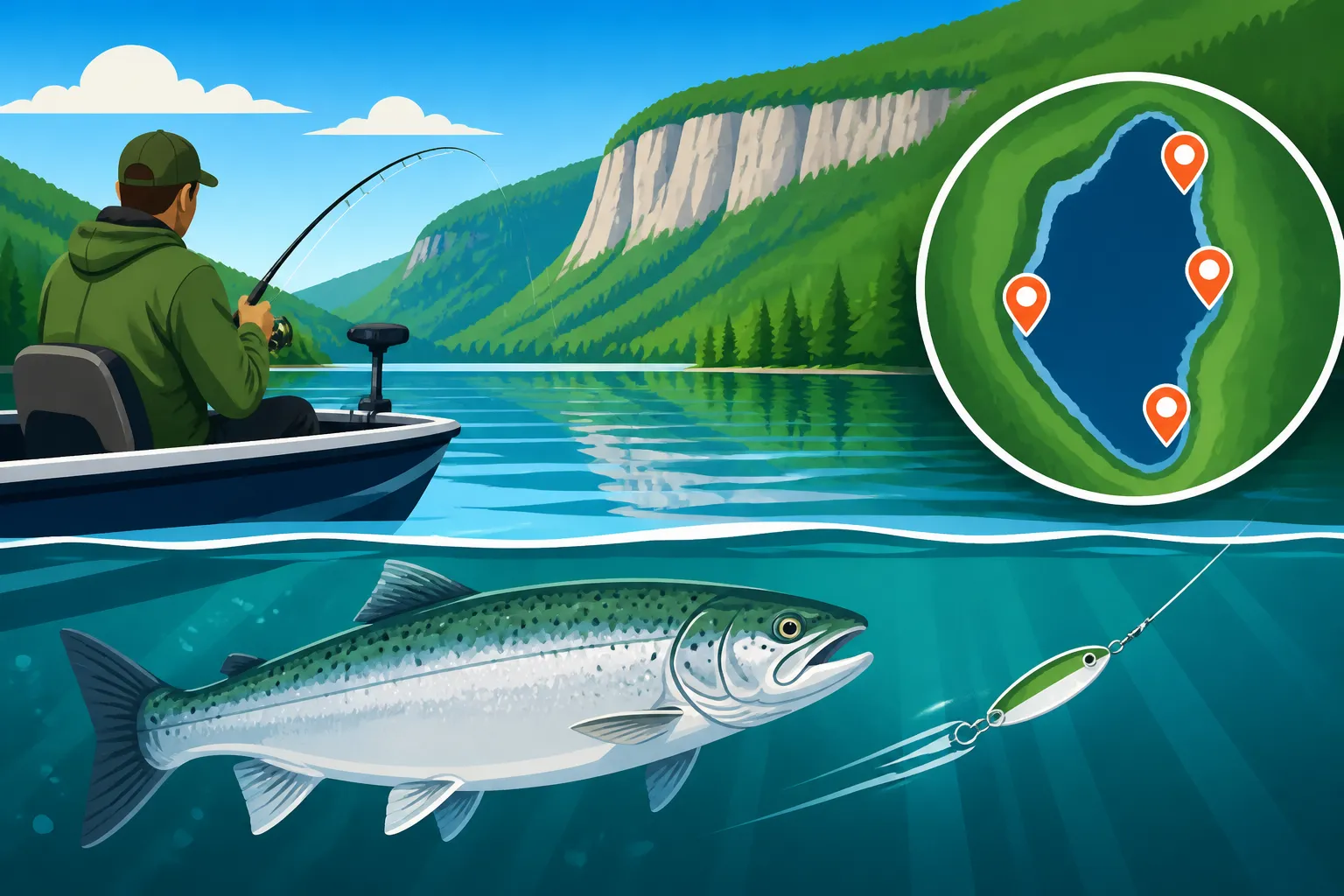
Lake Willoughby, with its distinct north and south ends and massive central basin, offers a variety of trolling opportunities. Knowing where to focus your efforts based on the time of year and water conditions will drastically improve your chances.
The North End Drop-Offs
The north end of Lake Willoughby, near the town of Westmore, features some significant deep-water access points and dramatic drop-offs that are absolute magnets for landlocked salmon. As you launch from the public access area, you'll immediately encounter deep water, which transitions rapidly from relatively shallow shelves to hundreds of feet.
Salmon often cruise the edges of these drop-offs, especially in the spring and fall when they're more likely to be found higher in the water column. Look for areas where the depth changes from, say, 30 feet to 100 feet in a short span. These transitions create current breaks and ambush points for salmon feeding on passing smelt. Trolling along the contours of these underwater ledges, particularly on the western side near Mount Hor and the eastern side near Mount Pisgah, can be highly productive. Focus on the first 50-70 feet of the water column in spring and fall, dropping deeper into the 70-120 foot range in summer. The clearer the water, the more subtle your approach needs to be here.
The Mid-Lake Trench and Thermocline
The vast central basin of Lake Willoughby is characterized by a massive, deep trench that runs nearly its entire length. This is where the lake plummets to its greatest depths. During the warmer summer months, the thermocline — the layer of water where the temperature changes most rapidly — becomes incredibly important. Salmon will stack up just above, within, or just below this layer, seeking that ideal temperature range.
Finding the thermocline with a good fish finder is crucial for summer salmon fishing. It can vary in depth, often settling in the 50-80 foot range but fluctuating with weather and time of year. Trolling directly through this band of water with downriggers or weighted lines is usually your best bet. The salmon here are often suspended, not necessarily hugging the bottom, so paying attention to your electronics for suspended baitfish and arches is vital. The sheer size of this area means covering water efficiently is key, often requiring longer trolling passes across the lake's width. This is where knowing how to rig smelt for landlocked salmon trolling becomes invaluable.
South End Structure and Points
While generally shallower than the north end, the south end of Lake Willoughby near the village of Willoughby Lake still offers excellent landlocked salmon opportunities, particularly during certain seasons. This area has more defined points, submerged humps, and subtle structure that can hold fish.
During the early spring after ice-out, and again in the late fall, salmon will often venture into these shallower areas, sometimes as shallow as 15-30 feet, especially at dawn or dusk. They might be feeding on smelt that push into these areas or even staging before spawning. Focus your trolling efforts around the points that extend into deeper water, such as those on either side of the public beach area. The change in bottom composition, from rocky areas to sand, can also be a key indicator. Look for any underwater features that could break up the current or provide cover. While you might not be dealing with the extreme depths of the north end, precision trolling around these features can yield some fantastic catches. Sometimes, exploring the nuances of these areas can be best done with a local expert; you can easily search for "Lake Willoughby Fishing Guide" to find experienced captains.
Essential Trolling Techniques and Gear for Lake Willoughby
Successful landlocked salmon fishing on Lake Willoughby isn't just about finding the right spot; it's also about presenting your offering effectively. The right techniques and gear make all the difference on this challenging lake.
Dialing in Your Depth and Speed
When trolling for landlocked salmon on Lake Willoughby, precision in depth and speed is paramount. These fish are highly sensitive to presentation, and being even a few feet off the ideal depth or moving too fast or too slow can result in a blank day.
Depth Control:
- Downriggers: These are almost essential for consistent summer salmon fishing when fish are deep in the thermocline. They allow you to precisely control the depth of your lure, keeping it in the strike zone for extended periods. Setting your lures just above, within, or below the baitfish schools you see on your fish finder is the classic approach. You can also use stacking releases to run multiple lines from one downrigger, increasing your coverage.
- Lead Core Line: A more accessible option if you don't have downriggers, lead core line allows your lures to sink without added weight. Each color segment (usually 10 yards) generally sinks about 5 feet at a typical trolling speed. This gives you a good, if less precise, way to reach different depths. It's often favored in spring and fall when salmon are shallower but still require a little depth.
- Dipsy Divers/Planer Boards: Dipsy divers pull your lure to a set depth and angle away from the boat, covering a wider swath. Planer boards run lures out to the side, getting them away from the boat's prop wash, which can be critical in clear water.
Speed Control:
Landlocked salmon typically prefer a trolling speed between 1.8 and 2.5 miles per hour, but this can vary. Pay close attention to what the fish are telling you. If you're marking fish but not getting bites, try subtle changes in speed. Sometimes a slight acceleration or deceleration will trigger a strike. GPS-enabled fish finders or speed sensors are invaluable for maintaining consistent speeds, especially if you're trolling with the wind or current. For a deep dive into this, you might find specific information on the Best trolling speed for landlocked salmon useful.
Lure Selection and Presentation
Matching the forage base, primarily rainbow smelt, is key for Lake Willoughby salmon. Your lures should mimic these baitfish in size, shape, and action.
- Spoons: Popular choices include slender, silver, or blue-and-silver spoons that imitate a struggling smelt. Brands like Mooselook Wobblers, Sutton Spoons, and DB Smelt are long-time favorites on northern New England lakes. Different sizes and weights allow you to vary your presentation.
- Stickbaits/Plugs: Long, slender stickbaits, often in natural baitfish patterns (silver, blue, black backs), can be deadly. Rapala, Storm, and Yo-Zuri make excellent options. Trolling these at various depths can entice strikes.
- Flasher/Dodger Combinations: For deep trolling, especially with downriggers, adding a flasher or dodger ahead of your lure can attract fish from a distance. These create flash and vibration that imitate a school of baitfish. Pair them with a short leader (18-36 inches) to a small spoon or fly.
- Colors: Silver, blue, black, purple, and green are consistently effective colors, especially those with some glitter or reflective properties to mimic smelt scales. In lower light conditions or stained water (though Willoughby is rarely stained), brighter colors like chartreuse or orange can sometimes stand out.
Always check your lures frequently for weeds or debris, as even a small piece can kill the action and make your presentation appear unnatural. For a complete overview of strategies, check out our guide on How to Catch Landlocked Salmon in Vermont.
| Season | Primary Depth Range (feet) | Recommended Trolling Speed (mph) | Lure Types | Key Colors |
|---|---|---|---|---|
| Early Spring | 10-40 | 1.5-2.2 | Small Spoons, Stickbaits | Silver, Blue/Silver, Smelt Patterns |
| Late Spring | 20-60 | 1.8-2.5 | Spoons, Smaller Flashers + Flies | Blue/Silver, Green/Silver, Perch Patterns |
| Summer | 50-100+ (Thermocline) | 1.8-2.5 | Large Spoons, Flashers + Flies/Plugs | Silver, Purple, Chartreuse (deep) |
| Fall | 20-70 | 1.5-2.2 | Spoons, Stickbaits, Smelt Baits | Silver, Natural Baitfish, Orange/Gold |
Seasonal Strategies for Landlocked Salmon in Lake Willoughby
Understanding how salmon behave throughout the year is perhaps the most crucial element to consistent success on Lake Willoughby. Their movements are largely dictated by water temperature and the availability of their primary food source, rainbow smelt.
Spring (Ice-Out to Early Summer)
As soon as the ice leaves Lake Willoughby, usually in April or early May, the salmon begin to spread out and become more accessible. The entire water column is relatively cold and oxygenated, allowing salmon to move into shallower areas, often within 10 to 40 feet of the surface. This is a fantastic time for those who enjoy covering water.
Focus your trolling efforts on the north end drop-offs and along the lake's eastern and western shores, particularly where tributary streams enter the lake, as smelt may congregate there. Long lining small spoons or stickbaits in smelt patterns, often with very light weights or even just the lure's action, can be incredibly effective. The salmon are hungry after a long winter and often more aggressive. Pay attention to areas where you see birds diving, as this can indicate schooling baitfish near the surface. This is also a prime time to consider a trip, and looking into Best Time of Day to Catch Landlocked Salmon can further refine your strategy. For those who want to experience this without owning a full trolling setup, looking for a fishing charter on FishingBooker is a great idea, as they'll have all the specialized gear and local knowledge.
Summer (Mid-Summer to Early Fall)
The dog days of summer bring a significant shift in salmon behavior. As the surface waters warm up, the landlocked salmon retreat to the cooler, deeper sections of the lake, primarily congregating around the thermocline in the mid-lake trench. This is when your fish finder and downriggers become your best friends.
You'll typically find salmon suspending anywhere from 50 to over 100 feet down, following the smelt that also seek the cooler water. Early mornings and late evenings can still offer opportunities in slightly shallower water (30-50 feet) as salmon briefly move up to feed, but during the day, expect to work the depths. Troll at consistent speeds with larger spoons or flasher/fly combinations that imitate larger smelt. Monitoring your electronics for baitfish schools and individual fish marks is critical; don't just blindly troll. If you're not marking fish at a particular depth, adjust until you are. For those new to the area, guides listed on services like FishingBooker can provide invaluable real-time insights into the current thermocline depth and fish patterns. If you're outfitting your boat for such deep-water endeavors, consider reading our guide on Best Fish Finders for Vermont Lakes.
Fall (Late Fall to Ice-Up)
As the autumn air cools, the surface water of Lake Willoughby begins to cool and mix with the deeper layers, a process known as "turnover." This equalizes the water temperature throughout much of the lake, and the salmon once again start to spread out, often moving shallower.
This period, typically from late September through November, can offer some of the most exciting salmon fishing of the year. The fish are often more aggressive as they feed heavily in preparation for winter. You'll find them again along the north end drop-offs, the points on the south end, and cruising the main lake basin in the upper 20-70 feet of the water column. Trolling spoons and stickbaits that perfectly mimic smelt are highly effective. The vibrant fall foliage around Lake Willoughby makes this not only a productive time to fish but also an incredibly scenic one. Keeping an eye on the water temperature is key, as the salmon will often follow the cooler water as it permeates the lake. For more general insights into this incredible body of water, our comprehensive Lake Willoughby Fishing Guide is a great resource.
Disclaimer
Fishing conditions and regulations in Vermont can change. Always consult the latest Vermont Fish and Wildlife Department regulations before heading out on the water to ensure you are compliant with all current laws regarding licenses, seasons, and bag limits. The information provided here is for general guidance and informational purposes only.