Best tippet material for tiny mountain stream trout
There’s nothing quite like the allure of those tiny, hidden mountain streams tucked away in Vermont’s beautiful backcountry. These aren't your big, broad rivers; we're talking about intimate, often overgrown trickles where native brook trout, those vibrant jewels, dart among mossy rocks and fallen timber. But as enchanting as they are, these delicate environments present a real challenge: how do you fool those notoriously skittish trout without spooking them with your line? The secret often lies in your tippet material, and choosing the right one is crucial for success. This guide will dive deep into the world of tippet, helping you understand which materials and sizes will give you the best chance to connect with those elusive, tiny mountain stream trout.
The Unique Challenges of Tiny Vermont Mountain Streams
Fishing the small, often remote mountain streams in Vermont is a world apart from casting into a big river or a wide-open lake. These special places demand a nuanced approach, and understanding their unique characteristics is the first step to choosing the right gear, especially your tippet.
Understanding the Habitat and Trout Behavior
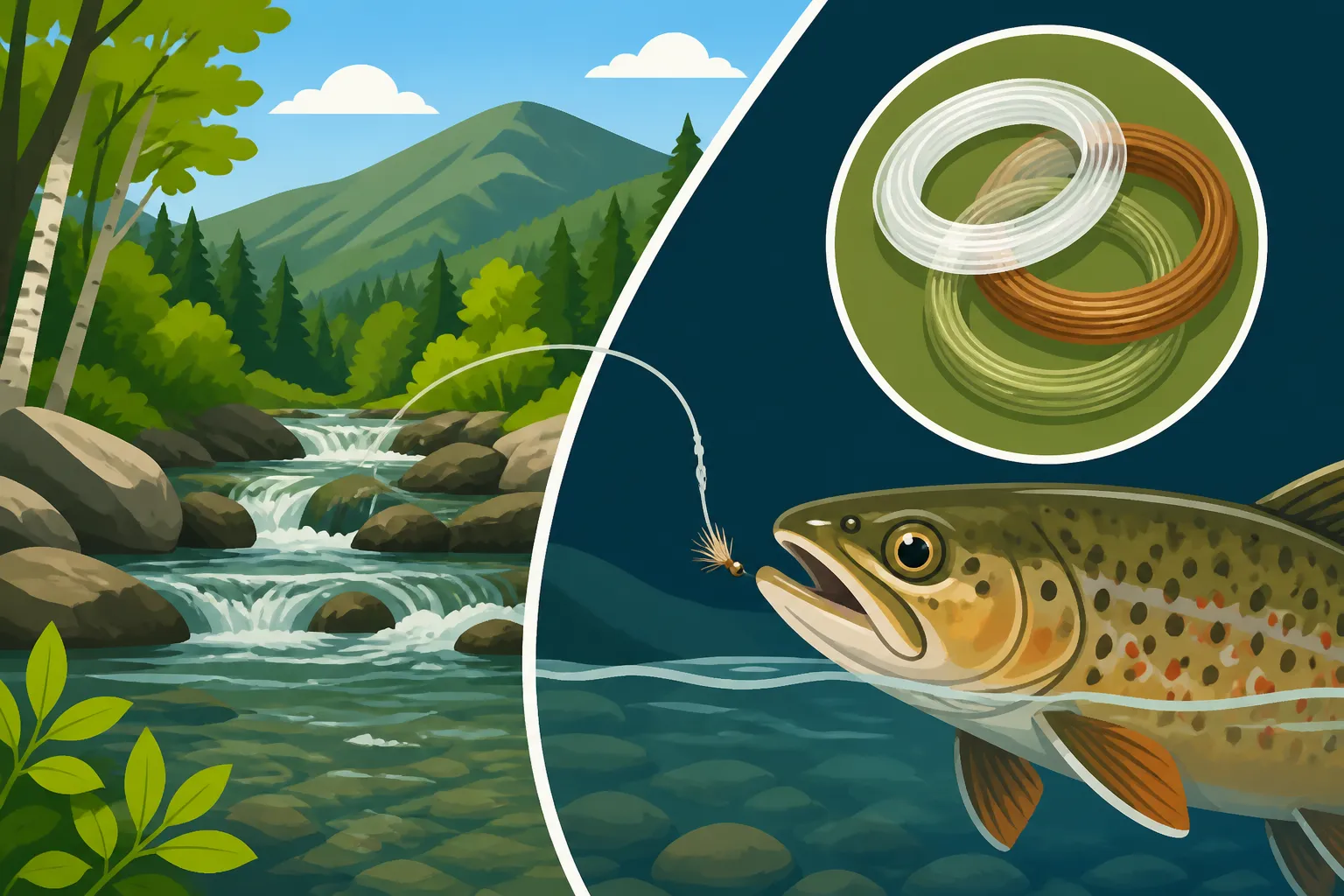
Picture it: crystal-clear water barely a foot deep, tumbling over ancient stones, shaded by dense canopy, and punctuated by small plunge pools and undercut banks. That's the typical setting for a Vermont mountain stream. The water is often remarkably clear, especially away from spring runoff or heavy rains. This clarity is beautiful, but it's also your adversary because it makes everything you present—your fly, your leader, and especially your tippet—far more visible to the fish.
The trout inhabiting these streams are primarily native brook trout, and they are masters of their domain. They're wild, naturally wary, and not accustomed to seeing anything unnatural drifting into their feeding lanes. They're often quite small, but their caution is inversely proportional to their size. A heavy splash, a shadow, or a glint of thick line is enough to send them darting for cover under a rock or submerged log. You're not just fishing; you're performing a delicate ballet of stealth and precision. You might only get one cast into a prime pocket, so that presentation has to be absolutely perfect. Remember, these fish are often concentrated in small, defined areas, and spooking one can put down the entire pool. Brook Trout: Vermont's Native Trout are true gems, and they deserve our utmost respect and a light touch.
Why Tippet Material Matters So Much Here
In these environments, every aspect of your setup is magnified, and your tippet, being the closest thing to the fly, bears the brunt of that scrutiny. It's the ultimate connection between you and the fish, both literally and figuratively.
First, visibility is paramount. If your tippet looks like a thick rope to a wary brook trout, they simply won't bite. This is where the material's refractive index comes into play, determining how much light it bends and, thus, how visible it is underwater. Second, knot strength is critical. You're often making delicate presentations with tiny flies, and if your tippet breaks at the knot when you hook a surprisingly feisty six-inch brook trout, it's incredibly frustrating. Third, abrasion resistance can't be overlooked. While mountain streams don't have the same casting distances as larger rivers, your line is constantly coming into contact with sharp rocks, submerged branches, and even the coarse, gravelly bottom. A tippet that frays easily is a recipe for lost fish and constant re-rigging. Lastly, suppleness and stretch affect your presentation and how forgiving your setup is. A stiff tippet might hinder the natural drift of a tiny dry fly, while a tippet with a bit of stretch can act as a shock absorber against a sudden strike or head shake, preventing a break-off on light tackle. In essence, the tippet is where stealth, strength, and finesse converge for tiny stream success.
Deciphering Tippet Materials: Fluorocarbon vs. Monofilament
When you walk into a fly shop or browse online at places like Bass Pro Shops or Amazon, you'll primarily see two types of tippet material: monofilament (nylon) and fluorocarbon. Both have their place, but for tiny Vermont mountain streams, understanding their pros and cons is absolutely essential.
Monofilament (Nylon) Tippet: The Classic Choice
Monofilament, often simply called nylon tippet, has been the go-to for fly anglers for decades, and for good reason. It's a versatile material that many of us grew up learning to tie knots with.
-
Pros:
- Supple: Nylon is quite flexible, which allows your tiny dry flies to float and drift very naturally on the surface. This is a huge advantage when presenting delicate patterns to finicky trout.
- Good Knot Strength: Generally, nylon is very forgiving when tying knots. A well-tied knot in monofilament will hold its rated strength exceptionally well.
- Floats Well: This characteristic makes it ideal for dry fly fishing, as it won't drag your fly underwater.
- More Forgiving Stretch: Monofilament has a good amount of stretch, which acts as a shock absorber. This can save you from breaking off a fish on a sudden strike, especially when using lighter tippets and fighting spirited trout in tight quarters.
- More Affordable: Typically, nylon tippet is less expensive than fluorocarbon, making it a good choice for anglers who go through a lot of material or are on a budget.
-
Cons:
- More Visible: Nylon has a higher refractive index than water, meaning it reflects more light and is more visible to discerning fish, especially in the clear waters of mountain streams.
- Less Abrasion Resistant: It's more susceptible to nicks and scrapes from rocks, branches, and fish teeth, which can quickly compromise its strength.
- Absorbs Water: Over time, nylon can absorb small amounts of water, which might slightly reduce its strength and suppleness.
-
When to Use: Monofilament shines when you're primarily dry fly fishing, where natural drift and presentation on the surface are key. It's also a perfectly acceptable choice for larger, slightly less clear streams, or when the trout aren't quite as spooky. For anglers just starting their Fly Fishing for Trout in Vermont journey, it's often a more forgiving material to learn knot tying with.
Fluorocarbon Tippet: The Stealth Advantage
Fluorocarbon has become increasingly popular in recent years, especially for situations demanding ultimate stealth. It offers distinct advantages that can make a huge difference in challenging conditions.
-
Pros:
- Nearly Invisible Underwater: This is fluorocarbon's superpower. Its refractive index is very close to that of water, making it incredibly difficult for fish to detect once submerged. In those gin-clear mountain streams, this invisibility can be a game-changer for wary trout.
- Very Abrasion Resistant: Fluorocarbon is much harder and denser than nylon, providing superior resistance to nicks and cuts from rocks and debris. This is a huge benefit when fishing tight spots with lots of underwater structure.
- Sinks Well: Being denser than water, fluorocarbon sinks. This is fantastic for nymphing or fishing streamers, helping your flies get down to the fish quickly and maintain depth.
- Less Stretch: While sometimes a con, less stretch means better sensitivity. You can feel subtle takes more easily, which is crucial for detecting the light bites of small trout.
-
Cons:
- Stiffer: Its stiffness can sometimes hinder the natural movement of tiny dry flies on the surface, making it less ideal for pure dry fly fishing if you prefer maximum suppleness.
- Less Forgiving Stretch: The minimal stretch means it offers less shock absorption. This requires more delicate hooksets and careful fighting of fish to prevent break-offs, especially with very light tippets.
- More Expensive: Fluorocarbon is significantly pricier than monofilament.
- Poorer Knot Strength (if not tied correctly): Because it's stiffer and harder, fluorocarbon knots need to be tied meticulously and moistened thoroughly before tightening to prevent them from "burning" and losing strength.
-
When to Use: Fluorocarbon is your best friend when nymphing or fishing small wet flies in clear, tiny mountain streams. It's also excellent for highly pressured waters or when the fish are exceptionally spooky. If you're targeting those bigger, wily holdover trout that lurk in the depths, fluorocarbon's invisibility and abrasion resistance give you a definite edge. Many popular brands like Seaguar, Rio, and Orvis offer high-quality fluorocarbon tippets, each with subtle differences in suppleness and strength that some anglers swear by for specific conditions.
The Critical Role of Tippet Size (X-Rating) for Mountain Streams
Beyond the material itself, the diameter of your tippet – indicated by its "X-rating" – is perhaps the most crucial decision you'll make for tiny mountain stream trout. Too heavy, and your presentation will be unnatural; too light, and you risk losing that trophy brook trout you've been dreaming of.
Matching Tippet Size to Fly Size and Fish Species
The "X-rating" system is standard in fly fishing, with higher numbers indicating thinner diameter tippet (e.g., 7X is much thinner than 3X). For tiny mountain streams, you'll almost exclusively be fishing with very light tippets.
Here’s a general guideline for these delicate waters:
- 5X Tippet: This is often the heaviest you'll want to go, and even then, it might be pushing it. It works best with larger dry flies (size 14-16) or small streamers in slightly off-color water. It offers a bit more breaking strength, which can be reassuring when you accidentally hook a piece of submerged wood or a slightly larger fish.
- 6X Tippet: This is your workhorse for most small stream situations. It's thin enough for delicate presentations with size 16-20 dry flies, nymphs, or soft hackles. It offers a good balance of stealth and reasonable breaking strength for the average mountain brook trout. Many anglers consider this the sweet spot for general purpose Best Gear for Vermont Trout Fishing on these streams.
- 7X Tippet: When the water is exceptionally clear, the sun is high, and the fish are incredibly finicky, 7X is your secret weapon. It’s incredibly fine and nearly invisible, allowing for the most natural drifts with tiny flies (size 20-24). It's perfect for those micro-nymphs or tiny parachute Adams. The downside, of course, is the significantly reduced breaking strength, demanding an even more delicate touch.
- 8X Tippet (and finer): While available, 8X and finer are usually reserved for highly technical spring creek situations or targeting truly microscopic midges. For the general mountain stream angler, 7X is usually the practical limit to maintain some semblance of fighting chance.
When you're dealing with Fly Patterns for Vermont Trout Streams that are tiny, say a size 20 midge pattern, you simply must use a very fine tippet like 6X or 7X. A heavier tippet will often prevent the fly from sinking naturally or riding correctly on the surface, completely defeating the purpose of your delicate presentation.
Balancing Presentation with Fighting Power
This is the eternal dilemma of light tippet fishing: how thin can you go without breaking off that surprisingly hefty fish? There’s a constant trade-off between achieving the most natural, undetectable presentation and having enough strength to land a fish.
For tiny mountain streams, presentation usually wins out. A fish that doesn't see your tippet and takes your fly is infinitely better than a fish that sees your tippet and ignores your fly, regardless of how strong your line is. You're far more likely to get a strike with a finer tippet.
However, once you hook a fish, the fight begins, and your light tippet is put to the test. This is where your rod, reel, and fish-fighting skills come into play. A good, soft-action fly rod, perhaps a 2- or 3-weight, will cushion the fight and protect your light tippet. Best Fly Rods for Vermont Trout Streams that are designed for delicate work will make all the difference. When you hook a fish, keep your rod tip high, let the rod absorb the shock, and use your reel's drag sparingly or even back-reeling if you're comfortable. Avoid horsing the fish in, especially if it's darting towards snags. Patience and a gentle hand are key to landing a beautiful trout on 6X or 7X tippet.
Consider the specific conditions:
- Water Clarity: Gin-clear water demands finer tippet (6X-7X).
- Sunlight: Bright sun makes tippet more visible, pushing you towards finer diameters.
- Fish Spookiness: Highly pressured fish or wild brook trout in pristine waters require maximum stealth.
- Fly Size: As discussed, smaller flies necessitate finer tippet.
- Obstacles: If the stream is choked with snags, you might consider bumping up to 5X if the fish aren't too picky, just for a fighting chance. But usually, it's better to be stealthier and play the fish gently.
Practical Tips for Rigging and Fishing Tiny Streams
Having the right tippet material and size is just the beginning. How you manage it, tie your knots, and present your fly will seal your success on these challenging, yet rewarding, waters.
Knot Tying for Maximum Strength
A perfectly chosen tippet is only as good as the knots you tie in it. For tiny tippets, knot integrity is paramount. A sloppy knot can reduce the breaking strength of your line by 50% or more, which means that precious 7X tippet might break like 10X.
- Connecting Tippet to Leader: For connecting different sections of tippet or attaching a new section to your main leader, the Blood Knot is a traditional and very strong choice. It creates a neat, low-profile connection that slides easily through rod guides. Another excellent option is the Triple Surgeon's Knot, which is perhaps easier to tie consistently, especially with finer materials.
- Attaching the Fly: The Improved Clinch Knot is a long-standing favorite for a reason. It's relatively easy to tie, strong, and reliable. Ensure you make enough wraps (5-7 for finer tippets) and pull it tight slowly and evenly. The Orvis Knot is another fantastic, low-profile option for flies that many experienced anglers swear by for its strength and small footprint.
- Moisten Your Knots: This is critical, especially with fluorocarbon. Always lubricate your knots with saliva before pulling them tight. This prevents friction heat from weakening the line and helps the knot cinch down properly without "burning" the material.
Practice these knots at home, perhaps while watching TV, until you can tie them quickly and correctly in various conditions. When you're standing knee-deep in a cold mountain stream with numb fingers, you'll thank yourself for the muscle memory.
On-Stream Management and Leader-Tippet Connections
Managing your tippet effectively on the stream ensures you're always ready to adapt to changing conditions and preserve your valuable leader.
- Tippet Length: For dry fly fishing, you generally want a longer tippet section (2-4 feet) to maximize slack and achieve a drag-free drift. For nymphing, you might shorten it slightly (1-2 feet) for better strike detection and control.
- Tippet Rings: These tiny metal rings are a game-changer for many anglers, especially those fishing small streams. You tie your leader to one side of the ring and your tippet to the other. This allows you to add new tippet sections repeatedly without cutting back and shortening your expensive tapered leader. It also creates a strong connection point. Just remember to use a very small, lightweight tippet ring so it doesn't interfere with your presentation. You can easily find these at most fly fishing stores or through retailers like Amazon.
- Carrying Extra Spools: Don't venture into the backcountry without a range of tippet sizes. You never know if you'll encounter extremely clear water demanding 7X, or if you'll be able to get away with 5X in a deeper, slightly murkier pool. Having a tippet holder with multiple spools (e.g., 5X, 6X, 7X in both mono and fluoro) is standard practice. Many brands offer handy little tippet tenders that keep your spools organized.
Other Considerations: Stealth, Casting, and Streamer Fishing
Even with the perfect tippet, a heavy-handed approach will send those trout scattering faster than you can say "Mayfly."
- Stealth is Supreme: When approaching a likely looking pool or riffle, move slowly and deliberately. Crouch low, use available cover, and avoid making sudden movements or casting a shadow over the water. Wading Techniques for Vermont Trout Streams emphasize a quiet, thoughtful approach.
- Accurate Casting in Tight Quarters: Mountain streams often mean tight casting lanes, overgrown banks, and low-hanging branches. You'll need to master roll casts, bow-and-arrow casts, and sidearm casts to get your fly into those tricky pockets. Practice these before you go. Remember, sometimes it's better to get one perfect cast into a prime spot than ten sloppy ones.
- The Rare Case for Heavier Tippet with Streamers: While tiny dry flies and nymphs usually demand fine tippet, if you're throwing a small streamer in a larger, slightly off-color mountain stream (perhaps after a light rain), you might get away with a heavier tippet, like 4X or 5X. The larger profile of the streamer and reduced visibility can sometimes mask the thicker line. However, this is an exception, not the rule, and it's less common for the very "tiny" mountain streams we're discussing.
Ultimately, choosing the best tippet material for tiny Vermont mountain stream trout boils down to a blend of science and art. Understand the fish, understand the water, and equip yourself with the materials that offer maximum stealth and reliable strength.
| Tippet Feature | Monofilament (Nylon) | Fluorocarbon | Best for Tiny VT Streams |
|---|---|---|---|
| Visibility | Higher (more visible) | Lower (nearly invisible) | Fluorocarbon |
| Abrasion Resistance | Moderate | High | Fluorocarbon |
| Knot Strength | Excellent (forgiving) | Good (needs careful tying) | Both (with proper technique) |
| Suppleness/Flexibility | High (good for natural drift) | Moderate (stiffer) | Monofilament |
| Stretch | High (good shock absorption) | Low (high sensitivity, less forgiving) | Monofilament |
| Sink Rate | Floats/Neutral | Sinks | Fluorocarbon (for nymphs) |
| Cost | Lower | Higher | Monofilament |
| Ideal Application | Dry flies, general purpose | Nymphs, clear water, spooky fish, abrasion | Fluorocarbon (nymphing), Monofilament (dry flies) |
| Recommended X-Ratings | 5X, 6X, 7X | 5X, 6X, 7X | 6X & 7X for both |
Remember, carrying spools of both monofilament and fluorocarbon in various light X-ratings (5X, 6X, and 7X) will give you the versatility to tackle any condition these beautiful Vermont streams throw your way.
Disclaimer
This article is for general informational purposes only and does not constitute professional advice. Laws, prices and regulations vary by location and change over time. Consult a qualified professional for guidance on your specific situation.