Best landing net mesh for catch and release
We've all been there: you finally get that beautiful Vermont lunker to the boat or the bank, heart pounding, only to realize your old, cheap landing net is a tangled mess of hooks and scales. For those of us dedicated to catch and release, the net isn't just a tool to land a fish; it's a critical piece of gear that dictates whether that fish swims away healthy and unharmed, or struggles with damaged scales and a compromised slime coat. This guide is all about helping you choose the best landing net mesh to ensure your treasured catches, whether a feisty Lake Champlain smallmouth or a vibrant Battenkill brown trout, are released in prime condition.
Why Your Landing Net's Mesh Matters for Catch and Release
When you're committed to catch and release, every detail of your interaction with the fish matters, and your landing net is often the first point of prolonged physical contact. The type of mesh on your net can make a world of difference between a successful, stress-free release and a fish that struggles, losing vital protective layers or even sustaining injuries. It’s not just about getting the fish in; it’s about getting it out of the net and back into the water with minimal impact.
The Delicate Nature of Fish Skin and Slime Coat
Think about it: fish live in water, constantly surrounded by it. Their skin is incredibly delicate, covered in a crucial slime coat – a natural protective barrier. This slime coat acts like their immune system's first line of defense, shielding them from parasites, bacteria, and fungal infections in the water. It’s a bit like our skin, but far more sensitive to abrasion.
Traditional, knotted nylon nets, the kind many of us grew up with, are notorious for stripping this vital slime coat right off the fish. Each knot, designed for strength, acts like a tiny abrasive point. As a fish struggles in one of these nets, its scales can be lifted or removed, and that precious slime coat gets rubbed away. This leaves the fish vulnerable to infections and diseases once it's back in the water, significantly reducing its chances of survival, even if it swims away strongly at first. For a true catch and release angler, this is a major concern, as the goal is truly to let the fish live to fight another day, perhaps even becoming a Vermont state record walleye weight or another trophy catch for someone else.
Minimizing Stress and Injury During Landing
Beyond the slime coat, physical injury is another major concern. Fish are powerful, especially when they're fresh out of the water and thrashing. Fins can get bent, torn, or even broken if they snag in a coarse, tight mesh. Eyes can be scratched, and delicate mouthparts can be damaged if hooks get deeply embedded in the net, causing the fish to struggle against the entanglement. The longer a fish is out of water and struggling in a net, the more stressed it becomes, leading to lactic acid buildup and exhaustion, which can be fatal even without visible injuries.
A good catch and release net aims to cradle the fish, not entangle it. It should allow for quick, efficient landing and an even quicker, gentler release. By minimizing the fish's struggle and protecting its fragile body, we improve its post-release survival. This responsibility is paramount for any angler practicing catch and release, especially when targeting popular species like the ones found in the Best Fishing Lakes in Vermont or the famed trout streams.
Exploring the Best Net Mesh Materials for Gentle Release
When you're serious about catch and release, your landing net isn't just an afterthought; it's an essential piece of conservation gear. The mesh material is the most critical factor, as it's what actually touches the fish. Let's break down the best options available for Vermont anglers.
Rubberized or Silicone Mesh Nets
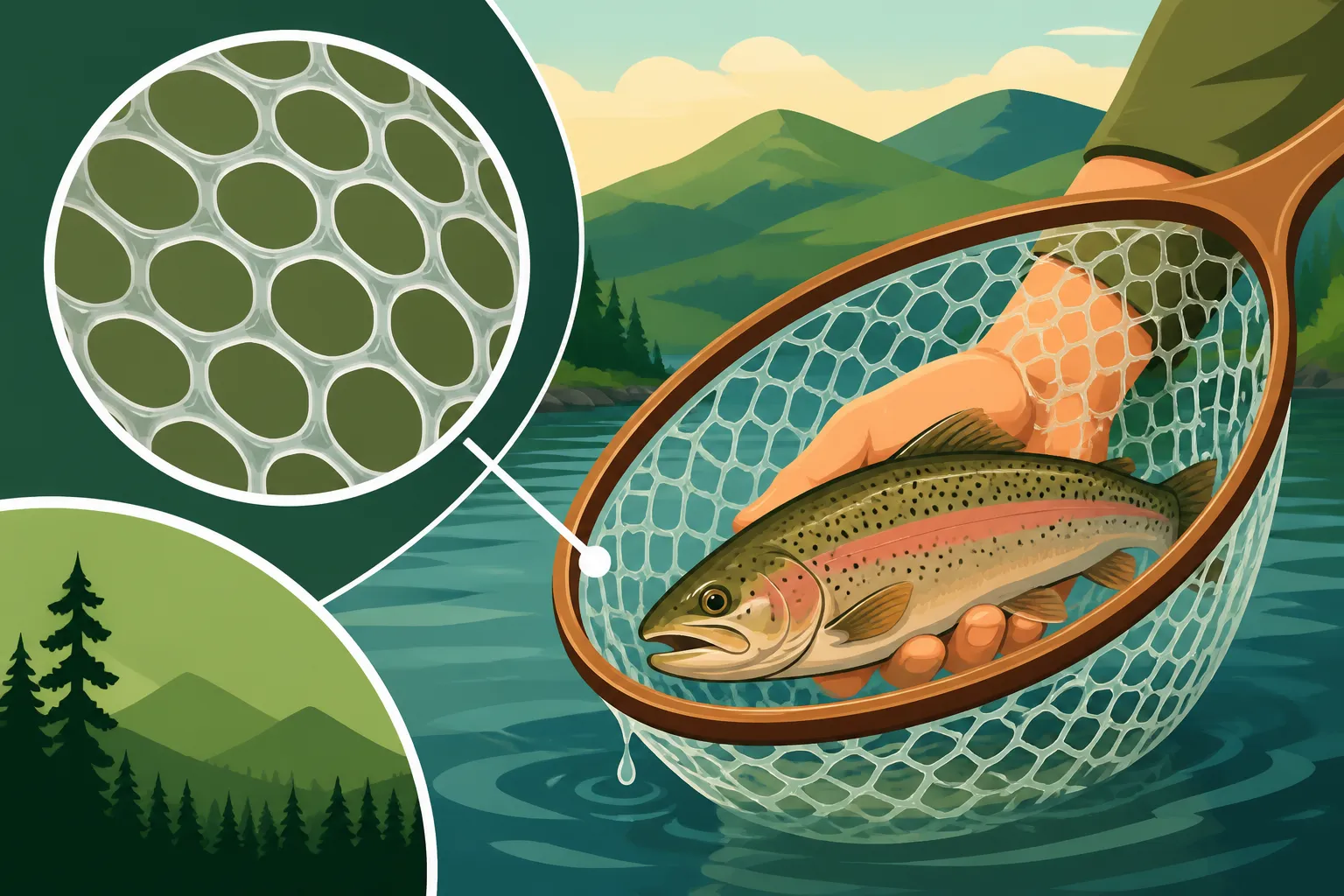
Without a doubt, rubberized or silicone mesh nets are the gold standard for catch and release. These nets feature a soft, flexible, often clear or dark, rubber-coated mesh that is incredibly gentle on fish. Unlike traditional nylon, there are no abrasive knots to strip away the protective slime coat or damage delicate scales.
The benefits of these nets are numerous. Firstly, their slick, soft surface is extremely fish-friendly, allowing the fish to rest comfortably without getting scraped. Secondly, hooks rarely, if ever, snag in the rubberized mesh. This is a huge time-saver and stress-reducer. Instead of fighting with tangled treble hooks, you can quickly and easily extract your lure, speeding up the release process. This is particularly valuable when you're dealing with a feisty smallmouth bass or a strong trout where every second out of the water counts. Thirdly, these nets are incredibly easy to clean. Fish slime, debris, and even algae rinse right off, preventing the spread of diseases between different waterways – a critical consideration if you're fishing in various Vermont lakes and rivers. You can find excellent options at outdoor retailers like Bass Pro Shops or even on Amazon, often with various hoop sizes and handle lengths to suit different fishing styles and target species.
However, rubberized nets do have a few downsides. They tend to be heavier than their nylon counterparts, which might be a consideration if you're hiking into a remote trout pond or trying to keep your gear as light as possible for Kayak Fishing Techniques for Vermont Lakes. They can also be a bit bulkier to store, and generally come with a higher price tag. But for the dedicated catch and release angler, the investment is usually well worth it for the peace of mind and the health of the fish.
Knotless Nylon or Coated Nylon Mesh Nets
If a full rubberized net isn't quite in your budget or you're looking for something a bit lighter, knotless nylon or coated nylon mesh nets offer a good compromise. These nets use a finer, softer nylon material than the old-school knotted nets, and often have a special coating that reduces abrasion. The key here is "knotless" – the absence of knots significantly reduces the likelihood of damaging the fish's slime coat and scales.
These nets are lighter than rubberized versions and typically less expensive, making them a popular choice for many anglers. While they are a vast improvement over knotted nets, they might still cause some minimal scale abrasion compared to the ultimate gentleness of pure rubber or silicone. Additionally, hooks can still occasionally snag in the nylon strands, especially if the coating wears down over time or if the mesh isn't completely coated. For species like panfish or smaller trout where quick handling is often the norm, these nets can perform admirably. They're a solid choice for anglers who want a gentler option without committing to the weight or cost of a full rubber net.
Micro-Mesh or Fine Mesh Nets
Micro-mesh or very fine mesh nets are another option, often seen on smaller, dedicated panfish or brook trout nets. The holes in these nets are extremely small, sometimes almost fabric-like in appearance. The primary benefit of such a fine mesh is that it cradles small fish exceptionally well, preventing delicate fins from poking through the holes and getting bent or damaged. It also provides excellent support for the entire body of smaller species.
While great for small fish, these nets do come with their own set of considerations. The very fine mesh creates significant water resistance, making them harder to sweep through the water, especially in moving current like a river. This can make landing a larger, stronger fish more challenging. They might also not offer enough "give" or depth to comfortably cradle a substantial fish, which is crucial for minimizing stress. While they are very gentle for smaller species, they aren't generally recommended for larger game fish where a wider, deeper, more open mesh is required to safely contain the fish.
Choosing the Right Net Size and Depth for Vermont Species
Just as important as the mesh material is the overall size and depth of your landing net. A net that's too small for your target species can cause more harm than good, leading to increased stress and potential injury. Matching your net's dimensions to the fish you're pursuing in Vermont's diverse waters is paramount for successful catch and release.
Matching Net Dimensions to Your Target Fish
Imagine trying to net a powerful, thrashing Lake Champlain walleye with a small panfish net – it's a recipe for disaster. The fish will likely spill out, potentially hurting itself on the boat gunwale or rocks, and you'll probably lose it. Conversely, a massive muskie net isn't practical for delicate brook trout in a small stream. The trick is to find a balance.
For species like the hard-fighting smallmouth bass found in Lake Champlain or the powerful landlocked salmon in Lake Willoughby, you'll want a net with a wide hoop and good depth. A net with a hoop around 18-24 inches and a depth of at least 24-30 inches will allow you to comfortably cradle the entire fish, preventing it from flopping out. This ensures that the fish is fully contained, reducing its ability to thrash and minimize damage. For larger, trophy-sized fish, consider going even bigger. When looking for the Best Tackle for Vermont Smallmouth Bass, remember the net is part of that crucial equipment.
When pursuing trout in Vermont's rivers and streams, such as the famous Battenkill or the White River, a smaller, shallower net might be appropriate. For brook trout or average-sized rainbows, a net with a 10-14 inch hoop and a depth of 12-18 inches is often sufficient. The key is that the net cradles the entire fish without bending its tail or forcing it into an unnatural position. Remember, when you're targeting trout, especially with delicate fly gear, a specialized Best Landing Net for Trout can make a huge difference in handling these beautiful fish.
Net Handle and Frame Considerations for Ease of Use
Beyond the mesh and hoop size, the net's handle and frame play a significant role in its practicality and effectiveness. A net that's cumbersome to use can make landing a fish a chaotic event, defeating the purpose of a gentle release.
Handle length is a major factor. For wade fishing in streams or rivers, a shorter, fixed-handle net that can be clipped to your vest or belt is often ideal. It stays out of the way until needed, then allows for quick, one-handed netting of a trout right at your feet. For boat fishing, especially from a larger craft on Lake Champlain, a longer, possibly telescoping handle is essential to reach fish boat-side. A telescoping handle offers versatility, allowing you to shorten it for storage or extend it for that crucial reach. If you're out on a kayak or canoe, a medium-length handle that's easy to manage in tight quarters is often best. Best Kayaks for Vermont Fishing often pair well with specific net designs.
The frame's shape and material also matter. Aluminum frames are lightweight and durable, while some nets feature composite materials. The opening shape – round, oval, or teardrop – is mostly a matter of preference, but an oval or teardrop shape can sometimes be easier to maneuver in the water, especially when trying to scoop a fish from a certain angle. The frame should be robust enough to withstand the weight and struggle of a large fish without bending or breaking.
Here's a quick comparison of common mesh types for catch and release:
| Mesh Type | Gentleness on Fish | Hook Snagging | Cleaning Ease | Weight | Durability | Common Uses |
|---|---|---|---|---|---|---|
| Rubberized/Silicone | Excellent | Very Low | Excellent | Moderate | High | All C&R species, especially bass, trout, salmon |
| Knotless Nylon | Good | Moderate | Good | Light | Moderate | General purpose, smaller game fish |
| Micro-Mesh | Excellent (small fish) | Moderate | Good | Moderate | Moderate | Panfish, small trout |
Maintenance and Best Practices for Your Catch and Release Net
Investing in a good catch and release net is only half the battle. To ensure its longevity and, more importantly, to uphold your commitment to fish health, proper maintenance and netting techniques are crucial. A well-cared-for net is a reliable tool, and proper usage ensures minimal stress on every fish you encounter.
Cleaning and Care for Longevity
After a successful day on the water, whether you've been battling Lake Champlain Walleye Fishing or chasing brook trout in a mountain stream, your net will inevitably have picked up fish slime, weed fragments, and perhaps some lake bottom muck. Rinsing your net thoroughly with fresh water after every use is the most basic, yet most important, step. This removes debris and helps prevent the buildup of bacteria that could harm fish on future outings.
Beyond a simple rinse, consider a deeper clean periodically. If you fish multiple bodies of water, especially if you move between different lakes or river systems, disinfecting your net can prevent the spread of aquatic invasive species and fish diseases. A mild bleach solution (e.g., a capful of bleach per gallon of water) or a commercial fishing gear disinfectant can be effective. Submerge the mesh, rinse thoroughly, and allow it to air dry completely before storage. Never use harsh detergents or abrasive scrubbers, as these can damage the delicate mesh or any protective coatings. Proper drying is also key to prevent mildew and odors, which can break down the mesh over time. Store your net in a cool, dry place, away from direct sunlight, to extend its life. This goes for all your Best Gear for Vermont Trout Fishing and beyond.
Proper Netting Technique for Minimal Impact
Even the best catch and release net can cause harm if not used correctly. The goal is a quick, decisive scoop that brings the fish into the net with minimal thrashing. Here's a brief breakdown of effective, low-impact netting:
First, bring the fish as close to you as possible. You want to lead the fish into the net headfirst. Avoid lunging or chasing the fish with the net, as this often spooks it and leads to more frantic fighting. Once the fish's head is past the net hoop, lift the net to bring the fish completely in. This should be a smooth, upward motion.
Once the fish is in the net, keep it submerged in the water as much as possible. This is perhaps the most critical rule for catch and release. The water supports the fish's body and gills, keeping it calm and oxygenated. If you must lift the fish for a quick photo, do so quickly and cradle it gently in the net, horizontally, supporting its entire body. Avoid holding fish vertically by the jaw, especially larger fish, as this can damage internal organs. Immediately unhook the fish while it's still in the net and in the water, if possible. Barbless hooks make this process even faster and easier. Once the hook is out, simply release the net, allowing the fish to swim away on its own terms. These principles are especially vital for more sensitive species and for ensuring Muskellunge catch and release survival tips. If you're learning How to Catch Smallmouth Bass in Vermont Lakes, mastering the net technique is part of the learning curve.
Disclaimer
This article is for general informational purposes only and does not constitute professional advice. Laws, prices and regulations vary by location and change over time. Consult a qualified professional for guidance on your specific situation.