Best jerkbait color for early spring bass
Early spring bass fishing in Vermont can be incredibly frustrating. One day the water feels like it's finally warming up, the next a cold snap sends temperatures plummeting, making those stubborn largemouth and smallmouth seem impossible to find, let alone entice into biting. But don't give up hope! This guide will dive deep into how choosing the right jerkbait color can be the game-changer you need to crack the code on those finicky early spring bass in Vermont's diverse waters.
The Vermont Early Spring Bass Conundrum
When the ice finally recedes from Vermont's beautiful lakes and ponds, many anglers rush out, eager for the first bites of the season. But often, they're met with disappointment. The bass are there, but they're not acting like their aggressive summer selves. This period, often called pre-spawn, is tricky because the fish are transitioning, their metabolism is slower, and they're highly sensitive to temperature fluctuations and light conditions.
Cold Water, Slow Bass Metabolism
Vermont's spring water temperatures hover in that chilly 40-50 degree Fahrenheit range for a good while. When the water is this cold, a bass's metabolism slows way down. They're not chasing down fast-moving baits with reckless abandon. Instead, they're looking for an easy, high-value meal that doesn't require a lot of energy expenditure. This is why jerkbaits shine – their erratic, suspend-and-pause action perfectly mimics a dying or struggling baitfish, a meal a sluggish bass simply can't resist. Understanding Vermont bass season opening date for 2026 and Vermont bass catch-and-release dates for 2026 is crucial to ensure you're fishing legally during this sensitive time.
Navigating Variable Water Conditions
Early spring in Vermont also means wildly variable water conditions. You might have crystal clear lakes one day and muddy, runoff-stained rivers the next. Sunlight can be intense or shrouded in persistent spring cloud cover. These factors play a huge role in what colors and presentations will be most effective. What works on a sunny, calm day on Lake Champlain might be a complete bust on a cloudy day on a swollen river.
Why Jerkbaits Dominate in Early Spring
Jerkbaits are, without a doubt, one of the most effective tools for early spring bass in Vermont. Their design and action are practically tailor-made for these challenging conditions. They are a staple in many an angler's tackle box, often purchased from reputable retailers like Bass Pro Shops or even conveniently online via Amazon.
The Irresistible Suspending Action
The magic of a jerkbait lies in its ability to suspend perfectly still in the water column during a pause. After a series of sharp jerks, you let it sit, sometimes for several seconds, or even longer in really cold water. This pause is often when the strike happens. A cold, lethargic bass sees what looks like an injured or disoriented baitfish just hanging there, an easy target. It doesn't have to chase, just glide over and inhale it. This natural presentation is extremely hard for even the most finicky bass to ignore.
Mimicking Natural Forage
In Vermont, early spring baitfish like smelt, shiners, and perch are often what the bass are keying in on. Many jerkbaits are designed to perfectly imitate these forage species in both profile and action. When fished correctly, a jerkbait can look exactly like a distressed baitfish, making it an undeniable meal opportunity for a hungry bass emerging from winter's dormancy.
Best Jerkbait Colors for Early Spring Bass in Vermont
Choosing the right jerkbait color isn't about having a hundred different shades; it's about understanding how different colors perform under varying conditions and knowing when to make the switch. Let's break down the essential categories for your Vermont early spring outings.
Natural Baitfish Patterns: The Go-To Choice
When in doubt, start with natural baitfish patterns. These are the workhorses of early spring. They mimic the actual forage species that bass are feeding on, making them universally effective.
Silver and Blue Back
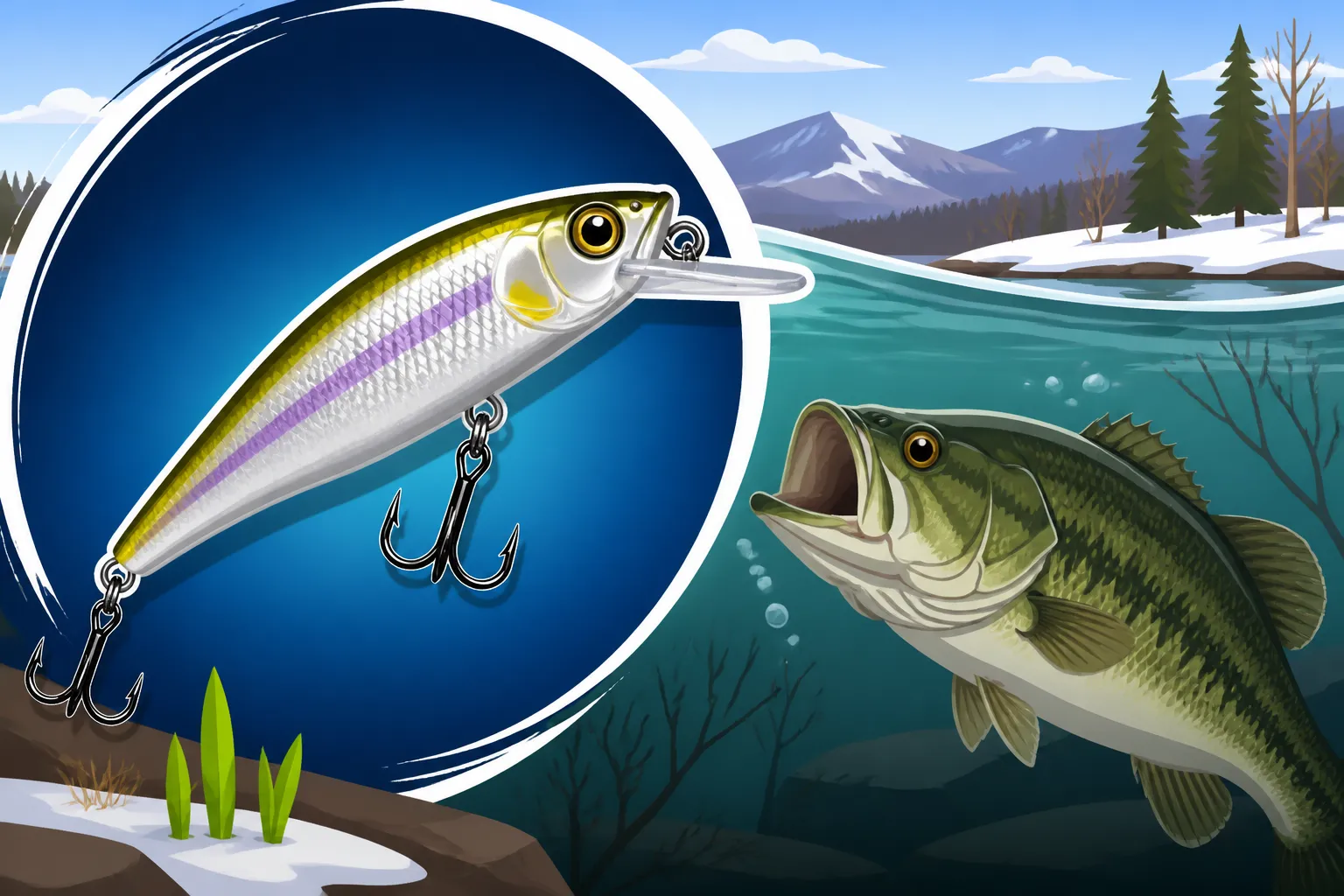
This is a classic for a reason. Silver sides with a subtle blue back accurately imitate many common baitfish like smelt, alewives, and shiners found in Vermont's larger lakes like Lake Champlain and Lake Memphremagog. It's particularly effective in clearer waters, mimicking the natural flash of a fleeing fish. On brighter, sunny days, the subtle flash of the silver is incredibly enticing. Consider lures with a semi-transparent body for added realism in extremely clear conditions.
Green or Brown Back with Pearl/White Belly
Many smaller baitfish, especially those found in more stained or vegetated waters, have green or brownish backs. Combine this with a pearl or white belly, and you have a very versatile pattern. This color works well when bass are feeding on perch fry or minnows. It's a great choice for ponds and smaller lakes with some natural tint to the water. A lot of anglers find success with this pattern in the many state park ponds around Vermont.
Flashy and Chrome Options: When Visibility is Key
Sometimes, bass need a little extra help finding your bait. This is where flashy and chrome colors come into play, especially when there's some stain in the water or you're fishing deeper.
Chrome and Black/Blue Back
High-contrast chrome patterns are excellent for low light conditions, cloudy days, or when the water has a slight stain from spring runoff. The chrome reflects what little light is available, creating a strong visual presence. The black or blue back provides a clear silhouette against the brighter belly, making it easier for bass to track. This can be particularly effective in larger, deeper lakes where bass might be holding in lower light conditions. If you're wondering How deep to troll for lake trout on Lake Champlain, remember that bass will often be shallower but still susceptible to chrome in deeper, stained water.
Gold or Firetiger
While less natural, gold can be incredibly effective in tannic or slightly muddy water. The warmer tones stand out and can trigger a reaction strike from an otherwise hesitant bass. Firetiger, with its vibrant greens, yellows, and oranges, is a classic "reaction bait" color. It’s highly visible and aggressive, making it perfect for muddy water or when you need to provoke a strike from sluggish fish. Sometimes, bass just need a kick in the pants to bite, and firetiger delivers that visual punch.
Bold and Contrasting Colors: For Stained and Murky Waters
When the spring rains have muddied up the water, subtlety goes out the window. You need colors that create a strong silhouette and are easy for bass to detect.
Chartreuse and Black
Chartreuse is an eye-catching color that penetrates stained and murky water very well. Paired with a black back, it creates a powerful contrast that bass can see from a distance. This is your go-to when water clarity is poor, perhaps after heavy spring rains have swollen rivers like the Winooski or Lamoille. It’s not about mimicking natural prey here; it’s about visibility and provoking a strike through sheer presence.
Matte Black or Dark Purple
Sometimes, a completely dark silhouette is what’s needed in extremely dark or muddy water, or even in very low light conditions like dawn or dusk. A matte black or dark purple jerkbait can create a stark contrast against the brighter sky or water surface, making it easily detectable. This is a niche choice but can be a true hero color when nothing else works in very specific, challenging situations.
Subtle and Transparent Colors: For Ultra-Clear and Calm Days
Vermont has some incredibly clear waters, especially in its mountain ponds and some smaller, pristine lakes. On calm, sunny days with high visibility, a bass can easily spot something unnatural.
Ghost or Transparent Patterns
These jerkbaits often have minimal color, sometimes just a faint hint of silver or blue, with a clear or translucent body. They are designed to blend in and appear as subtle as possible. The idea is that the bass sees the shape and action, but the lack of overt color makes it seem more natural and less threatening in crystal-clear conditions. This is often the trick to landing fish in those highly pressured, gin-clear lakes where every other color seems to spook them.
Factors to Consider When Choosing Your Color
Beyond just the basic color categories, a few other factors should always be in the back of your mind when you're on the water in Vermont. The best anglers are constantly adjusting, and that includes their color choice.
Water Clarity and Light Conditions
This is perhaps the most critical factor.
- Clear Water: Opt for natural patterns (silver/blue, green/pearl) or transparent/ghost colors. Subtle flashes are key.
- Stained/Lightly Muddy Water: Chrome, gold, and more prominent natural patterns will shine here. They offer more visibility without being overly aggressive.
- Murky/Muddy Water: Go bold! Chartreuse, firetiger, or dark silhouettes are your best bet to get noticed.
- Bright Sun: Natural baitfish patterns with good flash (silver, chrome) work well.
- Overcast/Low Light: Again, brighter, flashier colors (chrome, chartreuse) or strong silhouettes (black) can make a difference.
Local Forage Base
What are the bass actually eating in the particular body of water you're fishing? If a lake is known for its abundant smelt population, a silver-sided jerkbait that imitates a smelt is a no-brainer. If perch fry are prevalent, a green-backed pattern might be more effective. A quick check on Vermont Fish Stocking Search Tool, Explained can sometimes give you clues about potential forage.
Water Temperature
As mentioned, colder water means slower metabolism. In extremely cold water (below 45 degrees Fahrenheit), even subtle natural colors might be too much. Sometimes, a plain dark color like black or brown can create a strong silhouette without overwhelming the fish. As the water warms closer to 50-55 degrees, bass become a bit more aggressive, and you can start experimenting with more vibrant or contrasting colors.
Here's a quick reference table for jerkbait color selection:
| Water Clarity | Light Conditions | Primary Color Recommendations | Notes |
|---|---|---|---|
| Crystal Clear | Sunny | Silver/Blue Back, Transparent, Ghost | Subtle flash, natural imitation, low visibility |
| Crystal Clear | Overcast/Low Light | Silver/Blue Back, Green/Pearl, Transparent | Still subtle, but with a bit more presence |
| Slightly Stained | Sunny | Chrome/Blue Back, Green/Pearl | Good flash, clear silhouette |
| Slightly Stained | Overcast/Low Light | Chrome/Black Back, Gold, Firetiger | High contrast, strong visual |
| Muddy/Murky | Any | Chartreuse/Black, Firetiger, Matte Black | Max visibility, reaction strike generator |
| Tannic (Tea-Stained) | Any | Gold, Orange, Brown/Yellow | Warm tones penetrate dark water |
Optimizing Your Jerkbait Presentation in Early Spring
Having the right color is only half the battle. How you present that jerkbait is just as crucial, especially in the cold waters of Vermont.
The Art of the Pause
This cannot be overstated. In cold water, the pause is everything. After two or three sharp jerks, let your jerkbait sit. Count to five, ten, sometimes even fifteen seconds. Seriously. It feels like forever, but that extended pause allows a sluggish bass to approach the "dying" baitfish and commit to the strike without expending much energy. Pay close attention to your line during these pauses; often, the only indication of a bite will be a slight twitch or slackening of the line. For more on the species you might encounter, check out Smallmouth Bass Fishing in Vermont or Largemouth Bass Fishing in Vermont.
Rod and Line Selection
A medium-light to medium power spinning or casting rod, typically 6'6" to 7' in length, with a fast action tip, is ideal for jerkbait fishing. This tip allows for sharp, precise jerks to impart action, while the backbone helps you drive hooks home and control fish. Fluorocarbon line is a popular choice for jerkbaits because it's nearly invisible underwater and has very low stretch, which enhances your feel for subtle bites and gives you better control over the bait's action. A good quality fluorocarbon line can be found at Bass Pro Shops or online at Amazon. Consider options discussed in Best Fluorocarbon Line for Clear Lake Water.
Varying Your Retrieve
Don't be afraid to experiment. Start with a classic "jerk, jerk, pause" cadence, but be ready to change it up. Sometimes it's a single jerk followed by a long pause. Other times, a quick series of four or five jerks followed by a shorter pause. The bass will tell you what they want. Pay attention to how the bait reacts to your jerks; you want it to dart erratically, not just move in a straight line.
Beyond Color: Other Jerkbait Considerations
While color is paramount, a few other characteristics of jerkbaits can also make a difference in early spring.
Size Matters
Generally, in early spring, a slightly smaller profile jerkbait (3-5 inches) can be more effective. Bass aren't looking to gorge themselves on massive meals; they want something easy to swallow. However, don't rule out larger baits entirely, especially if you're targeting true trophy fish in waters known for them, like Vermont trophy trout waters stocking dates.
Rattle vs. Silent
Many jerkbaits come with internal rattles, creating noise to attract fish. In cold, clear water or highly pressured areas, a silent jerkbait can sometimes be more effective, as the noise might be perceived as unnatural. However, in stained or murky water, rattles can be a huge advantage, helping bass locate the bait when visibility is low. Experiment with both to see what the fish prefer on any given day.
Depth Control
Some jerkbaits are designed to dive deeper than others. In early spring, bass are often holding near drop-offs, rock piles, or submerged weed lines in shallower to mid-depths. Having a selection of jerkbaits that run at different depths (e.g., 2-4 feet, 4-8 feet, 8-12 feet) allows you to target fish effectively wherever they might be holding. For deeper waters like Lake Champlain, knowing How deep walleye go in summer on Lake Champlain can also give you insight into bass holding depths in other seasons.
Final Thoughts for Your Vermont Early Spring Adventures
Fishing in early spring in Vermont can be challenging, no doubt about it. But with the right jerkbait colors and a patient, deliberate retrieve, you can absolutely turn those frustrations into triumphs. Remember to observe the water conditions, consider the local forage, and be willing to experiment. Stock your tackle box with a range of natural, flashy, and bold jerkbait colors, and you'll be well-prepared for whatever Mother Nature throws your way. The next time you're heading out to your favorite Vermont bass waters, grab those jerkbaits and get ready for some exhilarating cold water strikes! For more information on fishing gear, check out Best Tackle for Vermont Smallmouth Bass.
Disclaimer
This article is for general informational purposes only and does not constitute professional advice. Laws, prices and regulations vary by location and change over time. Consult a qualified professional for guidance on your specific situation.