Best crankbait for stained lake water
There's nothing quite as frustrating as showing up at your favorite Vermont fishing spot, ready for a great day on the water, only to find the usually clear lake or river looking like a cup of tea or, worse, chocolate milk. Stained water can make many of your go-to lures completely invisible to fish, leaving you wondering if you'll ever get a bite. But don't despair! This guide is all about equipping you with the knowledge to pick the absolute best crankbaits designed to cut through that murk and help you hook into some fantastic Vermont fish, even when conditions aren't ideal.
Understanding Stained Water and Its Challenges
Fishing in stained water is a unique challenge that many anglers, especially those used to crystal-clear mountain streams or pristine lake coves, find intimidating. However, understanding what causes water to become stained and how it impacts fish behavior is the first step to overcoming this hurdle. Vermont's diverse aquatic environments, from its winding rivers to its vast lakes, often present stained water conditions due to a variety of natural and environmental factors.
What Makes Water "Stained" in Vermont?
When we talk about "stained" water, we're not just talking about muddy water from a recent storm, although that's certainly a common culprit. Stained water refers to any water with reduced clarity, where visibility is significantly hindered, but it doesn't necessarily mean it's dirty or polluted.
In Vermont, you'll encounter a few primary types of stained water:
- Tannin Stains: Many of Vermont's lakes and rivers flow through or are surrounded by forested areas rich in deciduous and coniferous trees. As leaves, pine needles, and other organic matter decompose, they release tannins into the water, giving it a characteristic tea-stained or reddish-brown hue. Think of a quiet pond nestled deep in the woods or the slow-moving stretches of a river. This type of stain is often present year-round, especially in boggy or heavily vegetated areas. It's perfectly natural and often indicates a healthy ecosystem, but it certainly affects visibility.
- Runoff and Sedimentation: This is perhaps the most common and dramatic form of stained water. After heavy rains, snowmelt, or agricultural activities, soil and sediment wash into rivers and lakes. This creates a cloudy, often brownish or grayish appearance, making it incredibly difficult for fish to see. Rivers like the Winooski or Lamoille, particularly after a big downpour, can turn quite milky. This runoff isn't just mud; it can carry nutrients, making the water cloudier with suspended particles.
- Algae Blooms: While less common than tannin or sediment stains, excessive nutrient input can lead to algal blooms, especially in warmer summer months in some of Vermont's shallower lakes. These blooms can give the water a greenish or pea-soup appearance, drastically reducing visibility. They can be more localized but pose a similar challenge to anglers.
The common thread among all these types of stained water is reduced light penetration and diminished visibility. This dramatically alters how fish forage and react to their environment, which in turn, dictates how we should present our lures.
Why Stained Water Impacts Fish Behavior
Imagine trying to navigate a dark room versus a well-lit one. That's essentially what fish experience in stained water. Their primary sense of sight, which is crucial for identifying prey in clear water, becomes far less effective. This forces them to rely much more heavily on other senses, primarily their lateral line system and their sense of smell.
Here’s how stained water affects fish and why it matters for your crankbait choice:
- Reduced Visibility, Reduced Reaction Time: In clear water, fish might see a lure from many feet away, giving them ample time to decide to strike. In stained water, that visibility might be reduced to mere inches or a foot. They need to detect the lure much closer to them, and often, their reaction has to be quicker once they do detect it. This means your lure needs to actively announce its presence rather than just passively looking appealing.
- Reliance on the Lateral Line: Fish possess a unique sensory organ called the lateral line, a system of pores and nerves running along their sides. This system detects vibrations and pressure changes in the water, essentially allowing them to "feel" their surroundings. In stained water, this becomes their most critical tool for finding prey, avoiding predators, and navigating. A crankbait that produces strong, distinct vibrations will be a beacon in the murk.
- Shift in Feeding Habits: Fish might become more opportunistic feeders in stained water, ambushing prey rather than chasing it down. They often hug structure more tightly, using it for cover and as ambush points. This means your crankbait not only needs to be detected but also needs to be presented effectively near where they're hiding.
- Comfort and Security: Stained water can also offer a sense of security to fish. They might move into shallower areas or more open water than they would typically in clear conditions, feeling less exposed to overhead predators. This can actually be an advantage for anglers, as fish might be more accessible, provided you can get their attention.
Knowing these behavioral shifts is paramount. It means that the "best" crankbait for stained water isn't just about what looks good to us; it's about what feels and sounds good to the fish.
Key Crankbait Characteristics for Stained Water Success
When you're faced with stained water in Vermont, you can't just throw any old crankbait and expect results. You need a lure that actively works to overcome the visibility challenges. This means focusing on specific characteristics that allow the crankbait to be seen, felt, and heard by fish that are relying on senses other than pure sight.
The Importance of Color: Bright & Contrasting
While fish rely less on visual cues in stained water, color is still incredibly important. The key is to choose colors that offer maximum contrast and can be detected even in low light conditions. Think about how emergency vehicles use bright, often fluorescent, colors to stand out – that's the principle here.
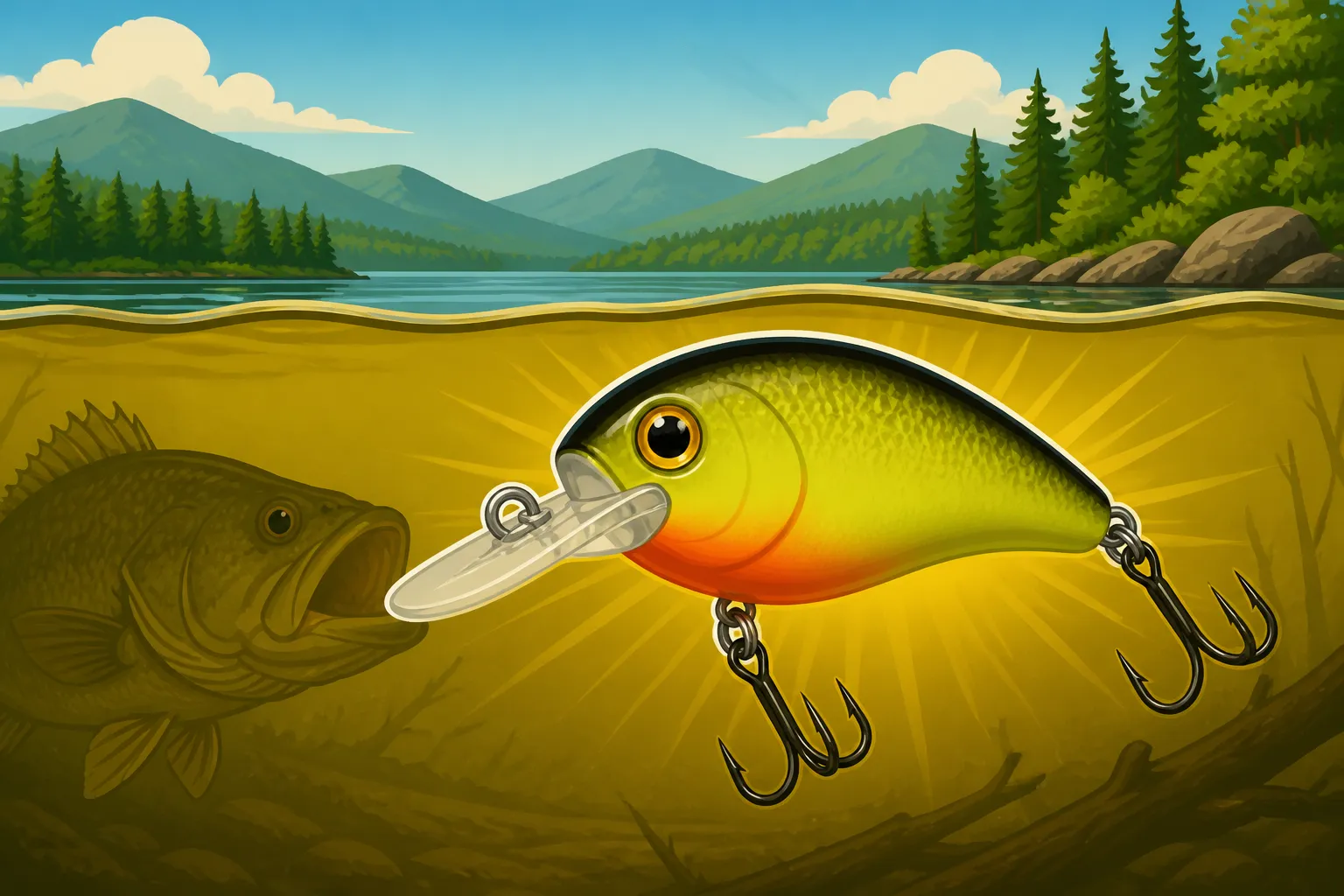
- Why Bright Colors Work: Bright and fluorescent colors, like chartreuse, electric blue, or hot orange, reflect what little light is available in stained water more effectively. They create a "glow" that fish can pick up, even if they can't discern the finer details of the lure. These colors don't just stand out to our eyes; they register as distinct shapes or flashes to a fish's limited vision in murky conditions.
- The Power of Contrast: Beyond just being bright, a crankbait with strong contrasting patterns can be even more effective. A "firetiger" pattern, for example, combines bright greens and yellows with bold orange and black stripes. This creates a highly visible, almost silhouette-like profile that fish can easily differentiate from the ambient murk. Think about a dark back with a bright belly, or contrasting bands. This helps the fish register the lure as a solid object rather than just a vague blur.
- Specific Recommendations for Vermont:
- Chartreuse: This vibrant green-yellow is a stained water classic for a reason. It's universally effective for bass, pike, and even walleye in murky conditions across Vermont's lakes like Lake Bomoseen or parts of Lake Champlain after a heavy rain.
- Firetiger: With its blend of chartreuse, orange, and black stripes, firetiger is a phenomenal all-around choice. It has incredible contrast and visibility, making it a go-to for many anglers fishing for aggressive species.
- Hot Orange/Red: Especially effective in tannin-stained waters or for species like smallmouth bass that often feed on crawfish, which can have reddish hues. Orange and red are also colors that can retain some visibility deeper in the water column.
- Black/Blue: While not "bright" in the traditional sense, black and blue can create a very strong silhouette in certain stained water conditions, especially against an overcast sky. This combination is particularly effective for bass in darker, tannin-stained ponds or muddy river sections.
Don't be afraid to experiment, but always lean towards something that pops. Remember, you're trying to create a visual target in a visually challenging environment.
Vibration and Sound: The Irresistible Force
If sight is compromised, the next best thing is vibration. This is where the lateral line of a fish comes into play. A crankbait that moves a lot of water and makes a racket is essentially shouting "here I am!" to any fish within range.
- Aggressive Wobble: Crankbaits achieve vibration through their lip design and body shape, which causes them to "wobble" as they move through the water. For stained conditions, you want a crankbait with a wider, more aggressive wobble. This displaces more water and sends out stronger pressure waves that fish can detect with their lateral line from a greater distance. Think of the difference between a gentle ripple and a big splash – you want the splash.
- Rattles: The Underwater Noise Makers: Many crankbaits come equipped with internal rattles. These can be tiny BBs, larger spheres, or even tungsten weights that create distinct sounds as the lure moves.
- Loud Rattles: In heavily stained or muddy water, the louder, the better. These rattles create noise that travels further and penetrates the murk, drawing fish in who might otherwise completely miss your lure. Some crankbaits are specifically designed with oversized or multiple rattle chambers for this purpose.
- High-Pitch vs. Low-Pitch: Different rattle materials (plastic, glass, steel, tungsten) produce different pitches. Experimenting with both high-pitch (often sharper, more frantic) and low-pitch (deeper, thudding) rattles can be beneficial, as fish might prefer one over the other on any given day. Tungsten rattles, for instance, tend to be louder and produce a different sound signature.
- Hydrodynamic Design: Beyond just the rattle, the overall shape and lip of the crankbait contribute to its vibration. Some lures are designed to be "thumpers," creating a deep, resonant vibration that's very effective in low visibility. When you reel it in, you should be able to feel the vibration clearly through your rod.
Dive Depth and Profile: Getting to the Strike Zone
Even the brightest, loudest crankbait won't catch fish if it's not presented where the fish are holding. In stained water, fish often orient themselves tighter to cover or structure, and their preferred depth can change depending on light penetration and comfort levels.
- Matching Depth to the Environment:
- Shallow Water: For stained river sections, shallow ponds, or lake flats (common in many Vermont ponds and smaller lakes), a squarebill or shallow-diving crankbait that runs 1-4 feet is ideal. These lures are designed to deflect off wood, rocks, and grass without snagging, triggering reaction strikes from fish hiding in the cover.
- Mid-Depth: If you're targeting stained points, submerged humps, or channel edges in Vermont's larger lakes like Champlain, a medium-diving crankbait (diving 6-12 feet) will be more appropriate. These lures need to get down to where the fish are often staging in stained conditions.
- Deeper Water: While crankbaits aren't typically the first choice for truly deep water (20+ feet), some deep-diving models can be effective for targeting suspended fish or deeper structure in stained conditions, particularly for species like walleye. However, in heavily stained water, fish tend to be shallower where light penetration is better, or hugging bottom structure very tightly.
- Profile and Size:
- Bulkier Profile: In stained water, a slightly bulkier profile can sometimes be more advantageous than a very slim, subtle bait. A larger profile creates a bigger "target" for the fish to home in on, especially when their vision is limited.
- Baitfish vs. Crawfish: Consider what the fish are likely feeding on. If it's a crawfish-heavy environment, a more compact, rounder profile with an orange or brown tint can be deadly. If it's baitfish-rich, a longer, slender profile might be better. In stained water, the motion and vibration of the profile often override its exact visual mimicry.
Top Crankbait Styles for Vermont's Stained Waters
Now that we understand the critical characteristics, let's dive into some specific crankbait styles that shine in stained water conditions throughout Vermont. Each style has its unique advantages for different situations you might encounter.
Lipless Crankbaits: Versatility and Aggression
Lipless crankbaits are a staple for many anglers, and their design makes them exceptionally effective in stained water. They are characterized by their lack of an external diving lip, with the line tie typically on the top of the lure's head.
- Why They Excel in Stained Water:
- Tight, High-Frequency Wobble: As lipless crankbaits are retrieved, their entire body vibrates rapidly, creating a very tight, high-frequency wobble. This intense vibration is easily detected by a fish's lateral line, making them incredibly effective at calling fish from a distance in murky water.
- Loud Rattles: Most lipless crankbaits are packed with internal rattles that create a significant amount of noise. This loud, often frantic sound signature is a huge advantage when fish can't see well.
- Versatile Depths: While they don't have a diving lip to control depth, lipless crankbaits are incredibly versatile. You can fish them from just under the surface all the way down to the bottom by simply adjusting your retrieve speed and allowing them to sink. This makes them ideal for prospecting different depths in stained conditions.
- Best Uses in Vermont:
- Covering Water: When you need to quickly locate active fish in a large, stained area, lipless crankbaits are fantastic. Cast them out, let them sink to your desired depth, and reel them in. This is great for searching stained lake flats, river eddies, or large bays on Lake Champlain.
- Fishing Over Grass: Their retrieve versatility makes them excellent for ripping through stained grass beds. When they snag on grass, a sharp rip of the rod will often free them and trigger a reaction strike from bass or pike hiding in the cover.
- Vertical Jigging: In deeper, stained holes or on ice, lipless crankbaits can be vertically jigged, letting their vibration and flash attract fish from below. This can be particularly effective for early season Walleye Fishing on Lake Champlain or for perch through the ice.
- Colors: Chartreuse, firetiger, and bright orange are absolute winners for lipless crankbaits in stained water.
- Retrieve Tips: A steady retrieve is often all it takes, but don't be afraid to incorporate a "yo-yo" retrieve – letting it fall on slack line and then ripping it up – which can be deadly in stained conditions.
Squarebill Crankbaits: Bouncing Off Structure
Squarebill crankbaits are designed specifically for fishing shallow, gnarly cover without getting hung up. Their unique lip design gives them a distinct advantage in stained, shallow environments.
- Why They Excel in Stained Water:
- Wide, Irregular Wobble: The square lip causes these baits to have a wide, erratic wobble. This strong, often thumping vibration is excellent for displacing water and attracting fish in low visibility. The erratic action can also mimic a distressed baitfish, which is very appealing to predatory fish.
- Deflection Power: The most significant advantage of a squarebill is its ability to "deflect" off obstacles like rocks, wood, and docks. When the square lip hits cover, it causes the bait to kick out erratically, often triggering a reaction strike from a fish that was hiding nearby. In stained water, fish will often hold very tight to cover, waiting for an ambush opportunity.
- Shallow Running: Squarebills typically run shallow, from 1 to 5 feet, making them perfect for targeting specific shallow cover that might hold fish in stained conditions.
- Best Uses in Vermont:
- Shallow Cover: Think fallen trees along riverbanks, rocky shorelines, stump fields in ponds, or shallow dock pilings. This is where squarebills truly shine for Largemouth Bass Fishing in Vermont and Smallmouth Bass Fishing in Vermont.
- Rivers and Creeks: Many of Vermont's rivers, like the Otter Creek or the White River, can become stained after heavy rains. Squarebills are perfect for working these sections, bouncing off submerged rocks and logs.
- Transition Areas: Cast squarebills along the edges where stained water meets clearer water, or where shallow stained flats drop off into deeper channels.
- Colors: Again, chartreuse, firetiger, and crawfish patterns (like red/orange combinations) are top picks.
- Retrieve Tips: A stop-and-go retrieve, combined with actively bumping into cover, is key. Let the bait "hunt" and deflect, as these unexpected movements are often what trigger a strike in low visibility.
Medium-Diving Crankbaits: Targeting the Mid-Depths
When fish aren't holding super shallow but aren't in the abyss either, medium-diving crankbaits are your go-to. These lures typically run between 6 and 12 feet, making them ideal for a wide range of stained water scenarios.
- Why They Excel in Stained Water:
- Consistent Dive Depth: They reach and maintain a specific depth range, allowing you to effectively target submerged structure or suspended fish in the mid-water column, which can be critical when visibility is low and fish are less willing to move far for a meal.
- Variety of Wobbles and Rattles: Medium divers come in a huge array of designs, offering various wobble actions (from tight to wide) and rattle systems. Look for models with a more aggressive wobble and prominent rattles to ensure maximum attraction in stained water.
- Targeting Key Structure: These baits are perfect for working stained main lake points, humps, channel swings, and deeper rock piles that might be holding smallmouth, walleye, or pike.
- Best Uses in Vermont:
- Lake Champlain Structure: On Lake Champlain, particularly in its southern sections or bays with stained water, medium divers are excellent for working rocky points or submerged humps where Lake Champlain Smallmouth Bass Fishing can be excellent.
- Larger Pond Contours: For Vermont's larger ponds and smaller lakes with stained water, these crankbaits help you explore the drops, ledges, and transition zones where fish might be holding slightly deeper for comfort or to ambush prey.
- River Channels: If a river has a deeper channel that’s stained, a medium diver can be used to probe those depths, especially if it has a stronger current.
- Colors: Firetiger, bright blues, chartreuse, and sometimes even a dark purple or black/blue can be effective.
- Retrieve Tips: A steady retrieve often works well, especially for covering water. However, try incorporating pauses or subtle twitches, particularly when you feel the lure making contact with structure. This momentary hesitation can be enough to entice a hesitant fish in low visibility. Consider brands like Rapala or Strike King, often found at places like Bass Pro Shops or easily available on Amazon, as they offer reliable medium-diving options.
Practical Tips for Cranking Stained Vermont Waters
Knowing which crankbaits to use is half the battle; knowing how to fish them effectively in stained water is the other. A few adjustments to your technique can dramatically increase your success rate.
Retrieve Speed and Pauses
In stained water, fish have less time to react to a lure, and their ability to track it visually is diminished. This changes how you should approach your retrieve.
- Vary Your Speed: While a consistent retrieve is often a good starting point, don't be afraid to experiment. Sometimes, a faster retrieve is necessary to generate maximum vibration and get a reaction strike before the fish can fully analyze the lure. Other times, a slower retrieve allows a more curious fish to home in on the vibration and sound.
- The Power of the Pause: In clear water, a pause might give a fish too much time to inspect a lure and decide it's fake. In stained water, a brief pause can be incredibly effective. It allows the lure to hang in the strike zone, giving the fish a chance to catch up and hone in on the sound and vibration. When the lure starts moving again, that sudden change of pace can often trigger a strike from a fish that was just following. This is especially true with lipless crankbaits, which flutter enticingly on the fall.
- Contact and Deflection: This goes hand-in-hand with retrieve speed. When fishing squarebills, actively seek out contact with submerged structure. The erratic deflection off a rock or log often triggers a reaction strike. In stained water, fish are typically holding tight to cover, and that sudden, unexpected movement can be irresistible. Adjust your retrieve speed to allow the lure to tick or crash into cover without getting hung up.
Line Choice and Sensitivity
Your fishing line is the direct link between you and your crankbait, and its properties can significantly impact your success in stained water. Sensitivity is key.
- Fluorocarbon for Feel and Stealth: Many experienced crankbait anglers swear by fluorocarbon line for its low stretch and excellent sensitivity. This allows you to feel subtle bites that you might miss with more stretchy monofilament, especially when fish are "mouthing" the bait in stained water rather than hitting it aggressively. While stealth is less of a concern in heavily stained water, fluorocarbon's invisibility is a bonus in situations where the water isn't completely opaque. It also sinks, which can help a crankbait reach its maximum running depth.
- Braided Line for Strength and Durability: If you're fishing in really heavy cover – thick weeds, dense laydowns, or rocky areas – where snagging is a high risk, braided line can be an excellent choice. Its zero stretch means incredible sensitivity, allowing you to feel every bump and vibration. The added strength helps you rip lures free from snags more easily. However, because braid is so visible, it's often recommended to use a fluorocarbon leader (3-6 feet) tied to your crankbait, especially if the water isn't pitch black. This gives you the best of both worlds: braid's strength and sensitivity, with fluorocarbon's reduced visibility near the lure.
- Monofilament for Give: While less sensitive, monofilament line has more stretch, which can be advantageous with treble-hooked baits like crankbaits. The stretch acts as a shock absorber, preventing fish from tearing hooks out during violent head shakes. If you're fishing open water in stained conditions where snags aren't a major issue, a good quality monofilament can still be effective, especially if you're using a sensitive rod.
Ultimately, consider the cover you're fishing and your personal preference. For general stained water cranking in Vermont, a good fluorocarbon or braid-to-fluoro leader setup will give you the most confidence and sensitivity to detect bites.
Where to Buy Your Stained Water Crankbaits
Finding the right crankbaits for stained water means having access to a good selection of colors, sizes, and styles. Luckily, there are plenty of options for Vermont anglers.
- Specialty Tackle Shops: Your local Vermont tackle shop is an invaluable resource. The staff often have firsthand knowledge of current local conditions, including which colors and styles are performing best in specific stained water bodies, whether it's the Battenkill River Trout Fishing or Lake Champlain Walleye Fishing. They can offer personalized advice and often carry regional favorites.
- Large Retailers: Stores like Bass Pro Shops or Cabela's (which is part of Bass Pro Shops) offer an enormous selection of crankbaits from all the major manufacturers. You'll find every color, rattle type, and dive depth imaginable. It's a great place to physically see and feel different baits, compare rattles, and stock up.
- Online Retailers: For sheer convenience and selection, online platforms like Amazon are hard to beat. You can read reviews, compare prices, and have a wide variety of crankbaits delivered right to your door. This is especially useful for finding specific, harder-to-find patterns or taking advantage of sales. When shopping online, pay close attention to the lure's stated dive depth, weight, and whether it features rattles. Look for descriptions that mention "stained water," "murky conditions," or "low light" performance.
Having a diverse selection of crankbaits in your tackle box, specifically chosen for their stained water characteristics, will make you a much more adaptable and successful angler on Vermont's varied waters. Don't let murky water intimidate you; embrace it as an opportunity to try something new and exciting!
| Crankbait Type | Key Stained Water Characteristic | Best Colors for Stained Water | Ideal Vermont Scenarios |
|---|---|---|---|
| Lipless Crankbait | High-frequency wobble, loud rattle | Chartreuse, Firetiger, Hot Orange | Covering open flats, ripping through grass, vertical jigging |
| Squarebill Crankbait | Wide, erratic wobble, deflection | Chartreuse, Firetiger, Crawfish patterns | Shallow rivers, rocky shorelines, heavy wood cover |
| Medium Diver (6-12 ft) | Aggressive wobble, good rattles | Firetiger, Chartreuse, Dark Blues/Purples | Main lake points, submerged humps, channel edges |
Disclaimer
This article is for general informational purposes only and does not constitute professional advice. Laws, prices and regulations vary by location and change over time. Consult a qualified professional for guidance on your specific situation.