Muskellunge catch and release survival tips
Landing a massive muskellunge is often the culmination of hours, days, or even a lifetime of dedication, but the moment you get that magnificent fish boatside or to shore is just the halfway point. Far too many anglers, especially those new to pursuing these toothy giants, get caught up in the excitement and inadvertently jeopardize the fish's chances of survival after release. This guide is dedicated to equipping you with the knowledge and practical tips to ensure that every musky you catch in Vermont swims away strong, ready to grow even bigger.
Understanding Why Musky Need Special Care
Muskellunge are truly apex predators in Vermont's waters, known for their incredible power and size. While they seem incredibly tough, the act of being caught and handled can be surprisingly traumatic for them. Recognizing these vulnerabilities is the first step towards responsible angling.
The Stress Factors of a Fight
Imagine being put through a grueling, adrenaline-fueled marathon against a relentless, unseen opponent. That's essentially what a musky experiences when hooked. Their explosive runs and head shakes, while thrilling for the angler, push their bodies to the absolute limit.
Muskellunge have a high metabolic rate, and a prolonged fight can lead to a severe buildup of lactic acid in their muscles. This is similar to what happens to a human athlete during intense exercise, but for a fish, it can be fatal. The lactic acid surge can impair their ability to properly absorb oxygen, even if they appear to be swimming away strongly after release. They might look fine at first, only to succumb hours later due to this internal stress. This is why minimizing fight time is paramount. Using gear that is appropriately heavy for the size of fish you're targeting allows you to subdue them more quickly, reducing their exhaustion and the detrimental physiological effects of a long battle. Think of it as a quick, intense workout rather than a drawn-out struggle.
Anatomical Considerations for Musky
Muskies have several physical characteristics that make them particularly susceptible to injury during handling. Their large, delicate gill rakers are essential for oxygen exchange and are easily damaged by fingers or mishandling. Any damage to these can severely impact their ability to breathe.
Then there are those impressive teeth. While they are formidable for catching prey, they pose a significant challenge for anglers trying to remove hooks. Careless handling can lead to deep cuts for the angler and further stress or injury to the fish's mouth and jaw, which are critical for its survival and future feeding. The sheer power of a musky's jaw means that even with care, a thrashing fish can cause considerable damage if not properly secured.
Finally, their protective slime coat is another vital but often overlooked aspect. This slimy layer acts as the fish's first line of defense against parasites, bacteria, and fungal infections. Rough handling, especially dragging a fish over boat carpet, rough ground, or even just excessive contact with dry hands, can remove this crucial layer. Once compromised, the musky becomes much more vulnerable to disease, further reducing its post-release survival chances. Protecting this slime coat means keeping the fish wet and handling it as little as possible.
Essential Gear for Responsible Musky Release
You wouldn't go into a major surgery without the right tools, and approaching musky catch and release is no different. Having the proper equipment on hand, and knowing how to use it, is non-negotiable for successful release. Don't wait until you've got a giant at the boat to realize you're unprepared.
The Right Tools for the Job
First and foremost, a large, rubberized, knotless landing net is absolutely critical. This isn't just any net; it needs to be big enough to fully encompass a musky (think 40-50 inches deep with a hoop size around 36-40 inches). The rubberized, knotless mesh is key because it protects the fish's delicate fins and slime coat much better than traditional knotted nylon nets, which can strip slime and damage fin rays. The depth ensures the fish is cradled securely and doesn't try to jump out, reducing thrashing. You can find excellent options for these on sites like Amazon.
Next, you need heavy-duty hook removal tools. Long-nosed pliers, preferably 11-12 inches long, are essential for reaching into those toothy mouths. You'll also want a quality pair of jaw spreaders to safely open the musky's mouth and keep it open while you work. Never use your fingers to pry open a musky's mouth – that's a recipe for a trip to the emergency room. For those deeply embedded hooks, a pair of side cutters or bolt cutters (strong enough to snip large gauge treble hooks) is a lifesaver. Sometimes, the safest and quickest option for the fish is to cut the hook shank, leaving the barb in place, rather than attempting to rip it out. These tools should be kept accessible, not buried at the bottom of a tackle bag.
Rod and Line Choices for Quicker Fights
This might sound counterintuitive to "fight the fish quickly," but using heavier tackle is a sign of respect for the fish, not a lack of angling skill. When you're targeting large, powerful fish like muskellunge, your rod and line choices directly impact the fight duration and, consequently, the fish's stress levels.
Opt for a heavy or extra-heavy action rod, typically in the 8-to-9-foot range, with a fast or extra-fast tip. This kind of rod has the backbone to absorb the musky's powerful runs and turn its head quickly, allowing you to gain control and bring it to the net faster. A lighter rod might be "more sporting" in some circles, but it prolongs the fight unnecessarily, leading to more exhaustion for the fish and a higher chance of post-release mortality. For instance, when fishing in Muskellunge Fishing on Lake Memphremagog, you'll appreciate the power of a stout rod.
Pair that heavy rod with a strong, low-stretch line. Braided line, in the 80-100 pound test range, is the standard for musky fishing. Its minimal stretch means you have direct contact with the fish, allowing for powerful hooksets and efficient reeling. This efficiency translates to less time fighting the fish. A good quality fluorocarbon leader is also essential for abrasion resistance against those sharp teeth. Consider Best Line Weight for Muskellunge Fishing for more details on this topic. Don't skimp on line quality; a line break means a lost fish, a lost lure, and a musky swimming away with hardware that could cause it further harm.
The Catch and Release Process: Step-by-Step
This is where all your preparation pays off. Every action, from the moment you hook the fish to the second it swims away, contributes to its survival. Precision, speed, and care are your guiding principles.
Minimize Fight Time and Landing Protocol
As we've discussed, the longer a musky fights, the more physiological stress it endures. When you hook a musky, it's not the time to "play" the fish. Use your heavy tackle to your advantage: keep constant pressure, pump and reel efficiently, and try to steer the fish towards the net. The goal is to bring it to the boat or shore as quickly and safely as possible. Think aggressive, but controlled.
Once the musky is boatside, get it into that large, rubberized net headfirst. Avoid dragging the fish over the gunwale of the boat or across the shore. The net should be deep enough to allow the entire fish to be submerged in water while still in the net, especially if you need a moment to prepare your tools. Keeping the fish in the water as much as possible is the single best thing you can do for its survival. Having the Best Landing Net for Muskellunge makes this process much smoother.
Safe Handling and Hook Removal
Now for the critical part. Once the musky is securely netted in the water, take a deep breath. Have all your tools laid out and ready: long-nosed pliers, jaw spreaders, and bolt cutters.
- Keep the fish submerged: If possible, perform all hook removal while the musky is still in the net and in the water. This keeps its gills functioning and preserves its slime coat.
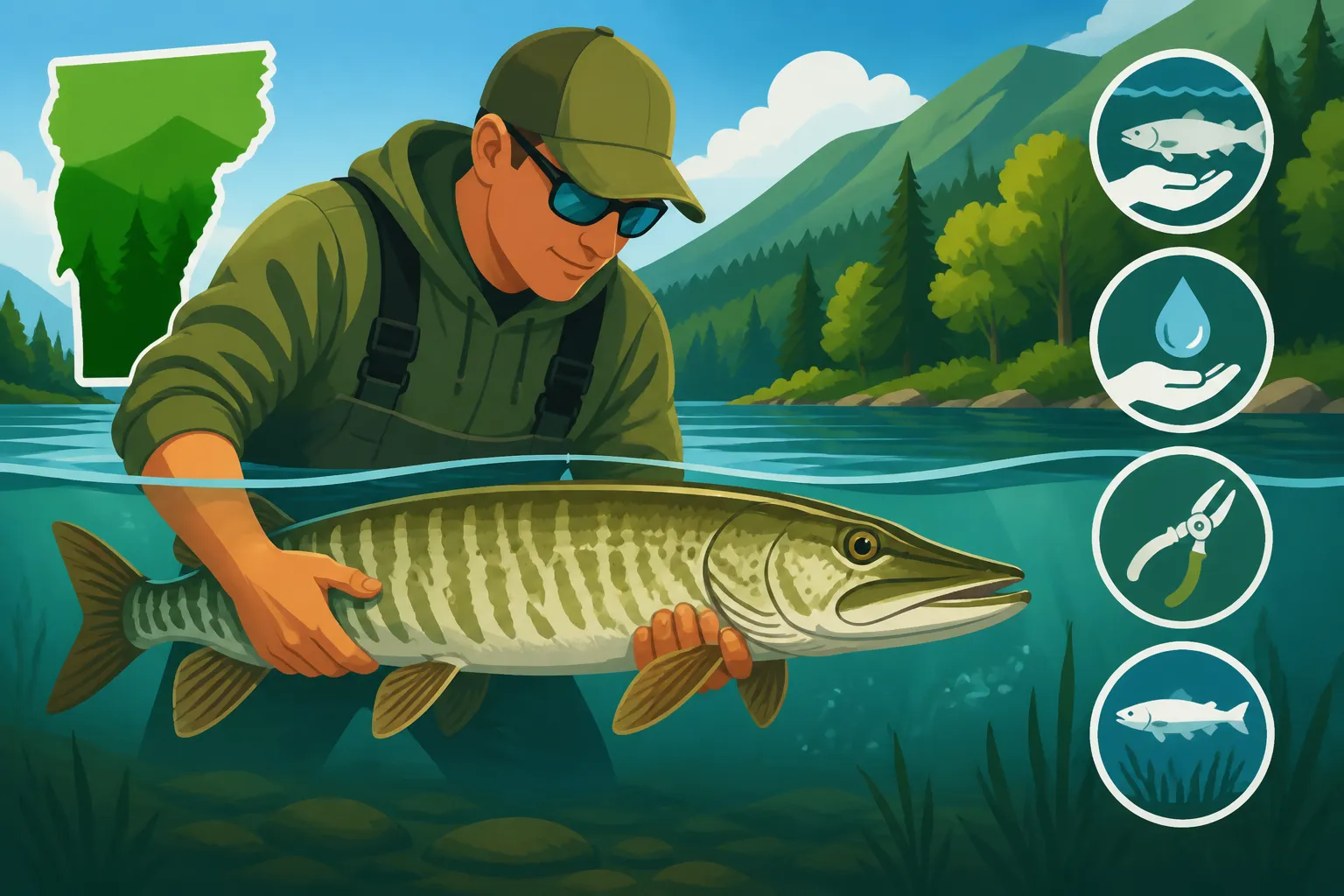
- Secure the fish: If you must remove the fish from the water for a quick photo or stubborn hook, do so quickly and carefully. Support its entire body horizontally. Never hold a musky vertically by its head or gills, as this can severely damage its spine and internal organs due to its heavy weight. A proper grip involves supporting the belly and holding the caudal peduncle (the narrow part of the tail).
- Open the mouth: Use your jaw spreaders to safely open the musky's mouth. This protects your hands and gives you clear access to the hooks.
- Remove hooks: With your long-nosed pliers, carefully twist and remove the hooks. If the hooks are deeply embedded or multiple hooks are snagged, don't hesitate to use your bolt cutters to snip the hook shanks. It's far better to leave a small piece of a hook in the fish than to tear its mouth or gills trying to extract it. Many high-quality hooks will rust out over time, and a fish has a better chance of surviving with a small piece of metal than with a torn jaw. For specific techniques, learning How to Catch Muskellunge on Lake Memphremagog often includes these handling tips.
The Critical Revival Process
This step is often rushed or overlooked, but it's vital for ensuring the musky truly recovers. Once the hooks are removed and the fish is back in the water within its net, or held gently, it's time for revival.
Signs of a Stressed Musky: A musky that is not ready for release will often be lethargic, roll over on its side or back, or make no attempt to swim away when gently pushed. Its gills might not be flaring strongly.
Revival Technique:
- Hold the fish upright: Position the musky facing into any current. If there's no current, gently move the fish forward and backward in the water, forcing water over its gills. This helps to flush out lactic acid and provides a fresh supply of oxygen.
- Observe for recovery: Watch the fish's gills. They should be flaring rhythmically and strongly. The musky should begin to show signs of alertness, perhaps trying to keep itself upright or even attempting to swim out of your grasp.
- Release when ready: Only release the fish when it can hold itself upright and actively tries to swim away from your hands. Don't just toss it back in. Let it swim away on its own power. If it struggles, continue the revival process. This might take several minutes, sometimes even 10-15 minutes for a truly exhausted fish. Be patient; their survival depends on it.
Here’s a quick comparison:
| Characteristic | Healthy Musky (Ready for Release) | Stressed Musky (Needs More Revival) |
|---|---|---|
| Body Position | Holds itself upright, balanced | Rolls over on its side or back, struggles to stay vertical |
| Gill Movement | Strong, rhythmic, consistent flaring | Slow, weak, erratic gill movements |
| Responsiveness | Actively tries to swim away, pushes against hands | Lethargic, doesn't react to gentle nudges |
| Coloration | Appears vibrant and natural | May appear pale or discolored, especially around gills |
| Fin Movement | Fins are spread and stable, may exhibit fin twitching | Fins are clamped, limp, or barely moving |
Best Practices Beyond the Release
Responsible angling doesn't end when the fish swims away. A few additional practices can further increase survival rates and contribute to the overall health of Vermont's musky fishery.
Photography Etiquette
Everyone wants a photo with their trophy musky – it's a natural desire! But this is often where well-intentioned anglers cause the most harm. The key is to be quick, minimize air exposure, and support the fish properly.
- Preparation is key: Have your camera ready before you even bring the fish in. Designate someone to take the photos.
- Keep it wet: As much as possible, take photos with the fish partially submerged in the net, or quickly remove it for a shot and immediately put it back in the water.
- Support its weight: If you must lift the fish, use two hands and support its entire body horizontally. One hand under the belly, one hand supporting the tail. Never hold it by the gill plate alone, especially vertically. That puts immense pressure on its jaw and spine.
- Speed is paramount: Aim for a maximum of 5-10 seconds out of the water. Get your shot and get the fish back to revival immediately. You'll have plenty of time to admire the photos later. Consider practicing your pose with a small stick or a pillow to get the hang of it beforehand.
Environmental Considerations
The environment itself can add another layer of stress to a musky, especially water temperature. Muskellunge, like all fish, are cold-blooded, and their metabolism is directly tied to water temperature.
- Water Temperature: High water temperatures, particularly during the summer months when surface temperatures can soar, dramatically reduce a musky's ability to recover from a fight. Oxygen levels decrease in warmer water, and the fish's stress response is amplified. If surface water temperatures are consistently above 75°F, it's often best to avoid actively targeting muskies altogether, as their chance of survival after release drops significantly. Even if you practice perfect catch and release, the added thermal stress can be lethal. Pay attention to local conditions, especially in lakes like Memphremagog where Muskellunge Habits on Lake Memphremagog can vary with seasonal temperatures.
- Special Regulations: Always be aware of specific regulations that might apply to musky fishing in certain areas or during particular seasons. Vermont Fishing Regulations Explained is your go-to resource for understanding these rules, which are often designed with fish conservation in mind. Sometimes, there are specific length limits or catch-and-release only periods, such as those detailed in Muskellunge Regulations on Lake Memphremagog. These aren't arbitrary rules; they're in place to protect these valuable fish populations. Also, for instance, checking if Is It Legal to Release a Muskellunge You Catch in Vermont? is clearly understood is part of being a responsible angler.
Continuing Education
The world of fishing, especially for specialized species like musky, is constantly evolving with new techniques and conservation insights. Don't stop learning!
- Connect with Experts: Join local musky fishing clubs or online forums where experienced anglers share their knowledge. There's a wealth of wisdom to be gained from those who've dedicated years to pursuing these fish. Many seasoned musky anglers are passionate about conservation and are happy to share their tips.
- Hire a Guide: If you're serious about targeting muskellunge, consider hiring a reputable musky guide for a day. They not only know the best spots and techniques (like what you'd find in How to Catch Muskellunge on Lake Memphremagog), but often prioritize safe handling and release practices, offering invaluable hands-on learning. They have the right equipment, the knowledge, and the experience to manage these powerful fish effectively and ethically.
- Research & Observe: Read articles and watch videos (even those found on Amazon product pages often have user-submitted content or instructional materials) dedicated to musky conservation. Observe how successful anglers handle their fish. The more you educate yourself, the better you'll become at ensuring the health and future of Vermont's magnificent muskellunge. Every released musky is an investment in the next generation of fishing memories.
Disclaimer
This article is for general informational purposes only and does not constitute professional advice. Laws, prices and regulations vary by location and change over time. Consult a qualified professional for guidance on your specific situation.