Tiger Muskie Stocking in Vermont
There's a fascinating, almost mythical quality to the idea of a "tiger muskie" in Vermont waters. Many anglers have heard whispers, seen old reports, or perhaps even dreamt of encountering these elusive, striped predators. But the reality can be a bit hazy, leaving many wondering: are they even still here? This comprehensive guide will cut through the speculation, diving deep into the history, biology, and current status of tiger muskie stocking efforts in our beautiful Green Mountain State.
Understanding the Tiger Muskie: A Hybrid Marvel
Let's be honest, there's something truly captivating about big, toothy predators in our freshwater lakes and rivers. And the tiger muskie is no exception. It's a fish that sparks a lot of curiosity, often leading to anglers poring over old fishing reports or trying to decipher blurry photos from years gone by. But before we get too deep into their presence (or lack thereof) in Vermont, let's talk about what makes a tiger muskie so special in the first place.
What Exactly is a Tiger Muskie?
A tiger muskie isn't a naturally occurring species in the wild, at least not commonly. It's a sterile, first-generation hybrid, typically created by crossing a true muskellunge (think those giants from Lake Memphremagog) with a northern pike. Genetically, it's like the mule of the fish world – a fantastic blend of two powerful parents, but unable to reproduce on its own. This sterility is actually a key reason why fisheries managers sometimes consider stocking them, as it means they can introduce a fast-growing, voracious predator without the risk of an unchecked population explosion.
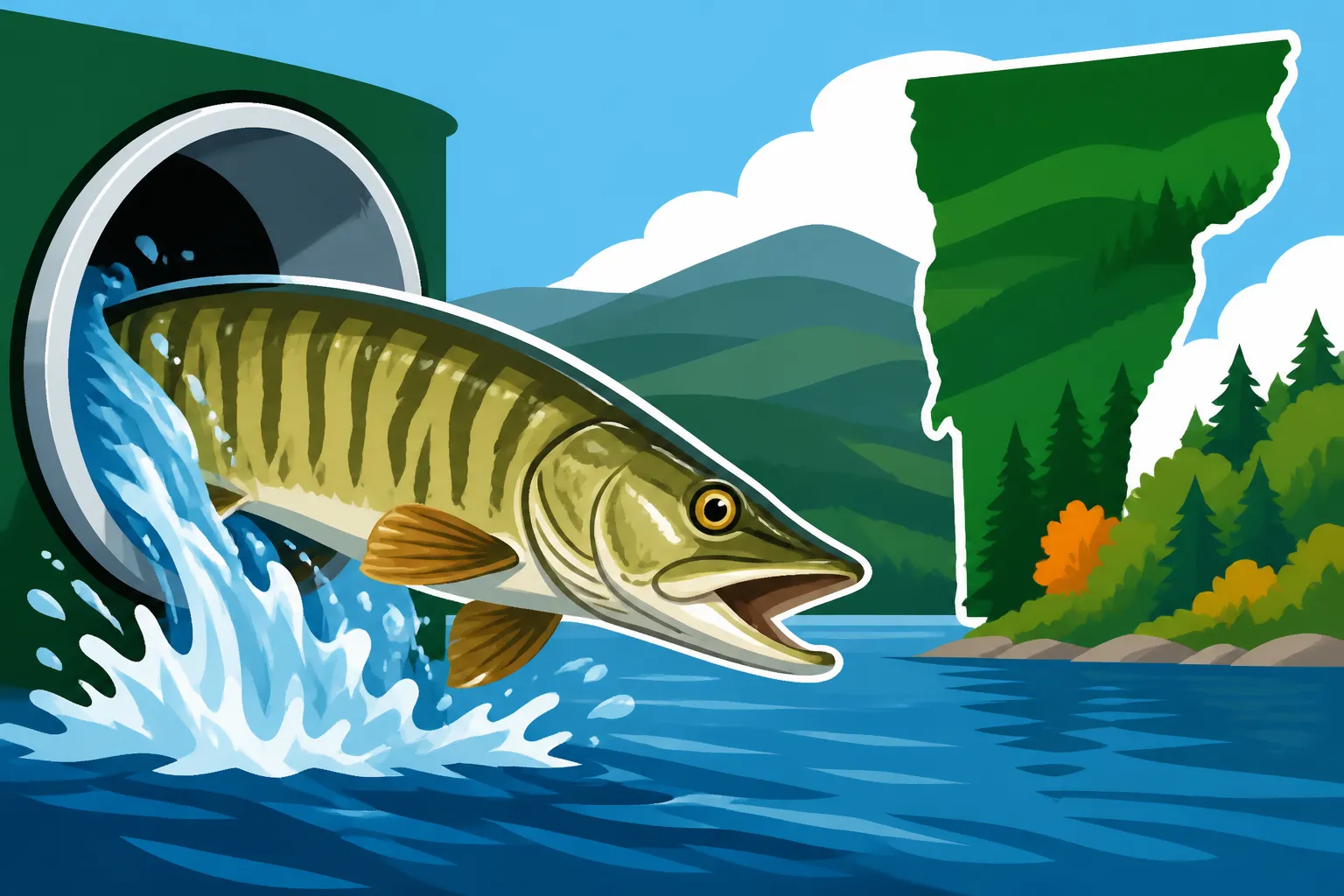
Visually, they are absolutely stunning. They inherit the long, cylindrical body shape of both parents, but their markings are what truly set them apart. Instead of the spots or blotches you might see on a pure muskie or the bean-shaped spots of a northern pike, tiger muskies boast striking vertical bars or stripes along their flanks, giving them that distinctive "tiger" appearance. These markings can range from bold, dark stripes on a lighter background to more subtle, wavy patterns, but they are almost always present. They also tend to have a slightly more flattened snout than a pure muskie and typically grow faster than either parent in their early years. Imagine reeling in a fish that looks like it swam straight out of a safari documentary – that's the tiger muskie experience. They can grow to impressive sizes, offering a truly thrilling challenge for anglers equipped with the right gear.
Why Vermont Considered Stocking This Hybrid
So, why would Vermont, a state known for its pristine trout streams and incredible bass and salmon fishing, ever look to introduce a hybrid like the tiger muskie? It boils down to a few very specific fisheries management goals. First and foremost, their sterility is a huge advantage. Fisheries biologists can precisely control their numbers. They can stock them to specific sizes and in specific quantities, knowing that the population won't explode or outcompete native species through natural reproduction. This gives managers a powerful tool to introduce a trophy-level predator without long-term ecological consequences from an established, reproducing population.
Secondly, tiger muskies are known for their incredibly fast growth rates, especially in their younger years, and their aggressive feeding habits. This makes them an exciting target for anglers looking for a challenging fight and a potentially large fish in a relatively short amount of time. In certain lakes, particularly those with an overabundance of nuisance or stunted prey fish like yellow perch or various panfish, tiger muskies can act as a natural, albeit introduced, control mechanism. They help thin out these populations, which can, in turn, lead to healthier growth rates for the remaining prey species and the overall balance of the aquatic ecosystem. They essentially become biological vacuum cleaners, turning excess baitfish into impressive sport fish. For anglers, this means the possibility of a truly exciting catch in waters that might not otherwise support such a large, apex predator.
The History and Status of Tiger Muskie Stocking in Vermont
The idea of stocking non-native or hybrid fish is never taken lightly, especially in a state like Vermont where conservation and maintaining ecological balance are top priorities. The story of tiger muskies in Vermont is one of careful consideration, experimentation, and evolving management strategies. It's not a straightforward tale of "we stocked them, and now they're everywhere." It's far more nuanced than that.
Early Experimentation and Program Goals
Vermont, like many other states in the region, did indeed explore the potential of tiger muskies as a sport fish. The primary goal was to create exciting, trophy fisheries in certain waters that might not be ideal for purebred muskellunge but could support a fast-growing predator. These weren't widespread stockings across the state. Instead, they were targeted experiments, often in specific lakes or ponds identified as having an abundance of smaller fish that could serve as a robust food source for these hungry hybrids. The hope was to introduce a thrilling fishing opportunity for anglers, providing a unique challenge and a chance at a truly memorable catch, while also addressing potential imbalances in the prey base of those chosen waters.
These programs typically involved raising tiger muskies in hatcheries to a certain size before releasing them. This "grow-out" period ensured they were large enough to avoid becoming prey themselves and could immediately begin their role as apex predators in their new homes. Waters considered were often those with robust forage fish populations and suitable habitat for a large, ambush predator. It was a calculated risk, undertaken with careful monitoring to assess both the success of the stocking and any unforeseen ecological impacts. The thinking was, if it could enhance sport fishing without harming existing native populations, it was worth exploring.
Current Stocking Realities
So, what's the verdict today? Are tiger muskies still being actively stocked in Vermont? The short answer, for the most part, is no. The large-scale, ongoing stocking programs for tiger muskies in Vermont have largely been discontinued. While historical records or local lore might point to certain lakes where they were once released, it's generally understood that the Vermont Fish & Wildlife Department has shifted its focus. The department prioritizes native fisheries management and the stocking of species that are either native or have a long, established history and proven ecological compatibility within Vermont's aquatic systems.
This doesn't mean you'll never hear a story about someone catching one. Fish live for many years, and a few individuals from older stockings could potentially still be swimming in certain lakes. However, relying on active stockings to target them would be a strategy built on outdated information. Anglers hoping to specifically target a "tiger muskie" in Vermont today would likely be better off focusing on the purebred muskellunge fishery in Lake Memphremagog or perhaps exploring waters known for northern pike, which are much more widespread. The commitment to native species and the long-term health of Vermont's natural fisheries ultimately guided the decision away from widespread tiger muskie introductions.
Vermont's Approach to Game Fish Management
Vermont's approach to game fish management is truly a reflection of our deep commitment to conservation and the long-term health of our aquatic ecosystems. It's not just about stocking fish for anglers; it's about maintaining a delicate balance. The state places a high value on native species, like brook trout and landlocked salmon, and works tirelessly to restore and enhance their populations. When stocking does occur, it's often with species that are either native to those waters or have a proven, positive impact on the fishery, such as brown trout or rainbow trout in certain designated waters. You can find out a lot more about these efforts, including which species are stocked and where, by exploring resources like the Vermont Fish Stocking Search Tool, Explained.
The discontinuation of widespread tiger muskie stocking highlights this philosophy. While tiger muskies offered a unique sport fishing opportunity, the long-term management strategy leans towards minimizing the introduction of non-native or hybrid species, especially when there are already robust native predator populations like northern pike and the magnificent purebred muskellunge in Lake Memphremagog. This careful balancing act ensures that Vermont's diverse fisheries remain healthy, resilient, and continue to offer incredible angling experiences for generations to come, whether you're chasing Vermont Trout Opening Day Traditions or trying your hand at Muskellunge Fishing on Lake Memphremagog.
Where You Might Encounter a Tiger Muskie in Vermont
Given the current stocking realities, actively seeking out a tiger muskie in Vermont is quite a unique challenge. It's less about finding a "hot spot" for them and more about understanding where they might persist from historical stockings, or how to properly identify one if you happen to hook into an unexpected surprise. The mystique surrounding these fish is part of what makes them so intriguing, but it also requires a realistic understanding of where they fit into Vermont's current angling landscape.
Identifying Potential Tiger Muskie Waters
While no waters are actively managed for tiger muskies in Vermont anymore, if you were to encounter one, it would likely be in lakes that historically received stockings and possess suitable habitat for large predators. These would typically be larger bodies of water with good populations of forage fish – think yellow perch, suckers, or other panfish – and ample weed beds, submerged structures, or rocky points for ambush hunting.
Historically, some of the larger, warmer lakes were considered for tiger muskie programs. It's not beyond the realm of possibility that an occasional, long-lived individual might still exist in certain lakes, particularly those with a history of general muskie or pike management. However, for a realistic shot at encountering a fish of this family, anglers are much better off focusing on the known purebred muskellunge waters, such as Lake Memphremagog, or the many lakes and rivers throughout Vermont that hold healthy populations of northern pike. Knowledge of Northern Pike Waters in Vermont would be far more beneficial for consistent encounters with large, toothy predators.
Distinguishing Them from Northern Pike and Purebred Muskies
This is where things can get a little tricky, and it's a common point of confusion for anglers. Often, a "tiger muskie" sighting might actually be a particularly large or unusually marked northern pike, or even a purebred muskellunge. Knowing the key identification features is essential.
Tiger Muskie vs. Northern Pike:
- Markings: Northern pike typically have light, bean-shaped spots or bars on a darker green background. Tiger muskies, as mentioned, have those distinctive dark, vertical stripes or blotches on a lighter background.
- Scales on Cheek/Operculum: This is a definitive identification feature. Northern pike have scales covering their entire cheek and the upper half of their gill plate (operculum). Tiger muskies (and purebred muskies) have scales only on the upper half of both their cheek and operculum, with the bottom half being bare. Run your finger over it – it’s quite noticeable!
- Pores under Jaw: Northern pike usually have 4-5 sensory pores on each side of their lower jaw. Tiger muskies and true muskies typically have 6-9 pores on each side.
Tiger Muskie vs. Purebred Muskellunge:
- Markings: Purebred muskellunge often have dark spots, bars, or blotches on a lighter background, but these are rarely the distinct, tiger-like vertical stripes. Their patterns are usually more broken or scattered.
- Tail Fin Shape: This can be subtle but helpful. The tail fin of a purebred muskellunge is often more deeply forked with pointed tips, while a tiger muskie's tail might be slightly less forked and more rounded, a trait often inherited from the northern pike parent.
- Body Shape: While both are long and slender, some purebred muskies can appear even more elongated and snake-like.
Here’s a quick reference table to help:
| Feature | Northern Pike | Tiger Muskie | Purebred Muskellunge |
|---|---|---|---|
| Body Markings | Light, bean-shaped spots on dark background | Dark, vertical stripes/bars on lighter background | Dark spots, bars, or blotches (less defined stripes) |
| Scales on Cheek | Fully scaled | Upper half scaled, lower half bare | Upper half scaled, lower half bare |
| Scales on Operculum | Upper half scaled, lower half bare | Upper half scaled, lower half bare | Upper half scaled, lower half bare |
| Pores Under Jaw | Usually 4-5 per side | Usually 6-9 per side | Usually 6-9 per side |
| Tail Fin | Rounded to slightly forked | Slightly less forked, often rounded | More deeply forked, often pointed |
| Reproduction | Naturally reproduces | Sterile hybrid (cannot naturally reproduce) | Naturally reproduces |
If you're out fishing in Vermont and land a big, toothy fish, take a moment to observe these characteristics. It’s part of the fun and learning process of being a keen angler!
Fishing for Tiger Muskies: Techniques and Gear Considerations
Even if tiger muskies aren't actively stocked in Vermont anymore, the techniques and gear for pursuing such large, aggressive predators are largely the same whether you're after a lingering tiger, a northern pike, or a purebred muskie. And let's be honest, the thrill of the chase, the sheer power of these fish, makes gearing up for them an exciting endeavor. You need equipment that can handle a serious fight, because when one of these fish hits, it hits hard.
Essential Gear for Targeting Large Predators
When you're chasing any member of the pike or muskie family, "heavy duty" is the name of the game. These aren't your typical trout or bass setups. You need gear that can withstand massive strikes, powerful runs, and the sheer weight of a fish that can easily top 15-20 pounds, or even much more if you're lucky enough to tie into a true trophy. For some of the best general options, consider checking out the Best Rods for Vermont Lakes, keeping in mind you'll want to lean towards the heavier side of the recommendations.
- Rods: Look for heavy to extra-heavy power baitcasting rods, typically 7 to 9 feet in length. The longer rods give you better casting distance for those large lures and more leverage to fight a powerful fish. A fast action tip is also beneficial for setting those big hooks quickly. Many anglers prefer specialized "muskie rods" for their robust construction.
- Reels: A high-quality baitcasting reel with a strong drag system and a large line capacity is essential. You'll want a low gear ratio for cranking in those big, high-resistance lures, but a faster retrieve can be good for burning baits and quick hooksets.
- Line: Braided line is almost universally preferred for muskie and pike fishing due to its incredible strength, lack of stretch for solid hooksets, and abrasion resistance. Think 65 to 100-pound test. You simply cannot go too light with these fish.
- Leaders: This is non-negotiable. Pike and muskies have mouths full of razor-sharp teeth that will shred monofilament or fluorocarbon main line in an instant. You need a bite-proof leader made of heavy fluorocarbon (80-130 lb test), steel, or titanium wire. It should be at least 12-18 inches long to prevent the fish from biting through your main line.
- Tools for Handling: Crucially, you need a long-handled landing net with a deep, rubberized, knotless mesh to protect the fish (like a Best Landing Net for Muskellunge). You'll also need long-nosed pliers or jaw spreaders and bolt cutters (in case a treble hook gets lodged deep and needs to be cut for the fish's safety). Reaching into a muskie's mouth with bare hands is a recipe for serious injury. These tools are absolutely necessary for safe, responsible catch and release, especially since Is It Legal to Release a Muskellunge You Catch in Vermont? – which it absolutely is, and is highly encouraged!
You can find a fantastic selection of robust fishing gear, from heavy-duty rods and reels to tough leaders and specialized tools, on platforms like Amazon. They have a wide range of options to get you properly outfitted for these toothy critters.
Best Lures and Tactics
Tiger muskies, like their purebred relatives and northern pike, are aggressive ambush predators. They love to strike large, flashy, and erratic baits that mimic their natural prey.
- Crankbaits: Large, deep-diving crankbaits that imitate baitfish are excellent, especially when trolling or casting along drop-offs, weed edges, and rocky points. Look for jointed models for added action.
- Jerkbaits: These lipless wonders are designed to be retrieved with a jerking motion, creating an erratic, dying-fish action that drives predators wild. Long, slender jerkbaits are particularly effective.
- Bucktails and Spinnerbaits: These are classic muskie and pike lures. The flash and vibration of the blades, combined with the pulsating bucktail, are irresistible. Large, double-bladed bucktails are extremely popular.
- Soft Plastics/Swimbaits: Big, realistic soft plastic swimbaits, often weighted, can be deadly when fished around cover or slow-rolled through open water.
- Topwater Lures: For sheer excitement, nothing beats a topwater strike. Large prop baits, walk-the-dog lures, and giant poppers can entice explosive surface strikes, especially during low-light conditions or over submerged weed beds.
- Trolling: For covering vast amounts of water, especially in larger lakes, trolling large crankbaits or bucktails is a very effective strategy. Vary your speed and depth to find the fish. This is a common technique for Best Techniques for Muskellunge on Lake Memphremagog.
- Casting: This is a more active approach, involving repeatedly casting and retrieving large lures around structure, weed lines, and points. It’s physically demanding but incredibly rewarding when you connect.
Remember, these fish are often found near structure – fallen trees, rock piles, sudden depth changes, and dense weed beds. Focus your efforts on these areas. And always be prepared for a follow right to the boat! The "figure-eight" maneuver at the side of the boat, where you continue your retrieve in a large figure-eight pattern, can often trigger a strike from a fish that has been following your lure.
Safe Handling and Release Practices
Given that tiger muskies are a rare find in Vermont and all large predators deserve respect, practicing proper catch and release is absolutely paramount. These fish are valuable, and their survival after being caught ensures they can continue to grow and provide a thrilling experience for another angler down the line. It's not just good sportsmanship; it's essential for conservation. You can learn more specific details in Muskellunge catch and release survival tips.
- Minimize Fight Time: Use heavy gear (Best Line Weight for Muskellunge Fishing) to bring the fish in quickly, reducing stress and exhaustion.
- Keep Fish in Water: Whenever possible, keep the fish in the water while unhooking it. A large, deep net helps immensely with this.
- Use Proper Tools: Have your long-nosed pliers, jaw spreaders, and potentially bolt cutters ready before you even cast. These allow for quick and safe hook removal. Never try to hand-grab hooks.
- Support the Fish: If you must take the fish out of the water for a quick photo, support its entire body horizontally, ideally with two hands—one supporting the head/gill plate area (but avoid squeezing the gills) and the other supporting the tail and belly. Never hold a large muskie or pike vertically by the jaw; this can cause severe damage to its internal organs and spine.
- Revive Gently: If the fish seems sluggish, hold it gently in the water by the tail, facing into a current or moving it gently back and forth until it regains its strength and can swim away on its own. It's often helpful to keep the fish submerged while reviving it.
- Respect the Teeth: Their teeth are formidable. Be extremely careful. It's always a good idea to wear heavy-duty gloves when handling these fish.
Practicing responsible catch and release ensures that these powerful predators continue to thrive, or at least, that any remaining historical tiger muskies in Vermont can live to fight another day.
The Broader Impact of Tiger Muskies on Vermont's Ecosystem
The decision to stock any non-native or hybrid species, even one as captivating as the tiger muskie, always comes with extensive ecological considerations. Fisheries biologists in Vermont, and elsewhere, perform rigorous analyses before implementing such programs, weighing the potential benefits against any possible negative impacts on the existing aquatic community. While tiger muskie stocking has largely ceased, understanding their potential role provides insight into the complex dynamics of Vermont's lakes and rivers.
Ecological Role and Prey Preference
If tiger muskies were present in significant numbers, their primary ecological role would be that of a top-tier ambush predator. They are not picky eaters when it comes to smaller fish, and their diet would largely consist of whatever abundant forage species are available in a given lake. This includes yellow perch, various panfish like bluegill and sunfish, suckers, minnows, and even smaller individuals of other game fish species. Essentially, anything that fits in their mouth and provides a good meal is fair game. This predatory behavior is one of the reasons they were considered for stocking in lakes experiencing an overpopulation of stunted panfish, aiming to improve the overall health and size structure of the prey species.
Because they are sterile, their impact is limited to their lifespan. They wouldn't establish a reproducing population that could exert continuous, generational pressure on a prey base. This is a crucial distinction from naturally reproducing species like northern pike or even purebred muskellunge, whose populations can grow and adapt over time. The impact of a stocked tiger muskie population would be immediate and controllable, effectively acting as a "biocontrol" for specific issues. They convert readily available forage into large, desirable sport fish, a process that is fascinating from an ecological and angling perspective. Understanding What muskellunge eat on Lake Memphremagog gives you a good idea of the general diet of these large predators.
Balancing Predator-Prey Dynamics
Managing predator-prey dynamics is a constant balancing act for fisheries departments like Vermont Fish & Wildlife. Introducing a new predator, even a sterile one, requires careful thought to avoid unintended consequences. For instance, while tiger muskies might help reduce stunted panfish populations, there's always a concern about their potential impact on desirable native game fish species, especially if those species are also a convenient food source.
Vermont's current management strategies tend to favor working with existing native fish populations and focusing on habitat restoration to achieve healthy ecosystems. For example, maintaining a healthy population of Brook Trout: Vermont's Native Trout involves preserving pristine coldwater habitats. Similarly, the robust fishery for Walleye Fishing on Lake Champlain is managed by understanding the existing predator-prey balance within that massive system. The decision to step away from tiger muskie stocking in most areas reflects a long-term commitment to these native and naturalized fisheries, ensuring that the ecological integrity of Vermont's waters is maintained while still providing fantastic angling opportunities. The lessons learned from previous tiger muskie programs, even if they led to discontinuation, contribute to a deeper understanding of how to manage our cherished aquatic resources for future generations. Knowing How big muskellunge get on Lake Memphremagog provides context for the potential growth rates and predatory impact of these large fish.
Disclaimer
This article is for general informational purposes only and does not constitute professional advice. Laws, prices and regulations vary by location and change over time. Consult a qualified professional for guidance on your specific situation.