Vermont fishing license for blind or disabled anglers
It's incredibly frustrating when you want to enjoy the peace and thrill of fishing in Vermont, but the administrative hurdles of getting a license feel like an insurmountable barrier, especially if you're navigating the world with a disability or visual impairment. You shouldn't have to jump through hoops just to connect with nature and reel in a beautiful catch. This comprehensive guide is here to cut through the confusion, clearly explaining how blind or disabled anglers can obtain a Vermont fishing license, ensuring you know your options and how to access them.
Understanding Vermont's Special Fishing License Provisions
Vermont, like many states, recognizes that not every angler can participate in the same way, or faces the same challenges when it comes to enjoying the outdoors. That's why there are specific provisions in place to ensure fishing remains accessible and affordable for individuals who are blind or have certain disabilities. These aren't just minor adjustments; they're thoughtful considerations designed to level the playing field.
Who Qualifies for a Disabled or Blind Angler License?
First things first, let's talk about eligibility. It’s important to understand the specific definitions Vermont uses, as they are key to determining if you qualify for a special license. Generally, these provisions are for individuals who meet certain criteria related to visual impairment or physical disability.
For those who are legally blind, the state usually follows the federal definition, meaning visual acuity of 20/200 or less in the better eye with corrective lenses, or a visual field of 20 degrees or less. If you're wondering about your specific situation, it’s always best to consult with your ophthalmologist to confirm your legal blindness status. For anglers with a permanent physical disability, the criteria typically revolve around an inability to participate in fishing activities in a manner similar to an able-bodied person. This isn't about minor inconveniences; it's about significant, lasting physical limitations that genuinely impair your ability to fish independently or safely. This could include conditions that severely restrict mobility, dexterity, or stamina required for typical fishing activities. You'll need a physician's certification stating the nature and permanence of your disability, confirming it's a genuine impairment, not a temporary condition.
The Heart Behind the Discount: Why These Options Exist
It’s easy to look at a discounted or free license as just a cost-saving measure, but the truth is, Vermont’s special license provisions are rooted in a deeper commitment to inclusivity and the belief that everyone deserves the chance to experience the state's incredible fishing opportunities. The Vermont Fish & Wildlife Department understands that individuals with disabilities or visual impairments often face additional financial burdens, whether it's for medical care, specialized equipment, or accessible transportation.
These licenses help to offset some of those implicit costs, making a beloved pastime more attainable. More than that, they send a clear message: fishing is for everyone. It’s about more than just catching fish; it’s about mental well-being, connecting with nature, and the joy of a shared experience. Vermont wants to remove as many barriers as possible so that all residents and visitors can enjoy the tranquility of a quiet lake or the thrill of a powerful river. This dedication is part of a broader effort to make the outdoors a welcoming space for all, ensuring that the beauty of Vermont fishing is not out of reach due to circumstance. You can find more general information about why these types of programs exist in the larger discussion around Free and Discounted Fishing License Options in Vermont.
Navigating the Application Process for Special Licenses
Applying for a special fishing license might feel a bit different from a standard license purchase, primarily because it often requires a bit more documentation. But don't let that deter you! The process is manageable, and knowing what to expect can make it much smoother.
Required Documentation and Certification
When applying for a special license due to blindness or disability, the Vermont Fish & Wildlife Department will require specific paperwork to verify your eligibility. This usually involves a formal certification from a medical professional. For a disability, you’ll likely need a "Physician's Statement for Disabled Hunter/Angler License" form, which your doctor will need to complete and sign, detailing the nature and permanence of your disability. This isn't just a simple note; it's a specific form designed to meet state requirements. For legal blindness, you might need certification from a recognized agency, such as the Vermont Division for the Blind and Visually Impaired, or a statement from your ophthalmologist confirming your status.
Beyond the medical documentation, you'll also need standard proof of residency if you're applying for a resident license. This could include a Vermont driver's license, utility bills, or other official documents that establish your continuous residency in the state. Understanding Vermont fishing license residency requirements is crucial here. Make sure all your documents are current and accurately reflect your information. It’s always a good idea to make copies of everything before you submit it, just for your own records.
Where and How to Submit Your Application
Unlike regular fishing licenses that you can often purchase with ease online or at many local sporting goods stores, special licenses sometimes require a more direct approach due to the necessary medical documentation. While some parts of the process might be handled digitally, you'll often need to submit original paperwork.
The most common and reliable method is to mail your completed application and supporting documents directly to the Vermont Fish & Wildlife Department's licensing division. You can also visit one of their regional offices in person, which can be helpful if you have questions or need immediate clarification. While local vendors and town clerks can sell standard licenses, they may not be equipped to process the specialized documentation for blind or disabled anglers. Before heading out, it's always wise to call ahead to the Vermont Fish & Wildlife Department directly at their customer service number to confirm the most current submission methods and required forms. This ensures you’re not wasting a trip. For a general overview of purchasing licenses, you can refer to Where and How to Buy a Vermont Fishing License.
Costs and Duration of These Licenses
The good news is that these special licenses often come with significantly reduced fees, and in some cases, can even be free. The exact cost will depend on the specific type of license and your resident status. For instance, disabled residents might pay a nominal fee, or in cases of severe disability, the license could be issued at no charge. The intent is to remove financial barriers, not just reduce them.
These special licenses are typically annual, meaning they expire on December 31st each year, regardless of when you purchase them during the season. This is similar to the expiration of most standard Vermont fishing licenses. You'll need to renew it annually, and while the initial application might require extensive medical documentation, subsequent renewals might be simpler, especially if your disability is permanent and on file with the department. However, it's always wise to reconfirm specific renewal requirements, as policies can occasionally change. For context, you can compare these costs to the How Much Does a Vermont Fishing License Cost for general licenses, and you'll see a clear difference.
Accommodations and Resources for an Enjoyable Experience
Getting your license is a huge step, but truly enjoying your time on the water often involves more than just the legal document. Vermont offers various accommodations and resources aimed at making your fishing experience as comfortable and rewarding as possible.
Assistance While Fishing: Companion Permits
One of the most valuable accommodations for disabled or blind anglers in Vermont is the provision for a companion. If you, as the licensed angler, require assistance due to your disability or visual impairment, a designated companion can often help you without needing their own fishing license, provided they are only assisting and not actively fishing themselves. This means they can help you bait your hook, cast your line, untangle snags, or navigate to a fishing spot.
It's important to clarify the companion's role: they are there to aid you, the licensed angler, in your pursuit of fishing. They cannot set out their own line, catch fish independently, or exceed the bag limits or regulations set for your license. Their actions are an extension of your fishing activity. This provision allows for a much safer and more enjoyable outing, ensuring you have the support you need to participate fully. Always double-check the latest regulations regarding companion permits, as specifics can vary.
Adaptive Gear and Accessible Fishing Spots
The right gear can make all the difference, transforming a challenging outing into a truly pleasant one. For anglers with disabilities, a wide range of adaptive fishing gear is available. This can include specialized rod holders that allow hands-free fishing, bite alarms that signal when a fish is on the line (especially helpful for blind anglers), larger-handled reels that are easier to grip, or even casting aids. Many of these innovative products are readily available online through retailers like Amazon, offering convenience and a vast selection to meet diverse needs. Taking the time to research and invest in gear that truly enhances your comfort and independence is incredibly worthwhile.
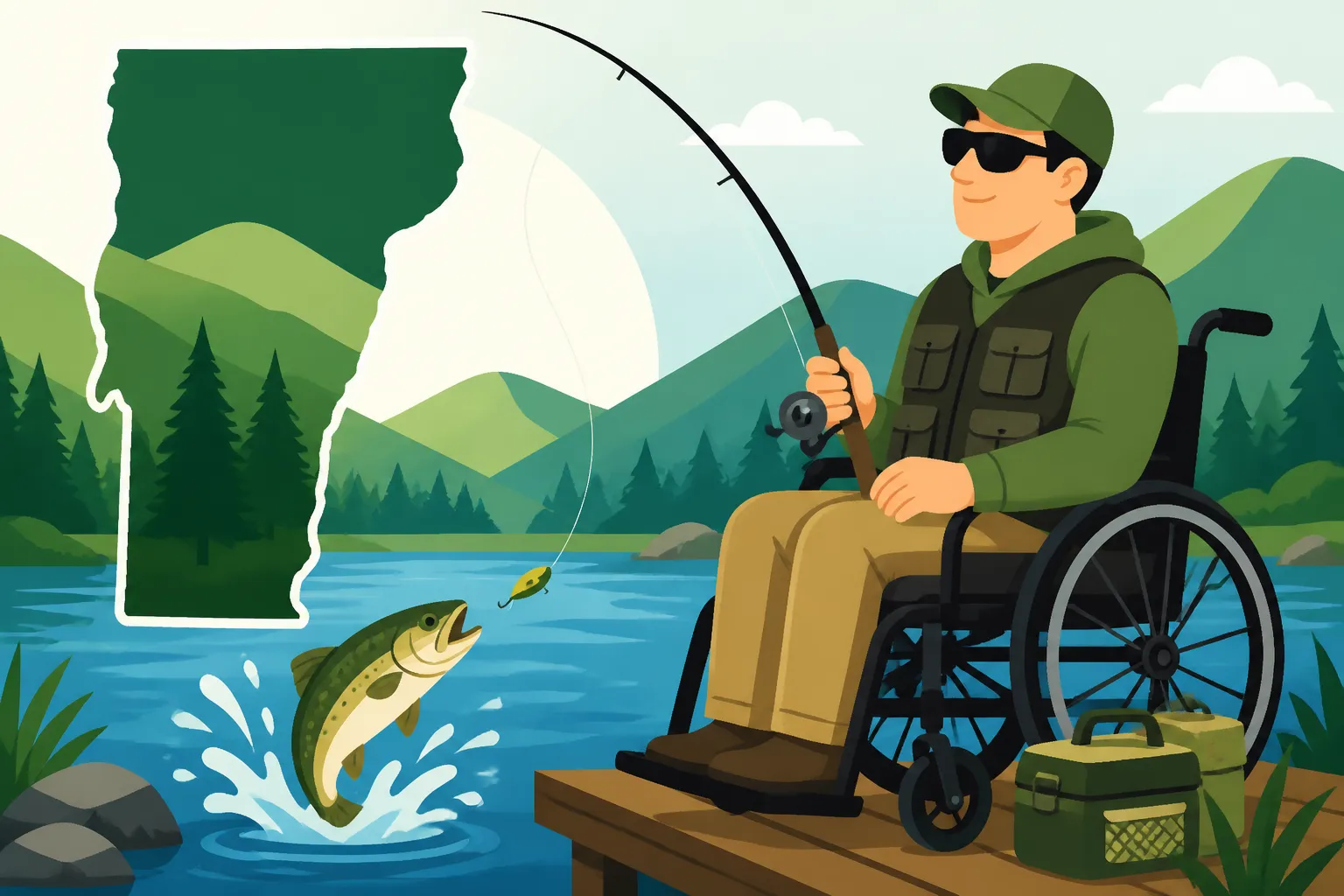
Beyond gear, Vermont is continually working to improve access to its beautiful fishing locations. Many state parks and public access points feature accessible fishing piers and hardened paths to the water's edge, designed to accommodate wheelchairs and reduce mobility barriers. Places like Lake Champlain, or several stocked ponds throughout the state, often have designated accessible features. To find spots near you, it’s worth looking into specific location guides. Knowing where to go can sometimes be the biggest hurdle, so checking out resources that highlight Best handicap-accessible fishing piers in Vermont can be a fantastic starting point. Don't be afraid to call local state parks or fishing access areas ahead of time to inquire about their specific accessibility features.
Understanding Regulations with Visual or Cognitive Impairments
Navigating the detailed world of fishing regulations can be a headache for anyone, but it presents unique challenges for anglers with visual or cognitive impairments. The traditional regulation guide, often a dense booklet of small print and complex legal language, isn't always user-friendly.
To overcome this, consider a few strategies. First, don't hesitate to utilize the Vermont Fish & Wildlife Department’s customer service line. Their staff are usually very helpful and can verbally clarify any rules or specific regulations you need to understand. Remember, their contact details are essential to have on hand, as covered in Vermont Fish and Wildlife license customer service phone number. Second, look for digital versions of the regulations online. While not always offering true large-print options, digital files can sometimes be magnified on a tablet or computer screen, or even read aloud using screen-reader software. While a dedicated audio version might not always be available, tools on your phone or computer can often assist. Most importantly, never assume a rule; always clarify to ensure you’re adhering to Vermont Fishing Regulations Explained. It’s far better to ask than to inadvertently violate a regulation, which can carry penalties as discussed in Fishing Without a License in Vermont: Penalties. Reading through the entire Reading the Vermont Fishing Regulations Guide is highly recommended, but don't hesitate to seek assistance to understand it fully.
Staying Compliant and Prepared on the Water
Once you have your special license and have planned your trip, there are still a few important things to keep in mind to ensure your fishing experience is not only enjoyable but also fully compliant with state laws. Staying prepared will help you avoid any unnecessary stress or complications while you're out there.
Carrying Your License: Digital vs. Physical
Just like any other angler, you are required to have proof of your valid Vermont fishing license on your person while fishing. The good news is that Vermont generally offers flexibility in how you carry it. You can opt for a traditional paper copy, which is always a reliable choice. Many anglers keep it in a waterproof wallet or a designated pocket in their fishing vest.
Alternatively, you can carry a digital version on your smartphone. The Vermont Fish & Wildlife Department's licensing system often allows you to download your license to your phone, which can then be displayed if requested by a game warden. This is incredibly convenient, especially if you want to avoid carrying extra paper. However, if you choose the digital route, make sure your phone is charged and protected from the elements. There's nothing worse than needing to show your license and realizing your phone battery is dead! For a detailed understanding of these options, check out Printing or Carrying a Digital Fishing License in Vermont. Whichever method you choose, ensure it's easily accessible and legible.
What Happens if You Lose Your Special License?
Life happens, and sometimes licenses get lost, damaged, or simply misplaced. If you find yourself in this situation with your special fishing license, don't panic. The Vermont Fish & Wildlife Department has a process in place for replacing lost licenses. It's generally a straightforward procedure, though there might be a small fee involved.
Typically, you can request a replacement online through the state's licensing portal or by contacting the Fish & Wildlife Department directly. You may need to provide some personal identifying information to verify your original purchase. It's crucial to obtain a replacement as quickly as possible, because fishing without a valid, present license, even if you previously purchased one, can lead to fines. Imagine catching the fish of a lifetime only to face a penalty because your license was back home! Understanding the steps for Replacing a lost Vermont fishing license can save you a lot of hassle.
Embracing the Community and Continued Support
Ultimately, fishing should be a source of joy and relaxation. Vermont's fishing community is generally very welcoming, and there are many resources available to support anglers of all abilities. Don't be shy about connecting with local fishing clubs or disability advocacy groups. Often, these organizations offer unique opportunities like mentored fishing trips, adaptive equipment loan programs, or shared knowledge about the most accessible fishing spots. Organizations dedicated to outdoor recreation for people with disabilities are growing, and a quick online search can often reveal local chapters or events.
Remember that you are part of a vibrant angling community in Vermont, and your ability to enjoy the outdoors is valued. Whether you're casting a line into Lake Champlain for smallmouth bass or seeking out trout in a quiet stream, the resources and support are there to help you make the most of it. From understanding Vermont Fishing License Guide for 2026 to knowing the Vermont Fishing License Age Requirements and everything in between, you're now better equipped to enjoy the green mountain state's waters.
| License Type | Eligibility | Required Documentation | Typical Cost (Approx.) | Where to Apply |
|---|---|---|---|---|
| Disabled Resident Fishing License | Permanent physical disability preventing conventional fishing (physician certified) | Vermont Physician's Statement for Disabled Hunter/Angler, Proof of Residency | Reduced Fee ($0-$20) | Mail, In-Person F&W Office |
| Blind Resident Fishing License | Legally Blind (20/200 or less with correction, or 20 deg field) | Certification from Ophthalmologist or VT Div. for Blind | Reduced Fee ($0-$20) | Mail, In-Person F&W Office |
| Disabled Veteran Fishing License | Veteran with 60% or more disability from service | VA disability certification, Proof of Residency | Usually Free | Mail, In-Person F&W Office |
Note: Costs are approximate and subject to change annually. Always verify current fees with the Vermont Fish & Wildlife Department.
Disclaimer
The information provided in this guide is for general informational purposes only and does not constitute legal advice. While we strive to keep the information accurate and up-to-date, fishing regulations and license requirements can change. Always refer to the official Vermont Fish & Wildlife Department website or contact them directly for the most current and specific details regarding fishing licenses for blind or disabled anglers.