Best technique for sight fishing bass in clear water
There's nothing quite as exhilarating, or sometimes as frustrating, as seeing a big bass cruising in crystal-clear Vermont waters. You spot that dark shadow, the subtle flick of a tail, and your heart starts pounding. But then, all too often, you cast, and the fish either spooks, ignores your perfectly placed lure, or just gives it a dismissive glance. It's a common dilemma for anglers: how do you effectively sight fish for bass in water so clear they can see you just as easily as you see them? This guide is all about giving you the proven techniques to turn those sightings into thrilling catches.
The Unique Challenges of Sight Fishing Clear Water Bass
Sight fishing in clear water, especially for bass, presents a unique set of obstacles. It's not like blind casting into murky depths where the fish have to rely purely on vibration and scent. Here, their primary sense, sight, is fully engaged, and that changes everything about how you need to approach them.
Why Clear Water Makes Bass Wary
Imagine trying to sneak up on someone in an open, brightly lit room; it's practically impossible without them noticing you. That's essentially the bass's perspective in clear water. When the visibility is high, fish become incredibly wary and can detect movement, shadows, and even the subtle glint of your fishing line from a remarkable distance. This heightened awareness means they're far more prone to spooking at the slightest disturbance. A heavy footfall on the bank, a boat rattling, or even just a quick, jerky motion with your rod can send them darting for cover.
Furthermore, in these transparent environments, bass often have to work harder for their meals. The abundant light penetrates deeper, potentially increasing overall prey visibility and making it more challenging for predators to ambush. This can sometimes lead to bass being more opportunistic rather than aggressively chasing down every lure they see. They scrutinize potential food sources with a keen eye, looking for anything unnatural. If your presentation doesn't mimic natural prey flawlessly, they're likely to just ignore it.
The Angler's Frustrations: Seeing But Not Catching
We've all been there: you spend hours meticulously scouting the shoreline, peer into every ripple and shadow, and finally, there it is—a beautiful smallmouth or largemouth bass, perfectly visible just beneath the surface. You know exactly where it is, you pick your cast, you land your lure right on the money… and nothing. The fish either bolts, ignoring your offering as if it were a piece of debris, or perhaps it swims over, gives your bait a curious nudge, and then slowly swims away. It’s incredibly frustrating to know a fish is there, know its general location, and still not be able to entice a bite.
This frustration often stems from underestimating just how much bass in clear water can perceive. They can see the thickness of your line, the unnatural connection of a snap swivel, or even a lure that's just a shade too bright for the conditions. Many anglers get caught up in the excitement of the visual, forgetting that the fish also have a visual advantage. It feels like you're playing a high-stakes game of hide-and-seek, but the bass has X-ray vision and a sixth sense for anything that seems out of place. This can lead to second-guessing your lure choices, your casting accuracy, and even your overall strategy, making what should be an exciting experience feel like a continuous test of patience.
Setting Yourself Up for Success: Essential Gear and Mindset
To overcome the challenges of clear water sight fishing, you need to shift your approach, starting with your gear and mental preparation. It's about blending in, maximizing your own vision, and using finesse to your advantage.
Maximizing Your Vision and Stealth
Your ability to see the fish before it sees you is paramount in clear water. This often means investing in high-quality gear that aids your vision and helps you blend into your surroundings. First and foremost, a good pair of polarized sunglasses is non-negotiable. They cut through the glare on the water's surface, allowing you to peer beneath and spot subtle movements or structures that would otherwise be invisible. There are many excellent options available, and a quick search on Amazon for "fishing polarized sunglasses" will show you a wide range of brands and styles. Look for lenses that offer good contrast and clarity, as this can make all the difference when trying to distinguish a bass from a submerged log.
Beyond vision, stealth is your best friend. Consider the colors you wear. Bright, contrasting clothing can make you stand out like a beacon to wary bass. Opt for muted, natural tones like greens, browns, grays, or even camouflaged patterns. Think about how you move on the bank or in your boat. Sudden, jerky movements send vibrations and create shadows that can instantly alert fish. Move slowly, deliberately, and keep your silhouette low, especially when approaching a known fishing spot. If you're in a kayak or canoe, consider a stealthy paddle, minimizing splashing, or use a pedal kayak for hands-free movement. Remember, the goal is to become as unnoticeable as possible.
Finesse Rod, Reel, and Line Choices
When you're trying to fool a bass that can see everything, heavy gear simply won't cut it. This is where finesse truly shines. Your rod, reel, and line need to be chosen specifically for light presentations and maximum sensitivity.
For rods, think light power and fast action spinning rods, typically in the 6'6" to 7'6" range. A fast action tip allows for accurate casting of light lures and provides the sensitivity needed to detect subtle bites or even just the slightest "bump" as a curious bass investigates your offering. The light power helps with casting those tiny baits without overpowering them. If you're looking for recommendations, many anglers find great success with a Best Spinning Rods for Smallmouth Bass setup for these exact conditions.
Pair your finesse rod with a small, lightweight spinning reel (around a 1000 to 2500 series). The key here is smooth drag and comfortable ergonomics for long periods of holding and subtle adjustments. Spool your reel with a very light line, usually 6-10 pound test braided line as a main line, which offers superior casting distance and sensitivity. The real secret, however, lies in your leader. Attach a several-foot section of high-quality fluorocarbon leader, typically 4-8 pound test. Fluorocarbon is almost invisible underwater due to its refractive index, and its low stretch provides excellent sensitivity. Many anglers rely on specific brands of Best Fluorocarbon Line for Clear Lake Water for this exact purpose, as its invisibility can be the difference between a fish spooking or striking. This setup allows for incredibly subtle presentations that are less likely to alarm the fish.
Mastering the Art of the Presentation
Once you've got your gear dialed in and your stealth mode activated, the next crucial step is perfecting your presentation. This involves a patient approach, precise casting, and a keen eye for how the bass reacts.
The Patient Approach and Observation Game
Sight fishing is not a game of speed; it's a game of patience and observation. Resist the urge to rush into a spot and start casting immediately. Instead, approach slowly and deliberately, especially if you're targeting areas like shallow flats, rocky points, or submerged weed lines where bass often cruise or hold. Use binoculars if you have them, or simply scan the water carefully from a distance. Look for any tell-tale signs: a dark shadow, a shimmering flash, a subtle movement in the weeds, or even a small ripple on the surface. It's a skill that improves with practice, but learning to identify fish from afar will significantly increase your chances.
Once you spot a bass, don't immediately cast. Take a moment to observe its behavior. Is it actively feeding, slowly cruising, or holding still near a piece of structure? Its demeanor will give you clues about how aggressive or cautious you need to be. Note its direction of travel, its depth, and any obstacles it might be near. Try to predict its path and determine where you can intercept it with your lure without startling it. Often, the best cast isn't directly at the fish, but a good distance ahead of it, allowing your lure to settle and appear natural by the time the bass reaches its vicinity. This patient observation is perhaps the most critical component of sight fishing, often overlooked in the excitement of the moment.
Pinpoint Casting and Lure Choices
With a wary bass in your sights, your cast becomes a surgical strike. Accuracy is paramount. You need to land your lure softly and precisely, often several feet beyond or to the side of the fish, so it doesn't splash down directly on its head. This allows the lure to sink or settle naturally into the strike zone as the bass approaches, making it appear less like a sudden threat and more like an unassuming meal. Techniques like skipping lures under docks or overhanging branches, or pitching them gently, become invaluable. The goal is a whisper-quiet entry into the water.
When it comes to lure choice for clear water sight fishing, remember that subtlety is key. Forget the loud, rattling, brightly colored lures. Instead, opt for finesse baits that mimic natural forage and have a more subdued, natural action. Think small soft plastics like weightless wacky worms, Ned rigs, or small drop shot baits. These lures often come in natural colors like green pumpkin, watermelon, or clear with flecks. The idea is to present something that looks realistic, moves naturally, and offers minimal perceived threat. A Best tackle for Vermont smallmouth bass typically includes a good selection of these finesse options.
Interpreting the Bass's Body Language
This is where sight fishing becomes truly engaging, almost like a conversation with the fish. After you've made your cast, don't just stare at your lure; watch the bass. Its reaction will tell you everything you need to know about whether your presentation is working.
If the bass flares its fins, darts quickly, or swims rapidly away, you've likely spooked it. This means your cast might have been too close, too loud, or your approach wasn't stealthy enough. Take a mental note and adjust your next attempt. If the fish completely ignores your lure, it might mean the color, size, or action isn't appealing, or it might not be in a feeding mood.
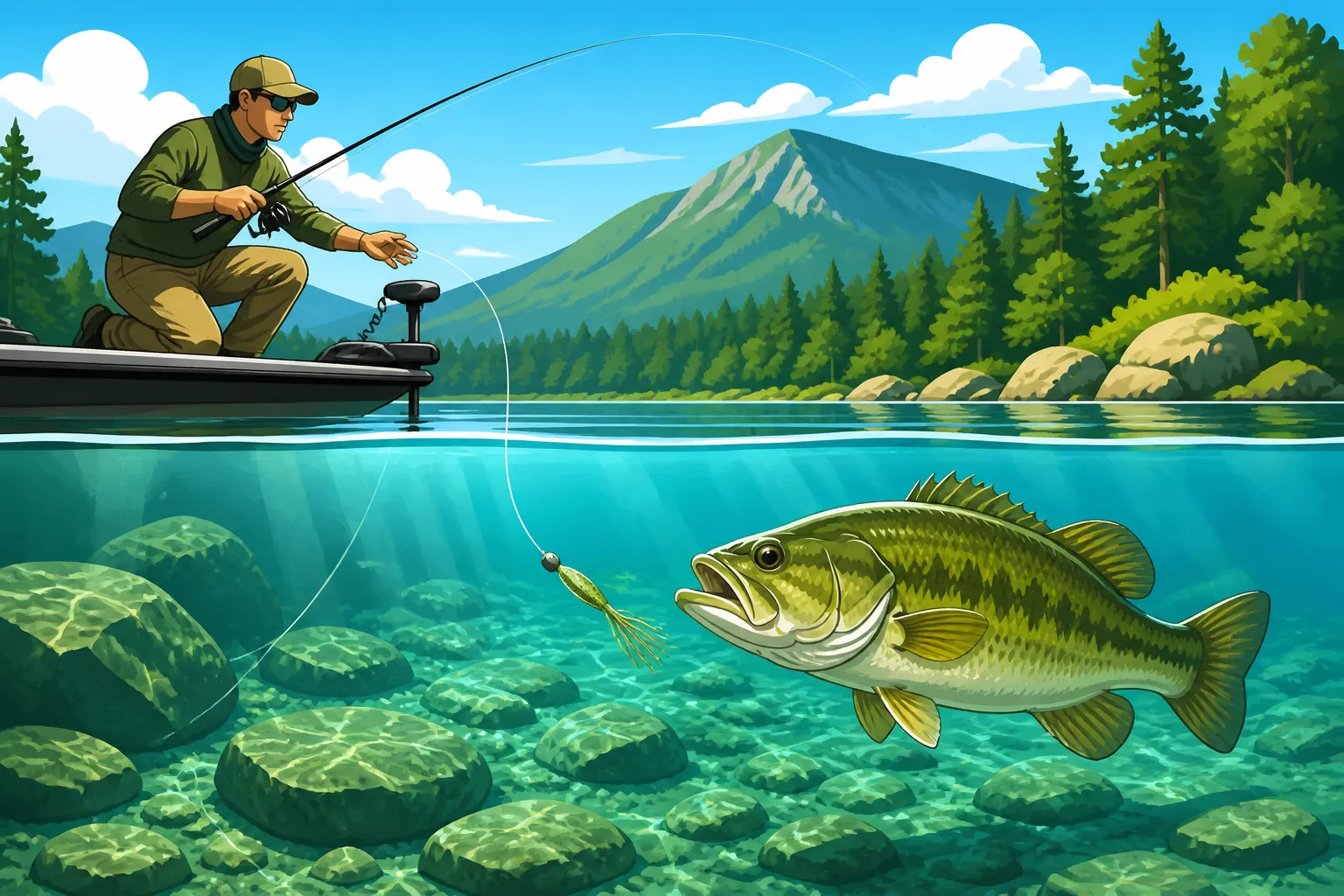
However, if the bass turns its head, slowly approaches, or subtly changes its swimming direction towards your lure, you're doing something right! This is the "interest" phase. Sometimes, it will just follow the lure, giving it a once-over. This is your cue to impart very subtle twitches or movements to the bait, mimicking a struggling insect or a dying minnow. Don't overdo it! A slight shake of the rod tip, a pause, or a slow drag can be enough. If the bass swims closer, opens its mouth, or flares its gills, that's the "commitment" phase – get ready to set the hook! Learning to read these subtle cues is a skill that takes time on the water, but it's incredibly rewarding and will make you a much more effective clear water angler.
Top Lures and Baits for Clear Water Sight Fishing
When bass can scrutinize every detail, your lure choice becomes critical. Natural, subtle presentations will consistently outperform loud, flashy options.
The Finesse Arsenal: Drop Shots, Wacky Rigs, and Ned Rigs
In clear water, these three finesse presentations are your bread and butter for tempting wary bass. They all excel at imitating natural forage with minimal splash and natural action.
-
Drop Shot: The drop shot rig allows your bait to suspend above the bottom, keeping it in the fish's strike zone without constantly dragging on the substrate. This is incredibly effective when bass are holding near structure or suspended slightly off the bottom. You can twitch the rod tip to impart subtle movement to the worm or creature bait without moving the weight, making the bait "dance" enticingly in place. Small worms, leeches, or minnow imitations work wonderfully on a drop shot. Many anglers find the components for these setups easily available on platforms like Amazon.
-
Weightless Wacky Rig: A wacky rigged stick bait, like a Senko-style worm, hooked right in the middle, creates a tantalizing flutter as it sinks. The ends wiggle and shimmy, perfectly mimicking a dying or injured baitfish. When cast weightless, it sinks slowly and naturally, giving wary bass plenty of time to inspect it. This presentation creates minimal disturbance upon entry and has an incredibly alluring action with very little effort from the angler. It's especially deadly around docks, laydowns, or weed edges.
-
Ned Rig: The Ned Rig is a minimalist's dream, consisting of a small mushroom-head jig and a short, buoyant soft plastic worm. This rig stands straight up on the bottom, mimicking a small foraging creature or an easy meal. It's designed for subtle movements—small hops, drags, and pauses—that entice bites from even the most finicky bass. Its small profile and unobtrusive presentation make it a go-to for tough conditions and highly pressured clear waters. You can find a good selection of Ned rig components and soft plastics to try out on Amazon, giving you plenty of options for different water clarity and bass preferences.
Color and Action: Less is Often More
When selecting colors for clear water, think natural. Earth tones like green pumpkin, watermelon, brown, and various shades of clear or translucent with silver or gold flake tend to be the most effective. These colors blend into the aquatic environment and don't scream "unnatural." Avoid bright, unnatural colors unless you're trying to provoke a reaction strike, which is less likely to happen with wary, sight-fished bass. Sometimes, even a pure black or dark blue lure can be effective as a silhouette against a bright sky.
Beyond color, the action of your lure should also be subtle and lifelike. You're not trying to trigger an aggressive chase; you're trying to fool a discerning predator into thinking your bait is an easy, natural meal. Think soft plastics with minimal appendages that flutter rather than wildly thrash. Small crankbaits or jerkbaits, if used, should have tight wobbles and be presented with long pauses. The goal is to avoid anything that looks too artificial or too aggressive, which will instantly raise red flags for clear water bass. This is why techniques like "finesse fishing clear water bass" are so effective.
Avoiding Common Pitfalls in Clear Water
Even with the right gear and techniques, it's easy to make mistakes that can quickly blow your chances in clear water. Being aware of these common pitfalls can significantly improve your success rate.
The Trap of Aggression and Over-Casting
One of the biggest mistakes anglers make in clear water is being too aggressive. The excitement of seeing a fish can lead to a quick, splashy cast directly at or over the fish. This nearly always results in a spooked bass. Remember, a direct overhead cast can create a shadow or a visible "line" in the water that sends immediate alarm signals. It's often better to cast past the fish and retrieve your lure into its path, or to cast well ahead and let the lure settle before the fish reaches it.
Another pitfall is over-casting. You spot a fish, cast, it spooks. Instead of taking a moment to reassess, many anglers will immediately cast again, often with the same result. Each failed cast further educates the fish and makes it harder to catch. If a bass is spooked, it's often best to mark its general location, give the area some time (sometimes 15-30 minutes), and then try a new approach from a different angle with a different lure or presentation. Patience truly is a virtue here. Don't force the issue; let the fish relax and perhaps return to its patrol or holding pattern before trying again.
Harnessing Environmental Elements to Your Advantage
Ignoring environmental factors can also be a costly mistake. The sun's position, wind, and even shadows play a huge role in clear water fishing.
-
Sun Angle: Always try to keep the sun at your back or to your side. This illuminates the water for you, helping you spot fish, while simultaneously making it harder for the fish to see you against the glare. Casting into the sun can create a shadow of your line or lure that the fish will easily detect. Conversely, using the sun to your advantage can make your line almost invisible from the fish's perspective.
-
Wind: A light chop on the water's surface can be your best friend in clear conditions. It breaks up your silhouette, distorts shadows, and makes it harder for fish to get a clear visual on you or your lure. On calm, glassy days, stealth becomes even more critical, and you might need to increase your casting distance and reduce your movements to absolute minimal levels.
-
Shadows: Be constantly aware of your shadow and the shadow of your boat or kayak. A dark shadow passing over a fish will send it fleeing faster than almost anything else. Position yourself so your shadow falls away from the area you're fishing. This might mean adjusting your boat position or moving along the bank to stay out of direct sunlight over the water. For instance, if you're fishing Lake Champlain Smallmouth Bass Fishing, where clear water can be prevalent, being mindful of your boat's shadow near rocky shoals is critical.
By understanding and working with these environmental factors, instead of against them, you can significantly increase your odds of success. It's all about playing the angles and using every tool at your disposal to gain an advantage over the incredibly wary clear water bass.
Here's a quick overview of essential gear for tackling those elusive clear water bass:
| Category | Item | Key Feature for Clear Water | Why It Helps |
|---|---|---|---|
| Visibility | Polarized Sunglasses | High-quality lens (e.g., amber, gray, copper) | Cuts glare, allows you to see into the water and spot fish. |
| Stealth | Neutral Clothing Colors | Greens, browns, grays, camo | Helps you blend into the background, reduces visibility to wary fish. |
| Rod | Light Power, Fast Action | Sensitive tip, good backbone (6'6" – 7'6") | Accurate casting of light lures, detects subtle bites. |
| Reel | Small Spinning Reel | Smooth drag, lightweight (1000-2500 series) | Handles light line, reduces fatigue, precise control. |
| Main Line | Braided Line | Thin diameter, no stretch (6-10 lb) | Long casting, extreme sensitivity to detect light bites. |
| Leader | Fluorocarbon Leader | Low visibility, abrasion-resistant (4-8 lb test) | Nearly invisible underwater, crucial for fooling wary bass. |
| Lures/Baits | Finesse Soft Plastics | Weightless wacky worms, Ned rigs, drop shot worms | Natural action, subtle presentation, mimics small forage. |
| Lure Colors | Natural Hues | Green pumpkin, watermelon, natural clear, brown | Blends with environment, appears less artificial to discerning fish. |
Disclaimer
This article is for general informational purposes only and does not constitute professional advice. Laws, prices and regulations vary by location and change over time. Consult a qualified professional for guidance on your specific situation.