How thick ice needs to be to fish safely in Vermont
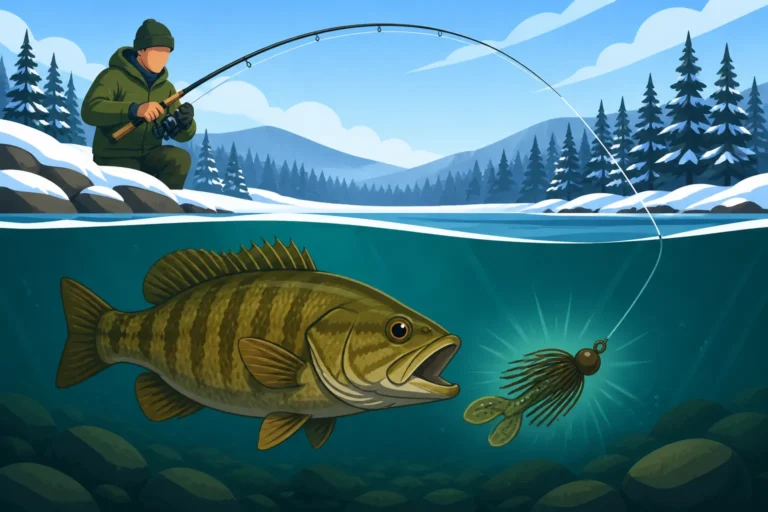
The thought of a day out on a frozen Vermont lake, surrounded by snow-dusted pines and the promise of a big catch, is incredibly alluring. But beneath that serene, white surface lies a very real, very unforgiving danger if you don't respect the ice. Every single year, anglers and outdoor enthusiasts face terrifying moments, or worse, because they misjudged the stability of the frozen water. This guide is here to walk you through exactly how thick the ice needs to be for safe fishing, and to equip you with the knowledge and confidence to make sound judgments before you ever step foot on a frozen lake or pond.
The Invisible Threat: Why Ice Thickness Is Your Lifeline
It’s easy to look out across a vast, frozen expanse and assume it’s solid. After all, it’s cold, right? But ice is a dynamic, living thing, constantly changing with the weather, currents, and even the type of water it forms on. What seems solid in one spot can be dangerously thin just yards away, and misjudging this can have catastrophic consequences that go far beyond a chilly dunk.
The Allure of Early and Late Ice
There's an undeniable thrill to being the first one out on the ice, or squeezing in those last few days as winter loosens its grip. Early ice often means less pressure on the fish and a chance to hit untouched spots. Similarly, late ice can offer some fantastic fishing as fish become more active with lengthening daylight. However, these periods are also the most treacherous. Early ice is still forming, and conditions can be incredibly inconsistent, with patches of solid ice adjacent to areas that are barely frozen. Late ice, conversely, is degrading from the bottom up, weakened by warmer temperatures and meltwater, making its strength deceptive.
The quiet appeal of these times often makes us lower our guard, but it's precisely when vigilance is most critical. A seemingly sturdy five inches in one cove could easily be three inches over a spring-fed area or near a current. This variability is why relying on visual cues alone, or simply following someone else's tracks, is a gamble you absolutely do not want to take. The ice might look strong, but its structural integrity could be compromised in ways that aren't visible from the surface.
More Than Just a Cold Dip: The Dangers of Breaking Through
Falling through the ice isn't just about getting wet; it's a life-threatening emergency. The initial shock of plunging into frigid water can instantly take your breath away, making it difficult to call for help or even think clearly. This gasp reflex can lead to inhaling water, and within minutes, hypothermia begins to set in, rapidly sapping your strength and coordination. Your muscles can quickly seize up, making self-rescue incredibly challenging, even if you're just a few feet from solid ice.
Beyond the immediate physical dangers, there's the psychological impact. Panic can set in, further impairing judgment. Even if you manage to pull yourself out, the ordeal of hypothermia can be severe, requiring immediate medical attention. Lost gear, frozen clothing, and the memory of the near-drowning experience can also be lasting consequences. This isn't meant to frighten you away from the ice, but to underscore the gravity of understanding and respecting ice thickness, ensuring your adventures remain safe and enjoyable.
Decoding the Numbers: Vermont's Safe Ice Thickness Guidelines
When it comes to ice fishing in Vermont, there are general guidelines that most state agencies, including our own Fish & Wildlife Department, recommend. These aren't arbitrary numbers; they're based on extensive research and countless real-world scenarios designed to keep you safe. Always remember, these are minimums, and more ice is always better.
Minimum Requirements for Foot Travel
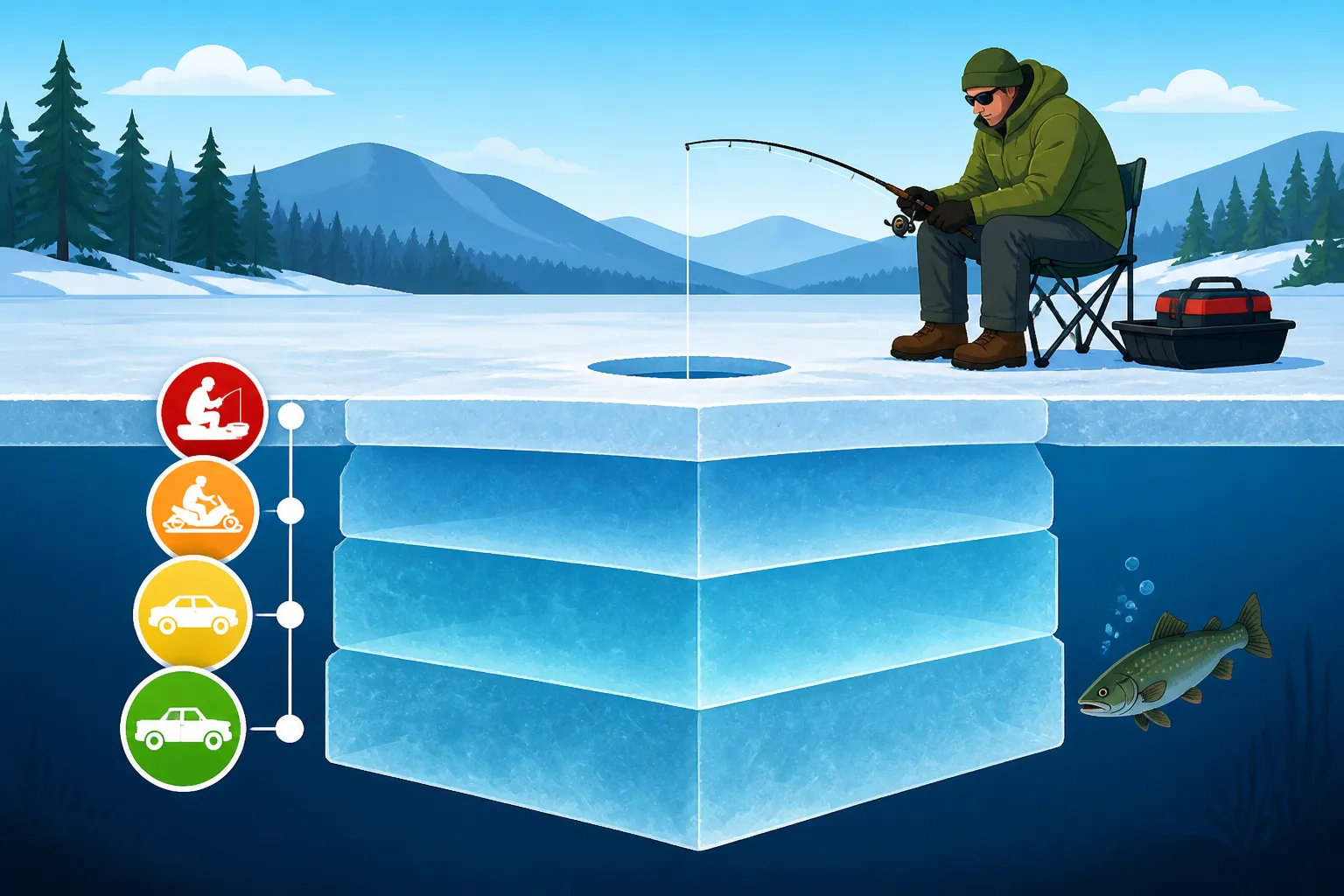
For individuals walking out onto the ice, without any heavy gear or snowmobiles, the general rule of thumb is at least 4 inches of clear, solid ice. This is the absolute bare minimum, and even at this thickness, you should proceed with extreme caution, constantly checking as you go. Four inches of clear, newly formed ice can typically support one person. However, if the ice is cloudy, slushy, or has been subjected to freeze-thaw cycles, its strength can be significantly diminished, even if it measures four inches.
Think of it this way: 4 inches is a suggestion for a single, lightweight angler with minimal gear. If you're a bigger person, carrying a heavy auger, a full tackle box, and a bucket of bait, you're pushing that limit. Always err on the side of caution. It's not just your weight, but the impact of walking, chopping holes, and carrying gear that can stress the ice. This is why many experienced Vermont ice anglers prefer to wait for at least 5-6 inches before venturing out for the first time, especially if they plan on moving around frequently or setting up a small shanty.
For Snowmobiles, ATVs, and Vehicles
This is where the required ice thickness jumps dramatically, and for good reason. The weight of a snowmobile, ATV, or even a light truck is exponentially greater than a single person, and so is the force they exert on the ice, especially when moving.
Here's a generally accepted breakdown for heavier loads:
- 5-7 inches: Suitable for a single snowmobile or ATV. Even at this thickness, slow speeds and avoiding slushy areas are paramount. Always consider the combined weight of the machine, rider, and any attached gear. A heavy snowmobile with a passenger and a full sled can quickly exceed the capacity of 5 inches.
- 8-12 inches: Generally safe for a small car or light truck. Again, the emphasis here is on small and light. Larger, heavier vehicles like SUVs or full-size pickup trucks require substantially more, often closer to 12-15 inches or even more, depending on the specific vehicle and ice quality. The general advice is to stay off the ice with vehicles entirely unless it's a designated access point with a clearly marked, proven safe path that has been professionally monitored.
These aren't suggestions; they are critical safety benchmarks. Driving onto a frozen lake with insufficient ice thickness is one of the riskiest behaviors you can engage in during ice fishing season. It's not just your life you're risking, but also the safety of anyone else on the ice and the environmental impact of retrieving a submerged vehicle. If you want to use heavier equipment like snowmobiles or ATVs, make sure to consult local regulations and wait for robust, consistent ice conditions.
The "Rule of Thumb" Versus Actual Measurement
Many people grow up hearing rules of thumb like "ice is safe if it's white" or "if the snowmobile track is already there, it's fine." These broad generalizations are incredibly dangerous and have led to countless incidents. Ice strength isn't just about color; white ice, also known as "snow ice," is often much weaker than clear "black ice" or "blue ice" of the same thickness because it's formed from refrozen slush and contains air pockets.
Furthermore, following someone else's tracks is a gamble. The conditions might have changed since they went out, or they might have simply been lucky. There are also specific hazards like springs, currents, or old fishing holes that can create localized weak spots that aren't visible and won't show up on a general "rule of thumb" assessment. This is why actual, physical measurement is non-negotiable. Don't guess; measure. Your life, and the lives of those you're with, depend on it.
Your Toolkit for Safety: How to Accurately Measure Ice Thickness
Knowing the recommended ice thickness is one thing, but accurately measuring it is another. You can't just eye it up and hope for the best. Having the right tools and knowing how to use them are fundamental steps to a safe and enjoyable day on the ice.
Essential Gear for Ice Measurement
Before you even think about stepping onto the ice, you need a few critical pieces of equipment. First and foremost, a spud bar is your best friend for early and questionable ice. This is essentially a heavy steel chisel on a long handle, used to strike the ice ahead of you. It's your personal ice detector, letting you know if the ice is firm or dangerously thin. A heavy strike that breaks through easily is a red flag, telling you to retreat immediately. You can find robust spud bars on sites like Amazon, and they are an indispensable part of any serious ice angler's kit.
Next, you’ll need an ice auger, either a hand auger, a propane-powered auger, or a battery-powered one. This is for drilling holes to get accurate measurements once you've determined the ice is reasonably safe to walk on. Coupled with your auger, a simple, reliable tape measure is crucial. A retractable metal tape measure works best, as cloth ones can freeze and become stiff. Some anglers even mark their auger bits at 4-inch, 6-inch, and 8-inch intervals for quick visual checks, but always double-check with a tape measure for precision. Don't forget your personal safety gear like ice picks and a throw rope, which we’ll discuss shortly.
The Step-by-Step Measurement Process
Measuring ice thickness isn't a one-and-done deal; it's an ongoing process as you move across the ice. Here’s how to do it safely:
- Start at the Shore: Begin by testing the ice closest to shore with your spud bar. This is often the weakest point, especially where water meets land or where reeds and other vegetation are present. Give it a few good whacks. If it breaks through easily, do not proceed.
- Advance with Caution: If the ice at the shore seems solid, walk out a few steps, continuing to use your spud bar to test the ice ahead of you with forceful downward strikes. Listen for the sound it makes – a solid thud usually indicates thicker ice, while a hollow or cracking sound suggests caution.
- Drill Your First Hole: Once you feel confident you're on at least 4 inches of ice (as indicated by your spud bar), drill your first hole with your auger. Immediately after drilling, use your tape measure to determine the exact thickness. Measure the ice from the top of the surface down to the bottom edge of the ice, not the water level.
- Repeat as You Go: As you venture further out, continue to test with your spud bar every few feet. Drill additional measurement holes every 20-30 yards, or more frequently if you encounter any changes in ice appearance (like slushy spots or darker areas) or if you hear any concerning sounds. It's not a race; take your time. Remember that ice thickness can vary dramatically even within a short distance.
- Check Around Structures and Inlets: Pay extra attention when nearing points, inlets, outlets, bridges, or any areas with current, springs, or submerged structures. These spots almost always have thinner ice, regardless of how thick the surrounding ice appears.
This systematic approach ensures you're constantly aware of the conditions beneath your feet. It might seem tedious, but it's a vital habit for any responsible ice angler.
Continuous Vigilance: Why One Measurement Isn't Enough
Imagine this scenario: you measure 8 inches of beautiful, clear ice near the access point, feel great about it, and head straight for your favorite fishing spot a quarter-mile away. You set up your gear, oblivious that a shallow spring or an underwater current has created a massive thin spot just fifty yards from where you are fishing. This happens more often than you'd think. Ice is rarely uniformly thick across an entire body of water.
Factors like current flow, underwater springs, pressure cracks, changes in bottom contour, and even the presence of certain fish species (which might cause minor localized melting due to their activity, although this is less common) can all contribute to significant variations in ice thickness. A good rule of thumb is to measure consistently. If you're moving a substantial distance, drill a new hole. If the weather has changed significantly (a sudden warm spell, heavy snow, or freezing rain), re-evaluate the ice. Don't just rely on where you initially got on; the whole lake is your responsibility to assess as you travel. Checking the ice regularly, especially near any suspicious-looking areas, is a fundamental practice for anyone engaging in Ice Fishing in Vermont.
More Than Just Depth: Other Factors Influencing Ice Integrity
While ice thickness is undeniably the most critical factor, it's not the only one. Experienced ice anglers in Vermont know that the type of ice, the presence of snow, and constantly changing weather conditions all play a significant role in determining how safe a frozen surface truly is.
Snow Cover's Deceptive Blanket
Snow, while beautiful, is an ice angler's mixed blessing and potential foe. On one hand, a fresh blanket of snow can provide traction and make for easier walking. On the other hand, it acts as an insulator. This insulation slows down the freezing process of the water underneath, meaning that snow-covered ice often freezes slower and remains thinner than exposed ice. Even worse, heavy snow can push down on the ice, displacing water, which then saturates the snow, creating a slushy, heavy layer that is notoriously weak. This is often called "snow ice" or "slush ice," and it's far less stable than clear, "blue ice."
Beyond insulation, snow also obscures visibility. It hides pressure cracks, open water, and other hazards that would be obvious on clear ice. You might be walking over a dangerously thin spot, completely unaware, because a foot of fresh powder is concealing the danger. This is why vigilance with your spud bar and auger is even more crucial in snowy conditions. Don't let a picturesque snowscape lull you into a false sense of security; beneath that white blanket, dangers can lurk unseen.
Currents, Springs, and Inlets: Perennial Trouble Spots
Vermont's diverse waterways, from the mighty Lake Champlain to countless smaller ponds and rivers, all have areas that remain inherently riskier throughout the ice fishing season. Any location with moving water is a red flag. Currents, whether from rivers flowing into or out of a lake, or even subtle underwater currents in larger bodies like Lake Champlain Fishing Guide, can continuously erode ice from below, creating dangerously thin pockets that are impossible to spot from above.
Underwater springs, even small ones, also introduce warmer water that can prevent ice from forming uniformly or thin existing ice. You might have 10 inches of solid ice everywhere else, but a spring vent could leave you with only an inch or two in a localized spot. Inlets and outlets of rivers and streams are notoriously dangerous for this reason. Areas around bridges, culverts, and dam structures are also high-risk zones due to constricted water flow and turbulence. Always approach these areas with extreme caution, drilling frequent test holes, and consider them off-limits if you have any doubt about ice integrity.
Temperature Swings and Thaw Cycles: The Ice's Nemesis
The weather in Vermont is famously fickle. A solid week of sub-zero temperatures can create fantastic ice, only for a sudden mid-winter thaw to arrive, followed by a refreeze. While the ice might look frozen again after a thaw, its integrity is significantly compromised. Ice that has gone through a freeze-thaw cycle develops a honeycomb-like structure, becoming brittle and much weaker than newly formed ice of the same thickness. It might measure thick, but it can break with little warning.
Rain also plays a detrimental role. Even cold rain can saturate the top layers of ice and snow, turning it into slush and weakening the overall structure. Strong winds during freezing temperatures can also create pressure cracks and shifts in the ice sheet, which, while sometimes refreezing, represent areas of potential weakness. Always check the forecast and understand how recent weather patterns have affected the ice. Never trust ice solely based on an old measurement if there have been significant temperature fluctuations or precipitation events since.
Ice Type and Clarity: Not All Ice Is Created Equal
When you're drilling your test holes, take a moment to observe the quality of the ice itself. This isn't just about thickness; it's about composition.
- Clear or Blue Ice (New Ice): This is the strongest type of ice. It's formed directly from calm, cold water, and its clarity indicates minimal air bubbles or impurities. Four inches of clear, blue ice is generally considered sufficient for a single angler on foot.
- White Ice or Snow Ice: This forms when snow falls on thin ice, then becomes saturated with water and freezes, or when slush freezes. It's cloudy, opaque, and contains many air bubbles. White ice is only about half as strong as clear ice, meaning you'd need roughly 8 inches of white ice to achieve the strength of 4 inches of clear ice. It's much more brittle and unreliable.
- Slush Ice: This is essentially unfrozen or partially frozen watery snow. It has virtually no bearing strength and is extremely dangerous. Avoid any areas that feel slushy underfoot.
- Layered Ice: Often, you'll see layers of clear ice, then white ice, then maybe clear again. This indicates multiple freeze-thaw cycles and snowfalls. The overall strength depends on the strongest layer, but it's generally less reliable than uniform clear ice.
Understanding these distinctions helps you make more informed decisions. If your 4-inch measurement is mostly white or layered ice, you should probably consider it insufficient and seek out thicker, clearer ice, or better yet, postpone your outing.
When Things Go Wrong: Emergency Preparedness and Self-Rescue
Even with all the precautions in the world, accidents can happen. Being prepared for the worst is just as important as trying to prevent it. Knowing what to do if you, or someone else, breaks through the ice can be the difference between a terrifying moment and a tragic outcome.
The Buddy System and Essential Safety Gear
Never, ever ice fish alone. The buddy system isn't just a suggestion; it's a critical safety measure. Having someone else with you means there's another person to call for help, to assist in a rescue, or simply to hand you a throw rope. If you're out with children, ensure you understand Vermont Youth Fishing License Rules by Age and that they are always supervised and equipped with appropriate safety gear.
Beyond a buddy, carry these essential items:
- Ice Picks: These are small, sharp metal spikes connected by a cord worn around your neck. If you break through, you can use them to grip the ice and pull yourself out. They are inexpensive and can be found readily on Amazon.
- A Whistle: Attach it to your life jacket or winter coat. If you fall in, the shock of the cold can make shouting difficult. A whistle carries sound further and requires less energy.
- Throw Rope/Bag: A rescue throw bag contains a floating rope that can be easily tossed to someone who has fallen in. Keep it readily accessible, not buried in your tackle box.
- Flotation Device: Wearing a personal flotation device (PFD) or a specialized ice fishing suit with built-in flotation is highly recommended, especially when venturing onto early or late ice. Even if the ice feels solid, the added buoyancy can buy you precious time and conserve energy if you do go through. Always be mindful of Life Jacket Requirements for Vermont Boaters, even when ice fishing.
- Extra Clothes: Keep a dry change of clothes in a waterproof bag in your vehicle, or better yet, in a dry bag carried on a sled if you're out a ways.
These items aren't just for emergencies; they provide peace of mind, allowing you to focus on the fishing knowing you've taken every reasonable step to mitigate risk.
What to Do If You Fall Through
The first few minutes after breaking through the ice are the most critical. This is often referred to as the "1-10-1" principle:
- 1 Minute: You have about one minute to regain control of your breathing. The cold shock will cause hyperventilation. Fight the urge to panic and focus on slow, deep breaths.
- 10 Minutes: You have roughly ten minutes of useful movement before your muscles lose strength and coordination due to hypothermia. This is your window for self-rescue.
- 1 Hour: You have about one hour before you become unconscious due to hypothermia, provided you don't drown first.
If you fall through:
- Don't Panic: This is easier said than done, but it's crucial. Control your breathing.
- Turn Towards Your Entry Point: The ice you just came from was strong enough to support you moments before.
- Use Your Ice Picks: Dig the picks into the ice and kick your feet to get your body horizontal.
- Propel Yourself Out: Use your arms and legs to push yourself up and slide onto the ice. Once out, roll away from the hole to distribute your weight and prevent breaking through again.
- Crawl to Safety: Do not stand up immediately. Crawl on your stomach, distributing your weight widely, back to thicker, more solid ice.
- Seek Warmth: Get to shelter, remove wet clothes, and get into dry ones immediately. Sip on warm liquids if available. Seek medical attention for hypothermia if necessary.
This sequence, if practiced mentally beforehand, can drastically increase your chances of survival.
Rescuing Others Safely: Don't Become a Second Victim
Witnessing someone fall through the ice is terrifying, and the natural instinct is to rush to their aid. However, rushing in without a plan or proper equipment can easily turn one victim into two. Your primary goal is to stay safe yourself.
Here’s a general guideline for rescuing someone else:
- Call for Help (Immediately!): Dial emergency services (911). Give them your precise location and describe the situation.
- Do Not Approach Standing Up: If you approach the edge of the hole, you'll likely break through too. Lie flat on the ice to distribute your weight.
- Extend, Throw, Go: This is the mantra for ice rescue.
- Extend: If you have a long pole, branch, or even an auger, try to extend it to the victim while remaining prone on the ice.
- Throw: If you have a throw bag or rope, uncoil it and throw it past the victim so they can grab it. Have them wrap it around their chest or hold onto it tightly, then pull them in while remaining prone.
- Go: This is the last resort. If you absolutely must enter the water (e.g., the person is unconscious and you have proper ice rescue training and equipment like a specialized suit), do so with extreme caution, and only if no other option is available. Most importantly, anchor yourself to something solid on shore or have someone else hold onto a safety line attached to you.
Remember, heroism is admirable, but foolish heroism can cost two lives. Your best bet for successful rescue is careful planning, carrying the right gear like a well-stocked Best Tackle Box Setup for Vermont Anglers, and knowing how to use it safely. Let's make sure our Vermont ice fishing tales are about the big one that got away, not a close call with disaster.
Disclaimer
This article is for general informational purposes only and does not constitute professional advice. Laws, prices and regulations vary by location and change over time. Consult a qualified professional for guidance on your specific situation.