How to catch trout right after stocking in Vermont
It's a common scenario: you hear the exciting news that your favorite local pond or stream has just been stocked with fresh trout, and you rush out, tackle box in hand, only to find the fish aren't biting the way you expected. It can be incredibly frustrating when those seemingly eager fish ignore your offerings. This guide will walk you through the unique behaviors of freshly stocked trout in Vermont and provide actionable strategies, baits, and techniques to help you consistently land them right after they hit the water.
Understanding Freshly Stocked Trout Behavior
When trout are released from a hatchery into a new body of water, they're not quite like their wild counterparts yet. They've lived a protected life, accustomed to regular feedings and a relatively stable environment. This sudden change in surroundings triggers a series of reactions that anglers can learn to anticipate and exploit. Understanding their immediate post-stocking mindset is key to figuring out how to get them on your line.
The "Stocking Shock" Phenomenon
Imagine being suddenly dropped into a brand new, massive cafeteria after eating the same prepared meal from a tray your entire life. That's a bit like what freshly stocked trout experience. This sudden change in environment, often referred to as "stocking shock," can leave them disoriented and stressed. They're no longer in the familiar confines of the hatchery raceway, where food was predictable and predators were absent. Suddenly, they're faced with open water, new currents, and the unsettling presence of natural predators like ospreys, kingfishers, and even larger fish.
Initially, this shock might cause them to cluster together for security or to simply sink to the bottom, seeking cover and trying to process their new reality. They might not be actively feeding right away, or if they are, they're likely looking for something familiar or easy. This initial period of adjustment is critical. Aggressive presentations or unfamiliar baits might be ignored because the fish are overwhelmed. Patience and a subtle approach are often more effective during this phase. As they gradually acclimate, their feeding instincts will kick in, but they'll still be looking for easy meals, much like they had in the hatchery.
Where Stocked Trout Go Immediately After Release
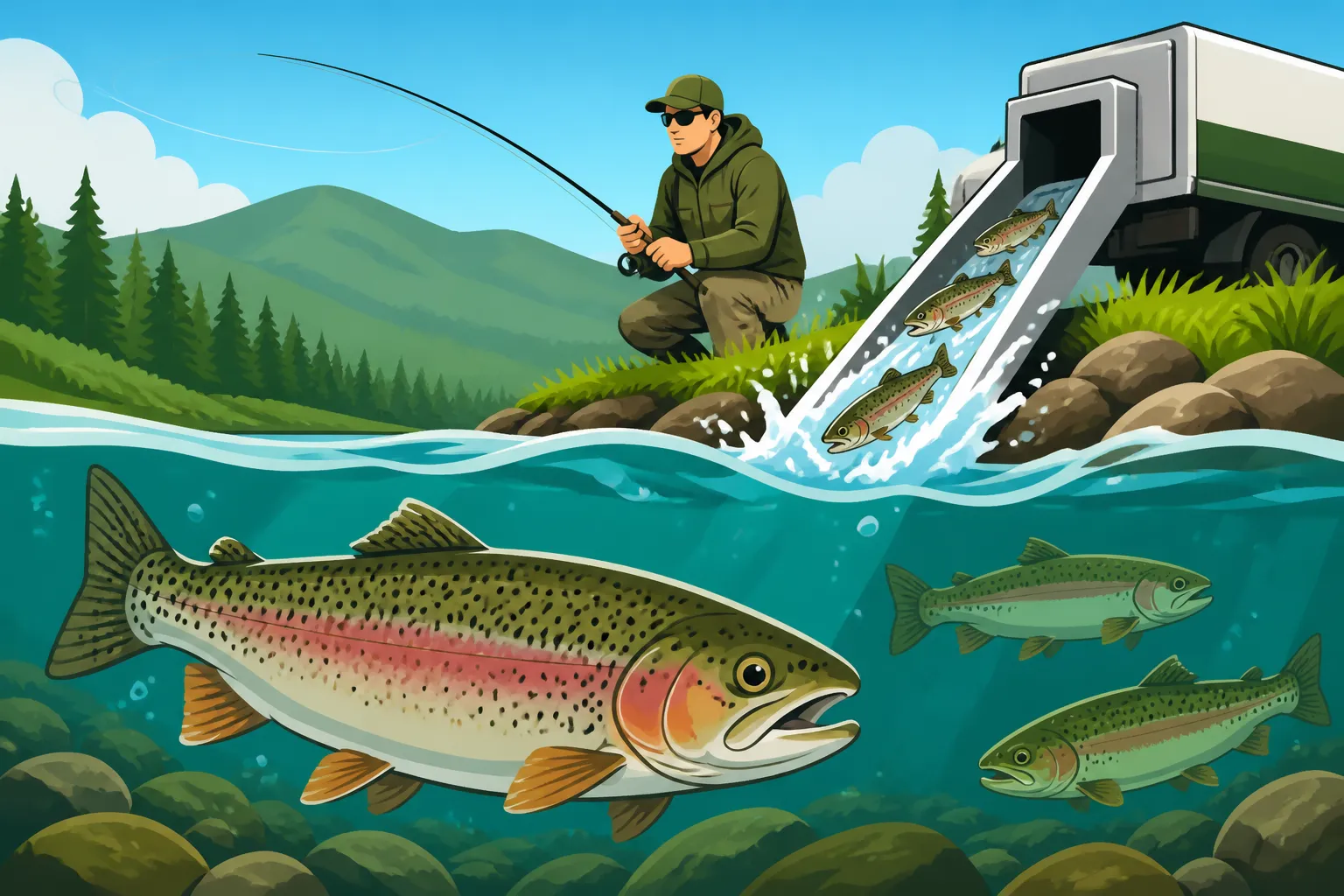
When those trucks roll up and the trout are gently, or sometimes not so gently, released into a stream or pond, their first instinct is often to seek refuge. In a river or stream, they might hold in deeper pools, undercut banks, or behind large rocks and logs that offer cover from the current and perceived threats. They won't immediately disperse throughout the entire water system; instead, they'll often stay relatively close to their release points for a period, forming loose schools. This makes it crucial to know the common stocking locations for your preferred waters. You can often find this information by checking the Vermont Fish Stocking Search Tool, Explained on the Vermont Fish & Wildlife Department website, which can give you a head start.
In a pond or lake, they might congregate in shallow coves, near weed beds, or along the shoreline, especially where there's some structure like fallen trees or docks. These areas provide both cover and a sense of security. As they get more comfortable, they'll slowly start to explore, but for the first few hours or even days, many will remain fairly concentrated. This means that if you're not getting bites in one spot, it's worth moving a short distance and trying again, especially within a quarter-mile radius of the known stocking points. Don't be afraid to walk the banks and observe other anglers, as a cluster of successful fishermen often points to a concentrated school of freshly stocked trout.
Best Baits and Lures for Stocked Trout
Okay, so we know these fish are a bit disoriented and looking for an easy meal reminiscent of their hatchery days. This understanding is your secret weapon when it comes to choosing what to put on your hook. Forget trying to "match the hatch" with delicate dry flies right away, at least not for the bulk of these newly introduced fish. Instead, think loud, proud, and easy to find.
The Power of Scented Baits
Scent is a huge trigger for newly stocked trout because it appeals to their most primal sense – the one they used daily in the hatchery. In a crowded raceway, their world was full of the scent of their food pellets. When they hit a new environment, a familiar scent can cut through the novelty and stress, acting as a powerful attractant. This is why artificial scented baits often perform incredibly well. Brands like PowerBait, which comes in various forms like nuggets, dough, or worms, are perennial favorites. The key here is the strong, almost pungent aroma that mimics what they were fed.
When you're using scented dough or nuggets, remember that presentation still matters. Mold the bait around your hook to completely conceal it, creating a small, floating ball that looks enticing. You want it to drift naturally in the current or sit just off the bottom. Colors can also play a role, with chartreuse, orange, and rainbow typically being very effective. Don't be afraid to experiment. If the trout are hitting on orange one day, they might prefer chartreuse the next. Having a variety of colors in your tackle box, easily found on Amazon, will give you options. The goal is to present something that not only looks appealing but smells irresistible to a fish that's craving a familiar meal.
Lures That Mimic Hatchery Food
While scented baits appeal to their nose, certain lures appeal to their visual memory of hatchery food. Think about what a fish pellet looks like: small, often brightly colored, and usually sinking slowly. Spinners and spoons are excellent choices because their flash and vibration get noticed, and their size can often imitate the larger food particles or even small baitfish they might naturally encounter. Small, brightly colored spinners like Mepps or Panther Martins in sizes #0 to #2 are often deadly. The rotation of the blade sends out vibrations that trigger a feeding response, and the flash catches their eye in new, sometimes murky, water.
Spoons, especially those with a wobbling action like a Thomas Buoyant or a Kastmaster, can also be very effective. Again, think bright colors: silver, gold, brass, or even fluorescent patterns. The key with these lures is a slow, steady retrieve. You're not necessarily trying to imitate a fleeing baitfish (though they will hit those too); rather, you're trying to present something that looks like an easy, slow-moving meal. If they're in deeper holes, let your spoon flutter down before starting your retrieve. Vertical jigging a spoon or a small lead-head jig tipped with a Berkley Gulp! Alive! grub, which combines both scent and profile, can also be a killer technique when you've located a school holding tight to the bottom.
Live Bait Advantages
Despite the effectiveness of artificials, nothing quite beats the real thing, especially when trout are finicky or have seen a lot of artificials. Live bait offers natural movement, scent, and texture that can be irresistible. Worms, particularly small red worms or garden worms, are universally appealing. The wriggling action and earthy scent are often enough to tempt even the most hesitant trout. Hook a small worm once or twice through the body, letting the ends dangle, to maximize its natural presentation.
Another excellent live bait option, especially for slightly larger trout or in areas where they might be feeding on smaller aquatic insects, are mealworms or wax worms. These juicy grubs offer a concentrated burst of protein and are perfect for fishing under a bobber or on a small jig head. The key with live bait is to present it as naturally as possible. Use small hooks (sizes 8-12) and just enough weight to get it down to the strike zone. If you're fishing in a current, letting a worm drift naturally without too much weight can be incredibly effective, mimicking a morsel washed downstream. Check the Vermont Trout Season and Stocking Rules to ensure you're compliant with any bait restrictions on specific waters.
Effective Techniques for Catching Stocked Trout
Having the right bait or lure is only half the battle; knowing how to present it effectively is the other. Newly stocked trout, while sometimes eager, can also be quite spooky or particular. Your technique needs to adapt to their somewhat unpredictable post-stocking behavior.
Finesse Presentations and Light Tackle
Even though they're often hatchery-raised, trout still possess a natural wariness, especially after being introduced to a new, potentially threatening environment. This calls for a finesse approach. Using light line, typically 4 to 6-pound test monofilament or fluorocarbon, is crucial. Thicker lines are more visible in the water and can spook fish, especially in clear Vermont streams or ponds. Fluorocarbon leaders, though not always necessary, can offer an extra edge due to their low visibility.
A light rod and reel setup, like a sensitive ultralight or light action spinning rod (perhaps a 5'6" to 6'6" rod), will allow you to cast small baits and lures accurately and feel even the subtlest bites. Small floats or bobbers can be incredibly effective, allowing your bait to suspend at a specific depth or drift naturally without resistance. When using a bobber, set your depth so the bait is just above the bottom or slightly suspended in the water column where the trout are likely holding. A slow, gentle retrieve with lures, or letting live bait soak, is usually more productive than aggressive jerking or fast reeling. These fish aren't always chasing; they're often waiting for an easy meal to come to them.
Covering Water and Locating Schools
Remember how we talked about stocked trout often staying in concentrated schools near their release points? This means you shouldn't just plunk down in one spot and stay there all day if nothing is happening. Actively cover water. If you're fishing a stream, work your way upstream or downstream, casting into likely looking holes, eddies, and runs. On a pond or lake, fan cast from one spot, then move down the bank a short distance and repeat. If you're using a small boat or kayak, slowly troll or paddle along the shoreline, making casts into coves and near structure.
When you do hook a fish, chances are there are more in the same vicinity. Make a mental note of that spot and continue to target it. Often, if one trout bites, others will follow as the initial fish's struggle can trigger a competitive feeding response in the school. Don't be afraid to try different depths in the same spot, too. Sometimes they're hugging the bottom, other times they might be suspended mid-water. The goal is to find that sweet spot where the concentration of trout is highest and they're most willing to bite. Having a tackle bag or vest, easily organized with different lures and weights, makes it easy to switch tactics on the fly.
Understanding Their Feeding Windows
Just like any fish, stocked trout will have periods of increased activity, or "feeding windows." These often occur during the cooler parts of the day, such as early morning and late afternoon/evening, especially if the water is relatively warm. Right after stocking, however, they might have short, sporadic feeding bursts as they acclimate. A sudden weather change, like a passing cloud cover or a light drizzle, can also trigger a bite.
Keep an eye on the water and observe any signs of feeding activity, like rises to the surface (though less common for freshly stocked fish unless an insect hatch is underway) or flashes of fish in the shallows. The best strategy is to be persistent and observant. If one spot isn't producing, try another. If one bait isn't working, switch it up. The fish might be hitting vigorously for 30 minutes, then shut down for an hour, only to turn back on again. Understanding the Best Time of Year to Fish in Vermont can also give you an advantage, as certain seasons naturally offer better feeding conditions for trout.
Gear Essentials for Post-Stocking Success
Having the right gear isn't just about catching fish; it's about making the experience enjoyable and increasing your chances of success. When it comes to chasing freshly stocked trout, a few key pieces of equipment can really make a difference. You don't need to break the bank, but investing in quality, sensitive gear will pay off.
Rod and Reel Setup for Sensitivity
For maximum sensitivity and control when fishing for stocked trout, an ultralight or light action spinning combo is usually the way to go. A rod in the 5' to 6'6" range is perfect. These rods are designed to handle lighter lines and baits, and their flexible tips will allow you to detect the subtle "taps" of a trout mouthing your bait. A good quality reel with a smooth drag system is also essential, especially when you hook into a surprisingly feisty trout that wants to run. Brands like Shimano, Daiwa, or even specific models you can find on Amazon are known for their reliable ultralight options.
Pair your rod with a small spinning reel (size 1000 to 2000) spooled with 4-6 lb test monofilament or fluorocarbon. Monofilament offers a bit more stretch, which can be forgiving with lighter lines, while fluorocarbon offers superior abrasion resistance and low visibility, making it a favorite for many finesse anglers. A sensitive setup not only helps you detect light bites but also allows you to make precise casts to those often-small pockets where trout might be holding. Check out a guide to Best Spinning Rods for Smallmouth Bass, which can often be adapted for trout fishing with lighter line.
Terminal Tackle for Finesse
Your terminal tackle – the components closest to your bait – needs to be chosen with care for stocked trout. Small, sharp hooks are paramount. Aberdeen or baitholder hooks in sizes #8 to #12 are generally ideal, matching the size of your bait. They're strong enough to hold a trout but small enough to be easily concealed by a PowerBait nugget or a small worm.
When it comes to weights, less is often more. Split shot sinkers are versatile; use only enough to get your bait to the desired depth or to hold it in a slow current. Avoid heavy egg sinkers or large bottom rigs that can make your presentation look unnatural or spook wary fish. Swivels are often unnecessary and can add bulk, but if you're using spinners, a small barrel swivel can prevent line twist. A selection of small bobbers or strike indicators, from pencil floats to small round bobbers, will allow you to fine-tune your depth and detect bites when fishing suspended bait. Having a well-organized Best tackle box setup for Vermont anglers will ensure you have all these little essentials readily available.
Accessories to Enhance Your Catch
Beyond the basic rod, reel, and tackle, a few accessories can really round out your stocked trout fishing experience. A small landing net with a soft, rubberized mesh is invaluable for safely landing fish, especially if you plan on practicing catch and release. It minimizes harm to the fish and helps prevent tangles. Pliers or hemostats are crucial for easily removing hooks, particularly if a fish swallows the bait.
A small cooler or stringer is essential if you plan to keep your catch, ensuring the fish stay fresh. Don't forget polarized sunglasses, which cut glare and allow you to spot fish moving in the shallows or observe structure underwater. A good pair of waders and wading boots (if stream fishing) or waterproof boots (for bank fishing) will keep you comfortable and dry, allowing you to access more areas. And always, always carry your Vermont Fishing License Guide for 2026 – not just on your person, but perhaps even a backup digital copy on your phone – to ensure you're fishing legally. Being prepared with the right accessories makes a good day on the water even better.
Disclaimer
This article is for general informational purposes only and does not constitute professional advice. Laws, prices and regulations vary by location and change over time. Consult a qualified professional for guidance on your specific situation.