Seymour Lake best trolling spots for salmon
Finding those elusive landlocked salmon on a vast, deep body of water like Seymour Lake can feel like searching for a needle in a haystack, especially when you're trying to figure out where they'll be hiding beneath the surface. Many anglers spend hours just aimlessly trolling, burning fuel and patience, without ever hitting that sweet spot where the salmon are actively feeding. This guide is here to cut through that frustration, focusing specifically on the best trolling spots and strategies to help you connect with more landlocked salmon on beautiful Seymour Lake.
Understanding Seymour Lake's Unique Features for Salmon Angling
Seymour Lake, nestled in Vermont's Northeast Kingdom, isn't just another pretty face; it's a deep, oligotrophic lake, meaning it's nutrient-poor and thus incredibly clear, which is exactly what landlocked salmon love. But its beauty also presents a challenge: clear water means salmon are often deep and sensitive to light and boat traffic. Understanding the lake's specific characteristics is paramount to successful trolling.
Deep Water Haunts and Thermoclines: Where Salmon Feel at Home
Landlocked salmon in Seymour Lake are cold-water fish, much like their lake trout cousins. They thrive in water temperatures generally ranging from the low to mid-50s Fahrenheit. During the warmer months, this means they'll retreat to the deeper parts of the lake, seeking refuge below the thermocline. The thermocline is that crucial layer where the water temperature rapidly changes, creating a distinct boundary. Above it, the water is warmer and less oxygenated; below it, it's colder and richer in oxygen.
On Seymour Lake, you'll typically find salmon suspending just above, within, or just below this thermocline, as this is where they find their preferred temperatures and often, their food source. This can vary by season, but generally, from late spring through early fall, you'll be looking at depths anywhere from 40 to 80 feet, sometimes even deeper. Don't be afraid to experiment with your downriggers or weighted lines to pinpoint that exact depth. What might be perfect one week could be a dud the next, depending on weather patterns and the sun's intensity. Ignoring your depth sounder or just guessing can lead to endless frustration, so pay close attention to where you're marking baitfish and any larger arcs that might indicate salmon.
Forage Fish Concentrations: Following the Bait
Just like any predator, landlocked salmon are where their food is. On Seymour Lake, the primary forage for these powerful game fish is the rainbow smelt. These small, silvery baitfish move in schools, and the salmon will follow them relentlessly. Knowing where smelt tend to congregate on Seymour Lake is half the battle. Smelt prefer cooler, oxygenated water, much like the salmon themselves. They'll often be found near drop-offs, underwater points, and along the edges of deep basins.
Using your fish finder to locate schools of baitfish is absolutely critical. If you're trolling through an area and not marking any bait, chances are you're not going to find many salmon either. Sometimes, you'll mark huge schools of smelt, and you might even see salmon "arcs" or "hooks" on your screen just below or slicing through those schools. That's your cue! Adjust your trolling depth to match the upper or middle part of the baitfish school, and you'll dramatically increase your chances. This means staying alert to what your electronics are telling you, rather than just blindly pulling lures.
Prime Trolling Zones on Seymour Lake
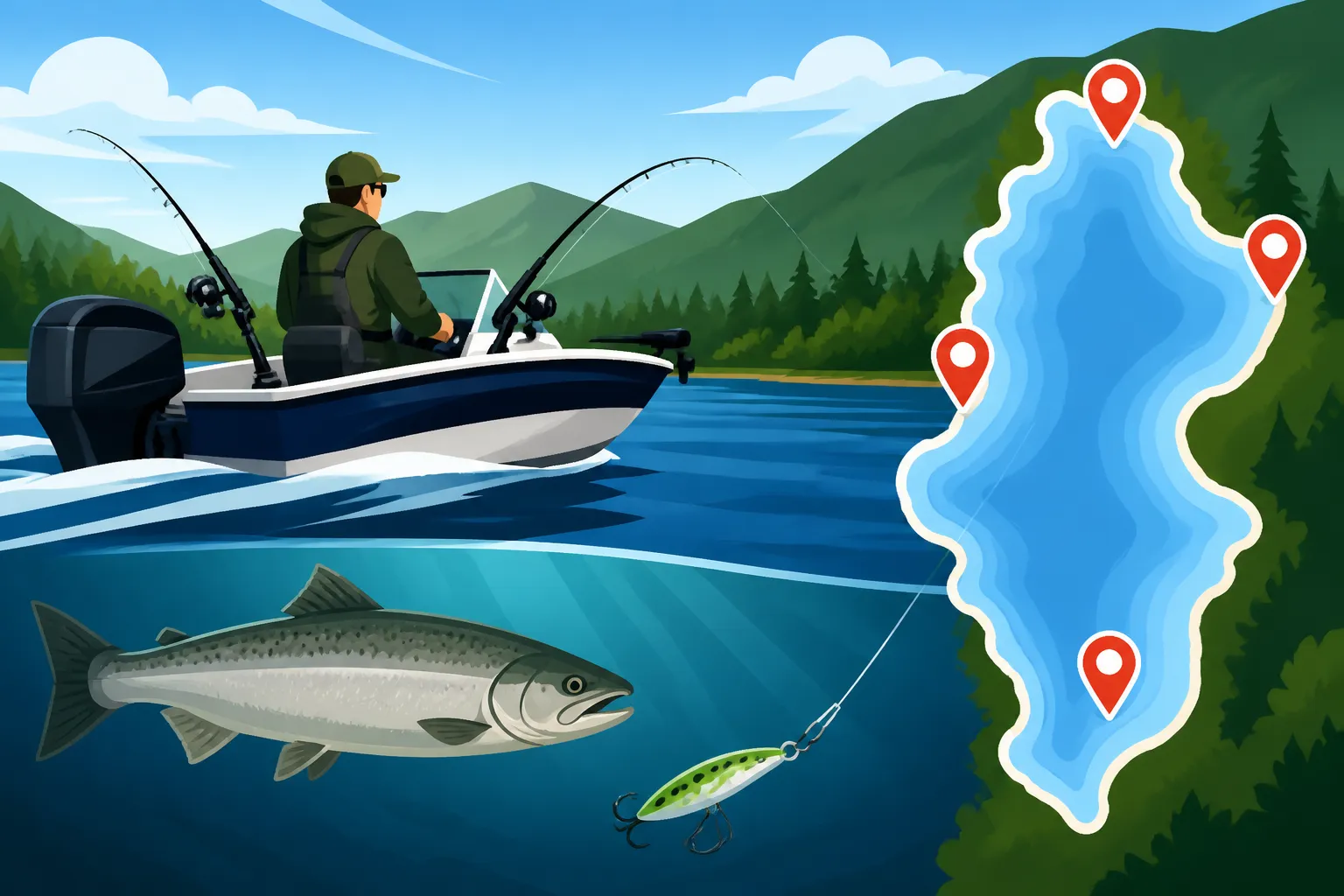
Seymour Lake boasts several key areas that consistently produce landlocked salmon for those who know where and how to fish them. These spots leverage the lake's natural topography, deep water, and known baitfish concentrations.
The North End Drop-Offs: Early Season Hotspots
The northern end of Seymour Lake, particularly the area around the access points and extending south along the eastern and western shores, is often a prime trolling zone, especially during the early season and into late spring. As the ice pulls back and the water begins to warm, smelt and salmon will often be shallower before retreating to the depths. Look for the distinct drop-offs here, where the bottom quickly plunges from 20-30 feet down to 60-80 feet or more.
Anglers often find success by tracing these contour lines, especially early in the morning or on overcast days when salmon might venture a bit shallower. The currents and underwater structure in this part of the lake can create ambush points for salmon. A common strategy here is to start your troll relatively shallow (20-30 feet) and gradually work deeper until you find the fish. On a calm morning, you might even see some surface activity as salmon chase bait, which is a clear sign to focus your efforts in that vicinity. Remember that Vermont Trout Opening Day Traditions can draw a lot of crowds, but the salmon fishing is a different beast.
The South Basin's Depths: Summer and Fall Action
As summer progresses and the lake warms, the deepest part of Seymour Lake, located primarily in the southern basin, becomes the most consistent producer for landlocked salmon. This area offers the thermal refuge these fish desperately need when surface temperatures soar. Here, you'll be deploying your gear into 80, 90, or even 100+ feet of water, often targeting fish suspending much shallower in the water column over these great depths.
Trolling patterns here often involve long, straight passes or sweeping S-turns across the basin, covering as much water as possible. It's less about hugging specific structure and more about intercepting schools of salmon that are free-ranging in the open water. Focus on the distinct humps and depressions within the main basin, as these subtle changes in depth can concentrate baitfish and, in turn, salmon. This is where your deep-diving crankbaits, spoons, and flashers with flies or small baits really shine. Using resources like a detailed Seymour Lake Fishing Guide can help you visualize these depths and contours before you even launch your boat.
Mid-Lake Structure and Reefs: Hidden Gems
While Seymour Lake is known for its deep basins, it also has some less-obvious mid-lake structure and reefs that can hold significant numbers of salmon. These are often submerged humps or rocky formations that rise up from the depths, acting as magnets for baitfish and, subsequently, for hungry salmon. These spots can be harder to find without good sonar and GPS mapping, but they can be incredibly rewarding.
These "hidden gems" are particularly good during periods when salmon might be slightly more dispersed or when they're transitioning between their shallow and deep water haunts. A prime example might be a large underwater hump that tops out at 40 feet surrounded by 80-foot depths. Trolling around the edges of such a feature, at varying depths, can be highly effective. The key is to be precise with your boat control to stay on these structures. Don't be afraid to slow down a bit when you hit a promising area, letting your lures work longer in the strike zone. Sometimes, these small, isolated pieces of structure are overlooked, offering less pressured fish.
Essential Trolling Strategies for Seymour Lake Salmon
Beyond knowing where to troll, how you troll makes all the difference. Landlocked salmon are notoriously finicky, and paying attention to the details of your presentation is crucial for consistent success.
Speed, Depth, and Lure Selection: Matching the Conditions
This is where the art of trolling truly comes into play. There’s no single magic formula for Seymour Lake, as conditions change daily, but there are some foundational principles.
- Trolling Speed: For landlocked salmon, a trolling speed of 2.0 to 3.5 miles per hour is a good starting point. However, always be prepared to adjust. Sometimes a slight increase or decrease in speed can trigger bites, especially if you're marking fish but not getting strikes. Watch your rod tips – a subtle change in action can make all the difference. FishingBooker captains often share that paying attention to boat speed in relation to lure action is paramount.
- Depth Control: As mentioned, your fish finder is your best friend. Use downriggers, lead core line, or even heavy inline weights to get your lures to the exact depth where you're marking bait and fish. A good rule of thumb is to present your lure slightly above the fish, mimicking a baitfish trying to escape upwards. Remember that Best Time of Day to Catch Landlocked Salmon can influence how deep they are, with fish often shallower during low light.
- Lure Selection:
- Spoons: Classic trolling spoons like those from Luhr-Jensen (e.g., Krocadile) or Michigan Stinger spoons are perennial favorites. Silver, blue/silver, green/silver, and chartreuse patterns often work well, especially on bright days in clear water. Their fluttering action mimics an injured baitfish.
- Stickbaits/Plugs: Long, slender stickbaits that dive to various depths can be incredibly effective, especially when fished off planer boards or weighted lines. Brands like Rapala (J-11, J-13 Jointed) or Bagley's Minnow can imitate smelt very well. Try natural smelt or perch patterns, as well as brighter colors like firetiger or hot pink on darker days or in deeper water.
- Flashers/Dodgers with Flies/Squids: Many anglers swear by a flasher or dodger ahead of a small fly (like a streamer fly in a smelt pattern) or a small squid. The flasher creates attraction and vibration, drawing fish in, while the small offering seals the deal. This setup is particularly potent in deeper water.
- Live Bait: While less common for trolling, some anglers will slow-troll live smelt or shiners if regulations allow, presenting them on a plain hook with an appropriate weight. This can be deadly on finicky fish.
Reading Your Electronics: Sonar Secrets for Success
Modern fish finders are incredible tools, but only if you know how to interpret what they're showing you. On Seymour Lake, with its deep and clear water, your sonar becomes an extension of your eyes.
- Identifying the Thermocline: Most good fish finders will show a distinct band on the screen where the thermocline exists. It will often appear as a hazy, denser line. This is your target zone.
- Marking Baitfish: Smelt schools will show up as clouds of "speckles" or "dots" on your screen. Don't just motor past them! Adjust your depth and lures to work around and through these schools.
- Distinguishing Salmon Arcs: Landlocked salmon will typically appear as distinct, strong arcs on your sonar, often larger and more defined than individual baitfish. If you see multiple arcs or arcs specifically within or near bait schools, you're in the right spot. Many high-quality Best Fish Finders for Vermont Lakes offer advanced features like CHIRP sonar, which can greatly enhance your ability to distinguish fish from bait or structure.
- Bottom Composition: While salmon are often suspended, understanding the bottom contour (rocky, soft, abrupt changes) can inform where baitfish might be holding. Use your GPS mapping to mark productive spots and replicate your successful trolling passes.
A consistent log of your successes and failures, noting depth, speed, lure color, and location, will be your most valuable asset over time. It helps you build a personal knowledge base for Seymour Lake.
Navigating Challenges and Maximizing Your Catch
Even with the best spots and strategies, fishing can throw curveballs. Adapting to the conditions and staying persistent are key to a successful day on Seymour Lake.
Weather and Water Conditions: Adapting Your Approach
Vermont weather, especially in the Northeast Kingdom, can be fickle. What starts as a sunny, calm morning can quickly turn into a windy, overcast afternoon. These changes directly impact salmon behavior and, consequently, your trolling tactics.
- Sunny vs. Overcast: On bright, sunny days, salmon will often be deeper and more light-sensitive. Deeper trolling and more subtle, natural-colored lures tend to be more effective. On overcast days or during low light periods (dawn/dusk), salmon might move shallower and be more aggressive, often responding to brighter or more contrasting lures.
- Wind and Waves: A little chop on the water can actually be a good thing, breaking up the surface and making salmon feel more secure coming shallower. It also imparts more action to your lures. However, too much wind can make boat control difficult, especially when trying to maintain a precise trolling path over structure. In very windy conditions, focus on trolling with the wind or slightly quartering it to maintain better control, and consider slightly heavier weights to keep your lures down. FishingBooker's local guides often recommend focusing on protected coves or leeward shores during high winds.
- Water Clarity: Seymour Lake is generally very clear, but heavy rains or spring runoff can temporarily reduce clarity, especially in shallower areas. In these situations, bolder lure colors and those that create more vibration might be more effective. When the water is exceptionally clear, fluorocarbon leaders are essential to reduce line visibility.
| Condition | Suggested Depth Adjustment | Lure Color/Type Recommendation | Trolling Speed Insight |
|---|---|---|---|
| Bright Sun | Deeper (50-80+ feet) | Natural, Silver, Blue/Silver spoons/stickbaits | Maintain 2.5-3.0 mph |
| Overcast/Low Light | Shallower (30-60 feet) | Brighter, Chartreuse, Pink, Firetiger spoons/plugs | Can slow down slightly (2.0-2.5 mph) or speed up (3.0-3.5) |
| Choppy Water | Slight variation, less deep | Bolder, more erratic action lures | Experiment, waves add natural lure action |
| Calm/Glassy | Deeper, more precise depth | Subtle, natural lures, long fluorocarbon leaders | Maintain steady 2.0-2.5 mph, minimal turns |
| Post-Rain Runoff | Shallower edges, slightly stained | Brighter colors, vibration (crankbaits, spinner rigs) | Can slow down to let fish locate lure |
Seasonal Shifts: When and Where the Salmon Move
Salmon fishing on Seymour Lake is a year-round pursuit (including ice fishing!), but the "best" trolling spots and depths change dramatically with the seasons. Understanding these shifts is vital for continuous success.
- Spring (Ice-out to early June): As the ice recedes, the entire lake is cold and oxygenated. Salmon will often be found relatively shallow, sometimes just 10-30 feet down, as they chase smelt that are also shallow. The north end drop-offs and main lake points are excellent during this time. The surface bite can be explosive. This is also a fantastic time to brush up on Vermont Landlocked Salmon Regulations as they might differ from other species.
- Summer (Late June to Early September): This is when salmon retreat to the deep, cool sanctuary of the south basin. You’ll be targeting fish suspending over 80-100+ feet of water, often still in the 40-70 foot range themselves, below the thermocline. Long trolling passes across the basin, often with multiple downriggers or lead core lines, are the norm.
- Fall (Late September to November): As water temperatures begin to cool across the lake, salmon become more active and can spread out, moving shallower again. They’re feeding heavily in preparation for winter. The north end and mid-lake structures become productive again, and the fish can be more aggressive, hitting a wider variety of lures. They might still be found deeper in the warmest parts of the day, but overall, they're more accessible. Many anglers find Best Time of Year to Fish in Vermont for salmon is during these cooler shoulder seasons.
- Winter (Ice Fishing): While this guide focuses on trolling, it's worth noting that Seymour Lake also offers excellent ice fishing for salmon. Through the ice, anglers typically jig with spoons or live bait in the same deep basins that hold salmon during summer, though they may move up or down depending on baitfish movements under the ice.
No matter the season, patience and persistence are your greatest allies. Trolling for salmon is often a game of covering water until you hit the active fish. Don't be discouraged by slow periods; keep experimenting with your depths, speeds, and lures, and eventually, Seymour Lake will reward your efforts.
Disclaimer
Please remember that fishing regulations, including those for landlocked salmon on Seymour Lake, can change. Always consult the most current Vermont Fish & Wildlife Department regulations before heading out on the water. This guide is for informational purposes only and does not replace official state guidelines.