Vermont black crappie limit
It can be incredibly frustrating to head out to your favorite Vermont fishing spot, get into a hot bite of black crappie, and then suddenly stop, unsure of exactly how many you’re allowed to keep. Nobody wants to accidentally break the rules, especially when you're just trying to enjoy a peaceful day on the water. This guide is here to clear up the confusion around Vermont's black crappie limits, explaining not just the numbers, but also why these regulations are so important for keeping our fisheries healthy and thriving for years to come.
Understanding Vermont's Black Crappie Limits
Fishing in Vermont offers some truly fantastic opportunities, and black crappie are often a highlight for many anglers, known for their eager bites and delicious fillets. But like any popular species, they need a little protection to ensure their populations remain strong. That's why the state has clear, albeit sometimes confusing, regulations.
The Current Daily and Possession Limits for Black Crappie
When you're out on the water targeting black crappie in Vermont, the rules are designed to be straightforward, but there's a key detail that sometimes trips people up. For black crappie, along with other popular panfish like yellow perch, bluegill, and sunfish, Vermont employs an aggregate daily limit. This means you're not just limited to 50 black crappie, but rather a total of 50 fish combined from this group of panfish species.
Currently, the daily limit for black crappie and other panfish (yellow perch, sunfish, bluegill, and rock bass) is 50 fish in aggregate. This means if you catch 30 black crappie and 20 yellow perch, you've hit your limit for the day. You cannot keep 50 black crappie and then another 50 yellow perch. It’s all lumped together under that 50-fish umbrella.
The possession limit typically mirrors the daily limit in Vermont for most species, meaning you can't have more than 50 panfish in your cooler, livewell, or at home in your freezer that were caught on a given day. This prevents anglers from accumulating huge quantities of fish over multiple days beyond what's allowed daily. It's important to remember that these limits apply to all waters of Vermont unless specifically noted otherwise in the Vermont Fishing Regulations Guide for special regulation waters. There is currently no minimum length limit for black crappie in Vermont, which means you can keep any legal-sized fish you catch, as long as you stay within that 50-fish aggregate daily and possession limit.
Why We Have Fishing Limits
It’s easy to sometimes feel like regulations are just there to make things complicated, but the truth is, fishing limits are absolutely vital for maintaining the health and sustainability of our aquatic ecosystems. Think about it: if everyone kept every fish they caught, especially during prime spawning times or in smaller bodies of water, our fish populations would quickly dwindle.
The Vermont Fish & Wildlife Department sets these limits based on scientific data, including population surveys, growth rates, and reproductive cycles of species like black crappie. These limits help prevent overharvesting, which can lead to reduced fish numbers, smaller average sizes, and an overall decline in the quality of the fishery. By ensuring that enough fish survive to reproduce, we guarantee that there will be plenty of crappie for future generations of anglers to enjoy. These rules are a big part of the larger effort to manage all of Vermont's natural resources responsibly, ensuring that our lakes and rivers remain vibrant and productive. For a deeper dive into the broader regulatory framework, check out our comprehensive guide on Vermont Fishing Regulations Explained.
Identifying Black Crappie and Their Habitats
Before you can confidently keep your catch, it's pretty important to know what you've got! Black crappie are a beloved species, but they can sometimes be confused with other panfish, especially their close cousin, the white crappie (though white crappie are less common in Vermont) or other sunfish species. Knowing where they like to hang out also significantly boosts your chances of a successful outing.
Black Crappie vs. Other Panfish in Vermont
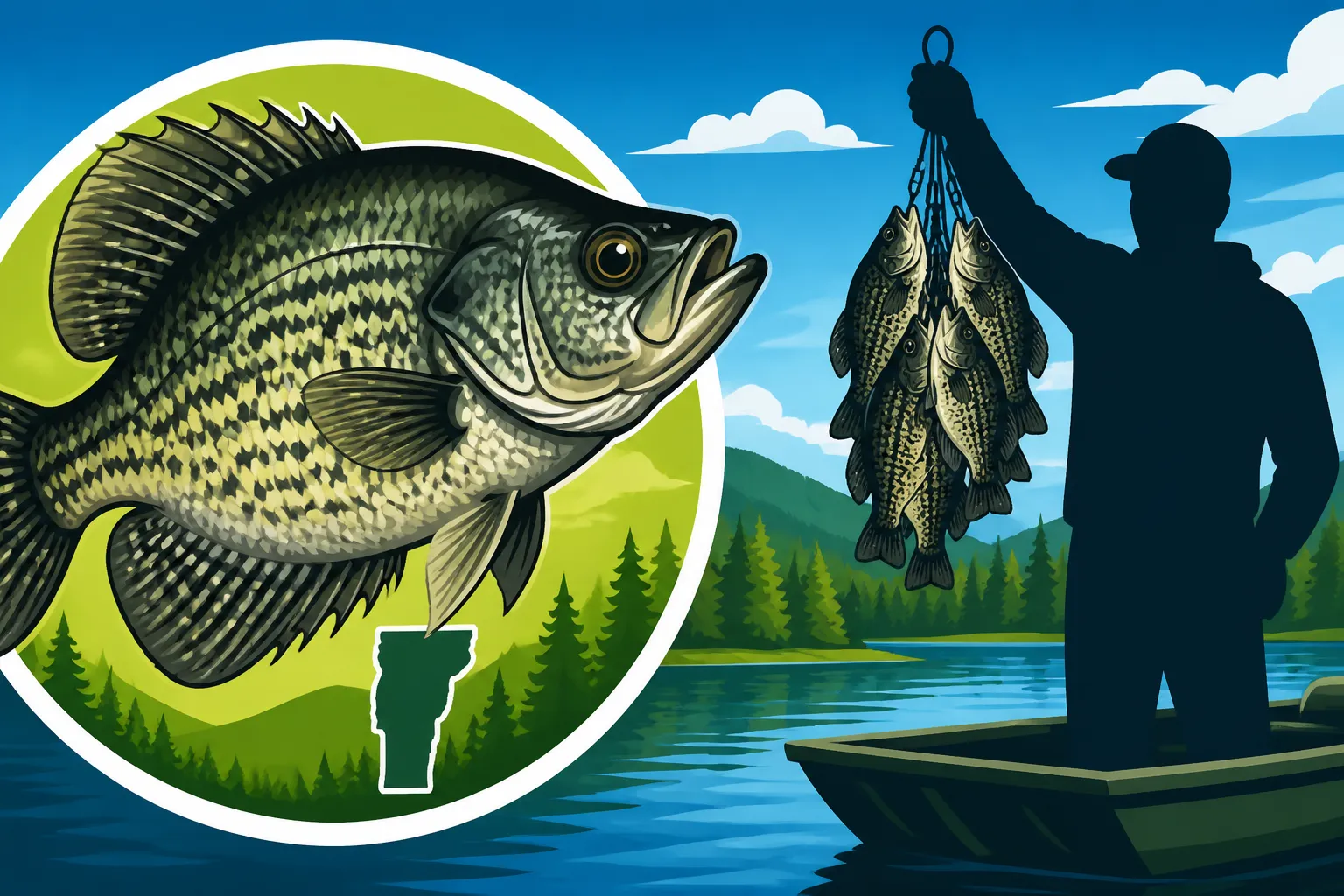
Distinguishing black crappie from other panfish can be a bit tricky, but there are a few key characteristics to look for. Black crappie, scientifically known as Pomoxis nigromaculatus, are generally darker in coloration than white crappie, with irregular dark spots scattered across their silvery-green bodies. Perhaps the most reliable identifier is the dorsal fin: black crappie typically have 7 or 8 dorsal spines, whereas white crappie usually have 5 or 6. Their bodies are deep and compressed, giving them a "slab-sided" appearance.
Here's a quick comparison with some other common panfish you might encounter in Vermont:
| Feature | Black Crappie | Yellow Perch | Bluegill Sunfish | Pumpkinseed Sunfish |
|---|---|---|---|---|
| Dorsal Spines | 7-8 | 13-15 (spiny front fin) | 10-12 | 10-12 |
| Coloration | Silvery-green with irregular dark spots | Golden yellow with 6-8 distinct dark vertical bars | Dark olive-green to blue with a dark spot on dorsal fin, blue iridescent gill plate | Olive-green to brown with distinct wavy blue lines on face, bright red/orange spot on gill plate flap |
| Body Shape | Deep, compressed, "slab-sided" | Elongated, somewhat compressed | Deep, roundish, compressed | Deep, roundish, compressed |
| Mouth | Large, extends past center of eye | Small | Small | Small |
Understanding these differences is crucial, especially when considering the aggregate limit. You might be catching a mix of panfish, so identifying each one correctly ensures you stay within the legal Vermont Bag and Possession Limits by Species. For more on panfish, our Panfish Species Identification Guide for Vermont can offer even greater detail.
Where to Find Black Crappie in Vermont
Black crappie are quite widespread across Vermont's lakes, ponds, and even slower-moving river sections. They're particularly fond of clear, warm waters with plenty of cover, which makes many of Vermont's diverse fishing environments ideal. They love to hang out around submerged structures, such as fallen trees, weed beds, docks, brush piles, and rock piles. These areas provide both ambush points for feeding on smaller baitfish and insects, as well as protection from predators.
One of the most renowned crappie fisheries in the state is undoubtedly Lake Champlain. Its vastness offers countless bays, marinas, and submerged structures where crappie thrive. Popular spots on Lake Champlain include Malletts Bay, Missisquoi Bay, and many of the smaller protected coves, especially those with reeds and docks. Other excellent crappie waters include Lake Bomoseen, which is known for its diverse fishery and abundant structure, and smaller lakes like Lake St. Catherine and Lake Dunmore. Even some of the larger reservoirs and deeper ponds across the state, particularly in areas with good weed growth, can hold impressive populations. If you’re planning a trip to the big lake, our comprehensive Lake Champlain Fishing Guide is a great resource.
During different seasons, their location can shift. In spring, after ice-out, crappie often move into shallower areas to spawn, making them more accessible from shore or by kayak. As waters warm in summer, they tend to move deeper, seeking out cooler temperatures and congregating around main lake structures. In fall, they might school up aggressively as they feed prior to winter.
Practical Tips for Responsible Crappie Angling
Catching crappie is a blast, and responsible angling means not just following the rules, but also using techniques that promote healthy fish populations. Even though there's no minimum length, practicing selective harvesting can improve the quality of your crappie fishery over time.
Best Practices for Catching and Keeping Crappie
Crappie are typically not hard to catch once you locate them. They have relatively soft mouths, so using light tackle is often preferred. A lightweight spinning rod (ultra-light or light action) paired with a small reel spooled with 4-6 lb test monofilament or fluorocarbon line is ideal. Small jigs, typically 1/32 oz to 1/8 oz, tipped with a small plastic grub or tube, are incredibly effective. Live minnows fished under a bobber are also a classic, deadly method.
When you're reeling them in, be gentle. Their soft mouths can tear easily, leading to lost fish. If you plan to keep fish for the table, bring a cooler with ice to keep them fresh. When releasing fish you don't intend to keep, handle them minimally with wet hands, and try to unhook them quickly. A small pair of fishing pliers (you can find a good set on Amazon, for example) can make hook removal much easier and reduce harm to the fish.
Consider practicing "selective harvesting." While the 50-fish limit is quite generous, keeping only a portion of your catch, or targeting medium-sized crappie for the dinner plate while releasing the very largest ones (which are often the best spawners) and the very smallest ones, can help maintain a balanced crappie population with good average size. It's a personal choice, but one that benefits the fishery in the long run. To get set up with the right gear, check out our guide on the Best Tackle for Panfish.
Staying Up-to-Date with Regulations
Fishing regulations, while generally stable, can change from year to year. New scientific data, environmental shifts, or conservation initiatives might prompt adjustments to limits, seasons, or special waters. It's every angler's responsibility to know the most current rules before heading out. Relying on outdated information can lead to unintentional violations.
The best and most reliable source for up-to-date Vermont fishing regulations is the Vermont Fish & Wildlife Department's official website. They publish a new fishing regulation guide annually, usually in late winter or early spring, which details all the current rules, including daily limits, possession limits, length requirements, and special regulations for specific waters. You can often download a PDF version or find an interactive guide online. Printed copies are also usually available at license vendors across the state, such as town clerks, general stores, and sporting goods shops.
Before each fishing season, or even before heading to a new body of water, make it a habit to quickly review the official guide. This ensures you're always compliant and contributes to the respectful and legal enjoyment of Vermont’s incredible fishing opportunities. For more detailed instructions on how to navigate the official guide, our post Reading the Vermont Fishing Regulations Guide is an invaluable tool.
Consequences of Exceeding Crappie Limits
We've covered the limits and why they exist, but it's equally important to understand what happens if those rules aren't followed. Exceeding bag limits isn't just a minor oversight; it has real legal and environmental repercussions that can impact both individual anglers and the broader fishing community.
Penalties for Violations
Fishing without the proper license or exceeding bag limits are not mere suggestions – they are legal requirements enforced by Vermont State Game Wardens and other law enforcement officials. Getting caught with more than the legal limit of black crappie (or any other fish) can lead to significant penalties. These typically include:
- Fines: Monetary penalties can vary, but they are often substantial, especially for repeat offenses. These fines are designed to deter illegal activity and contribute to conservation efforts.
- Seizure of Catch: Any illegally caught fish will be confiscated.
- Seizure of Equipment: In more egregious cases, fishing equipment (rods, reels, even boats) can be seized.
- Loss of Fishing Privileges: Anglers may face suspension or revocation of their Vermont fishing license, preventing them from legally fishing in the state for a period of time. This can also affect your ability to get a license in other states due to reciprocity agreements.
- Court Appearances: Depending on the severity and nature of the violation, you might be required to appear in court.
These penalties are not arbitrary; they reflect the state's commitment to protecting its natural resources. The aim is not just to punish, but to educate and enforce behaviors that sustain our fisheries. For more information on fishing penalties in Vermont, you might find our article on Fishing Without a License in Vermont: Penalties insightful, as many of the enforcement principles apply across various types of violations.
The Broader Impact on Fisheries
Beyond the individual legal consequences, exceeding crappie limits has a detrimental ripple effect on the entire fishery and the ecosystem it supports. Every fish illegally taken is one less fish contributing to the spawning stock, one less fish for other anglers, and one less fish for the natural food chain.
When a large number of anglers disregard limits, it can quickly lead to localized overfishing, especially in smaller ponds or easily accessible areas. This can deplete populations, reduce the average size of fish, and even alter the genetic makeup of the stock over time, making future generations less resilient. A decline in the crappie population can also affect their predators and prey, disrupting the delicate balance of the aquatic ecosystem. Healthy fish populations are a cornerstone of Vermont's outdoor recreation and tourism economy, supporting local businesses, guides, and tackle shops. When fisheries suffer, these economic benefits diminish. By respecting the limits, we all play a part in conserving these valuable resources, ensuring vibrant fishing experiences for everyone, both now and in the future.
Disclaimer
Please note that fishing regulations can change. While this guide provides the most current information available at the time of writing, it is essential for all anglers to consult the official Vermont Fish & Wildlife Department regulations guide annually before fishing to ensure compliance with the latest rules.