Best bilge pump for a small fishing boat
There's nothing quite like the feeling of heading out onto a serene Vermont lake or river in your small fishing boat, whether it's for a quiet morning of chasing brook trout or an afternoon hunting smallmouth bass. But that peace can quickly turn to frustration, or even danger, if you find yourself constantly bailing out water that's accumulated from rain, splash, or an unexpected leak. Dealing with a swamped boat is not just an inconvenience; it can be a serious safety issue, potentially damaging your gear and putting you at risk. This comprehensive guide is all about equipping your small fishing boat with the best bilge pump, ensuring you stay dry, safe, and focused on the fishing, not the bailing.
Why a Bilge Pump is Non-Negotiable for Your Small Vermont Fishing Boat
For many small boat owners, especially those with Jon boats, aluminum skiffs, or even larger canoes fitted with motors, a bilge pump might seem like an extra luxury. After all, a bucket or sponge has always done the trick, right? While those manual methods have their place, relying solely on them can quickly become a significant headache, and in some situations, a real hazard. Vermont's weather can be unpredictable, and even the calmest waters can throw a curveball.
Beyond Just Sinking: Other Water Woes
When we talk about water in the bilge, most people immediately think of a catastrophic leak that leads to sinking. While that's the worst-case scenario a bilge pump is designed to prevent, it's far from the only reason you'll appreciate having one. Think about a typical spring day on Lake Dunmore. You're out fishing, and suddenly a squall rolls through, dumping an inch of rain into your boat in a matter of minutes. Or maybe you're navigating a choppy section of the Missisquoi River, and constant spray comes over the bow. What about a leaky livewell, or simply a slow drip from a poorly sealed stern?
All of these scenarios lead to standing water. That water adds significant weight to your boat, impacting its stability and making it less maneuverable. It can slosh around, soaking your gear, damaging sensitive electronics like your fish finder, and corroding metal components over time. The constant act of manually bailing out water, especially when it's cold, takes away from your fishing time, energy, and overall enjoyment. A good bilge pump handles these everyday annoyances automatically, letting you concentrate on the bite. It's about preserving your boat, your gear, and your fishing experience.
Safety First: Preventing Emergencies
While the convenience factor is huge, the most critical role of a bilge pump is safety. Small boats are inherently more susceptible to taking on water quickly. A larger wake from a passing boat on Lake Champlain could crest your transom, or you might hit a submerged log on the Lamoille River, creating a sudden leak. In these moments, a bucket is simply too slow and inefficient.
A properly functioning bilge pump can rapidly remove large volumes of water, maintaining your boat's buoyancy and keeping you in control. If you're out on the water, especially in colder months or on larger bodies like Lake Memphremagog, the risk of cold water immersion is a serious concern if your boat were to become swamped. Having an active bilge pump buys you precious time to address the source of the water or get back to shore safely. It's a critical piece of equipment that provides an invaluable layer of protection, offering peace of mind even when you're far from the dock. Remember to always keep up with Life Jacket Requirements for Vermont Boaters and ensure your safety gear is in order, but a bilge pump is part of proactive safety.
Understanding Bilge Pump Types for Small Boats
When you start looking at bilge pumps, you'll quickly realize there's more to it than just a motor and a hose. Knowing the different types and how they operate is key to picking the right one for your specific small fishing boat and how you use it in Vermont's diverse waters.
Manual Bilge Pumps: The Essential Backup
Even with the most advanced electric bilge pump, a manual option is a must-have. Think of it as your reliable, no-fail backup plan.
- Pros: Manual pumps are incredibly simple, requiring no electricity to operate. This makes them inherently reliable in a power outage or if your battery dies. They're typically compact and easy to store, making them perfect for even the smallest kayaks or canoes that might only occasionally venture out on a pond. In an emergency where your electrical system is compromised, a manual pump is your only way to get water out.
- Cons: The biggest drawback, as you can imagine, is that they are entirely labor-intensive. If you're taking on a significant amount of water quickly, trying to keep up with a manual pump can be exhausting and ultimately ineffective. They're best for clearing out residual water or handling very minor leaks.
- When to Use: Every small boat, regardless of its electric pump setup, should have a manual bilge pump or a large bailer bucket onboard. They are fantastic for those situations where you just need to clear out a few gallons of rainwater after a shower, or for a very small craft where an electric pump isn't practical. They're also indispensable if you find yourself fishing a remote, undeveloped pond in the Green Mountains where reliable power isn't guaranteed.
Electric Bilge Pumps: The Workhorse
For most small powerboats and even larger fishing kayaks that have a battery, an electric bilge pump is the primary solution. These are the unsung heroes that work tirelessly, often without you even noticing, to keep your boat dry.
- Pros: Electric pumps are efficient and can move water much faster than any manual method. They free you up to focus on fishing, navigating, or dealing with other issues. Many can operate automatically, constantly monitoring your bilge for water and activating only when needed.
- Cons: They require a power source, which means drawing on your boat's battery. This can be a concern for small boats with limited battery capacity, especially if the pump runs frequently. There's also the potential for electrical issues—blown fuses, corroded wiring, or a dead battery can render them useless.
- Types:
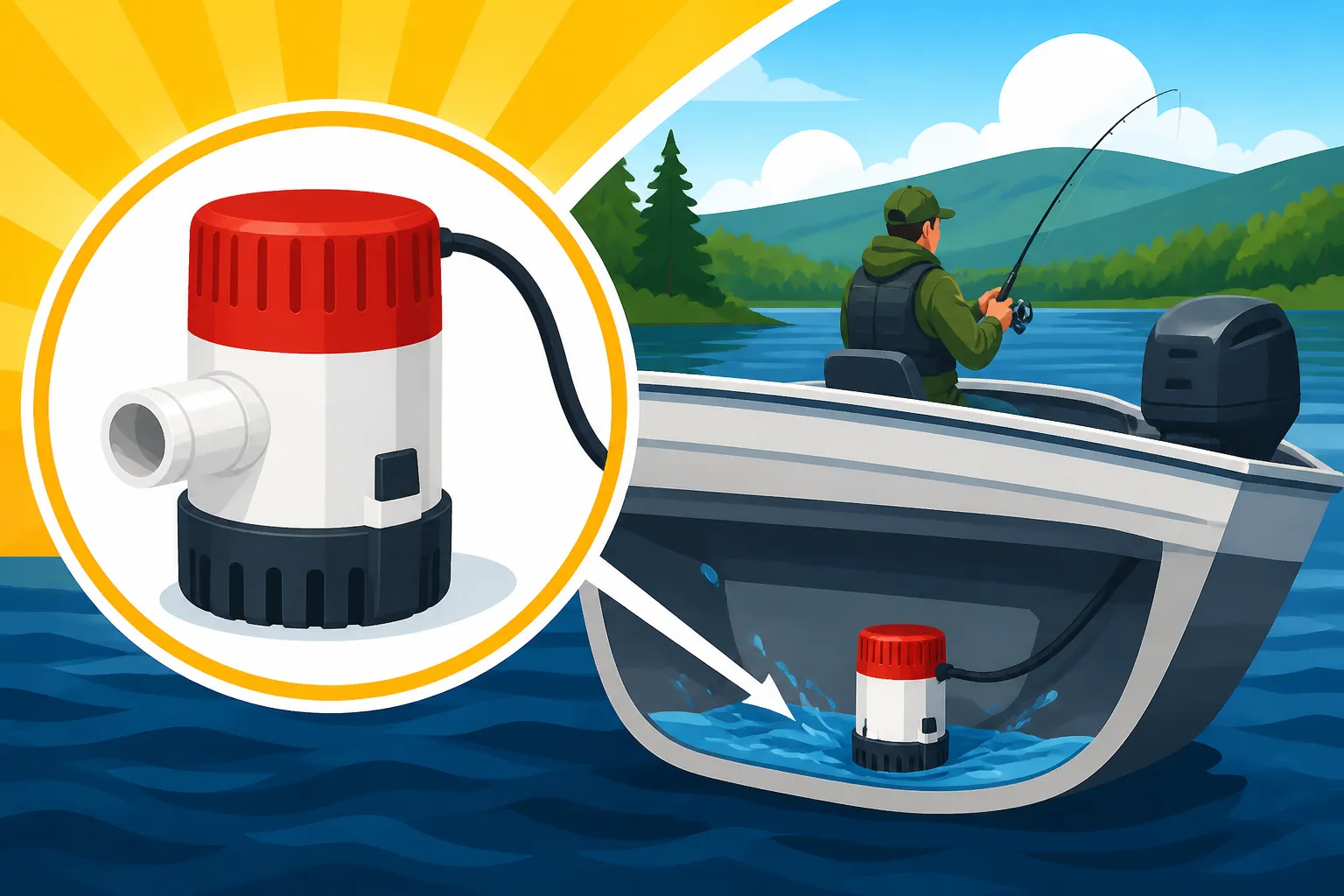
- Submersible Pumps: These are by far the most common type for small fishing boats. They sit directly in the bilge water and literally submerge to pump water out. They're compact, relatively inexpensive, and come in a wide range of flow rates. You'll find a massive selection of these at marine retailers or online storefronts like Amazon.
- Diaphragm Pumps: While less common for primary bilge duty in small boats, these are sometimes used for livewell recirculation or specific transfer tasks. They work by using a flexible diaphragm to draw and push water. They can run dry without damage, which is a big advantage, but are typically more expensive and larger than submersibles of similar capacity.
- Flow Rates (GPH): Bilge pumps are rated by Gallons Per Hour (GPH). This indicates how much water they can move in an hour under ideal conditions. For a small fishing boat, you'll typically be looking at pumps ranging from 500 GPH to 1500 GPH. We'll delve into how to choose the right GPH in the next section, but suffice it to say, more isn't always better if it overtaxes your battery.
Automatic vs. Manual-Switch Operation
One of the most significant decisions you'll make when choosing an electric bilge pump is how it activates.
- Float Switches: An automatic bilge pump system incorporates a float switch. This device senses when water in the bilge reaches a certain level, then automatically turns the pump on. Once the water level drops below the trigger point, the pump shuts off.
- Advantages: This "always on guard" capability is fantastic. It means your boat is being monitored even when you're not around, protecting against unexpected rain, slow leaks, or overnight moisture accumulation. If you're leaving your boat moored or trailered outside, an automatic pump is a game-changer.
- Considerations: Float switches themselves can sometimes stick (either on or off) if they get clogged with debris or worn out. They also draw a tiny amount of power constantly, waiting for water, which is usually negligible but worth noting for very small batteries.
- Manual Switches: These pumps are activated only when you flip a switch. You have complete control over when they run.
- Advantages: They don't draw any passive power when off, which can conserve battery life. They are simpler in terms of wiring and installation.
- Considerations: You have to remember to turn them on. If you're not paying attention or forget, water can accumulate unnoticed. They offer no protection when you're not actively monitoring the boat.
- Importance of Both: For optimal safety and convenience, many anglers opt for a system that includes an automatic pump with a manual override switch. This gives you the best of both worlds: automatic protection against unexpected water, combined with the ability to manually activate the pump if the float switch fails or if you need to clear water that hasn't reached the float switch's trigger level. It's a robust solution for a variety of conditions, from calm days on Lake Bomoseen to more adventurous outings on larger, choppier waters.
Choosing the Right Bilge Pump for Your Vermont Fishing Adventures
Now that you know the types, let's get down to the nitty-gritty of selecting the perfect bilge pump for your small fishing boat, keeping in mind the unique demands of fishing in Vermont.
Matching GPH to Your Boat Size and Needs
The "Gallons Per Hour" (GPH) rating is crucial. It tells you how quickly the pump can move water. You don't want a pump that's too weak to keep up, nor one that's overkill and drains your battery unnecessarily.
-
General Recommendations for Small Boats:
- Very Small Boats (canoes, small Jon boats up to 12-14 ft, kayaks with bilge areas): A 300-500 GPH pump is often sufficient, especially if primarily used for bailing out rain or spray. For these, a manual backup is absolutely vital.
- Small to Mid-Size Fishing Boats (14-18 ft aluminum boats, small fiberglass bass boats): A 750 GPH or 1000 GPH pump is a good all-around choice. This range provides decent pumping power for both routine water accumulation and modest emergency situations.
- Larger Small Boats (18-20 ft, or boats that frequently encounter rough water): Consider a 1000 GPH to 1500 GPH pump. If you're regularly on large bodies like Lake Champlain, especially in windy conditions, the increased capacity can be a lifesaver.
-
Consider Your Boat Type and Use:
- Jon boats: Often have flat bottoms and can accumulate water quickly. A 750 GPH pump is a solid starting point.
- Small Bass Boats: Typically have deeper bilges, and often livewells that can leak. A 1000 GPH pump is a wise investment here.
- Kayaks with internal bilges: A small 300-500 GPH pump might be tucked into a bilge area, but many serious kayak anglers also carry a manual hand pump for quick bailing.
- Fishing the Winooski River vs. Lake Champlain: If you stick to smaller, calmer rivers like the White River, you might get away with a lower GPH. But if you venture onto Lake Champlain or the Connecticut River, where larger wakes and rougher conditions are common, lean towards a higher GPH for safety.
-
Anticipate Water Ingress: Think about how your boat takes on water. Do you have an open boat that catches a lot of rain? Does your livewell often overflow or leak? Do you take on a lot of spray when running at speed? These factors should nudge you towards a higher GPH rating. You'll find a wide array of options across various GPH ratings when browsing online retailers like Bass Pro Shops or Amazon, making it easy to compare specs.
Power Source and Installation Considerations
An electric pump is only as good as its installation. Poor wiring or placement can render even the best pump useless.
- Battery Connection:
- Direct to Battery: For very simple setups, especially on smaller boats with minimal electronics, a direct connection to the battery (always with an in-line fuse!) can work.
- Fuse Panel: The best practice is to wire your bilge pump to a dedicated circuit on a marine fuse panel. This centralizes your electrical system, makes troubleshooting easier, and ensures proper fusing for all accessories.
- Wiring: This is absolutely critical. Use marine-grade, appropriately sized wire for the pump's amperage draw and the length of the run. All connections must be waterproof. Soldering and heat-shrink tubing are your best friends here. Given Vermont's damp springs and frosty winters, any exposed or shoddy wiring will quickly corrode and fail.
- Placement: The pump needs to be at the absolute lowest point of your bilge where water naturally collects. If your boat has multiple bilge areas or a keel that prevents water from flowing to a single point, you might need more than one pump. Ensure the pump is mounted securely so it doesn't shift around in rough water, and its intake is clear of any obstructions like fishing line, leaves, or other debris.
- Discharge Hose: The hose that carries water out of your boat needs to be routed correctly.
- Routing: It should run with a continuous rise to prevent airlocks and be as short as possible to maximize flow.
- Through-Hull Fittings: The hose needs to exit the boat above the waterline through a proper marine through-hull fitting.
- Preventing Backflow: Consider installing an anti-siphon loop or a check valve in the discharge line to prevent water from flowing back into the bilge once the pump shuts off. This is especially important if your through-hull fitting is close to the waterline. Before purchasing, check the product descriptions on places like Amazon for any specific hose diameter or fitting requirements.
Durability and Maintenance in Vermont Conditions
Vermont's fishing seasons bring a range of conditions, from warm summer days on Lake Carmi to chilly fall mornings on the Battenkill River. Your bilge pump needs to be able to handle it.
- Corrosion Resistance: While most of Vermont's fishing is in freshwater, ensuring your pump has corrosion-resistant components (stainless steel shafts, robust plastic housings) is still important. Freshwater can still cause corrosion, especially with dissimilar metals or poor electrical connections.
- Debris Management: Small boats often accumulate debris—fishing line, bait scraps, leaves, sand from launching. Many pumps come with a small strainer base to prevent larger items from entering the pump. Regularly inspect and clean this strainer. Fishing line, in particular, can wrap around impellers and seize a pump.
- Winterization: If your boat is stored outdoors or unheated during Vermont's harsh winters, you must winterize your bilge pump. This typically involves ensuring all water is drained from the pump and discharge hose to prevent freezing and cracking. Some anglers remove their pumps entirely for winter storage.
- Regular Testing: Make it a habit to test your bilge pump before every outing. A simple test involves pouring a bucket of water into the bilge to ensure the pump (and float switch, if automatic) activates, pumps water out, and then shuts off correctly. This simple check can save you a lot of grief on the water. Reputable brands found at retailers like Bass Pro Shops are generally built to withstand demanding conditions, but even the best equipment needs routine checks.
Installation and Troubleshooting Common Bilge Pump Issues
Even the best bilge pump won't do you any good if it's not installed correctly or if you don't know how to troubleshoot it when things go wrong. Don't worry, it's not rocket science, and a little knowledge goes a long way!
Step-by-Step Installation Basics
While specific pump models may have slightly different instructions, the general process for installing a submersible electric bilge pump in a small fishing boat is pretty straightforward.
Here’s a basic outline to get you started:
| Step | Description | Key Considerations |
|---|---|---|
| 1. Identify Lowest Point | Locate the lowest spot in your boat's bilge where water naturally accumulates. | Ensure it's clear of obstructions and accessible for maintenance. |
| 2. Mount Pump and Float Switch | Securely attach the bilge pump to the boat's hull. If automatic, mount the float switch adjacent to the pump. | Use stainless steel screws. Ensure the float switch has free movement. |
| 3. Run Discharge Hose | Connect the discharge hose to the pump's outlet. Route it upwards to a through-hull fitting above the waterline. | Avoid kinks, sharp bends. Keep the run as short as possible for optimal flow. |
| 4. Install Through-Hull Fitting | Drill a hole (if necessary) above the waterline and install a marine through-hull fitting. Secure with sealant. | Ensure it's high enough to prevent backflow. Use marine-grade sealant. |
| 5. Wire to Power Source | Connect the pump's positive (+) and negative (-) wires. Install an in-line fuse close to the power source. | Use marine-grade wire. All connections must be waterproof (solder and heat shrink). |
| 6. Install Switch (if applicable) | Wire the pump to a manual switch or an automatic switch on your console/panel. | Clearly label the switch. Ensure easy access. |
| 7. Test Thoroughly | Pour several gallons of water into the bilge. Observe the pump's activation, water removal, and deactivation. | Check for leaks, proper float switch operation, and adequate flow from the discharge. |
Remember, safety first! Always disconnect your battery before working on electrical systems. If you're unsure about any step, especially electrical wiring, it's always best to consult a professional marine technician. Properly installed, your pump will serve you well on Best Fishing Lakes in Vermont or any of your favorite Best Fishing Rivers in Vermont.
Troubleshooting When Your Pump Won't Pump
There's nothing more frustrating than having water in your boat and a silent bilge pump. Before you panic, here are some common issues and how to troubleshoot them:
- No Power to the Pump: This is the most frequent culprit.
- Check the Battery: Is your boat's battery charged? Even a low battery might not have enough juice to run the pump effectively.
- Inspect the Fuse: Look for the in-line fuse near the battery or on your fuse panel. A blown fuse means too much current tried to pass through. Replace it with a fuse of the correct amperage.
- Examine Wiring Connections: Trace the wires from the pump back to the power source. Look for loose connections, corrosion, or frayed wires. These are common points of failure, especially in a damp bilge environment.
- Clogged Intake: The pump might be getting power, but it can't suck water in.
- Inspect the Strainer: Remove the pump's base (if possible) and check the strainer for debris like fishing line, leaves, weeds, or bait chunks. Clear any blockages. This is a very common issue, particularly on boats that see a lot of action or are moored in areas with floating vegetation.
- Float Switch Stuck (for automatic pumps):
- Physical Obstruction: The float switch itself might be jammed by debris or something that has fallen into the bilge. Gently clear any obstructions and ensure it moves freely.
- Corrosion/Failure: Over time, float switches can corrode internally or simply fail. If it's clean and still not working, it may need replacement.
- Pump Running but No Water (or very little):
- Airlock: Sometimes, air can get trapped in the pump or discharge hose, preventing water from being drawn up. Shaking the pump gently or temporarily raising and lowering the hose can sometimes clear an airlock.
- Hose Obstruction: Check the discharge hose for kinks or blockages (e.g., a mud dauber's nest, a large piece of debris).
- Faulty Impeller: The internal impeller that pushes the water might be damaged or worn out, especially if the pump has run dry for extended periods. In this case, the pump might hum but not move water efficiently. This usually requires pump replacement.
- Water Leaking Back In After Pump Shuts Off:
- No Anti-Siphon Loop/Check Valve: If your discharge hose doesn't have an anti-siphon loop (a high point in the hose above the waterline) or a check valve, water can flow back into the bilge through the hose once the pump turns off. Install one to prevent this.
Being able to diagnose these common issues quickly means less downtime on the water and more time enjoying Vermont's fantastic fishing opportunities. Remember, a well-maintained and functioning bilge pump is as important as your fishing rods and tackle box for a successful and safe day out. It's a key part of your boating preparation, right up there with knowing Vermont Boating Laws for Anglers and having your Vermont Boat Registration Requirements in order.
Disclaimer
This article is for general informational purposes only and does not constitute professional advice. Laws, prices and regulations vary by location and change over time. Consult a qualified professional for guidance on your specific situation.