Best jerkbait for muskellunge fishing
For many anglers, the pursuit of muskellunge in Vermont is a true test of patience, skill, and, let's be honest, gear. These formidable apex predators, often referred to as "the fish of 10,000 casts," can be incredibly elusive, making every strike a hard-earned victory. If you've ever felt the frustration of a muskie following your lure right to the boat, only to turn away at the last second, you know the importance of making that final presentation irresistible. This guide is all about equipping you with the knowledge to choose and effectively fish the best jerkbaits specifically for muskellunge in Vermont, helping you turn those follows into solid hookups and unforgettable battles.
Understanding Muskellunge Habits in Vermont and Jerkbait Appeal
Muskies are magnificent creatures, embodying strength and predatory cunning. In Vermont, the primary fishery for these incredible fish is centered around Lake Memphremagog, a truly special body of water that offers anglers a unique opportunity to target these giants. Successfully catching them isn't just about throwing any lure; it's about understanding their behavior and presenting something they simply can't resist.
Where Vermont Muskies Live
When we talk about muskellunge in Vermont, our thoughts immediately turn to the vast, cool waters of Lake Memphremagog. This large, deep lake, straddling the U.S.-Canadian border, is renowned for its muskie population. These fish thrive in its varied habitat, which includes deep main lake basins, rocky points, weed beds, and tributary mouths. Understanding the structure and cover they prefer at different times of the year is crucial for knowing where to cast your jerkbait. In spring, muskies might be found cruising shallower bays as the water warms and baitfish become active. As summer progresses, they'll often relate to deeper weed lines, humps, and points, seeking cooler water and ambush points. Muskellunge Habits on Lake Memphremagog provides a deeper dive into their seasonal movements.
Why Jerkbaits Entice Muskie
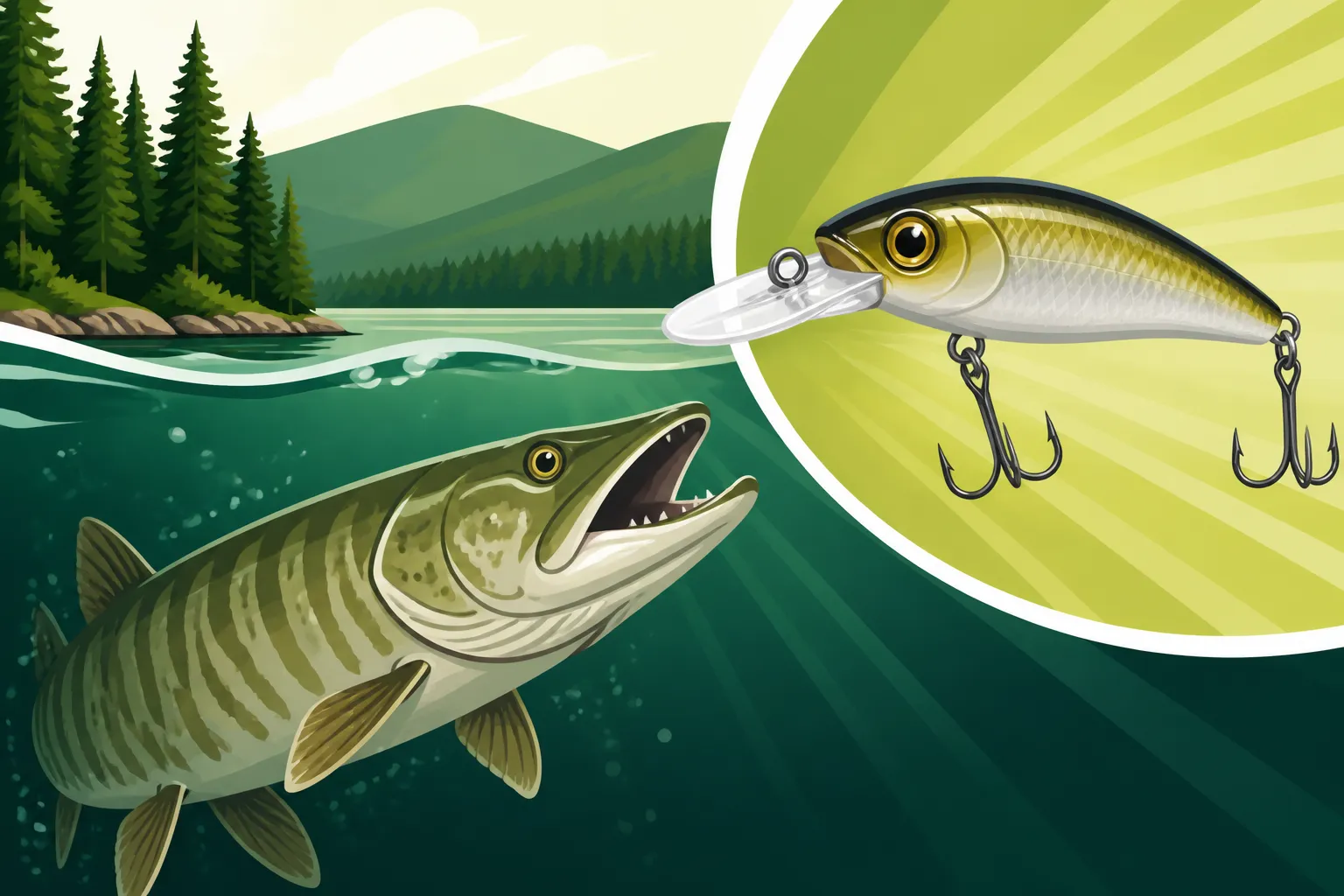
Jerkbaits are a cornerstone of muskie fishing for a very good reason: they perfectly mimic a wounded or disoriented baitfish. Unlike lures that have a consistent, predictable action, a jerkbait's movement is entirely controlled by the angler. With a series of rod twitches and pauses, you can make it dart erratically side-to-side, dive, rise, or even perform a sudden stop. This unpredictable, struggling action is a huge trigger for a predatory fish like a muskie. They are drawn to easy meals, and a lure that looks like it's in distress signals exactly that. The pause, in particular, often seals the deal, giving the muskie that split second to decide to strike after intently tracking the erratic movement.
The Challenge of Muskie Fishing
Let's face it, muskie fishing can be incredibly humbling. The "fish of 10,000 casts" isn't just a catchy phrase; it's a reality many muskie anglers live with. You might spend hours, even days, casting, retrieving, and working your lures with no action, only to have a massive shadow materialize behind your bait right at the boat. That's the notorious "muskie follow." It's incredibly frustrating when they just nose up to the lure and then turn away, leaving you questioning everything. This is precisely where a well-chosen jerkbait and a practiced figure-eight technique become invaluable. The erratic action of a jerkbait can often be the trigger that converts a curious follow into an aggressive strike, especially during that critical moment boat-side.
Key Characteristics of Effective Muskellunge Jerkbaits
When it comes to picking a jerkbait for Vermont's muskellunge, you can't just grab anything off the shelf. These aren't smallmouth bass we're talking about; muskies require specific lure attributes to stand up to their immense power and razor-sharp teeth. Every detail, from size to hardware, plays a critical role in your success and the longevity of your bait.
Size and Profile
Muskellunge are ambush predators with a substantial appetite, and they're not afraid to attack a large meal. This means your jerkbaits need to have a significant size and profile to truly grab their attention. We're generally talking about lures ranging from 6 inches all the way up to 12 inches or more. A larger profile creates more disturbance in the water, making it easier for a muskie to detect from a distance, especially in low light conditions or stained water. Think about the common forage fish in Lake Memphremagog: large suckers, substantial yellow perch, and robust ciscoes. Your jerkbait should ideally mimic these larger baitfish. A slender profile often works well, as it allows for that characteristic side-to-side glide that muskies find irresistible. Don't be afraid to go big; muskies are notoriously opportunistic and will often target the largest meal available.
Action and Retrieve
The beauty of jerkbaits lies in their customizable action. Depending on the design, a jerkbait can offer various movements:
- Gliders: These are typically straight-bodied or slightly curved lures that, with a sharp twitch of the rod, dart wide from side to side. The key here is the pause – after a hard jerk, the lure will often hang tantalizingly in the water, perfectly mimicking a struggling baitfish. This can be absolutely deadly, especially when muskies are being finicky.
- Dive-and-Rise: These jerkbaits often have a lip or a specific weighting that causes them to dive deeper with a retrieve and then slowly float or suspend on the pause. The diving action can trigger strikes from deeper-holding fish, while the rise or suspension keeps it in the strike zone longer.
- Wobblers: Some jerkbaits have a more pronounced wobble or roll as they're retrieved, even without aggressive jerking. This can be effective for covering water and for fish that are reacting to constant movement rather than sudden erratic bursts.
The retrieve is entirely in your hands. You can impart short, sharp jerks for an aggressive, erratic dart, or long, sweeping pulls for a wider glide. Varying the speed and duration of your pauses is also crucial. Sometimes a quick, aggressive retrieve will trigger a reaction strike, while other times a long, drawn-out pause will be what finally gets a cautious muskie to commit.
Durability and Hardware
This is not the place to skimp on quality. Muskies are brutal on tackle. Their powerful jaws, sharp teeth, and violent head shakes can destroy flimsy lures and bend weak hardware. You need jerkbaits constructed from tough, impact-resistant materials – usually a hard plastic or even wood.
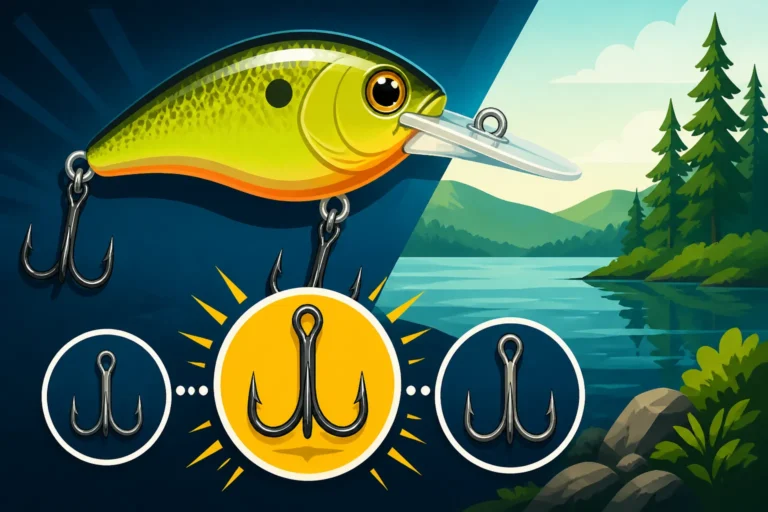
- Hooks: Replace any stock hooks that feel anything less than incredibly strong. You'll want heavy-duty, super-sharp treble hooks, often 3X or 4X strong, to withstand the abuse. Look for reputable brands known for their muskie-grade hooks.
- Split Rings: These are often the weakest link. Ensure all split rings are heavy-duty and robust. Many experienced muskie anglers upgrade their split rings immediately after purchasing a new bait, especially if it's from a brand not specifically catering to muskie fishing.
- Through-Wire Construction: The ideal muskie jerkbait will feature a "through-wire" construction, meaning a single piece of wire runs through the entire body of the lure, connecting all the hook hangers and the line tie. This prevents the lure from breaking apart if a massive muskie crushes it, ensuring your hooks remain connected to your line. When browsing selections at a local Bass Pro Shops or online at Amazon, always check for these details or read product reviews carefully.
Color Patterns for Vermont Waters
While muskies aren't necessarily "color-sensitive" in the same way some other fish might be, choosing patterns that match local forage or offer high contrast can be beneficial.
- Natural Baitfish Patterns: Mimicking the natural prey found in Lake Memphremagog is always a safe bet. Think perch patterns (yellows, greens, vertical bars), sucker patterns (browns, golds, darker backs), and cisco or smelt patterns (silvers, blues, subtle iridescence). These are particularly effective in clear water conditions.
- High Contrast/Flash: In stained water, low light, or on overcast days, patterns with high contrast or plenty of flash can be more visible. Firetiger (bright green, yellow, orange), chartreuse, and white with red accents are excellent choices. Lures with holographic finishes or reflective scales can also catch and disperse light effectively, drawing attention from a distance.
- Black/Dark Colors: Surprisingly, black or very dark lures can be incredibly effective in low light or at night, as they create a distinct silhouette against the lighter sky or water surface, making them easier for a muskie to track.
Remember, experimenting with color is part of the fun. What works one day might not work the next, so having a selection is always wise.
Top Jerkbait Styles and When to Use Them for Vermont Muskies
Muskellunge fishing isn't a one-lure-fits-all scenario, and jerkbaits come in a fantastic array of styles, each with its own unique action and ideal application. Understanding these differences will help you select the perfect tool for the conditions you're facing on Vermont's muskie waters.
Gliders and Side-to-Side Action
Gliders are arguably the most iconic style of muskie jerkbait, and for good reason. They are typically lipless, often featuring a flat or slightly concave face and sometimes a subtle bend in their body. When retrieved with sharp, short rod snaps, a glider darts widely from side to side in a mesmerizing, erratic dance. The magic often happens on the pause: after a hard snap, the lure will "glide" to a stop and then suspend or slowly sink, mimicking a stunned or dying baitfish. This moment of vulnerability is what often triggers a muskie to strike.
- When to use them: Gliders excel in various conditions. They are fantastic when you're fishing over weed tops or along weed edges, allowing you to keep the lure in the strike zone for longer. They're also excellent for calling fish in from a distance due to their wide, sweeping action. Many anglers find them especially effective during periods when muskies are following but not committing, as the sudden stop and hang can be the ultimate trigger. They are a must-have for the crucial figure eight technique for muskie fishing with jerkbaits.
- Retrieve Tips: The key is to find a rhythm. Start with a firm, downward snap of your rod tip, then immediately give slack to allow the lure to glide. Reel up the slack, and repeat. Vary the length of your pauses, from just a second or two to a prolonged five or six seconds, especially if you see a follow.
Dive-and-Rise Jerkbaits
These jerkbaits often feature a distinct lip or a specific internal weighting system that allows them to dive aggressively on the retrieve and then either slowly float back up or suspend when paused. The diving action can get the lure down to deeper-holding fish, while the slow ascent or suspension keeps it visible in the strike zone.
- When to use them: Dive-and-rise jerkbaits are excellent for working deeper breaks, rock piles, or humps where muskies might be holding slightly below the surface. They can also be very effective when fish are somewhat lethargic, as the slower, more deliberate retrieve and long pauses allow the muskie ample time to react. The change in vertical presentation can be a great trigger for fish that are ignoring horizontal retrieves.
- Retrieve Tips: A common retrieve involves a long, sweeping pull of the rod to get the lure to dive, followed by a pause. The length of the pull dictates the dive depth, and the pause allows the lure to float or suspend. You can also mix in shorter, sharper jerks to add more erratic action. These lures are also great for twitching along the surface in shallower water during early season, before muskie move to deeper haunts.
Multi-Jointed Swimbaits with Jerkbait Action
While technically a hybrid, many multi-jointed swimbaits can be fished with a jerkbait-like retrieve, offering a unique, lifelike swimming action combined with the erratic appeal of a jerkbait. These lures are often made up of two or more segments connected by hinges, giving them a serpentine movement.
- When to use them: These are fantastic for when muskies are particularly finicky or when you're trying to replicate a larger, more natural baitfish profile. Their realistic movement can fool even the most cautious muskie. They work well along drop-offs, over submerged timber, or anywhere you need a highly convincing presentation. Some anglers even use them to target trophy muskellunge on Lake Memphremagog.
- Retrieve Tips: A steady retrieve will give them their natural swimming action. To impart jerkbait action, introduce pauses and subtle twitches. The lure will continue to "swim" or shimmy on the pause due to its jointed construction, making it highly attractive. Varying the retrieve speed and adding occasional sharp snaps can make these baits incredibly effective.
Soft Plastic Jerkbaits (Jig-and-Rip)
While hard-bodied jerkbaits dominate the muskie scene, don't overlook the potential of large soft plastic jerkbaits, especially when fished on heavy jig heads. These typically have a more subtle, lifelike action and a different profile than their hard-bodied counterparts.
- When to use them: Soft plastic jerkbaits can be incredibly effective when muskies are holding tight to cover, such as dense weed beds, submerged brush, or deep rock crevices, where a snag-prone hardbait might be difficult to fish. They also offer a softer presentation, which can be advantageous in clear water or when fish are pressured. The heavier jig head allows for deeper presentations and faster drops.
- Retrieve Tips: The technique is often a "jig-and-rip." Cast the bait out, let it sink to your desired depth, then use a series of sharp upward rips of the rod to make the lure dart and jump. Allow it to fall back on a semi-slack line. The soft plastic will quiver and undulate as it falls, often triggering strikes. This is a very active retrieve, demanding constant engagement from the angler.
Rigging and Technique for Jerkbait Fishing for Muskies
Catching a muskellunge is a high-stakes game, and your rigging and technique need to be flawless to ensure that when a muskie finally commits, you're ready for the fight of a lifetime. This isn't your average panfish setup; everything needs to be beefed up to handle these powerful predators.
Rod, Reel, and Line Setup
Your gear setup for muskie fishing with jerkbaits needs to be robust. There's no room for light tackle here.
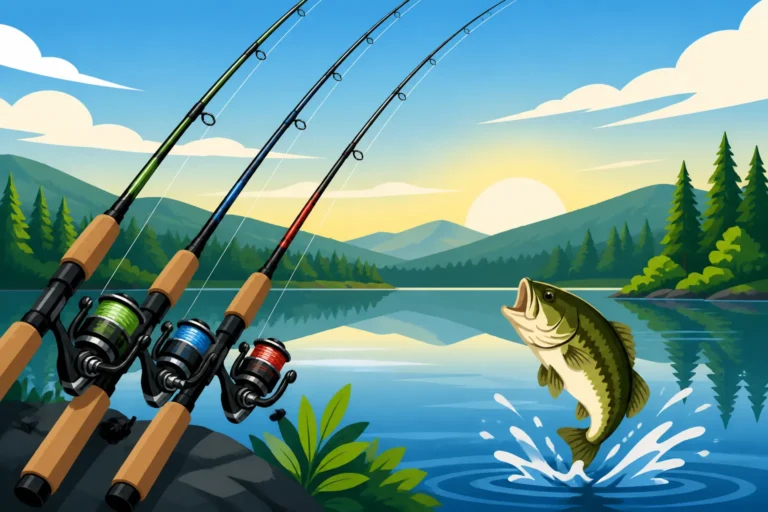
- Rods: You'll want a heavy-power, fast-action baitcasting rod. Look for lengths typically ranging from 8 feet to 9 feet. The extra length helps with casting those heavy jerkbaits long distances, especially from a boat, and provides better leverage for controlling large fish and performing the critical figure eight. A fast action means the tip is sensitive enough to impart precise lure action, while the heavy backbone provides the power to set hooks firmly and fight a muskie. Best Fishing Rods for Vermont Lakes might offer some good general insights, but specifically for muskie, think heavy-duty.
- Reels: A high-quality baitcasting reel with a strong drag system and a high line capacity is essential. A gear ratio around 5.1:1 to 6.4:1 is often preferred, providing a good balance of power and retrieve speed. These reels need to withstand constant heavy use and the immense stress of fighting big fish.
- Line: Braided line is the overwhelming choice for muskie fishing. Its zero-stretch properties provide maximum sensitivity, allowing you to feel every subtle movement of your lure and every bump or follow. It also ensures powerful hooksets. Opt for heavy line, typically 80 to 100-pound test. This heavy line strength isn't just for fighting fish; it also helps prevent snap-offs when casting heavy lures or when your line inevitably encounters sharp muskie teeth or abrasive cover. For more details on this, check out Best Line Weight for Muskellunge Fishing.
Leaders and Terminal Tackle
Muskie have mouths full of razor-sharp teeth that can easily shred standard monofilament or fluorocarbon line. A heavy-duty leader is absolutely non-negotiable.
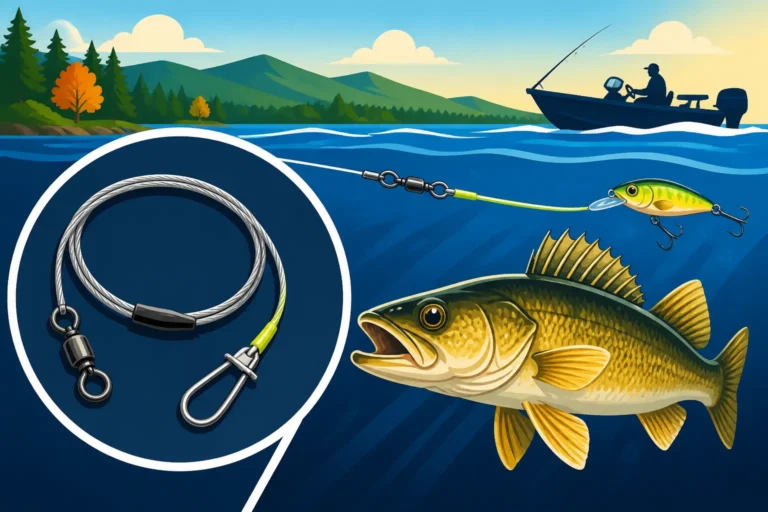
- Leaders: You'll need a wire or heavy fluorocarbon leader to prevent bite-offs.
- Wire Leaders: These are typically made of solid wire or braided multi-strand wire, often coated. They are incredibly bite-resistant but can sometimes hinder the natural action of certain jerkbaits due to their stiffness. Lengths usually range from 10 to 18 inches.
- Heavy Fluorocarbon Leaders: While not as bite-proof as wire, very heavy fluorocarbon (100 to 150-pound test) offers more stealth and a more natural lure action because it's less visible and more flexible underwater. Many muskie anglers prefer this, accepting the slightly increased risk of bite-offs for better presentation.
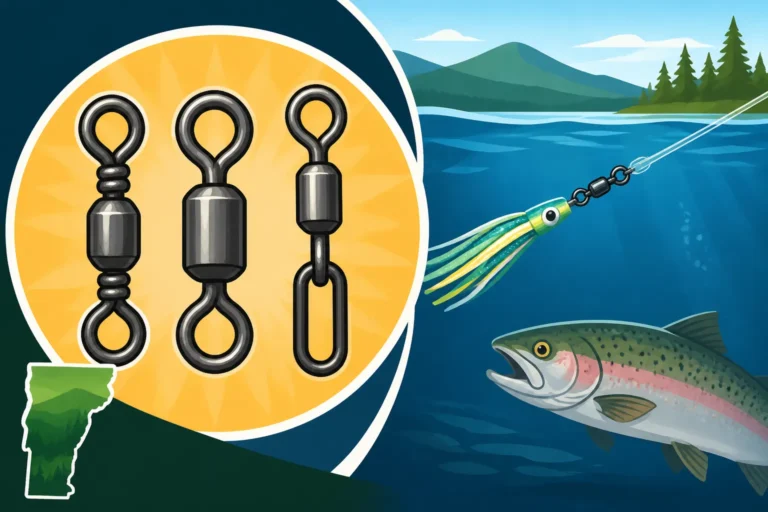
- Snaps/Swivels: Attach your leader to your main line with a heavy-duty swivel to prevent line twist. At the lure end, use a strong, high-quality snap. Avoid using snap swivels directly at the lure, as the swivel can interfere with the jerkbait's action. The snap allows for quick lure changes, which you'll be doing often to find what the fish want. For more specific guidance, read Best Leader for Muskellunge on Lake Memphremagog.
Mastering the Figure Eight
This technique is perhaps the most critical skill for muskie fishing, especially with jerkbaits, and it's what often turns a follow into a strike. When a muskie tracks your lure right to the boat, do NOT pull it out of the water.
- The Technique: As your lure approaches the boat, smoothly sweep your rod tip into the water, tracing a large "figure eight" pattern with your lure right beside the boat. Make the turns wide and fluid, keeping the lure moving just below the surface. A muskie that has been following might be hesitant to strike in open water, but in the confined space of the figure eight, they often feel cornered and react defensively.
- Why it works: The sudden change in direction and increased speed in a tight circle can be the trigger. The muskie, perhaps thinking the bait is about to escape, or simply reacting to the aggressive turn, will often strike viciously. Maintain eye contact with the muskie throughout the entire figure eight, and be ready to set the hook. This technique requires practice, but it's an absolute game-changer for converting those frustrating follows into thrilling hookups.
Varying Retrieves for Success
The beauty of jerkbaits is their versatility. Don't fall into the trap of using a single, monotonous retrieve. Muskies are smart, and they often respond to changes in presentation.
- Mix it Up: Start with a standard cadence, then introduce variations. Try short, sharp snaps followed by long pauses. Then switch to a series of quick, continuous jerks with minimal pauses. Experiment with the speed of your retrieve – sometimes a super-fast, aggressive retrieve will get a reaction strike, while other times a slow, deliberate approach with extended pauses is what's needed, especially in colder water.
- Read the Fish and Conditions: If you're getting follows but no strikes, it's a clear sign to change something. Try a different retrieve speed, pause length, or even a different jerkbait style or color. Pay attention to water clarity, temperature, and light conditions, as these can all influence how muskies prefer their meals presented. For example, during cold front fishing tactics for Vermont bass, which often applies to muskies too, slower presentations are usually more effective.
Considerations for Jerkbait Selection in Specific Vermont Scenarios
Vermont's fishing seasons offer distinct challenges and opportunities, even within the prime muskie waters of Lake Memphremagog. The most effective jerkbait choice and retrieve can vary significantly depending on the water temperature and the muskie's activity level. Adapting your approach is key to consistently enticing these elusive fish.
Early Season and Cold Water
As the ice retreats and spring arrives in Vermont, the water in Lake Memphremagog slowly begins to warm. Muskies are often lethargic in cold water, conserving energy after the long winter. They might be found in shallower bays that warm up faster, or along the edges of deeper channels.
- Jerkbait Choices: For early season and cold water, prioritize jerkbaits that can be fished slowly and maintain an enticing action even with minimal input. Dive-and-rise jerkbaits or those with a slow, wide glide are excellent options. You want lures that stay in the strike zone longer and don't require aggressive retrieves to look natural. Think about suspending jerkbaits that can be paused for extended periods without sinking too quickly. Many anglers will opt for natural baitfish patterns that mimic the less active forage found in cooler water.
- Retrieve Strategy: The mantra here is "slow and deliberate." Long pauses are crucial. Cast your jerkbait, let it settle, then use long, sweeping pulls of the rod rather than sharp jerks. Follow each pull with a lengthy pause, sometimes up to 10-15 seconds. The muskie needs time to see the lure, approach it, and commit. Don't be afraid to fish these baits deep, near transition areas where shallow bays meet deeper channels.
Mid-Summer and Active Fish
Summer in Vermont brings warmer water temperatures and often more active, aggressive muskies. They'll spread out more, relating to deeper weed lines, humps, offshore structure, and rocky points where cooler water and abundant baitfish can be found.
- Jerkbait Choices: This is the time to experiment with more aggressive actions and perhaps larger profiles. Gliders with a wide, erratic side-to-side dart are prime choices. Jerkbaits with a lot of flash or vibrant colors can also be very effective at calling in active fish from a distance. Multi-jointed swimbaits that can be ripped and paused also shine in these conditions, offering a very realistic fleeing baitfish presentation.
- Retrieve Strategy: You can afford to pick up the pace in summer. More aggressive jerks, shorter pauses, and a faster overall retrieve can trigger reaction strikes from active muskies. Cover water efficiently by making long casts and working your bait back with a consistent rhythm of jerks and pauses. However, always be ready to slow down if you get follows but no strikes, or if the fish seem to be ignoring a fast retrieve. Remember, the best time to fish Lake Champlain in summer also applies to Memphremagog; often early morning, late evening, or overcast days can be most productive.
Fall Turnover and Pre-Spawn
As autumn leaves turn and water temperatures begin to drop again, muskies enter a crucial feeding period, often referred to as the "fall feed." They are bulking up for winter and are typically very aggressive. This also coincides with their pre-spawn movements as they prepare for the following spring.
- Jerkbait Choices: Big baits are the name of the game in the fall. Muskies are looking for substantial meals. Choose your largest gliders, dive-and-rise baits, and multi-jointed swimbaits. Darker colors or natural patterns mimicking large suckers or ciscoes are often effective, especially as baitfish school up. Jerkbaits that can be worked slowly over deep structure are also good, as muskies will often stage in these areas.
- Retrieve Strategy: While muskies are aggressive, a steady, deliberate retrieve often works best for these larger baits. Long casts are important to cover more water. Focus on working your jerkbaits along deep breaks, significant points, and the edges of remaining weed beds. Don't be afraid of long pauses, even in fall, as a muskie might be tracking your lure from a distance and needs that moment to intercept it. Pay close attention to the Vermont bass season opening date for 2026, as changes in game fish behavior can often provide clues for muskie activity.
No matter the season, always remember the crucial figure eight at the boat. Even the most aggressive fall muskie might follow curiously before committing, and that last-second maneuver can make all the difference.
Here's a quick comparison of jerkbait types for muskie:
| Jerkbait Type | Primary Action | Ideal Depth | Best for | Considerations |
|---|---|---|---|---|
| Glider (Lipless) | Wide side-to-side dart, suspend | Shallow-Mid | Calling fish, follows, weed edges, figure-eight | Requires active rod work, excellent erratic action, popular choice |
| Dive-and-Rise (Lipped) | Dives on retrieve, floats/suspends on pause | Mid-Deep | Deeper breaks, lethargic fish, varying depths | Good for vertical presentation, can be less erratic if not twitched hard |
| Multi-Jointed Swimbait | Realistic S-swim, can be twitched like jerkbait | Shallow-Mid | Finicky fish, realistic presentation, open water | Mimics live bait well, may require more subtle twitches for jerkbait action |
| Soft Plastic (Jig-and-Rip) | Erratic darting on retrieve, quivers on fall | All Depths | Dense cover, pressured fish, subtle presentation | More snag-resistant, often requires heavier jig head, active retrieve required |
Muskellunge fishing, especially with jerkbaits, is a dynamic and deeply rewarding pursuit. It demands attention to detail, persistence, and a willingness to adapt. By understanding the different types of jerkbaits, their optimal uses in various Vermont scenarios, and the critical rigging and retrieve techniques, you'll be well on your way to conquering the "fish of 10,000 casts." Remember, every follow is a lesson, and every strike is a triumph earned through dedication. Good luck out there on Lake Memphremagog, and may your next muskie encounter be one for the record books!
Disclaimer
This article is for general informational purposes only and does not constitute professional advice. Laws, prices and regulations vary by location and change over time. Consult a qualified professional for guidance on your specific situation.