Best umbrella rig for winter bass
Battling the cold in Vermont to coax a bite out of lethargic winter bass can feel like an impossible challenge, often leaving anglers frustrated and empty-handed. Many assume bass fishing shuts down completely once the snow flies, but with the right approach and gear, you can still find incredible success. This guide will walk you through everything you need to know about selecting and effectively using an umbrella rig, also sometimes called an A-rig, to target those elusive, heavy winter bass in Vermont's chilly waters, transforming your cold-weather fishing woes into triumphant catches.
Understanding the Winter Bass Challenge in Vermont
Winter fishing in Vermont is a different beast entirely. It's not the explosive topwater action of summer or the aggressive feeding frenzies of fall. Instead, you're dealing with a much slower, more calculated game. Understanding why bass behave this way in the cold is your first step toward cracking the code.
Why Winter Bass are So Finicky
As water temperatures plummet in Vermont's lakes and ponds, the metabolism of both largemouth and smallmouth bass slows down dramatically. Imagine trying to run a marathon in freezing temperatures – you'd conserve energy, move slowly, and probably not crave a huge meal. Bass are much the same. They're trying to conserve every ounce of energy, which means they're not going to chase a fast-moving bait or expend much effort for a single, small morsel. Their feeding windows become shorter and less frequent, and they'll often position themselves in specific thermal refuges or near abundant, easy prey. This lethargy means your presentation needs to be almost irresistible, offering a substantial meal with minimal effort required on their part.
The Appeal of the Umbrella Rig for Cold Water
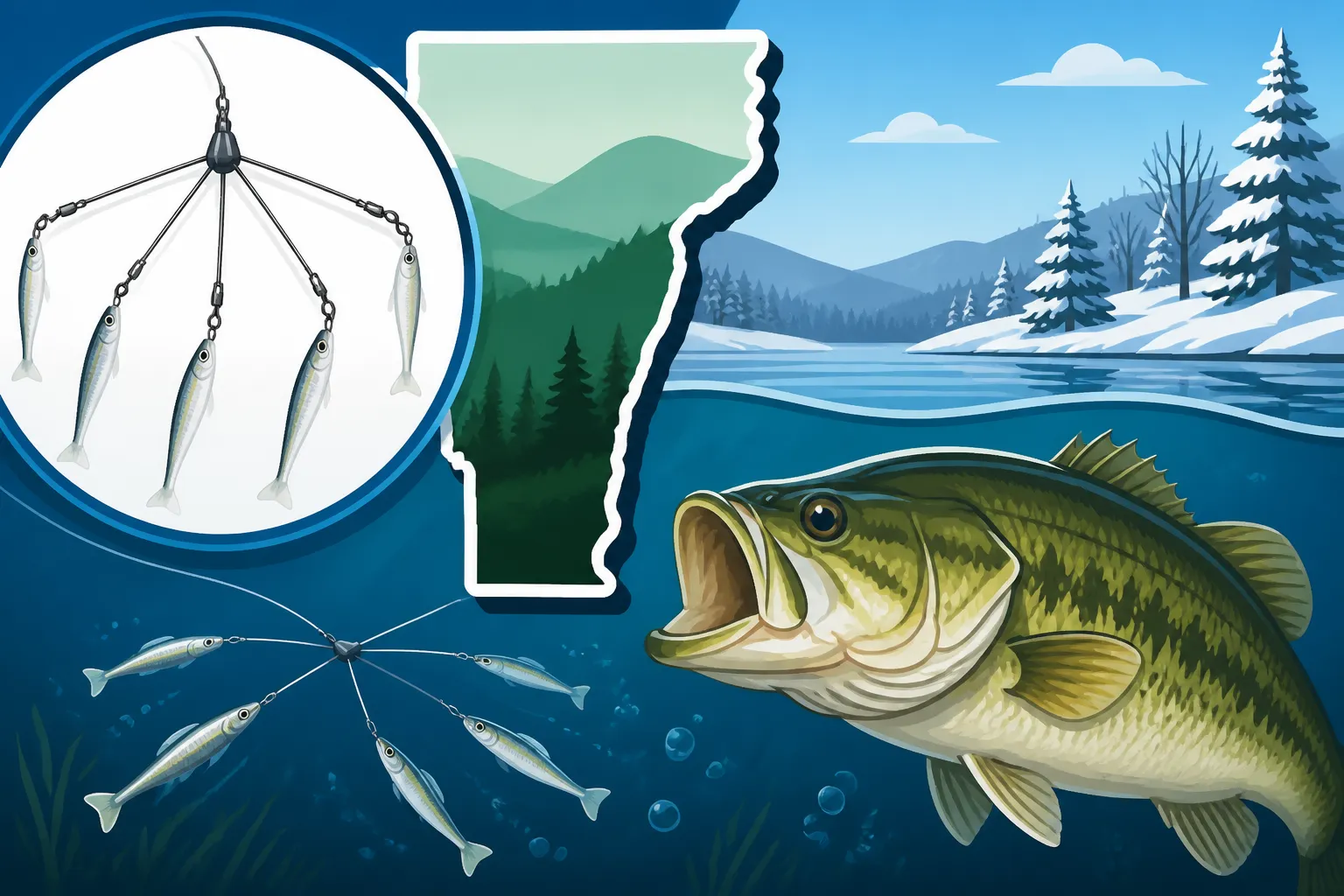
This is precisely where the umbrella rig shines in the winter. Instead of presenting a single bait, which might not be enough to tempt a sluggish bass, an umbrella rig offers a school of baitfish. Think about it: a bass sees five small shad or perch imitations swimming together. This visual presentation, often combined with subtle vibrations from blades, creates a compelling illusion of a vulnerable, easy-to-intercept school. A bass might not commit to chasing one minnow, but the instinct to strike at a concentrated school is much stronger, especially when it represents a significant caloric payoff. The sheer mass of the offering, coupled with its ability to be fished very slowly and deliberately, makes it an ideal tool for triggering reaction strikes from even the most finicky, cold-water bass. It effectively solves the problem of needing to present a large, attractive target that still moves slowly enough for a lethargic fish to intercept.
Deconstructing the Best Umbrella Rigs for Vermont Winter Bass
Not all umbrella rigs are created equal, especially when you're specifically targeting winter bass in Vermont. The nuances of rigging can make a significant difference in your success. You're looking for a setup that convincingly imitates a compact school of baitfish while being easy for sluggish bass to commit to.
Key Components of a Winter-Effective Umbrella Rig
When it comes to umbrella rigs for cold water, the devil is in the details. You want something that offers visual appeal without being overly bulky or difficult to retrieve slowly.
- Wire Gauge: Opt for rigs with a lighter wire gauge. Heavy, thick wires can make the rig too stiff, inhibiting the natural movement of your swimbaits. Lighter wires allow for more subtle action, which is crucial when bass are not actively chasing. Many quality rigs, like those you might find on Amazon or at Bass Pro Shops, offer varying wire strengths.
- Arm Count: While some A-rigs designed for saltwater or striper fishing might have six or more arms, for winter bass, a 3- to 5-arm rig is usually ideal. Fewer arms mean less resistance, allowing for a slower retrieve, and still effectively mimics a small school. A 5-arm rig is often the sweet spot, providing enough "fish" to be attractive without being cumbersome.
- Blade Type: Blades add flash and vibration, but in winter, less can sometimes be more. Small willow leaf blades offer a subtle flash without creating too much drag. Colorado blades produce more thump, which can be effective in stained water but might be overkill in clear, cold conditions. Some rigs have no blades at all, relying solely on the swimbait action, which can be great for a truly stealthy approach.
- Head Weight: The weight of the rig's head matters for getting down to the fish. You'll likely be targeting deeper water, so a rig with enough weight to reach those depths is important. However, too heavy a head can impede the natural movement of your swimbaits. Look for rigs with a ½ oz to 1 oz head, allowing you to use lighter jig heads on your individual swimbaits.
Swimbait Selection: Size, Color, and Action
The individual swimbaits you attach to your umbrella rig are just as critical as the rig itself. These are what the bass will actually strike, so they need to look and move right.
- Size: This is paramount for winter bass. Forget the oversized baits of summer. For cold water, smaller profiles are generally more effective. Think 2.5-inch to 3.5-inch swimbaits. These imitate smaller, more vulnerable baitfish that bass are likely to target when their metabolism is low. A good strategy is to put slightly larger baits (3.5 inch) on the hook points and smaller ones (2.5-3 inch) on the dummy arms to create a fleeing school look.
- Color: Water clarity often dictates color choice in winter. In clear Vermont waters, go for natural baitfish patterns like pearl, white, silver shiner, perch, or bluegill. If the water is stained or murky, perhaps due to snowmelt or heavy rains, brighter colors like chartreuse, white/chartreuse, or even a subtle glow can be more visible and provoke a strike. Always match the prevalent baitfish in the specific body of water you're fishing. For instance, if you know the lake has a strong population of yellow perch, a perch-patterned swimbait is a wise choice.
- Action: You want a swimbait with a subtle, tight tail kick. Avoid baits with wide, aggressive thumps that are designed for active fish. In cold water, bass prefer an easy meal, and a bait that looks like it's struggling or moving slowly is often more appealing. Many soft plastic swimbaits from brands like Keitech or Zoom offer this refined action.
Terminal Tackle: Jigs and Hooks
The individual jig heads and hooks used on your swimbaits are crucial for both presentation and hooking power.
- Jig Heads: For your individual swimbaits, use relatively light jig heads, typically 1/8 oz to 1/4 oz. These lighter weights allow the swimbaits to flutter and swim more naturally, even at very slow retrieve speeds. If your main umbrella rig head is heavy enough to get the rig down, you don't need heavy jig heads on each arm. Match the jig head size to your swimbait length for a balanced presentation.
- Hooks: Sharp, strong hooks are non-negotiable. Winter bass often "mouth" baits rather than inhaling them aggressively, so a sticky-sharp hook is essential for penetration. Ensure the hook size is appropriate for your swimbait, allowing the plastic to move freely without being overloaded. Many anglers prefer a good quality, strong wire jig hook to prevent flex and ensure solid hooksets on larger bass.
- Dummy Baits: Remember, many umbrella rigs have five arms, but only three are legal to put hooks on in Vermont if you're fishing for bass. The other two arms will feature "dummy baits" – swimbaits without hooks. These are still critical for completing the illusion of a school. Place these on the outer arms or in positions that enhance the overall look of a chasing fish. Make sure they match the size and color of your hooked baits for a seamless presentation. Always double-check Vermont Fishing Regulations Explained to be sure about hook limits.
Here's a quick comparison of common swimbait choices for winter umbrella rigs:
| Swimbait Brand/Type | Common Sizes (inches) | Primary Action | Ideal Water Clarity | Key Feature |
|---|---|---|---|---|
| Keitech Swing Impact Fat | 2.8, 3.3, 3.8 | Subtle Thump | Clear to Stained | Realistic profile, strong scent |
| Zoom Fat Albert Grub | 2, 3 | Subtle Curl Tail | Stained | Budget-friendly, good vibration |
| Berkley PowerBait Power Swimmer | 3, 3.3, 3.8 | Natural Kick | Clear to Stained | Scent-infused, durable |
| Yamamoto Zako | 3 | Finesse Kick | Clear | Soft plastic, great for slow retrieves |
Techniques for Fishing an Umbrella Rig in Vermont's Cold Waters
Having the right rig is only half the battle. Knowing how to present it effectively to cold, sluggish bass in Vermont's unique environment is where true mastery comes in. Winter fishing demands patience and a nuanced approach.
Locating Winter Bass Concentrations
Winter bass aren't everywhere; they concentrate in specific areas to conserve energy and find food. Your fish finder is your best friend here, helping you pinpoint these crucial spots. If you're looking for guidance on electronics, check out Best Fish Finders for Vermont Lakes.
- Deeper Breaks and Drop-offs: Bass will often relate to the deepest available structure near warmer pockets or current breaks. Look for sharp changes in depth, especially those that transition from shallow flats to deep water.
- Channel Swings: In larger lakes like Lake Champlain, river channels that wind through the lake bed create distinct edges and deeper pockets where bass will hold. A subtle bend or swing in the channel can be a prime ambush point.
- Main Lake Points: Points that extend into deeper water offer bass access to both shallow and deep zones without moving much. The deeper sides of these points can be excellent holding areas.
- Thermoclines (if present): While more common in summer, some deep, clear lakes might retain subtle thermoclines or distinct temperature layers that hold baitfish, and thus bass.
- Deep Structure: Submerged humps, rock piles, ledges, and timber in deeper water (20-40+ feet) are classic winter bass haunts. These provide cover and act as current breaks, allowing bass to conserve energy while waiting for prey. On a lake like Lake Champlain, understanding the deep structure is key to How to Catch Smallmouth Bass in Vermont Lakes.
Retrieval Strategies for Lethargic Bass
Once you've located some potential areas, your retrieve needs to be as subtle and enticing as possible. Remember, you're not trying to trigger a chase, but rather an opportunistic strike.
- Slow, Steady Retrieves: This is the golden rule for winter A-rigging. A painfully slow, deliberate retrieve is almost always the most effective. The goal is to keep the rig moving just enough for the swimbaits to flicker and undulate, mimicking a struggling school of baitfish.
- Subtle Pops and Pauses: Incorporate very slight rod twitches or short pauses into your retrieve. These mimic a baitfish school darting or faltering, often triggering a reaction bite. Don't overdo it; think gentle coaxing, not aggressive jerking.
- Maintain Bottom Contact or Just Above Structure: Bass in winter often hug the bottom or relate very tightly to cover. If you're fishing a deep ledge, try to keep your rig just above it or occasionally bump the bottom to stir up sediment, drawing attention.
- Vary Depth: Don't just cast and retrieve at one depth. Fan cast to cover different depths on a drop-off. Start by letting the rig sink all the way to the bottom, then slowly retrieve, allowing it to "walk" up the slope. Experiment until you find where the bass are holding.
Rod, Reel, and Line for Umbrella Rigging
Fishing an umbrella rig effectively requires a specialized setup that can handle the weight and torque of multiple baits, plus a potential struggle with a hefty bass.
- Rod: You'll want a heavy power, moderate-fast action baitcasting rod. A length of 7'6" to 8'0" is ideal. This length provides the leverage needed to cast the heavy rig and control a powerful fish, while the heavy power can handle the combined weight of the rig and multiple fish. The moderate-fast action gives you enough backbone for hooksets but also enough flex to absorb surges without pulling hooks. Look for specific A-rig rods or swimbait rods at a store like Bass Pro Shops.
- Reel: A high-capacity baitcasting reel with a robust drag system is essential. A gear ratio in the 5.X:1 to 6.X:1 range is perfect, as it encourages slower retrieves and offers more cranking power. You'll need plenty of line for long casts and battling fish that might make deep runs.
- Line: Fluorocarbon line is generally the top choice for umbrella rigs in cold, clear water. Its low visibility is crucial for wary bass, and its low stretch provides excellent sensitivity for detecting subtle bites, which are common in winter. A breaking strength of 15-20lb is a good starting point. Some anglers opt for braid with a fluorocarbon leader for maximum sensitivity and casting distance, but this can be more prone to tangles if not managed carefully. The abrasion resistance of fluorocarbon is also a huge plus when fishing around rocky structure.
Common Mistakes and Advanced Tips for Winter Success
Even with the right gear and basic techniques, there are pitfalls to avoid and extra steps you can take to elevate your winter umbrella rig game in Vermont.
Avoiding Common Pitfalls
It's easy to make mistakes that cost you bites when fishing such a specialized technique in challenging conditions.
- Too Fast a Retrieve: This is probably the most common error. Remember, bass are sluggish. If your retrieve is too fast, they won't even register the opportunity, or they'll simply decide it's not worth the energy. Slow it down. Slower. Even slower.
- Too Heavy a Rig: While you need weight to get deep, an overall rig that's too heavy can look unnatural, exhaust you, and be difficult to retrieve properly. Balance the head weight of the rig with the individual jig heads on your swimbaits.
- Wrong Bait Size or Color: Failing to adapt your swimbait size and color to the specific conditions and available forage is a surefire way to struggle. If the water is ultra-clear and cold, tiny, natural-colored baits are often best. If it's stained, a bit more flash or a brighter hue might be needed. For more on this, check out Best Lure Color for Muddy Water Bass Fishing.
- Ignoring Electronics: Blind casting for winter bass is a losing proposition. Use your sonar to identify bait balls, deep structure, and even individual fish. The umbrella rig is a search tool, but it's far more effective when you know where to search.
- Not Adjusting to Specific Conditions: Every winter day is different. A day after a big snowmelt might bring stained water, while a prolonged cold snap could push fish even deeper. Be prepared to adapt your retrieve speed, depth, and even swimbait choices. The principles outlined in Cold Front Fishing Tactics for Vermont Bass are particularly relevant here.
Rigging Variations and Customizations
Once you've got the basics down, don't be afraid to experiment with your umbrella rig to dial it in for specific conditions or fish preferences.
- Experiment with Swimbait Combinations: Try putting a slightly larger or different colored swimbait in the center position, or on your main hooked arms. This can create a "leader" or a standout bait in the school that bass might key on. For example, a slightly brighter yellow perch pattern in the middle surrounded by natural shad patterns on the other arms.
- Adding Scent: Bass in cold water rely heavily on their sense of smell. Applying a good quality bass scent to your swimbaits can make a big difference, especially if fish are just "nosing" the rig. Many anglers swear by a garlic-based scent or a baitfish-mimicking attractant.
- Varying Blade Colors/Absence: If your rig has interchangeable blades, try different colors like silver, gold, or even black nickel. In very clear water, sometimes no blades at all are best for a stealthy approach.
- Heavy Center Bait: Some anglers like to put a slightly heavier jig head on the center swimbait to give the rig a deeper keeling action and ensure it gets down quickly.
- Tuning the Arms: Before you even cast, make sure the arms of your umbrella rig are tuned correctly. They should spread out evenly and naturally, ensuring none of your swimbaits are fouled or running incorrectly. You can often find replacement arms and various rigging components on sites like Amazon or at your local Bass Pro Shops, allowing for endless customization.
- Practice Your Presentation: The key to an umbrella rig isn't just casting it out; it's about making it look alive. Practice in clear water if you can, or simply visualize how your school of baits is moving at different retrieve speeds. This will build your confidence and help you present the rig more effectively to those big winter bass.
When you master the umbrella rig for winter bass in Vermont, you open up a whole new world of cold-weather fishing opportunities. It's a method that consistently puts big fish in the boat when other techniques fail, proving that winter is far from a dead season for dedicated anglers.
Disclaimer
This article is for general informational purposes only and does not constitute professional advice. Laws, prices and regulations vary by location and change over time. Consult a qualified professional for guidance on your specific situation.