Best treble hook size for crankbaits
There's nothing quite as frustrating as feeling that solid thump of a fish hitting your crankbait, setting the hook, and then… nothing. Or worse, getting a fish boatside only for it to throw the hook right at the net. Often, anglers assume it's their technique or the fish's mood, but a frequently overlooked culprit is the size and quality of the treble hooks on your crankbaits. This guide is all about helping you unravel the mystery of treble hook sizing for your crankbaits, ensuring you're set up for success on Vermont's diverse waters, whether you're chasing bass, walleye, or even pike.
Understanding Treble Hook Sizing Systems
Before we dive into specific lures and fish, let's get a handle on how treble hooks are sized. It's not as intuitive as you might think, and once you understand the system, choosing the right hook becomes much clearer.
The Inverted Scale: What the Numbers Mean
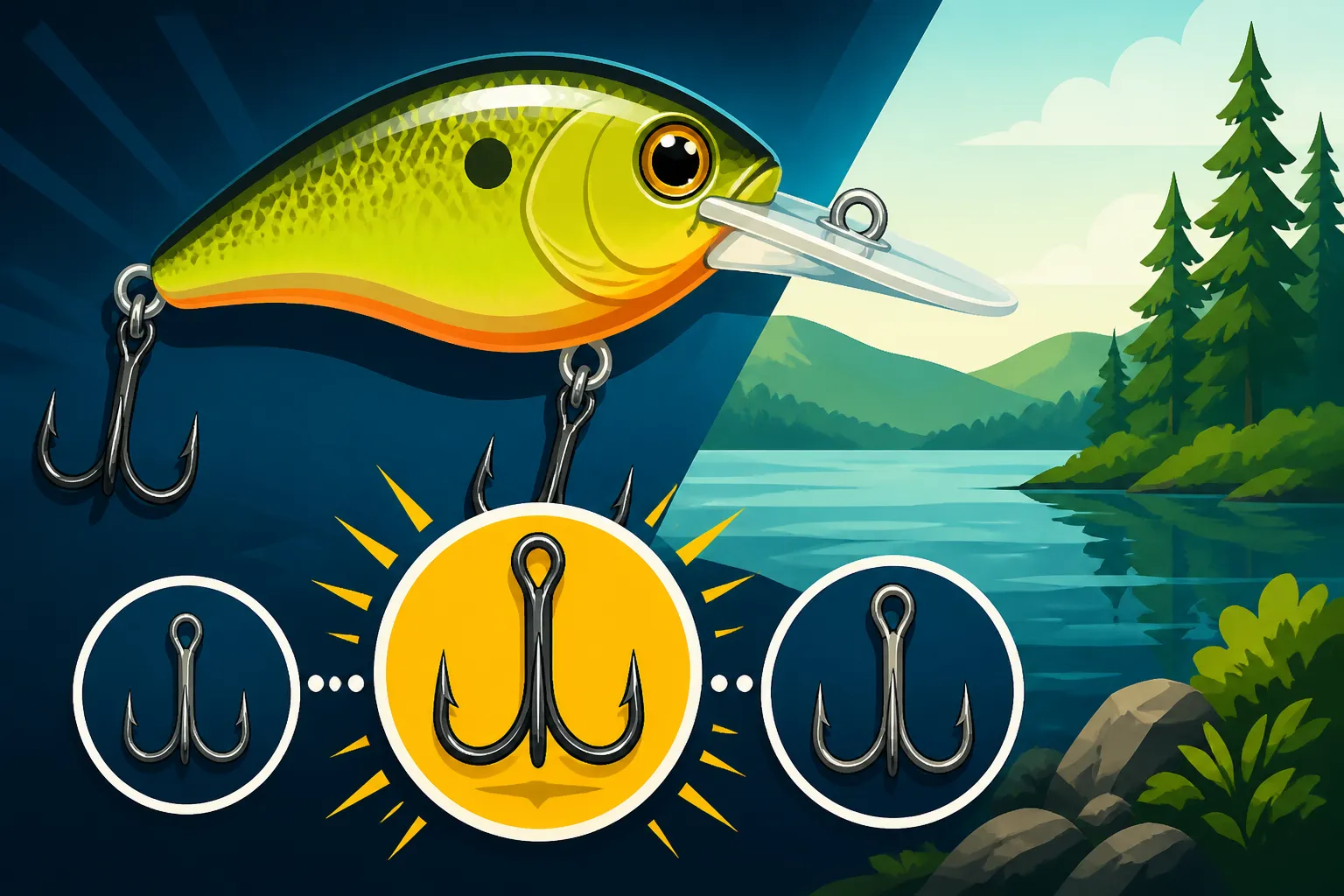
Here's the kicker: treble hook sizing works on an inverted scale. This means that as the number gets smaller, the hook actually gets larger. So, a size 2 hook is much bigger than a size 8 hook. This often throws off new anglers, or even seasoned ones who haven't paid much attention to the details. Think of it like a golf score – lower is better, or in this case, bigger. The smallest hooks you'll typically see for crankbaits might be a size 10 or 12, often found on tiny finesse crankbaits. On the flip side, larger crankbaits, especially those designed for big predatory fish, could sport hooks as large as a size 1 or even 1/0 (pronounced "one aught"). The "aught" sizes (1/0, 2/0, 3/0, etc.) follow the standard rule of thumb: the larger the number before the /0, the bigger the hook. A 3/0 hook is significantly larger than a 1/0. Understanding this fundamental system is your first step to making smart choices when upgrading or replacing hooks.
When you're perusing the aisles at your local tackle shop, or browsing for fishing gear on sites like Amazon, you'll see these numbers plastered on the hook packages. It’s vital to remember that a package marked "size 6" will contain hooks smaller than a package marked "size 4." Many anglers mistakenly grab larger numbers thinking they're getting bigger hooks, only to find them too small for their intended crankbaits. Always double-check before you buy, especially if you're replacing a specific hook and don't have the original handy for comparison. This inverted scale is consistent across most major hook manufacturers, so once you grasp it, you're good to go.
Why Manufacturer Hooks Aren't Always Optimal
Let's be real: most crankbaits come straight out of the box with hooks that are… adequate. Sometimes they're great, sometimes they're just okay. But rarely are they truly optimized for every fishing scenario or every angler's preference. Manufacturers often choose hooks based on cost, widespread appeal, and a general "good enough" standard rather than specific performance in niche conditions. For example, a crankbait designed for general bass fishing might come with hooks that are fine for open water, but quickly become a liability in the heavy weed beds or rocky bottoms common in many Vermont lakes.
Moreover, the quality of the steel, the sharpness of the point, and the durability of the hooks can vary wildly between brands and price points. A budget-friendly crankbait might have hooks that dull quickly, bend under pressure from a strong fish, or corrode after only a few uses, especially if you're fishing in slightly brackish water or not rinsing your gear diligently. High-quality aftermarket hooks, on the other hand, often feature chemically sharpened points, stronger wire, and more resistant coatings. Upgrading your hooks isn't just about size; it's about transforming a decent lure into a truly exceptional one, significantly increasing your hook-up ratio and reducing lost fish, which is priceless when you've finally found that perfect Vermont honey hole.
Key Factors Beyond Just Size
While size is crucial, it's far from the only factor to consider when selecting treble hooks. Think of it like this: you wouldn't buy a car just based on its length. You'd consider its engine, tires, and overall build. The same goes for hooks.
First, there's the wire gauge. This refers to the thickness of the wire used to make the hook. "Standard" wire is common, but you'll also find "light wire" and "heavy wire" options. Light wire hooks penetrate easily, which is great for fish with softer mouths or when using lighter tackle. However, they can bend out on larger, stronger fish or get snagged on heavy cover. Heavy wire hooks, conversely, are incredibly strong and resist bending, making them ideal for battling trophy fish or navigating snag-heavy areas. The trade-off is they might require more force to penetrate, and their added weight can subtly alter a crankbait's action.
Next, consider the hook point. Modern hooks boast a variety of point designs, from traditional needle points to cutting points, spear points, and even "sticky sharp" chemically sharpened points. A sharp point is non-negotiable – it's the difference between a solid hook-set and a frustrating swing-and-a-miss. Some points are designed to penetrate bone, while others are better for gripping soft tissue. Lastly, the bend of the hook plays a role. Different bends can provide better holding power, reduce fouling, or enhance bait presentation. A wider gap, for instance, can expose more of the hook point, leading to better hook-up ratios on certain retrieves. It’s a nuanced world, but paying attention to these details can elevate your fishing game, especially when chasing wary fish in clearer Vermont waters.
| Hook Feature | Description | Pros | Cons | Ideal Use Case |
|---|---|---|---|---|
| Size (e.g., #6 vs #2) | Smaller number = Larger hook. | Larger: Better holding power on big fish. | Larger: Can foul lure, reduce action, harder to set. | Matching natural bait size, fish mouth size, preventing throw-outs. |
| Wire Gauge (Light vs Heavy) | Thickness of the hook wire. | Light: Easy penetration, minimal lure impact. | Light: Can bend out on strong fish, prone to snags. | Finesse fishing, soft-mouthed fish, maximizing lure action. |
| Heavy: Strong, resists bending, good for power fishing. | Heavy: Harder penetration, can affect lure action/sink rate. | Big fish (pike, muskellunge), heavy cover, powerful hooksets. | ||
| Point Type (e.g., Needle, Cutting) | Design of the hook's piercing tip. | Needle: Excellent initial penetration. | Needle: Can dull faster, less "grip" than other styles. | General purpose, small-mouthed fish. |
| Cutting: Designed to slice through tough areas. | Cutting: Can cause more tissue damage, potentially slower to dull. | Tough-mouthed fish, situations where extra penetration is needed. | ||
| Bend (e.g., Round, Wide Gap) | Shape of the hook from shank to point. | Round: Standard, versatile, good for general use. | Round: Can sometimes lack optimal holding power on larger fish. | General crankbait use, good all-around performance. |
| Wide Gap: More exposed hook point, better holding power. | Wide Gap: Can snag more easily, potentially foul on casts. | Aggressive fish, better bite from the side, improving hook-up ratios. | ||
| Coating/Finish | Material protecting the hook from corrosion. | Black Nickel: Durable, less visible, good corrosion res. | Black Nickel: Can chip over time. | Most freshwater applications, general all-around. |
| Tin/Chrome: Bright, highly corrosion resistant. | Tin/Chrome: More visible, can deter wary fish. | Saltwater, dirty water, situations needing high visibility/attraction. |
Matching Treble Hooks to Crankbait Types for Vermont Fishing
Different crankbaits have different actions, profiles, and intended uses. It only makes sense that they'd require different considerations for their treble hooks. What works for a tiny shallow diver might be completely wrong for a deep-diving behemoth, especially when you factor in the unique challenges and opportunities of fishing in Vermont.
Shallow Divers and Squarebills
Shallow diving crankbaits and squarebills are the workhorses for fishing shallow cover – think fallen trees along the shore of Lake Bomoseen, rocky points in the Winooski River, or weed edges in a smaller pond. Their primary job is to deflect off obstacles, triggering reaction strikes. For these lures, maintaining their unique action is paramount.
Often, stock hooks on squarebills are a size #4 or #6. You generally don't want to go much larger, as this can impede the bait's erratic, "hunting" wobble. If the hooks are too large or heavy, the bait might lose its action, becoming less effective at deflecting and triggering those aggressive bites. When fishing in extremely heavy cover, like dense lily pads or thick submerged grass, some anglers might even downsize to a #6 or #8 light wire hook, not necessarily for better hook-ups, but to reduce snagging. The lighter wire can bend out of snags more easily, saving you lures, though you might sacrifice some holding power on bigger fish. Conversely, if you're fishing areas with fewer snags but expect larger fish, such as big smallmouth bass lurking around rocky shorelines on Lake Champlain, you might upgrade to a #4 or even a #2 heavy wire hook to prevent them from bending out. The key is finding that balance where the hook is strong enough for the fish you're after, but not so heavy or large that it kills the lure's action or becomes a constant snag magnet.
Medium to Deep Diving Crankbaits
When you're trying to reach those deeper contours, drop-offs, and submerged structures in larger bodies of water like Lake Champlain or Lake Willoughby, you're relying on medium to deep diving crankbaits. These lures are often retrieved with a steady pull, designed to get down to a specific depth and stay there. Hook size here becomes critical for both hook-up ratio and maintaining that desired diving depth and action.
Most medium to deep diving crankbaits come with #4 or #2 hooks. For deeper diving models, you might even see a #1. The general rule of thumb here is to stick with the stock hook size or go up one size at most. For instance, if your crankbait has #4s, consider trying #2s, especially if you're missing fish. However, be cautious not to add too much weight. Larger, heavier hooks can actually prevent your crankbait from reaching its advertised depth. They can also subtly alter the lure's swimming action, making it less appealing to fish. When chasing walleye on Lake Champlain, where they often hold to deeper structure, a strong, sharp #2 or #1 hook is essential to penetrate their bony mouths. How to Catch Walleye on Lake Champlain delves into the specific techniques, but hook choice is a fundamental part of that strategy. You also want to ensure the hooks are strong enough to handle potential encounters with larger fish like lake trout, which might occasionally hit a deep-diving crankbait intended for walleye.
Lipless Crankbaits and Jerkbaits
Lipless crankbaits and jerkbaits are in a category of their own, each with distinct actions and optimal hook considerations. Lipless crankbaits are often fished with a yo-yo retrieve, ripping them off the bottom or through grass, making them prone to fouling. Jerkbaits, on the other hand, are all about erratic, side-to-side darting action with pauses, and fish often hit them during these pauses.
For lipless crankbaits, common stock hook sizes range from #4 to #6. Because these lures are often retrieved aggressively and can pick up debris, reducing hook fouling is a big deal. Some anglers opt for slightly smaller, lighter wire hooks (e.g., #6 or #8) to minimize snagging on weeds, especially when fishing through dense vegetation common in many Vermont ponds. However, if you're fishing open water or targeting larger, more aggressive bass, upgrading to a #4 heavy wire hook can improve your landing ratio. The key is ensuring the hooks don't foul on themselves during the retrieve or on loose weeds. For jerkbaits, the erratic action is paramount. These lures often come with #6 or #4 hooks. Upgrading to a chemically sharpened hook of the same size is often the best approach here, as maintaining the lure's balance and precise darting action is critical. Adding heavier or larger hooks can completely throw off a jerkbait's carefully designed suspension or sink rate, ruining its effectiveness. For big smallmouth bass, especially during the colder months when jerkbaits shine, a sticky sharp #4 hook is typically the sweet spot. When upgrading, reputable hook brands like Gamakatsu, Owner, and VMC offer excellent options that maintain sharpness and strength.
Specialty Crankbaits for Specific Vermont Species
Beyond the general bass-centric crankbaits, there are specific lures designed for other Vermont species that have their own hook considerations. Thinking about pike, muskellunge, or even the occasional lake trout hitting a larger offering requires a different mindset.
For instance, when you're targeting the toothy critters like northern pike or muskellunge on Lake Memphremagog, you're dealing with immense power and sharp teeth. Standard hooks, even heavy wire ones, can be quickly bent or broken. Larger crankbaits designed for these species often come with hefty #1/0 or #2/0 hooks. Upgrading to the strongest, heaviest wire hooks available in these sizes is highly recommended. You'll often see specialized "X-strong" or "treble hook for predators" designations. These hooks are built to withstand the brute force of a big muskie and prevent them from bending out. Muskellunge Fishing on Lake Memphremagog highlights the need for robust tackle, and hooks are a critical component. Similarly, if you're using larger trolling crankbaits for lake trout in deeper Vermont lakes, you'll want incredibly strong and sharp hooks that can penetrate their tough, bony mouths and hold on during a deep-water fight. The focus shifts from subtle action to sheer power and durability.
Practical Considerations for Treble Hook Selection in Vermont
Choosing the right treble hook isn't just about matching it to the lure; it's also about understanding the environment you're fishing in and the species you're targeting. Vermont's waters offer a wide range of conditions, and being prepared means thinking critically about your tackle.
Targeting Specific Vermont Species and Their Mouths
The type of fish you're after significantly influences hook choice. Imagine the difference between a brook trout, a smallmouth bass, and a northern pike. Each has a distinct mouth structure and fighting style.
Smallmouth and Largemouth Bass: Both species have relatively tough, cartilaginous mouths. For these, a sharp, strong hook is key to ensure solid penetration. For largemouth, especially when fishing around heavy cover in ponds, a robust #4 or #2 heavy wire hook on a squarebill or shallow diver will help you get those fish out of the junk. For smallmouth, which often hit aggressively in open water on lakes like Champlain, a sticky sharp #4 or #2 on a jerkbait or medium diver will typically lead to excellent hook-up ratios. The wider gap on some hooks can also be beneficial for bass.
Walleye: These fish are known for their bony mouths, making hook penetration a challenge. How to Catch Walleye on Lake Champlain often emphasizes jigging or trolling, and with crankbaits, a super-sharp, fine-pointed hook (like a chemically sharpened #2 or #1) is crucial to find purchase. A dull hook on a walleye crankbait is a recipe for missed fish.
Northern Pike and Muskellunge: These are the apex predators of many Vermont waters, equipped with rows of needle-sharp teeth. They can crush and bend standard hooks with ease. For these species, "heavy wire" isn't enough; you need "extra heavy duty" hooks, often in larger sizes like #1/0 to #3/0. Their aggressive strikes and powerful runs demand hooks that will not fail. While hook size helps, the gauge of the wire is perhaps even more critical here.
Trout: If you're using small crankbaits for larger brown trout or rainbow trout in rivers like the White River, you'll want smaller hooks, perhaps #6 or #8, but still exceptionally sharp. Trout often have softer mouths than bass, so penetration isn't as much of an issue as holding power. Light wire hooks are generally suitable, but ensure they're strong enough for the size of trout you anticipate.
Water Conditions and Cover
Vermont's fishing landscape ranges from pristine, clear mountain streams to vast, weedy lakes and rocky riverbeds. Your hook choice should adapt to these conditions.
Heavy Cover (Weeds, Wood, Rocks): When fishing areas with dense aquatic vegetation or submerged timber, like many of the smaller ponds and some bays of larger lakes, snagging is a constant threat. Here, some anglers opt for slightly smaller hooks or light wire hooks (e.g., #6 or #8) on shallow-diving crankbaits. The rationale is that a lighter, smaller hook might bend out of a snag more easily, saving your valuable lure. The downside, of course, is that a bigger fish might straighten a light wire hook. Another tactic is to use "semi-barbless" hooks or slightly bent-down barbs to facilitate removal from snags, though this also makes it easier for fish to throw the hook.
Open Water: In open water, like across the vast expanses of Lake Champlain, where snags are less of a concern, you can afford to maximize your hook-up potential. This is where you might confidently upgrade to a heavier, stronger hook, or go up one size (e.g., from #4 to #2) to ensure better penetration and holding power. You're less worried about snagging and more focused on landing that trophy bass or walleye. Clear water also means fish can be warier, so a less intrusive, precisely sized hook that doesn't hinder the lure's natural action is crucial.
Turbid/Stained Water: In stained or muddy water, often seen after a heavy spring rain in rivers, fish might be less visually oriented and more aggressive. While hook size doesn't change dramatically, ensuring your hooks are exceptionally sharp is always critical. You might get more reaction strikes, and you want every opportunity to convert those into landed fish.
Balancing Lure Action and Hook Weight
This is a subtle but absolutely critical aspect of treble hook selection. Every crankbait is engineered to have a specific swimming action, a unique wobble, or a particular dive curve. These characteristics are painstakingly designed by the manufacturer and are often highly sensitive to minor changes in weight or balance.
Adding hooks that are too large or too heavy can completely ruin a crankbait's intended action. A suspending jerkbait, for instance, might suddenly sink slowly instead of hovering enticingly. A shallow diver might not wobble as erratically, or it might dive deeper than intended, causing it to constantly snag. Even a slight increase in hook size or wire gauge can throw off the lure's center of gravity, making it swim unnaturally. This is particularly true for high-performance crankbaits where every detail matters.
The best practice is often to stick with the same hook size as the original, but upgrade the quality (sharpness, wire strength, corrosion resistance). If you do decide to go up one hook size for better hook-up ratios, test the lure near your boat before casting it out. See how it swims. Does it still have that enticing wobble? Does it suspend or dive correctly? If the action is compromised, it's often better to revert to the original size or choose a lighter wire version of the larger hook, even if it means slightly less strength. It’s a delicate dance, but a perfectly tuned crankbait with optimal hooks will always outperform one that's out of balance.
Essential Hook Maintenance and Upgrades
Good hooks are an investment, and like any good investment, they need care. Ignoring your hooks is a surefire way to lose fish.
Sharpening: Even the best chemically sharpened hooks will eventually dull, especially after encountering rocks, wood, or even a few bony-mouthed fish. Carrying a small hook sharpener is non-negotiable. A few quick passes with a quality diamond file or ceramic sharpener can bring a dull point back to life, increasing your chances of a solid hook-set dramatically. Always check your points frequently throughout the day, especially after hitting cover or landing a fish.
Rust and Corrosion: While modern hooks are often coated for corrosion resistance, rust can still be an issue, particularly if you're fishing in varied conditions or simply not drying your tackle properly after use. Rusty hooks are weak hooks and dull hooks. Replace any hook showing signs of significant rust immediately. For anglers who fish frequently, having a stock of replacement hooks on hand, perhaps from Bass Pro Shops or other reliable sources, is a smart move.
Upgrading Stock Hooks: This is often the most impactful upgrade you can make to a crankbait. Many anglers, myself included, will immediately replace the factory hooks on new crankbaits with preferred aftermarket options. Brands like Owner, Gamakatsu, and VMC are popular choices known for their exceptional sharpness, strength, and durability. You'll likely find these options at any well-stocked tackle shop or online. Consider upgrading not just the size, but the specific hook point (e.g., a "sticky" sharp point) and wire gauge to match your target species and fishing style in Vermont. It's a small investment that pays huge dividends in landed fish.
Common Mistakes and Advanced Tips for Treble Hooks
Even with a good understanding of hooks, it's easy to fall into common traps or overlook subtle nuances. Let's cover some advanced considerations and common pitfalls.
The Danger of Oversizing and Undersizing
Getting the hook size wrong can be detrimental to your fishing success. It's a delicate balance that impacts everything from lure action to hook-up ratios and fish mortality.
Oversizing: Putting hooks that are too large on a crankbait is a common mistake. As discussed, it can severely impede the lure's action, making it swim unnaturally or even foul on itself. Imagine a small diving crankbait designed to wiggle subtly; oversized hooks might make it roll or dive too deep, completely changing its profile in the water. Furthermore, oversized hooks can be harder to penetrate, as they require more force to drive into a fish's mouth. If you're fishing for species like trout or panfish with smaller mouths, an oversized hook can simply be too big to fit, leading to missed bites. In Vermont, where you might be targeting diverse species in the same water, this is especially important. For example, a crankbait for Vermont Bass Minimum Length Limits might inadvertently catch a smaller panfish, and an oversized hook could make it difficult to unhook safely.
Undersizing: Conversely, using hooks that are too small or too light-wired is equally problematic. While smaller hooks can aid in lure action and snag resistance, they lack the necessary gap and strength to hold larger, more powerful fish. A big smallmouth bass or a feisty pike can easily bend out or break a light wire hook that's too small for its mouth, leading to heartbreaking losses. Undersized hooks also offer less holding power once a fish is hooked, increasing the chances of the fish throwing the hook during the fight, especially if it jumps or makes strong runs. Always consider the potential size of the fish you might encounter in a particular Vermont waterway and size your hooks accordingly, erring on the side of slightly stronger if unsure.
Staggering Hooks and Addressing Hook Fouling
When a crankbait has two or three treble hooks, there's always the potential for them to tangle or "foul" during the cast or retrieve. This is especially true with aggressive retrieves or when fishing in windy conditions. Hook fouling means your lure isn't swimming correctly, and it's practically impossible to get a bite.
One common solution is staggering the hooks. This involves having one hook slightly larger or smaller than the other, or simply oriented differently. For many crankbaits with two trebles, the general practice is to keep the front hook the same size or slightly larger, and the rear hook the same size or slightly smaller. This slight difference can prevent the hooks from tangling with each other. For example, on a crankbait that comes with two #4 hooks, you might put a #4 on the front and a #6 on the back. Another trick is to orient the hooks so that their points face the body of the lure, or away from each other, reducing the chance of them locking together. Sometimes, simply using a split ring on both the front and back hook hangers can provide enough articulation to prevent tangles. When you're constantly casting and retrieving, as you would when using Best Crankbaits for Vermont Smallmouth Bass, minimizing fouling saves you time and frustration.
Brand Recommendations and Where to Buy
When it comes to upgrading or replacing treble hooks, not all brands are created equal. Investing in quality hooks is a non-negotiable step for serious anglers.
Several reputable brands consistently produce top-tier treble hooks that anglers trust. Owner hooks are renowned for their exceptional sharpness, strength, and durable coatings. Their ST-36 and ST-41 models are popular choices for a wide range of crankbaits. Gamakatsu hooks are another angler favorite, known for their sticky sharp points and robust construction; their EWG (Extra Wide Gap) trebles are particularly effective for bass. VMC offers a wide array of options, including their Spark Point and Permasteel series, which provide excellent penetration and corrosion resistance. They also have specific offerings like short-shank trebles that can be very useful for certain lure body styles. Daiichi and Mustad also produce quality treble hooks that are worth considering, often at a slightly more accessible price point without sacrificing too much quality.
You can find these high-quality hooks at virtually any dedicated fishing tackle shop, but for the widest selection and often competitive pricing, online retailers are a great resource. Platforms like Amazon offer a massive selection of hook brands, sizes, and styles, making it easy to find exactly what you need. Specialty fishing retailers like Bass Pro Shops also have a comprehensive online presence and physical stores where you can get hands-on advice and see the hooks up close. Having a trusted source for your replacement hooks means you're never left in a bind when a favorite crankbait needs a refresh.
Carrying a Treble Hook Kit
For the avid angler, particularly those who venture out frequently on diverse Vermont waters, a dedicated treble hook kit is an absolute game-changer. You never know when a hook might get bent, dulled beyond repair, or simply need to be swapped out for different conditions.
Your kit should be more than just a random assortment of hooks. Organize it by size and perhaps by wire gauge. Include a range of common sizes: #8, #6, #4, #2, and maybe a #1 or even 1/0 for larger baits or species like pike. Having both standard and heavy wire options for your most used sizes will cover most situations. Don't forget a few extra split rings in various sizes, as these are often needed when replacing hooks. A good pair of split ring pliers is essential for quick and easy swaps, saving your fingernails and your sanity. You'll also want to include a high-quality hook sharpener. Pack this kit in a small, waterproof tackle box or a dedicated compartment in your main tackle bag. This way, whether you're bank fishing a small pond or trolling the vastness of Lake Champlain, you'll be prepared to optimize your crankbaits on the fly and ensure you're always fishing with the best possible setup. This preparation can truly make the difference between a frustrating day and a memorable one out on the water.
Disclaimer
This article is for general informational purposes only and does not constitute professional advice. Laws, prices and regulations vary by location and change over time. Consult a qualified professional for guidance on your specific situation.