Best line color for clear lake water
One of the most frustrating things about fishing Vermont's famously clear lakes and rivers is watching a wary fish dart away, spooked by your fishing line. It’s a common scenario, and it can really dampen a beautiful day on the water. We've all been there, casting perfectly, only for that prize smallmouth or elusive trout to give your offering a wide berth because they spotted your line. This guide is all about tackling that exact problem, helping you understand how fish see your line in clear water and providing actionable advice on choosing the best line colors and materials to fool even the most cautious fish.
Understanding Line Visibility in Clear Water
When you're out on a pristine Vermont lake, like Lake Willoughby or a crystal-clear stretch of the Battenkill River, the water often looks so transparent you might think nothing could be seen beneath the surface. However, fish have a completely different perspective than we do from above the water. What looks clear to us can still present a stark contrast for them, especially when light is playing tricks.
Why Clear Water Fishing is Tricky
Clear water fishing poses a unique challenge because light penetrates deeply, making your line, lures, and even your movements much more visible to fish. Unlike murky or stained water where objects are obscured, clear water acts like a magnifying glass for our mistakes. Fish in these environments often rely heavily on their eyesight, developing a keen sense for anything out of place. This means that if your line stands out against the natural surroundings, whether it's the sky above or the lakebed below, you're significantly reducing your chances of a bite. It's not just about color; it's about the entire package – diameter, material, and how it refracts light.
The Science of Light Refraction and Fish Vision
Fish don't see the world in the same way humans do. Their eyes are adapted for an aquatic environment, and they perceive light differently as it passes through water. Light bends, or refracts, when it enters water, which can make objects appear distorted or in a different location than they actually are. Different line materials and colors refract light in varying ways.
For example, a bright, opaque line might catch and reflect sunlight in a way that makes it shine like a beacon to a fish. Conversely, a line that absorbs light or allows it to pass through with minimal distortion can blend in much better. Many fish also have a wider field of vision than humans, and some species, like trout, are known to have excellent color vision, especially in the blue and green spectrums that penetrate water best. This means that a line color that seems camouflaged on land might glow vividly underwater if it doesn't match the ambient light conditions or the water's natural tint. Understanding this aquatic optics is key to making an informed choice.
The Primary Goal: Making Your Line as Invisible as Possible
Ultimately, your mission in clear water is to minimize your line's visual signature as much as possible. This isn't just about picking a "clear" line, as even clear lines can be quite visible depending on light conditions and background. It's about reducing contrast against the environment. Think about a bird in the sky; it's a dark silhouette against a bright background. Now imagine that same bird, but if it were somehow transparent. That's the effect you're trying to achieve with your fishing line.
You want your line to disappear into the background, whether that's the blue of the sky reflected on the surface, the greens and browns of submerged vegetation, or the dark depths. This involves not only choosing the right color but also considering the line's material, its diameter, and how you present it. Every little bit of "invisibility" helps, especially when targeting finicky fish in places like Lake Champlain's clear spots or those gorgeous small mountain ponds.
Top Line Colors and Materials for Clear Vermont Lakes
When you're fishing Vermont's sparkling clear waters, your choice of line material and color can be the difference between a fantastic day of catching and a frustrating day of watching fish turn their noses up. It’s not a one-size-fits-all situation, but there are definitely some proven performers that anglers rely on when visibility is high.
Fluorocarbon: The Gold Standard
If there's one material that truly shines in clear water, it's fluorocarbon. This isn't just hype; there's a real scientific reason for its effectiveness. Fluorocarbon has a refractive index that's very close to that of water. What does that mean in plain English? It means light passes through it with minimal bending, making it much less visible underwater compared to traditional monofilament. It essentially becomes almost transparent to fish.
Beyond its invisibility, fluorocarbon offers other advantages. It's much more abrasion-resistant than mono, which is great when fishing around rocky bottoms or submerged timber often found in lakes like Lake Bomoseen. It also has less stretch, providing excellent sensitivity, allowing you to feel even the most subtle bites. The main drawback is typically its cost and stiffness compared to mono, but for leaders in clear water, it's usually worth the investment. You can find excellent options from brands like Seaguar or Berkley, often available at local bait shops or online retailers like Bass Pro Shops and Amazon. When considering Best Fluorocarbon Line for Clear Lake Water, remember that its low visibility is its superpower.
Monofilament: Specific Clear or Low-Vis Tints
While fluorocarbon is fantastic, traditional monofilament still has a place, especially as a main line. The key is to be very selective with your color choice. "Clear" monofilament is often the go-to, and for good reason—it lacks pigments that might stand out. However, even clear mono can be visible, especially if it's thicker or reflects sunlight in a harsh way.
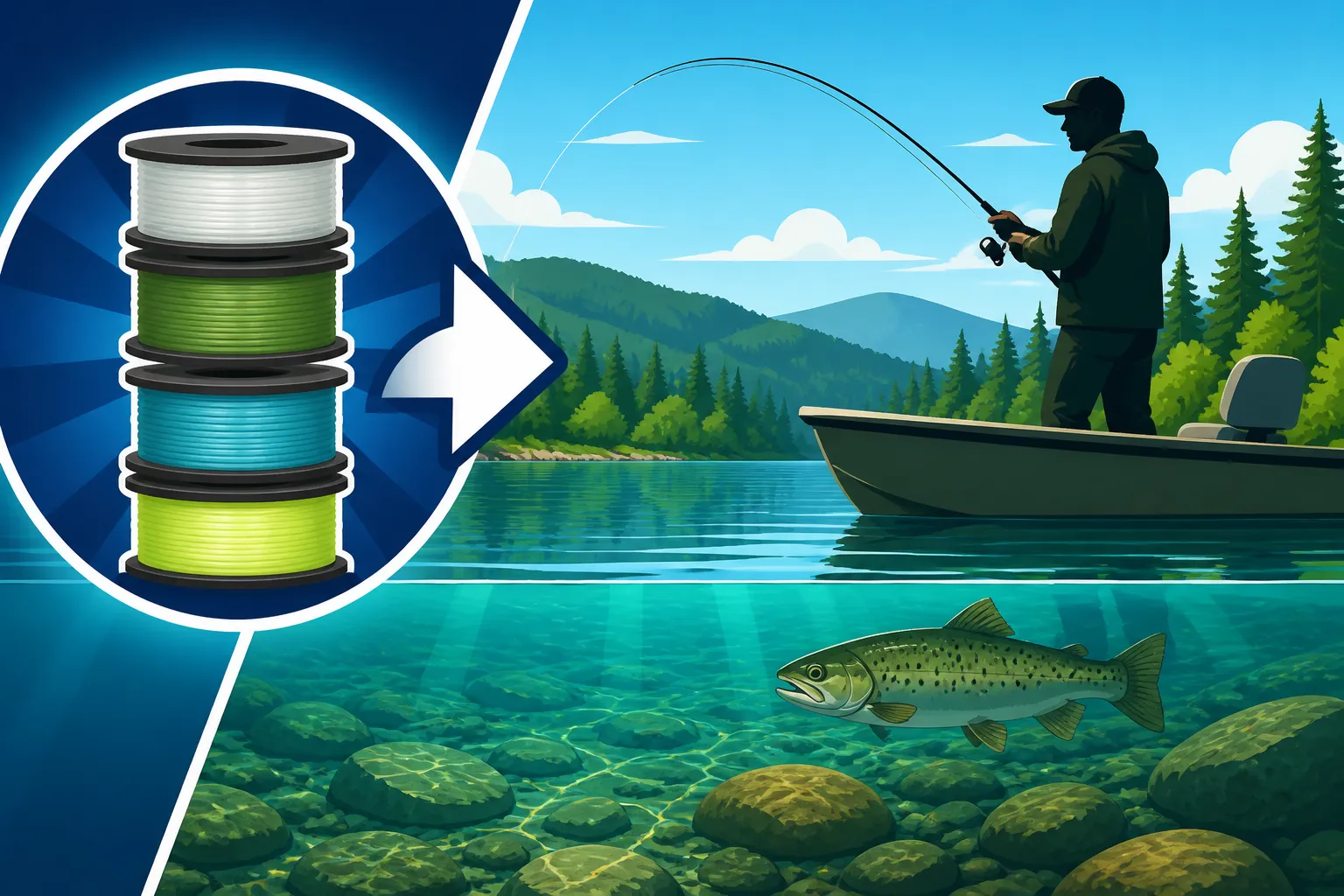
Beyond clear, some manufacturers offer "low-visibility" green or blue tints. A light green, often called "moss green" or "aquatic green," can blend beautifully with submerged vegetation, especially in shallower areas of lakes or along riverbanks. A light blue or "smoke" color can disappear effectively when fishing open water, mimicking the blue of the sky or the deeper, bluer hues of the lake. The trick is to match the dominant background color as much as possible. For instance, fishing a clear pond with lots of lily pads and weeds might call for a light green, while casting in the middle of Lake Champlain might favor clear or light blue. Brands like Stren or Trilene offer various low-vis monofilament lines that can be quite effective when fishing for trout or panfish.
Braided Line: When and How to Use It with a Leader
Braided line is incredibly strong for its diameter, offers zero stretch for unparalleled sensitivity, and casts like a dream. But in clear water, its inherent opacity and often vibrant colors make it a huge no-no directly tied to your lure. Fish will see it coming from a mile away.
This doesn't mean you should abandon braid entirely; it simply means you need to use it intelligently. The solution is always to pair braided line with a leader, and this is where fluorocarbon truly shines. You tie a short section of fluorocarbon (typically 4-10 feet, but sometimes longer depending on conditions) to the end of your braided mainline. This creates a nearly invisible connection to your lure or bait, giving you all the benefits of braid (strength, sensitivity, casting distance) while presenting a subtle, clear connection to the fish. This setup is particularly effective when How to Catch Smallmouth Bass in Vermont Lakes in clear water, allowing you to feel every bump and tap without spooking the fish. Many anglers rely on this technique for walleye on Lake Champlain as well, using braid as their main line for better sensitivity to detect subtle bites. This combination of braid and a fluorocarbon leader is a powerful tool in any clear water angler's arsenal.
Situational Line Color Choices: Matching Conditions
Choosing the perfect line color isn't just about picking one "clear" option; it's about adapting to the ever-changing conditions on the water. What works wonders on a bright, sunny afternoon might be totally wrong on an overcast day or in different depths. Becoming a savvy angler means learning to read the environment and adjust your gear accordingly.
Sunny vs. Cloudy Days
The amount of light penetrating the water has a huge impact on how visible your line appears.
- Sunny Days: On bright, sunny days, light penetrates deeply into the water. This can make even "clear" lines visible if they catch and reflect the sun's rays. In these conditions, lines with a refractive index closer to water, like fluorocarbon, are paramount. If using monofilament, stick to genuinely clear or very subtle light blue/smoke colors that blend with the overhead sky or deep water. Avoid anything with a sheen or a bright, opaque color. A shorter, even more invisible leader is also critical. Best Lures for Walleye Trolling on Lake Champlain on a sunny day might be rendered useless if attached to a line that's too obvious.
- Cloudy Days: When the sky is overcast, the light is diffused, and the overall brightness underwater is reduced. This can make your line less visible in general, offering a bit more leeway. A light green or even a very light, almost translucent brown monofilament might blend in better with darker, subdued backgrounds, especially near vegetation or bottom structures. While fluorocarbon is still a great choice for leaders, you might get away with slightly less extreme measures on your mainline compared to bright conditions. However, "less visible" doesn't mean "invisible," so caution is still key.
Deep vs. Shallow Water
The depth you're fishing also dictates how your line interacts with light and background elements.
- Shallow Water: In shallow areas, especially those with visible bottom structure like rocks, sand, or weeds, your line will be silhouetted against whatever is behind it. If you're fishing over a sandy bottom, a clear or very light tan/brown line might blend well. Over dark weeds, a light green could be effective. However, very shallow water (just a few feet) means fish have a clearer view of the surface and anything breaking it. This is where fluorocarbon leaders are absolutely indispensable, and thinner diameters will pay dividends. This is often the case when Spring Trout Fishing Techniques for Vermont Streams where you're casting into relatively shallow runs.
- Deep Water: In deeper water, light penetration is significantly reduced, and colors begin to disappear from the spectrum. Red is the first color to vanish, followed by orange, yellow, green, and finally blue. In truly deep water, most colors appear gray or black. This means that a clear or light blue/smoke colored line will typically blend in best. However, for deep jigging or trolling, the sheer length of line in the water means that even a slightly visible line can potentially spook fish if they approach it from a distance. Again, fluorocarbon's low visibility shines here. The main concern in deep water is often line twist or abrasion, so ensure your line is well-maintained regardless of color.
Fishing for Different Species
Different fish species have varying levels of visual acuity and habits, influencing your line choice.
- Trout: Vermont's trout, especially wild brook trout and educated brown trout in clear streams like the Winooski River, are notoriously wary. They have excellent eyesight and are quick to spook. For these fish, absolute minimal visibility is critical. Thin fluorocarbon leaders are a must, often paired with a light-colored or clear monofilament mainline. Fly fishermen specifically pay extreme attention to their tippet material, often going to incredibly light diameters and fluorocarbon to fool these discerning fish. When you're choosing Best Gear for Vermont Trout Fishing, remember line visibility is paramount.
- Bass (Smallmouth & Largemouth): Smallmouth bass, particularly in clear lakes like Lake Champlain or Lake Memphremagog, can be quite line-shy. They often feed by sight. A clear fluorocarbon leader on a braided mainline is a popular and effective choice for presenting lures without detection. Largemouth bass, while often found in weedier, slightly less clear water, can still be spooked by heavy, visible line. In clearer ponds, the same principles apply: keep it as invisible as possible. Best Tackle for Vermont Smallmouth Bass will almost always include a focus on low-visibility line options.
- Walleye: Walleye are known for their excellent low-light vision, but they can still be line-shy in clear conditions. They often hunt in deeper water or during dawn/dusk, but if you're fishing clear areas on Lake Champlain, a clear or very light blue fluorocarbon leader is highly recommended, especially when jigging or trolling. Their keen eyes will pick up on anything unnatural.
Practical Tips for Choosing and Using Low-Visibility Line
Beyond just picking a color, there are several practical considerations and techniques that can further enhance your "line stealth" and improve your catch rate in Vermont's clear waters. It's about combining the right gear with smart angling practices.
The Importance of Leaders
We've touched on this a bit already, but the concept of a leader is so crucial in clear water that it deserves its own spotlight. A leader is a shorter section of line, typically 2 to 10 feet (or sometimes much longer for specific techniques), tied to the end of your main line, with your lure or bait attached to its end.
- Fluorocarbon as a Leader Material: This is almost always the best choice for a leader in clear water due to its low visibility. It allows you to use a stronger, more abrasion-resistant, or more sensitive main line (like braid) while still presenting a virtually invisible connection to the fish. The length of your leader can vary; in extremely clear and calm conditions, a longer leader (6-10 feet) might be beneficial, while in stained water or when casting heavy lures, a shorter leader (2-3 feet) is often sufficient.
- Tying Knots: The strength of your connection depends on your knot. Learning reliable knots for connecting different line types is essential. Knots like the FG knot, Alberto knot, or uni-to-uni knot are popular for connecting braid to fluorocarbon leaders. Practicing these knots at home, perhaps while watching a YouTube tutorial, will save you a lot of frustration on the water and ensure your invisible leader stays connected when that big fish hits.
Line Diameter Matters
Even if you choose the "perfect" color or material, a line that's too thick will be more visible than a thinner one. Think about it: a thick rope is easier to see than a thin thread, even if they're the same color.
- Trade-off Between Strength and Visibility: There's always a balance. You want a line strong enough to handle the fish you're targeting and the cover you're fishing in, but as thin as possible to maintain invisibility. For instance, if you're targeting panfish in a clear pond, you might get away with 4-6 pound test line, which is incredibly thin. But for larger smallmouth bass or lake trout, you might need 8-12 pound test or even heavier, where the low-visibility properties of fluorocarbon become even more critical.
- Matching the Hatch (Line Edition): Just as you try to match the size of your lure to the local baitfish, you should try to match your line diameter to the fish's wariness and the water clarity. If you can comfortably land fish on a lighter line, do it. It will increase your bites.
Maintenance and Inspection
Even the best low-visibility line won't perform if it's damaged or old.
- Regular Inspection: Constantly check your line for nicks, abrasions, or kinks, especially the last few feet near your lure. Running your fingers along the line can help you feel imperfections. These weak points not only compromise strength but can also make the line more visible as they distort light. If you feel any rough spots, cut off a few feet and re-tie your leader or lure. This is crucial for all line types, whether you picked it up at Bass Pro Shops or ordered it from Amazon.
- Storage and Lifespan: UV light and heat can degrade fishing line over time, making it brittle and more visible. Store your spare spools of line in a cool, dark place. Fluorocarbon, while more resistant to UV than monofilament, still benefits from proper storage. Monofilament, in particular, has a shorter shelf life and should ideally be replaced on your reels every season or two, depending on how often you fish. Braid is more durable but still benefits from checking the leader connection points.
By paying close attention to these details – the type of line, its color, its diameter, and how you maintain it – you'll significantly increase your chances of fooling those discerning fish in Vermont's beautiful, clear waters. It's all part of the angling challenge and ultimately makes the successes even more rewarding.
| Line Type | Typical Visibility in Clear Water | Key Benefits | Best Use Case |
|---|---|---|---|
| Fluorocarbon | Very Low (Invisible) | Matches water's refractive index, abrasion-resistant, sensitive | Leaders for all clear water fishing |
| Monofilament | Low (Clear/Light Blue/Green) | Good knot strength, shock absorption, affordable | Main line in moderately clear water, some leaders |
| Braided Line | High (Opaque/Bright) | Extreme strength, zero stretch, casting distance | Main line with a fluorocarbon leader for sensitivity |
Disclaimer
This article is for general informational purposes only and does not constitute professional advice. Laws, prices and regulations vary by location and change over time. Consult a qualified professional for guidance on your specific situation.