Best Kayak for Lake Champlain
Heading out onto Lake Champlain in a kayak is an experience unlike any other in Vermont. The sheer scale of the lake, with its vast open waters, sudden weather shifts, and deep, diverse fishing grounds, can feel daunting if you're not properly equipped. This guide is all about helping you navigate the complexities of choosing the absolute best kayak for fishing these iconic waters, ensuring you're safe, comfortable, and ready to tackle whatever the lake throws at you.
Understanding Lake Champlain's Unique Demands for Kayak Anglers
Before you even start looking at specific kayak models, it's crucial to wrap your head around what makes Lake Champlain such a unique and, at times, challenging environment for kayak fishing. This isn't your average calm pond or sleepy river; Champlain is a serious body of water that demands respect and the right gear to match.
The Wind and Waves Factor on a Large Lake
One of the biggest realities of Lake Champlain is its unpredictable nature, particularly when it comes to wind and waves. A calm morning can turn into a choppy whitecapping nightmare in a matter of minutes, especially if you're out in the broader, more exposed sections. This isn't just a matter of getting wet; it's a safety concern. Smaller, less stable kayaks can be easily swamped or become incredibly difficult to control when strong winds kick up a chop or even significant waves.
Imagine you're targeting smallmouth bass on a rocky point off Burlington, and a sudden squall rolls in. A low-profile, narrow touring kayak might be great for speed in calm water, but when those waves start breaking over the bow, you'll wish you had something wider, with more freeboard, and designed for stability. This inherent instability not only makes paddling a chore but also severely impacts your ability to cast, retrieve, and land fish effectively. A kayak that tracks well in a straight line but struggles in crosswinds or heavy chop is simply not suitable for the open expanse of Lake Champlain.
Navigating Open Water vs. Sheltered Bays
Lake Champlain offers an incredible variety of fishing environments, from vast open-water expanses to intricate, sheltered bays and river mouths. Your kayak choice needs to reflect this diversity, or at least be optimized for the types of water you plan to fish most often. If your dream is to chase walleye or lake trout in the deeper, more exposed sections, you'll need a different vessel than someone who primarily plans to explore the shallow, weedy coves of Missisquoi Bay for largemouth bass.
The open water demands a kayak with good hull speed, excellent tracking, and enough volume to handle significant waves without feeling precarious. You'll often cover greater distances, so paddling efficiency is key. Conversely, fishing tighter, more confined areas, like the marshy edges or tight river bends feeding into the lake, benefits from a more maneuverable kayak that can turn quickly and slip into tight spots. While one kayak can't be perfect for every single scenario on Champlain, understanding your primary targets will guide you toward a compromise that offers the best overall experience. Think about where you expect to spend most of your time; are you a big-water hunter or a secluded cove explorer?
Diverse Fishing Opportunities Requiring Versatility
Lake Champlain is a veritable smorgasbord for anglers. You can target trophy lake trout in deep basins, smallmouth bass on rocky shoals, largemouth bass in weedy bays, northern pike in river deltas, and even landlocked salmon or walleye in various locations. This incredible diversity means your kayak needs to be versatile enough to accommodate different fishing styles and the gear that goes with them. Lake Champlain Fishing Guide offers a great overview of these opportunities.
One day you might be trolling deep for salmon, requiring rod holders, possibly a fish finder, and stability for managing a spread of lines. The next, you might be sight-fishing for bass in clear, shallow water, needing a stable platform to stand and cast, or ample deck space for tackle organization. The ideal Lake Champlain fishing kayak isn't just a boat; it's a mobile fishing platform. It needs to have enough space for multiple rods, a tackle box, a cooler for your catch or lunch, and perhaps even a small anchor or shallow water anchor system. Without these considerations, you'll constantly feel limited by your craft, leading to frustration rather than the joy of a successful day on the water.
Types of Fishing Kayaks Best Suited for Large Lakes
When you start diving into the world of fishing kayaks, you'll quickly realize there's a huge spectrum of designs, each with its own strengths and weaknesses. For a body of water as expansive and dynamic as Lake Champlain, certain types of kayaks inherently offer more advantages.
Sit-on-Top for Stability and Space
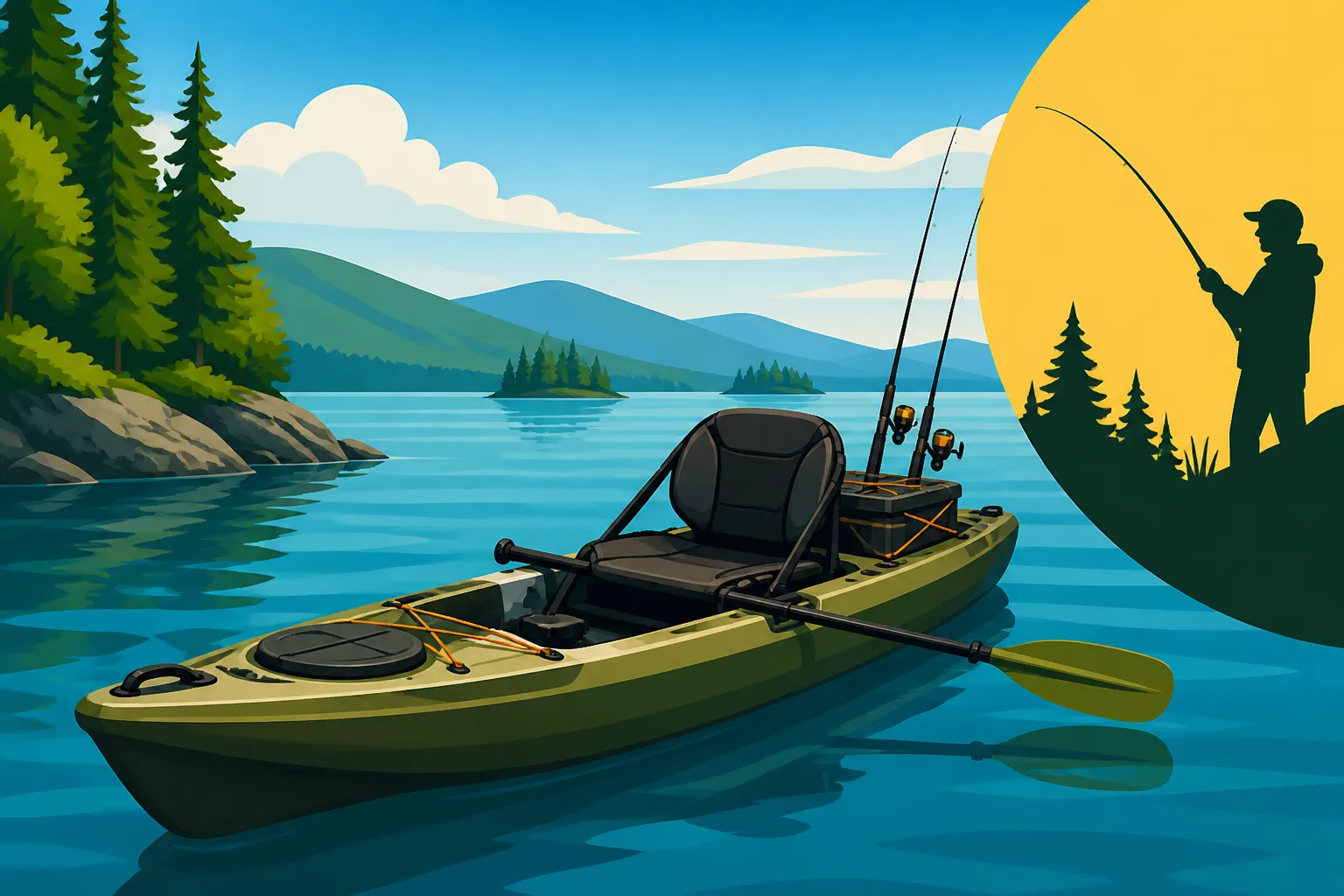
For most kayak anglers on Lake Champlain, a sit-on-top (SOT) kayak is the gold standard, and for good reason. Unlike traditional sit-inside kayaks, SOTs are incredibly stable, largely due to their wider hulls and a lower center of gravity. This stability is absolutely critical on a large lake where conditions can change rapidly. You'll feel much more secure paddling through chop, landing a big fish, or even standing up to cast, which is a game-changer for visibility and casting angles.
Beyond stability, SOT kayaks offer unmatched open deck space. This means more room for your gear – multiple rods, a tackle crate, a cooler, and even a fish finder. The scupper holes allow water to drain quickly, so if a wave does crash over the bow, you're not sitting in a puddle for long. Many modern fishing SOTs also feature integrated track systems, flush-mount rod holders, and storage hatches, making them highly customizable. Brands widely available at retailers like Bass Pro Shops often specialize in robust sit-on-top designs, perfect for a lake of Champlain's size. While they might be a bit slower than a sleek touring kayak, the trade-off in stability, comfort, and rigging capacity is usually well worth it for serious anglers.
Pedal Drive for Hands-Free Angling
For many seasoned Lake Champlain kayak anglers, the pedal drive system has become a non-negotiable feature. Imagine being able to propel your kayak forward with your legs, leaving your hands completely free to cast, reel, adjust tackle, or even take a sip of coffee. This hands-free operation is a huge advantage, especially when trolling for walleye or landlocked salmon, or when trying to stay on a school of active smallmouth bass while battling a crosswind.
Pedal kayaks, like those from popular brands you might find on Amazon, use a system of pedals connected to either a propeller or a set of fins (like a mirage drive) to move the boat through the water. They are generally wider and more stable to accommodate the drive system and often come packed with fishing-specific features. While they tend to be heavier and more expensive than traditional paddle kayaks, the efficiency and freedom they offer on a large lake can significantly enhance your fishing experience. The ability to maintain speed and direction while actively fishing allows you to cover more water, stay on fish longer, and fight fish without having to drop your paddle. This can be particularly beneficial on Lake Champlain, where covering significant distances and holding your position in currents or wind are common challenges.
Hardshell vs. Inflatable Durability and Performance
When considering kayak construction, you're generally looking at hardshell (usually roto-molded polyethylene) or inflatable kayaks. For Lake Champlain, hardshell kayaks are overwhelmingly the preferred choice for dedicated fishing. Their rigid construction offers superior performance in terms of tracking, speed, and stability, especially in rougher water. They are also incredibly durable, capable of bouncing off rocks or docks without much fuss, which is important when launching at rocky access points around the lake.
Inflatable fishing kayaks have come a long way in recent years, offering surprising stability and durability. They are fantastic for portability and storage, making them a great option if you have limited space or want to explore remote ponds that require a short hike. However, even the best inflatables will generally not match the speed, tracking, and overall robust feel of a hardshell kayak on a large, open body of water like Lake Champlain. They can also be more susceptible to wind, acting a bit like a sail. While a high-quality inflatable might be suitable for calm days in a sheltered bay, if you plan to venture out into the main lake or fish regularly, a hardshell kayak will provide a safer, more efficient, and more enjoyable experience.
Key Features to Prioritize for Lake Champlain Kayak Fishing
Choosing the right kayak isn't just about the type; it's about the specific features that will make your time on Lake Champlain productive and safe. These are the aspects you absolutely don't want to compromise on.
Unmatched Stability is Paramount
Let's be honest, falling out of your kayak on Lake Champlain is no fun, especially if the water is cold or the chop is up. Stability is, without a doubt, the most critical feature for a fishing kayak on such a large, often unpredictable body of water. A stable kayak means you can confidently cast, retrieve, stand up (if desired), and most importantly, land a feisty fish without feeling like you're about to take an unplanned swim.
Look for kayaks that are typically wider (32 inches or more) with a hull design that prioritizes initial stability (how stable it feels when you first get in) and secondary stability (how stable it feels when rocked side-to-side or leaned over). Many modern fishing kayaks feature pontoon-style hulls or flattened areas that create an incredibly stable platform. This added stability not only boosts your confidence but also allows you to focus on fishing, rather than constantly worrying about capsizing. It's the difference between an enjoyable day chasing Lake Champlain Smallmouth Bass Fishing and a stressful struggle against the elements.
Storage and Rigging Options for All Your Gear
Fishing on Lake Champlain often means bringing a variety of gear. You might need different rods for different species, a sizable tackle box, a cooler, a net, and essential safety equipment. Your kayak needs to have ample, accessible storage and flexible rigging options to keep everything organized and within reach. Clutter on a kayak deck is not just annoying; it can be a safety hazard.
Look for kayaks with large, open tank wells in the stern (often with bungee systems) for tackle crates or coolers. Good sized bow and stern hatches, preferably with dry bags or bulkheads, are essential for storing extra layers, snacks, and safety gear like first-aid kits. Integrated gear tracks are a huge bonus, allowing you to easily mount rod holders, fish finders, camera mounts, and other accessories without having to drill holes in your boat. This modularity means you can customize your setup for different fishing trips, whether you're chasing Lake Champlain Walleye Fishing or exploring shallower waters. Retailers like Bass Pro Shops offer a wide array of kayak fishing accessories that utilize these track systems, making it easy to outfit your new vessel.
Comfort for Long Days on the Water
Fishing on Lake Champlain can easily turn into an all-day affair. From dawn patrols chasing early morning bites to sunset casts, you could be in your kayak for many hours. If your seat is uncomfortable, your back will be screaming, and your focus will wander, making the experience much less enjoyable. Don't underestimate the importance of a good seat!
Modern fishing kayaks often come with adjustable, elevated seating systems that are a far cry from the molded plastic seats of old. Look for seats that offer plenty of back support, comfortable padding, and the ability to adjust the recline and height. Some premium seats even have breathable mesh to keep you cool on hot summer days. An adjustable footpeg system is also key for maintaining a comfortable paddling or pedaling position, reducing fatigue in your legs and core. Investing in a kayak with a superior seating system will pay dividends in comfort and endurance, allowing you to spend more time on the water, soaking in the beautiful Vermont scenery and, more importantly, catching fish. Best Cooler for a Fishing Boat will also be a key comfort item on those long days!
Powering Your Kayak: Paddle vs. Pedal vs. Motor
The method you use to propel your kayak across Lake Champlain is a significant decision that impacts your efficiency, endurance, and overall fishing experience. Each option has its distinct advantages and considerations.
The Traditional Paddle Approach
For many, the appeal of kayak fishing lies in its simplicity and the connection to the water that paddling provides. A paddle kayak is typically lighter, less expensive, and easier to maintain than its pedal-driven or motorized counterparts. For shorter trips, exploring sheltered coves, or accessing areas where other boats can't go, a paddle kayak is a fantastic choice. You get a great workout, and there's a certain satisfaction that comes from manually propelling yourself across the water.
However, on a vast lake like Champlain, the limitations of a paddle kayak can become apparent. Covering long distances against wind or current can be exhausting, severely limiting your range and stamina. Imagine trying to troll a long stretch for lake trout or quickly reposition on a fast-moving school of smallmouth bass when you're constantly gripping a paddle. Your hands are occupied, making it challenging to fish efficiently. While a paddle kayak is certainly viable, especially for those on a budget or who prioritize the traditional paddling experience, be realistic about the physical demands and the compromises it entails on a big lake. You'll want to ensure you have a good quality, lightweight paddle to minimize fatigue.
Embracing Pedal Power for Efficiency
As mentioned before, pedal drive kayaks offer a huge leap in efficiency and hands-free operation, making them incredibly popular for large lake fishing. Using your powerful leg muscles means you can cover more water faster and with less fatigue than paddling, which is a massive advantage on Lake Champlain. This efficiency allows you to reach distant fishing spots, scout more territory, or quickly retreat if the weather turns.
The primary benefit, however, is the ability to fish continuously. You can maintain speed and direction with your feet while actively casting, setting the hook, and fighting a fish with your hands. This is invaluable when trolling, jigging, or working a shoreline. When you hook into a big Muskellunge Fishing on Lake Memphremagog (or Lake Champlain, if you're lucky!), being able to keep the boat moving and pointed into the fish can be the difference between landing it and losing it. While the initial investment is higher and they are heavier to transport, the enhanced fishing experience and reduced physical strain often make pedal kayaks worth every penny for dedicated Champlain anglers.
Considering Small Electric Motors
For the ultimate in hands-free propulsion and range on Lake Champlain, many kayak anglers are now integrating small electric trolling motors onto their fishing kayaks. This really blurs the line between a kayak and a micro-skiff, offering power-assisted travel that opens up even more of the lake. Motors allow you to cover vast distances with ease, battle strong head-winds or currents effortlessly, and hold your position precisely over structure or bait schools without expending any physical energy.
Mounting options vary, from stern-mounted brackets to bow-mounted motors with foot pedal control, offering incredible versatility. When adding a motor, however, you'll need to consider battery life, weight distribution, and additional safety gear. A good fish finder can also integrate with an electric motor for spot-lock features, allowing you to hold your position automatically. While this is the most expensive and complex propulsion option, it unlocks parts of Lake Champlain that might otherwise be out of reach or too exhausting for a paddle or even pedal-powered kayak. Remember to check Vermont boating laws for any requirements regarding motor size or registration for kayaks, as regulations can vary. Best Trolling Motor for a Fishing Kayak will provide more detail on this option.
Safety Considerations and Essential Gear for Big Water
Safety on Lake Champlain is not something to take lightly. Its vastness, depth, and changeable weather mean you need to be prepared for anything. Beyond the kayak itself, certain gear is absolutely essential for safe and responsible angling.
Essential Personal Flotation Devices
This cannot be stressed enough: wear your life jacket! On Lake Champlain, conditions can turn on a dime, and even strong swimmers can be quickly overwhelmed by cold water shock, waves, or currents if they unexpectedly capsize. A PFD (Personal Flotation Device) isn't just a recommendation; it's a non-negotiable piece of safety equipment. Life Jacket Requirements for Vermont Boaters are strict, and for good reason.
Choose a PFD specifically designed for kayak fishing. These are typically more comfortable, offering better arm mobility for casting, and often include pockets for small tools, a whistle, or even a VHF radio. The best PFD is the one you will wear, so make sure it fits well and doesn't restrict your movement. Inflatable PFDs are popular for their low profile but require proper maintenance and understanding of their activation. Regardless of type, ensure it's Coast Guard approved and in good condition.
Anchoring Systems for Staying Put
One of the biggest frustrations on a large, open lake is trying to hold your position while fishing when the wind or current constantly pushes you around. A reliable anchoring system is an absolute must-have for Lake Champlain kayak fishing. Without it, you'll spend more time fighting the boat than fishing, especially when targeting specific structure or trying to jig vertically.
There are several options, from traditional anchor systems to more modern shallow water anchors. A basic anchor kit, consisting of a small grapnel or mushroom anchor (typically 1.5-3 lbs), appropriate rope, and an anchor trolley system, is a great starting point. An anchor trolley allows you to deploy and retrieve your anchor from either the bow or stern of your kayak, keeping your boat oriented correctly into the wind or current. For shallow water, a stick anchor or pole anchor can be incredibly effective, allowing for quick deployment and silent positioning without dragging a chain. Whatever system you choose, practice deploying and retrieving it in calm conditions before relying on it in a challenging situation.
Visibility and Communication Tools
Being visible on Lake Champlain is crucial, especially when sharing the water with larger motorboats, sailboats, and even commercial vessels. Kayaks are small and sit low to the water, making them inherently harder to spot. Always display a brightly colored flag or light, especially in low light conditions (dawn, dusk, or foggy weather). A tall, bright orange or red flag mounted on a pole will significantly increase your visibility to other boaters.
Beyond visibility, having reliable communication is paramount. A fully charged cell phone in a waterproof dry bag is a start, but cellular service can be spotty in certain areas of Lake Champlain. A VHF marine radio provides a much more robust line of communication, allowing you to hail other boats, listen to weather forecasts, and, in an emergency, contact the Coast Guard or local authorities. A whistle attached to your PFD is a simple, effective way to signal for help. Don't venture out onto Champlain's vast waters without considering how you will be seen and how you will communicate if an emergency arises. Best Dry Bag for Kayak Fishing is an excellent resource for protecting your electronics.
Budgeting and Where to Buy Your Lake Champlain Kayak
Getting into kayak fishing on Lake Champlain doesn't have to break the bank, but it's important to understand the investment involved. Prices can vary wildly depending on the type, features, and brand of kayak you choose.
Entry-Level Options and What to Expect
If you're just dipping your toes into Lake Champlain kayak fishing, there are certainly entry-level options that can get you on the water without a massive upfront cost. These might be basic paddle-driven sit-on-top kayaks, often found at big box stores or general sporting goods retailers. Expect these kayaks to be simpler in design, often lacking advanced features like integrated gear tracks, sophisticated seating, or pedal drive systems.
While these kayaks are budget-friendly, be realistic about their performance on Lake Champlain. They might be perfectly fine for calm, sheltered bays or shorter trips, but they will likely struggle with sustained winds, strong currents, or long distances. You might find yourself upgrading sooner rather than later if you fall in love with the sport and want to explore more of the lake. However, for a casual angler or someone wanting to test the waters, an entry-level SOT can be a great starting point, especially if you prioritize stability. You can often find decent starter packages at places like Bass Pro Shops that include a paddle and a basic PFD.
Mid-Range Kayaks for Serious Anglers
For those serious about kayak fishing Lake Champlain regularly, a mid-range kayak is often the sweet spot. These kayaks typically offer a significant upgrade in stability, comfort, and features without reaching the price point of premium models. You'll start seeing dedicated fishing features like adjustable, elevated seating, integrated gear tracks, ample storage, and sometimes even basic pedal drive systems.
This category represents the best value for many Lake Champlain anglers, balancing performance, durability, and a reasonable cost. You'll find a wide variety of excellent options from reputable brands that are designed to handle the challenges of a large lake. These kayaks will be more efficient to paddle or pedal, more stable for casting and fighting fish, and more comfortable for longer days on the water. They are built to last and can withstand the rigors of frequent use, making them a solid investment for years of productive fishing on Vermont's biggest lake.
Premium Models and Their Advantages
At the higher end of the spectrum, premium fishing kayaks offer cutting-edge technology, superior construction, and a full suite of features designed for the most demanding anglers. These are often the kayaks with advanced pedal drive systems, integrated motor mounts, incredibly stable stand-up platforms, high-end electronics compatibility, and meticulous attention to detail in storage and rigging.
The advantages of a premium kayak on Lake Champlain are clear: maximum efficiency, ultimate stability, unmatched comfort for all-day excursions, and the ability to truly customize your setup for any fishing scenario. You'll be able to confidently tackle rough conditions, cover vast distances, and target a wider array of species with specialized techniques. While the price tag is significantly higher, these kayaks are built for peak performance and longevity. If you're an avid angler who plans to spend countless hours exploring Lake Champlain's depths and shores, a premium model can be a worthwhile investment, providing the best possible platform for your passion. Many top-tier brands are available for order through major online retailers like Amazon, though it's often best to see them in person at a specialty shop or outdoor retailer before committing.
| Kayak Type | Stability on Champlain | Speed/Efficiency | Hands-Free Fishing | Cost Range | Portability | Best Use Case on Champlain |
|---|---|---|---|---|---|---|
| Basic Paddle Sit-on-Top | Good | Moderate | No | Low | High | Calm, sheltered bays; short trips |
| Advanced Paddle Sit-on-Top | Excellent | Good | No | Moderate | Moderate | Versatile, but can be tiring for long distances |
| Pedal Drive Kayak | Excellent | Very Good | Yes | High | Moderate (heavier) | Open water, trolling, covering long distances |
| Motorized Kayak (Added Motor) | Excellent | Excellent | Yes | Very High | Moderate (heaviest) | Maximum range, precision, rough conditions |
Disclaimer
This article is for general informational purposes only and does not constitute professional advice. Laws, prices and regulations vary by location and change over time. Consult a qualified professional for guidance on your specific situation.