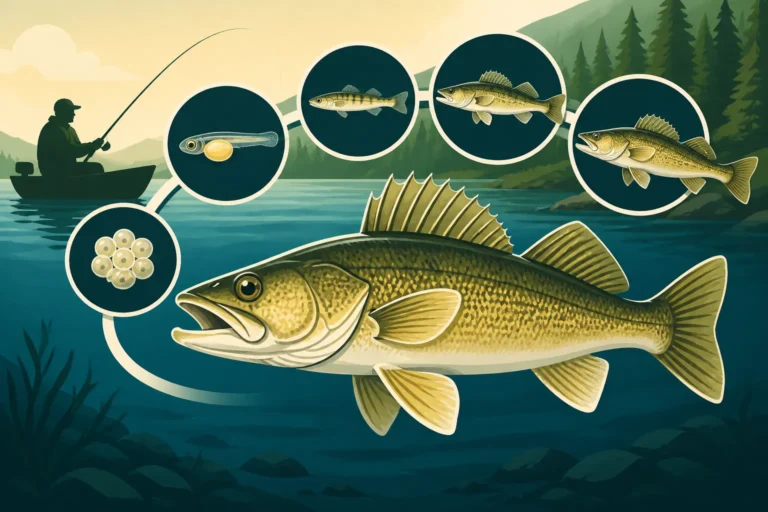
How deep walleye go in summer on Lake Champlain
Summer on Lake Champlain is absolutely stunning, but if you're a walleye angler, you know the frustration: those toothy predators can vanish into the depths, making them incredibly elusive. It's easy to spend hours fruitlessly casting in familiar spots only to wonder, "Where did all the walleye go?" This comprehensive guide will pull back the curtain on the mysteries of summer walleye behavior, specifically focusing on how deep walleye go in Lake Champlain during the warmer months and what factors drive them to those cooler, darker hideaways, helping you strategize your next successful outing.
The Seasonal Migration: Why Walleye Go Deep in Summer
When the sun beats down and the surface waters of Lake Champlain start to feel like a warm bath, walleye undergo a significant shift in their behavior. Unlike some other species that might stick to the shallows year-round, walleye are quite sensitive to light and temperature. This sensitivity drives them to seek refuge in deeper, more stable environments as summer progresses. Understanding why they go deep is the first step to consistently finding them.
Thermal Stratification and Preferred Temperatures
Lake Champlain, like many large, deep lakes, experiences what's called thermal stratification during the summer. Imagine the lake dividing itself into distinct layers based on temperature. The top layer, the epilimnion, is warm and exposed to the sun. Below that is the thermocline, a transitional layer where the temperature drops rapidly. And beneath that, the hypolimnion, which remains cold and stable. Walleye are cold-water fish, generally preferring water temperatures in the low to mid-60s Fahrenheit (around 17-20 degrees Celsius). As the epilimnion warms up significantly, these deeper, cooler layers become their sanctuary.
The thermocline is often a key area because it offers that perfect balance: cooler temperatures without being excessively cold. It also tends to concentrate baitfish, which are drawn to the richer oxygen levels and cooler water just above or within this layer. So, when you're out there in July or August, don't just think "deep," think "thermocline." Your fish finder's temperature gauge can be a game-changer here, helping you pinpoint that critical temperature break where the walleye are likely stacking up. You'll often see distinct bands on your sonar where baitfish are gathered, and if you find those, the walleye are usually not far behind.
Oxygen Levels and Forage Availability
Temperature isn't the only factor drawing walleye down. While the surface waters warm up, they also tend to have lower dissolved oxygen levels, especially in certain parts of the lake or during prolonged heat waves. The cooler, deeper waters, particularly those refreshed by springs or currents, often maintain higher oxygen concentrations, making them more comfortable for walleye. Moreover, the food chain dictates much of their movement. Many of the baitfish species that walleye prey on, such as alewives and smelt, also prefer cooler, deeper water during the summer.
If the baitfish are deep, the walleye will follow. It's a simple predator-prey relationship. You might find schools of shiners or smelt suspended over deep humps or along submerged ledges, and that's precisely where you'll want to present your lure. Pay close attention to your electronics for these baitfish schools; they're often the most reliable indicator of where the walleye might be lurking. Sometimes, the walleye might be just below the baitfish, looking up, or directly within the schools, aggressively feeding. This seasonal shift is a critical component of understanding Walleye Fishing on Lake Champlain year-round.
Typical Depths for Summer Walleye on Lake Champlain
Alright, let's get down to the nitty-gritty: how deep are we actually talking? While there's no single magic number, and conditions can change daily, summer walleye on Lake Champlain generally orient themselves in specific depth ranges. This isn't just a random guess; it's based on the combined effects of temperature, oxygen, and light, as well as the availability of their favorite snacks.
The 20 to 60-Foot Sweet Spot
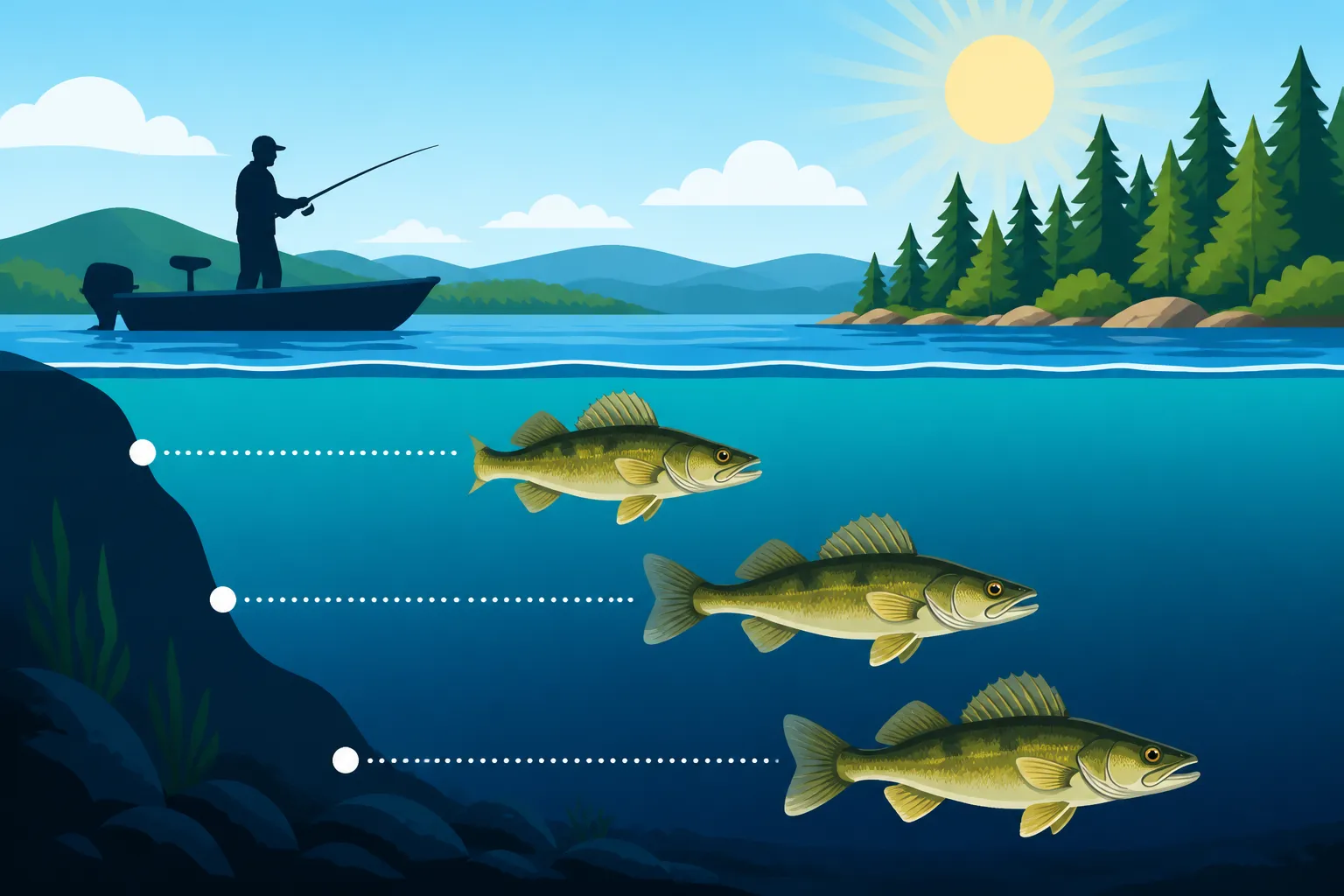
During the peak summer months, from late June through August, walleye on Lake Champlain are most commonly found in depths ranging from 20 to 60 feet. This range typically encompasses the thermocline, which might settle anywhere from 20 feet in some areas to 40 or 50 feet in others, depending on the lake's specific contours, recent weather, and inflow from tributaries. On overcast days, or during low-light periods like dawn, dusk, or even at night, they might move slightly shallower, perhaps into the 15-25 foot range, to chase baitfish that have themselves risen higher in the water column. However, during bright sunshine, expect them to hug the lower end of that range or even dive deeper.
It's not uncommon to find fish suspended over even deeper water, say 80 to 100 feet, but still holding at that 30-50 foot depth, following schools of baitfish that are also suspended. This is particularly true in the main lake basin. You might be fishing over what looks like a barren flat on the bottom, but your sonar is showing arches mid-water. That's your cue to adjust your presentation to target those suspended fish. Understanding Best Trolling Depth for Walleye on Lake Champlain is really about understanding these vertical movements.
Factors Influencing Depth Fluctuations
While 20-60 feet is a solid guideline, walleye depth can fluctuate daily, sometimes even hourly, due to several factors:
- Sunlight Penetration: Walleye have excellent low-light vision, which is why they often feed most actively at dawn, dusk, or on cloudy days. Bright sunlight drives them deeper, often to the bottom or into dense cover, to protect their sensitive eyes. On a bright, bluebird day, those walleye are likely hugging structure in 40-60 feet of water or even deeper.
- Weather Patterns: A prolonged heat wave will push them deeper, as the warm water penetrates further down. Conversely, a strong cold front might scatter them, or if it brings cloudy, windy conditions, it could actually encourage them to move shallower, especially if it disrupts the thermocline.
- Forage Movement: This is perhaps the biggest driver. If the schools of alewives, smelt, or other baitfish decide to move up or down, the walleye will often follow them closely. Look for those baitfish schools on your Best Fish Finders for Vermont Lakes! If you see them at 25 feet, fish at 25 feet. If they're at 45 feet, go deeper. Tracking these baitfish on your electronics is paramount.
- Structure and Cover: Walleye are still structure-oriented fish, even when deep. They'll relate to submerged humps, rock piles, ledges, old creek channels, or sharp drop-offs. These features offer ambush points and concentrate baitfish. So, while they might be in 40 feet of water, they won't just be anywhere in 40 feet; they'll be at a specific spot on structure that's in 40 feet. Lake Champlain has incredible deep-water structure, so learning to read it on your GPS and sonar is crucial.
Effective Techniques for Deep Summer Walleye
Once you've zeroed in on the general depth range and identified promising structure or baitfish schools, it's time to choose the right technique. Fishing deep for walleye isn't like casting a worm on a bobber; it often requires specialized gear and methods to consistently put your lure in the strike zone.
Trolling with Depth Control Devices
Trolling is undeniably one of the most effective ways to cover water and present lures at specific depths for deep summer walleye. But you can't just throw out a crankbait and expect it to hit 40 feet. You'll need some help getting those lures down.
- Downriggers: These are perhaps the most precise tools for depth control. A downrigger uses a heavy ball (cannonball) on a cable to carry your fishing line down to a precise depth, which you can set and monitor on the unit. Your fishing line is attached to the cannonball via a release clip. When a fish strikes, the clip releases, and you fight the fish directly, without the weight of the cannonball. This allows you to use lighter, more enticing lures at great depths. Brands like Cannon and Scotty are popular choices for downriggers. You can often find accessories and replacement parts, like release clips or weights, on platforms like Amazon.
- Lead Core Line: This specialized line has a lead core inside a braided nylon sheath, which causes it to sink. The general rule of thumb is that 1 color (10 yards) of lead core will get your lure down about 5 feet at a trolling speed of 2 mph, though this varies greatly with lure type and current. By letting out a certain number of colors, you can achieve a desired depth. It's less precise than a downrigger but allows for multiple lines to be fished without the bulk of downrigger arms.
- Dipsy Divers and Planer Boards: Dipsy Divers are disc-shaped diving devices that take your lure down and away from the boat. They also trip when a fish strikes. Planer boards, on the other hand, take your lines out to the side of the boat, allowing you to cover a wider swath of water, often in conjunction with lead core or snap weights to achieve depth. These are fantastic for reaching fish that might be spooked by the boat directly overhead.
Regardless of the device, using a good quality line counter reel is crucial. It lets you know exactly how much line you have out, which is vital for replicating successful presentations. When learning Trolling Techniques for Vermont Lake Trout, many of these same principles apply.
Vertical Jigging and Dropping
While trolling covers water, sometimes the walleye are tightly schooled over specific pieces of structure, or they might be less active and prefer a vertical presentation. This is where vertical jigging or dropping tactics come into play.
- Blade Baits: These vibrating metal lures are excellent for deep water. They sink fast, and their tight wobble on the retrieve or lift-and-drop presentation can entice reluctant walleye. Experiment with different colors and sizes; silver, gold, and firetiger are often reliable.
- Jigging Spoons: Heavy spoons, often with a flashy finish, are another deep-water staple. Drop them to the bottom, then snap them up a few feet, letting them flutter back down on a semi-slack line. Most strikes occur on the fall. You'll want a sensitive rod to detect those subtle takes in deep water.
- Drop-Shot Rigs: While more commonly associated with bass fishing, a drop-shot can be deadly for deep, lethargic walleye, especially when they're suspended or holding tight to structure. The weight keeps your bait (often a soft plastic minnow or worm imitation) suspended at a specific depth above the bottom, keeping it in the strike zone longer. This is a very precise presentation for picking off individual fish or those in small, tight schools. This method is particularly useful when targeting finicky fish that might not chase a trolled lure. Best bait for walleye in deep water will often involve live bait or realistic soft plastics on these rigs.
When vertical jigging, the key is boat control. Using a bow-mounted trolling motor with GPS Spot-Lock technology (like those from Minn Kota or Motorguide) can be a lifesaver, allowing you to hold precisely over a hump or school of fish, even in windy conditions. You can often find these sophisticated electronics and related fishing gear on popular online retail sites such as Amazon.
Essential Gear for Deep Walleye Fishing
Fishing for deep summer walleye requires a slightly different approach to your tackle box and boat setup. You're not just casting from shore; you're often working with heavier weights, specialized lines, and more robust rods.
- Rods and Reels: For trolling, you'll want medium-heavy to heavy action rods, often in the 7 to 9-foot range, with a good backbone to handle heavy weights and the powerful runs of a big walleye. Line counter reels are almost mandatory for precise depth control with lead core or even when deploying crankbaits with specific dive curves. For jigging, a sensitive medium-heavy spinning or baitcasting rod (6'6" to 7'6") with a fast tip is ideal for feeling those light bites in deep water.
- Line: Braided line (20-30 lb test) is excellent for deep jigging because it has virtually no stretch, providing superior sensitivity for detecting subtle bites and strong hooksets. For trolling, depending on your method, you might use monofilament (10-17 lb test) for crankbaits, or lead core line, as mentioned previously. A good fluorocarbon leader (10-15 lb test) is always a smart idea for its invisibility in clear water and abrasion resistance.
- Lures: Deep-diving crankbaits are a staple for trolling. Look for models that can reach depths of 15-30+ feet on their own, or combine them with lead core or downriggers for even greater depths. Popular colors often mimic smelt, alewives, or perch – common forage in Lake Champlain. When jigging, blade baits, jigging spoons, and heavy jigs (3/8 oz to 1 oz or more) tipped with soft plastics (grubs, paddletails, or minnow imitations) or live bait (minnows or nightcrawlers) are all highly effective.
- Electronics: A high-quality fish finder with down imaging and side imaging capabilities is your best friend. It helps you identify thermoclines, locate baitfish schools, mark individual walleye, and most importantly, understand the deep-water structure you're fishing. GPS is also critical for marking hotspots and navigating back to productive areas. Consider checking out brands like Humminbird or Garmin for advanced units, many of which are readily available on Amazon. For specific advice on these crucial tools, check out Best Fish Finders for Vermont Lakes.
Here’s a quick overview of common summer walleye depths and techniques:
| Factor | Typical Depth Range (Feet) | Key Considerations | Recommended Techniques | Essential Gear |
|---|---|---|---|---|
| Clear, Sunny Day | 40-60+ | High light penetration, walleye eye sensitivity | Downrigger Trolling, Vertical Jigging | Heavy Crankbaits, Blade Baits, Jigging Spoons, Fish Finder |
| Overcast Day | 20-40 | Reduced light, walleye may rise slightly | Lead Core Trolling, Crankbaits, Drop-Shot | Medium-Diving Crankbaits, Soft Plastics, Sensitive Rod |
| Dawn/Dusk/Night | 15-30 (or shallower) | Walleye actively feeding in low light | Shallow Crankbaits, Jigs, Spoons | Glow Lures, Headlamps, Trolling Motor |
| Post-Cold Front | Deeper, scattered | Fish often lethargic, seek stable conditions | Slow Trolling, Finesse Jigging | Small Baits, Scent, Patience, Precise Depth Control |
| Baitfish Location | Follow forage | Walleye will be where the food is | Match depth to baitfish schools | High-Res Sonar, Lure Selection to Mimic Forage |
Advanced Tips for Chasing Deep Walleye
Finding and catching walleye in the summer depths of Lake Champlain is a rewarding challenge. Beyond the basic techniques, a few advanced tips can really help you dial in your approach and increase your success rate. These insights come from years of anglers learning to adapt to the unique behaviors of these elusive fish.
Understanding the Thermocline's Nuances
While we've talked about the thermocline as a general "sweet spot," it's rarely a perfectly flat, uniform layer. It can fluctuate in depth, have areas where it's thicker or thinner, and even feature subtle "ridges" or "valleys" caused by underwater topography or currents. Your fish finder is crucial here. Learn to interpret the thermocline as a fuzzy or distinct band on your sonar display. Walleye often position themselves right on top of the thermocline, especially if baitfish are concentrated there, or just below it in slightly cooler water.
Experiment with your lure presentation directly above, within, and just below this layer. Sometimes, moving your lure just a few feet up or down can be the difference between an empty hook and a solid strike. The thermocline also dictates oxygen levels, and if the water below it becomes anoxic (lacking oxygen), the walleye won't go there, even if it's colder. This is why the upper edge or within the thermocline itself is often the most productive zone. Constantly monitor your temperature gauge and sonar to stay locked onto this critical layer.
The Importance of Speed and Presentation
When trolling for deep walleye, speed is often more critical than many anglers realize. Walleye are ambush predators, but they can be finicky. Typically, a slower troll (1.0 to 2.5 mph) is more effective for walleye, especially in summer when they might be less aggressive. However, don't be afraid to experiment. Sometimes, a subtle increase or decrease in speed can trigger a bite. Make slight S-turns with your boat; this will cause your lures on the inside turn to slow down and those on the outside turn to speed up, often enticing a follow or strike.
For jigging, the cadence of your lift and drop, and the height of your jigging motion, can also make a huge difference. Are the fish hitting on a hard snap, or a subtle quiver? Do they want it dropped quickly or slowly? Let the fish tell you what they prefer. Using soft plastics can offer a more natural, subtle presentation compared to hard baits, and sometimes tipping your jig with a piece of live nightcrawler or a minnow can be the ultimate enticer for a hesitant walleye. When you're trying to figure out How to catch walleye on Lake Champlain, presentation is key.
Night Fishing for Deep Walleye
While many anglers focus on daytime efforts, summer nights can be incredibly productive for walleye on Lake Champlain, even for those that spent the day in deep water. As the sun sets, the light penetration diminishes, and walleye will often move shallower to feed under the cover of darkness. This doesn't mean they're in inches of water, but they might shift from 40 feet to 15-20 feet, especially near prominent points, reefs, or flats adjacent to deeper water.
Night fishing requires specific gear, including good boat lighting, headlamps (you can find excellent options on Amazon), and often, lures with glow-in-the-dark features or rattles. Trolling crankbaits at these shallower night depths, or even casting jigs to lighted areas like docks, can be highly effective. The walleye's superior night vision gives them a distinct advantage over their prey, making them aggressive feeders during these low-light periods. For a deeper dive into this exciting method, read our guide on Night Fishing for Walleye on Lake Champlain.
Marking Waypoints and Developing a Pattern
Consistency in walleye fishing, especially in a vast lake like Champlain, comes from learning to identify patterns. When you find walleye, whether by trolling a particular depth or jigging a specific structure, mark that spot immediately on your GPS with a waypoint. Don't just mark where you caught a fish; mark the entire productive contour, the edge of the thermocline, or the school of baitfish. Over time, you'll start to build a library of productive waypoints.
Pay attention to all the details: depth, water temperature, type of structure, wind direction, time of day, and even the specific lure color or action that got the bite. All these pieces of information contribute to developing a reliable pattern. Summer walleye might be in the depths, but they're not impossible to catch once you understand their behavior and adapt your tactics accordingly. Keeping a detailed fishing log can be incredibly helpful for recalling these patterns for future trips to Lake Champlain.
Disclaimer
This article is for general informational purposes only and does not constitute professional advice. Laws, prices and regulations vary by location and change over time. Consult a qualified professional for guidance on your specific situation.