Sea Lamprey Control on Lake Champlain
It's incredibly frustrating when you're trying to enjoy a beautiful day fishing on Lake Champlain, only to pull in a stunning lake trout or a feisty landlocked salmon, and see those tell-tale, ghastly scars from a sea lamprey. These invasive parasites have caused significant heartache for anglers and conservationists alike, impacting the health and numbers of our beloved game fish. This guide dives deep into the persistent, often complex, efforts to control sea lamprey populations on Lake Champlain, explaining why it's so vital and what's being done to protect our fisheries.
Understanding the Sea Lamprey Threat in Lake Champlain
Before we can appreciate the control efforts, we really need to grasp just what a formidable adversary the sea lamprey is. They’re not just an annoyance; they're a serious ecological threat that has reshaped fisheries in the Great Lakes and right here in Lake Champlain.
What are Sea Lamprey and Why Are They a Problem?
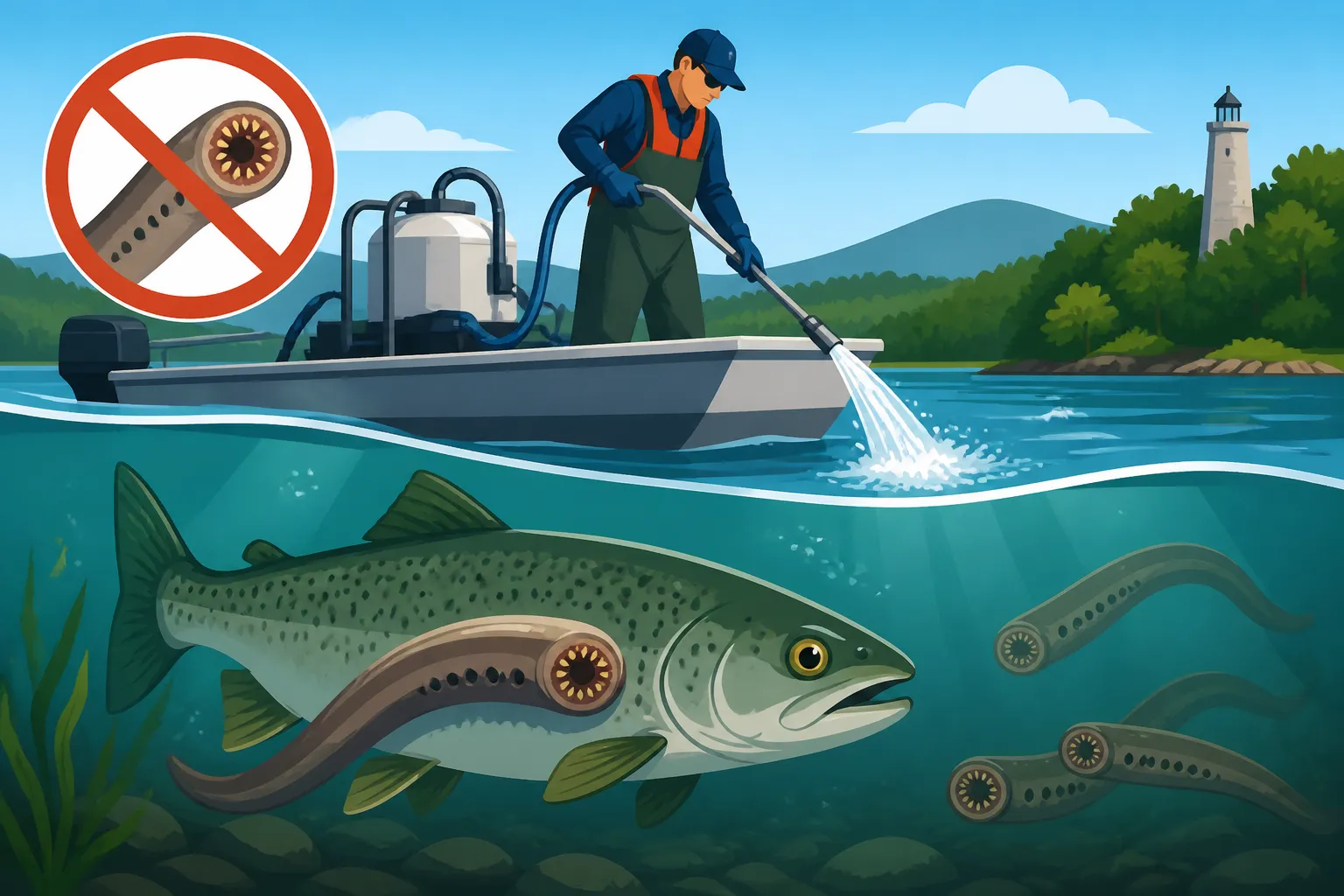
Imagine a creature that looks like an eel, but with a horrifying, disc-shaped mouth full of concentric rings of sharp, rasping teeth. That's a sea lamprey, and it's definitely not what you want attaching itself to your prize catch. These are jawless fish, primitive in form, and native to the Atlantic Ocean. They made their way into Lake Champlain historically through waterways altered by human activity, like canals. Once here, they found an abundance of large-bodied, coldwater fish—like lake trout and landlocked salmon—that had no natural defenses against them.
The problem isn't just cosmetic. Sea lamprey are parasitic. They latch onto a host fish, rasp a hole through its scales and skin, and feed on its blood and bodily fluids. A single lamprey can kill up to 40 pounds of fish in its lifetime. Even if a fish survives an attack, it's often weakened, more susceptible to disease, and less likely to reproduce. This predatory behavior doesn't just reduce fish populations; it can dramatically alter the entire aquatic ecosystem. It's truly a tough situation for our native fish.
The Historical Impact on Lake Champlain's Fishery
Before robust control programs were put into place, the impact of sea lamprey on Lake Champlain's fishery was nothing short of devastating. You talk to old-timers who fished the lake back in the day, and they'll tell you stories of abundant lake trout and landlocked salmon. But then, for a period, those populations plummeted. The number of lamprey scars on the fish that were caught was alarming, and the overall survival rates for important sport fish were incredibly low.
The native lake trout population in Lake Champlain, for example, essentially collapsed due to sea lamprey predation. Stocking programs, which were meant to bolster fish numbers, became a revolving door: fish were released only to become lamprey fodder. It became clear that without significant intervention, Lake Champlain would lose its iconic coldwater fisheries, affecting everything from recreational angling to the delicate balance of the lake's ecosystem. This era truly highlighted the urgent need for action, prompting agencies to collaborate on a solution. You can learn more about Lake Champlain Lake Trout Fishing in another post.
The Science Behind Sea Lamprey Control Methods
Addressing an invasive species problem of this magnitude requires a multi-pronged approach, rooted in solid scientific understanding. It's not about eradication, which is often impossible, but about control to allow native fish populations to thrive.
Lampricides: How They Work and Why They're Used
One of the primary and most effective tools in the sea lamprey control arsenal is the use of lampricides. These are specialized chemicals, specifically TFM (3-trifluoromethyl-4-nitrophenol) and, sometimes, Bayluscide, that are highly toxic to sea lamprey larvae but have minimal impact on other aquatic organisms, including fish, plants, and wildlife, when applied correctly. It's a remarkably selective poison, which is crucial for ecological integrity.
The "how" is fascinating: Sea lamprey larvae, called ammocoetes, spend several years burrowed in the sediment of specific streams that flow into Lake Champlain, filter-feeding. They're quite vulnerable during this stage. Control teams identify these nursery streams and, during precise application windows, introduce carefully measured amounts of lampricide. The chemical targets the lamprey's unique respiratory system. The idea is to kill off as many young lamprey as possible before they transform into their parasitic adult stage and migrate into the lake. It's a delicate operation requiring extensive mapping, monitoring, and trained personnel to ensure effectiveness and safety for other species in the water.
Barrier Dams and Trapping Programs
While lampricides target the larval stage, barrier dams and trapping programs focus on the adult sea lamprey. Adult lamprey, after spending years in the lake, migrate up rivers and streams to spawn. This is a critical choke point in their life cycle. Barrier dams, often designed as low-head dams or specialized structures, are built on known spawning streams to block adult lamprey from reaching their upstream spawning grounds. This effectively prevents new generations of lamprey from being born.
Complementing these barriers are trapping programs. Traps are strategically placed at or near barrier dams to capture migrating adult lamprey. These traps allow biologists to gather valuable data on lamprey populations (e.g., number, size, sex ratios) and remove a significant number of adults from the system before they can spawn. The lamprey caught in these traps are not released; they are removed permanently from the ecosystem. This two-fold strategy of preventing spawning and removing adults is a crucial component of the integrated pest management approach. It’s an effective way to keep pressure on the population year after year.
Other Control Techniques and Research
Beyond lampricides and physical barriers, researchers are always exploring new and innovative ways to manage sea lamprey populations. One promising area of research involves pheromones. Sea lamprey release powerful chemical cues (pheromones) that guide other lamprey to spawning grounds or attract mates. Scientists are studying how to synthesize these pheromones to either lure lamprey into traps more effectively or, conversely, to repel them from sensitive areas.
Another concept is sterile male release. This involves capturing male lamprey, sterilizing them, and then releasing them back into the spawning population. These sterile males compete with fertile males for mates, leading to unsuccessful reproduction and a reduction in the number of lamprey eggs that hatch. While this technique has shown promise in other pest control scenarios, its application for sea lamprey is still under investigation due to the scale and complexity of Lake Champlain's ecosystem. These ongoing research efforts are vital for developing even more sustainable and targeted control methods in the future.
The Collaborative Efforts for Lake Champlain Sea Lamprey Control
Successfully tackling a problem as vast and complex as sea lamprey control in a large, interstate body of water like Lake Champlain isn't something one entity can do alone. It requires a significant, ongoing collaboration between multiple agencies and governments.
Key Agencies and Organizations Involved
The efforts to control sea lamprey on Lake Champlain are a prime example of successful interstate and federal cooperation. The Vermont Fish & Wildlife Department and the New York State Department of Environmental Conservation (DEC) are the two primary state agencies, as Lake Champlain borders both states. They work hand-in-hand to implement control strategies within their respective jurisdictions, conducting stream surveys, lampricide applications, and operating trapping facilities.
On the federal side, the U.S. Fish and Wildlife Service (USFWS) plays a pivotal role. The USFWS leads much of the research, technical expertise, and large-scale coordination, often providing critical funding and personnel for lampricide applications and barrier construction. The Lake Champlain Basin Program (LCBP) also serves as a crucial partner, fostering communication, providing grant funding, and supporting public education initiatives around the health of the lake, including invasive species management. This coalition of state and federal partners ensures a unified and strategic approach, sharing resources and knowledge to maximize effectiveness across the entire lake basin. It's a testament to what can be achieved when everyone pulls in the same direction for a common goal.
Funding and Resources for Control Programs
Controlling an invasive species on the scale of Lake Champlain's sea lamprey population is not a cheap endeavor. It requires substantial and consistent funding, a constant concern for those dedicated to the work. These control programs rely on a mix of federal and state appropriations. The U.S. Congress, through various environmental and fisheries acts, allocates significant funds to agencies like the US Fish and Wildlife Service, which then direct a portion of these resources to Lake Champlain's sea lamprey program.
State legislatures in both Vermont and New York also contribute, recognizing the economic and ecological importance of a healthy Lake Champlain fishery. Additionally, organizations like the Lake Champlain Basin Program often facilitate grants and seek additional funding sources to support specific research projects, outreach, or infrastructure improvements related to lamprey control. It's a long-term commitment, and advocates for the lake consistently work to ensure that these vital resources are available. Without this financial backing, the scientific expertise and on-the-ground efforts would simply not be possible.
Impact and Successes of Control Efforts
After decades of dedicated effort, it's fair to ask: is it working? The good news is, yes, the sea lamprey control program on Lake Champlain has achieved significant successes, visible in the health of the lake's fish populations.
Documented Improvements in Fish Populations
One of the most compelling indicators of success is the remarkable recovery of lake trout and landlocked salmon populations. Before control measures, these species suffered high mortality rates from lamprey attacks. Now, scar rates are significantly lower, and fish are living longer, growing larger, and contributing more effectively to natural reproduction. This has allowed for a thriving sport fishery, attracting anglers who can once again target robust, healthy fish. You can see the improved health and vitality in fish caught today compared to historical records.
The graph below illustrates the general trend.
| Year Group | Average Lamprey Scars per Lake Trout (Adult) | Lake Trout Catch Rates (Approx. % Increase) |
|---|---|---|
| Pre-Control | High (e.g., 5-10+) | Low |
| Early Control | Moderate (e.g., 2-5) | Gradual Increase |
| Current | Low (e.g., <1-2) | Significant Increase |
Note: These figures are illustrative of general trends and not specific data points.
Anglers often report catching lake trout with far fewer visible scars, a direct result of the reduced lamprey population. This improvement is crucial not just for fishing, but for the overall ecological balance of the lake. It's a testament to the long-term vision and hard work of the management agencies involved. To really appreciate these efforts, one might even consider picking up a field guide on fish identification or Lake Champlain's ecosystem, many of which are available through retailers like Amazon, to better understand the species benefiting from these programs.
Ongoing Challenges and Future Outlook
While there have been significant victories, the fight against sea lamprey is far from over. It’s an ongoing battle, not a one-time fix. One major challenge is the constant need for monitoring and adaptation. Sea lamprey are adaptable creatures, and factors like climate change, changes in water flow, and potential development along tributary streams can impact their spawning success or the effectiveness of control measures. There's always the concern of developing resistance to lampricides, though this hasn't been a widespread issue yet.
Another challenge is securing consistent funding. As mentioned, these programs are expensive, and budget fluctuations can impact the scope and frequency of control efforts. The outlook, however, remains cautiously optimistic. Biologists and managers continue to refine techniques, explore new technologies, and maintain vigilant surveillance of lamprey populations. The goal isn't necessarily to eradicate them – that's often an unrealistic expectation for an invasive species in a large ecosystem – but to maintain their numbers at a level where our beloved fish populations can thrive. It’s a continuous commitment to the health of Lake Champlain.
How Anglers Can Support Sea Lamprey Control
As anglers, we're often the first line of defense and observation when it comes to the health of our waters. Your participation and awareness can genuinely make a difference in supporting sea lamprey control efforts.
Identifying and Reporting Sea Lamprey
Knowing what a sea lamprey looks like and understanding its impact is the first step. If you happen to catch a fish with fresh lamprey wounds or, more rarely, actually catch a sea lamprey itself, reporting it can provide valuable data to management agencies. Adult sea lamprey are long and eel-like, with mottled brown to gray skin, and their distinct sucker mouth with those formidable teeth. Ammocoetes (larvae) are small and worm-like, usually found buried in stream beds, and rarely encountered by anglers.
If you encounter a sea lamprey, especially in a stream where they aren't typically expected, or notice an unusual number of lamprey scars on fish, it's important to report it. You should contact the Vermont Fish & Wildlife Department or the New York DEC. They will want to know the location, date, and any details you can provide. This information helps their teams monitor populations, identify new spawning areas, and assess the effectiveness of current control measures. Your observations contribute directly to the scientific understanding and management of this invasive species. Learning about Vermont Fishing License Guide for 2026 will also help you understand the regulations that support these efforts.
Best Practices for Sustainable Fishing
Beyond direct reporting, adopting sustainable fishing practices generally helps maintain healthy fish populations, which are more resilient to threats like sea lamprey. This includes practicing responsible catch and release, especially for vulnerable species like lake trout and landlocked salmon. Handling fish gently, minimizing their time out of water, and using proper unhooking tools increases their survival chances. For tips on how to catch specific species like How to Catch Landlocked Salmon in Vermont or Lake Trout Fishing in Vermont, check out our other guides.
Furthermore, preventing the spread of all invasive species is crucial. Always "Clean, Drain, Dry" your boat, kayak, and fishing gear when moving between different bodies of water. This simple act prevents the accidental transfer of lamprey larvae, other invasive fish, or aquatic hitchhikers that can disrupt ecosystems. Be mindful of bait usage; never release unused baitfish into a different body of water than where they were caught, as this can introduce new problems. By being a conscientious angler, you become an active partner in protecting Lake Champlain and all of Vermont's precious waters for future generations.
Disclaimer
This article is for general informational purposes only and does not constitute professional advice. Laws, prices and regulations vary by location and change over time. Consult a qualified professional for guidance on your specific situation.