Vermont fishing license reciprocity on Lake Champlain with New York
It can be incredibly confusing trying to figure out which fishing license you need when you're casting lines in a massive body of water like Lake Champlain, especially when it borders two different states. Nobody wants to be caught on the water with the wrong paperwork, facing fines and spoiling a perfectly good fishing day. This guide is here to clear up all that uncertainty, diving deep into the specifics of Vermont fishing license reciprocity on Lake Champlain with New York so you can fish with confidence.
Navigating the Waters of Lake Champlain: A Tale of Two States
Lake Champlain isn't just any lake; it's a massive, beautiful inland sea shared by Vermont and New York, and a small sliver even extends into Quebec, Canada. This unique geographical situation means that anglers often find themselves wondering if their Vermont license is valid when they drift near the New York side, or vice-versa. The good news is that both states have worked together to create a reciprocity agreement, aiming to make fishing on this shared treasure as seamless as possible for licensed anglers. It’s a real relief, as imagining a hard boundary line in the middle of the lake where your license suddenly becomes invalid is enough to give any angler a headache.
The Reciprocity Agreement Explained
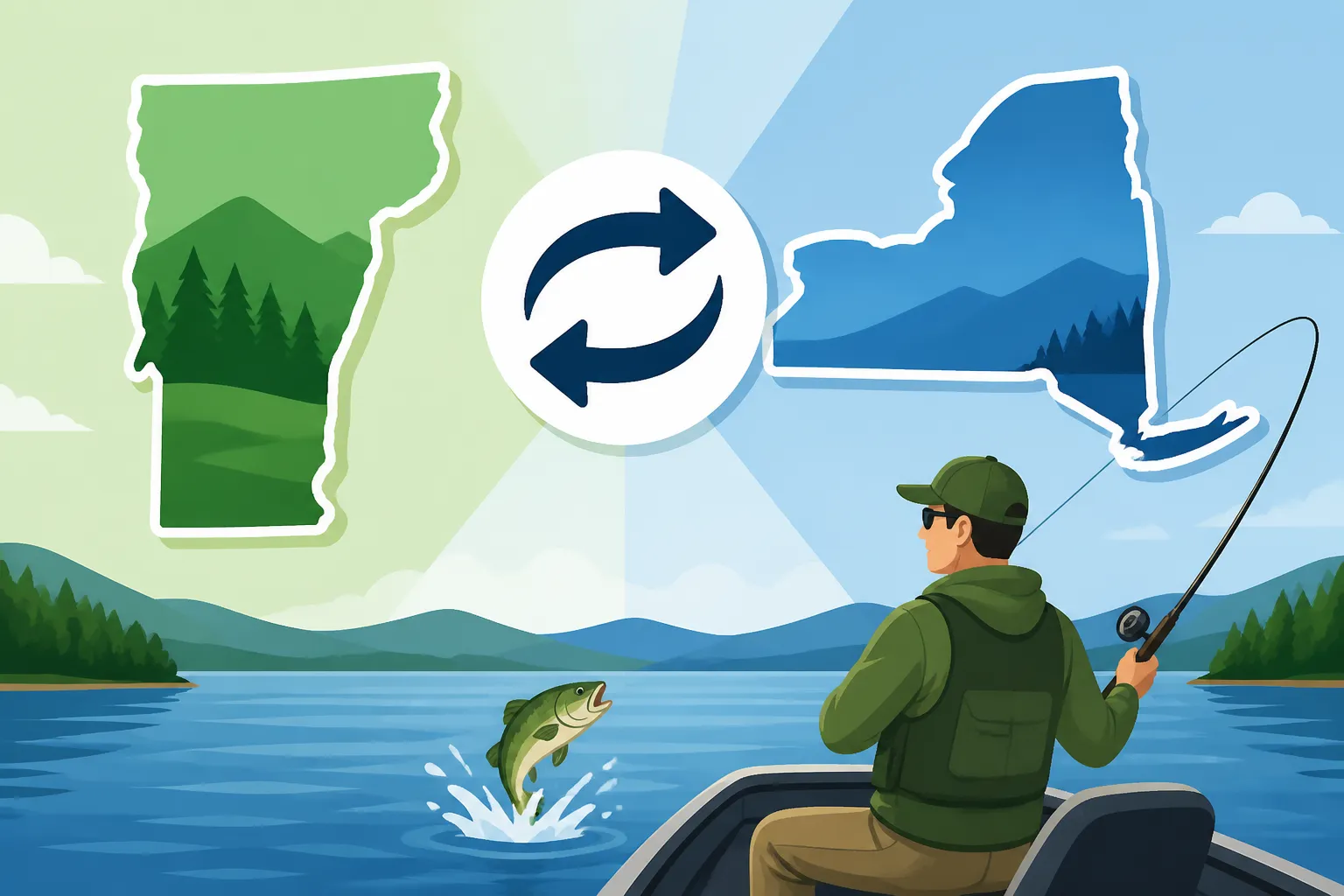
At its heart, the Lake Champlain reciprocity agreement is designed to allow anglers who hold a valid fishing license from either Vermont or New York to fish the shared waters of Lake Champlain. This means if you have a Vermont fishing license, you can legally fish not only on the Vermont side but also venture into the New York portions of the lake without needing a separate New York license. The same holds true for New York license holders; their license allows them to fish the Vermont waters of Lake Champlain. This agreement really opens up the entire lake as a single, expansive fishing ground, which is a huge benefit for those who love to explore different depths and structures.
This cooperative approach stems from the sheer scale and shared ecosystem of Lake Champlain. It would be practically impossible, and certainly unenjoyable, for anglers to constantly police their exact location to ensure they weren't crossing an invisible line. The agreement acknowledges that the fish, and the fishing experience, don't recognize state borders. It’s a common-sense solution to a complex problem, allowing anglers to focus on the bite rather than their GPS coordinates. So, whether you're a Vermont resident or a nonresident visitor, your Vermont Fishing License Guide for 2026 is your ticket to a wider world on Champlain, and the same goes for our friends on the New York side.
What a Vermont or New York License Covers
When we talk about "shared waters" for reciprocity, it's crucial to understand the boundaries. The reciprocity agreement specifically applies to the waters of Lake Champlain itself. This typically includes the main lake body, bays, and tributaries up to the first dam or natural obstruction. It does not extend to other inland lakes or rivers within either state. For example, your Vermont license won't let you fish in upstate New York's Finger Lakes, and a New York license won't let you fish in Vermont's Lake Willoughby. It's strictly a Lake Champlain benefit.
For Vermont residents, obtaining your Vermont resident fishing license cost 2026 means you're good to go anywhere on Lake Champlain that's accessible by boat, including the New York side. Nonresidents visiting Vermont can also purchase a Vermont nonresident fishing license cost 2026, which will grant them the same access across Lake Champlain. This flexibility is fantastic, especially for folks who might be staying on one side of the lake but want to explore fishing hot spots on the other. It really simplifies the planning for a fishing trip, removing the guesswork of navigating dual licensing requirements for a single body of water. Just remember, while your license gets you across the border on the water, the individual state's regulations for species, size, and bag limits might still apply depending on where you are.
Practical Implications for Anglers on Lake Champlain
While the reciprocity agreement is a godsend, it doesn't mean you can just hop on the lake without thinking. There are still practical considerations to keep in mind to ensure your fishing trip is both enjoyable and legal. Understanding how and where to acquire your license, and being aware of any specific nuances in regulations, can save you a lot of hassle. After all, the goal is to enjoy the serene beauty and incredible fishing opportunities Lake Champlain offers, not to get bogged down in bureaucratic details.
Where to Buy Your License and What to Look For
Purchasing your fishing license for Lake Champlain is straightforward, much like buying any other fishing license in either state. In Vermont, you can easily purchase your license online through the Vermont Fish & Wildlife Department website, at authorized license vendors (like sporting goods stores or bait shops), or at many town clerk offices. The same options are generally available in New York through their Department of Environmental Conservation (DEC) website and vendors. When you purchase your license, whether it's an annual, 3-day, or 7-day permit, the reciprocity for Lake Champlain is typically inherent to the license itself – there isn't a special "Lake Champlain Reciprocity License" you need to request. Just get your standard Vermont or New York fishing license, and you're all set for the big lake.
It's always a good practice to double-check the specific language on the Vermont Fish & Wildlife Department website or the New York DEC site regarding Lake Champlain reciprocity, just to stay abreast of any minor changes. While the core agreement has been stable for a long time, regulations can evolve. Keep in mind that while you can research gear on platforms like Amazon, you absolutely cannot purchase a state fishing license there. Licenses must come directly from the state's wildlife department or their authorized agents. Make sure you check out Where and How to Buy a Vermont Fishing License for a full breakdown of your options here in the Green Mountain State.
Understanding Exceptions and Special Regulations
Despite the general reciprocity for licensing, it's critical to understand that fishing regulations themselves can still differ between Vermont and New York, even on Lake Champlain. This is perhaps the most confusing part for many anglers. For instance, while your Vermont license allows you to fish in New York waters of the lake, you still need to abide by New York's specific rules concerning species-specific bag limits, minimum lengths, or season dates if you are fishing in New York waters. The same logic applies when a New York licensed angler crosses into Vermont waters – they must follow Vermont’s regulations.
This means you can't just assume the rules are uniform. For popular species like walleye, bass, or northern pike, there might be subtle but significant differences. For example, Vermont Bass Catch-and-Release Season, Explained might have different start and end dates or specific regulations than New York's. The Vermont Walleye Limit on Lake Champlain could also vary slightly from New York's. Before heading out, especially if you plan to target specific species or explore different areas of the lake, it's wise to consult both the Vermont Fishing Regulations Explained and the New York fishing regulations guides. Being proactive here prevents an accidental violation that could lead to a fine, even with a valid license in hand.
| Feature | Vermont Fishing License Holder | New York Fishing License Holder |
|---|---|---|
| Lake Champlain Waters | Covers all Lake Champlain waters (VT & NY portions) | Covers all Lake Champlain waters (VT & NY portions) |
| Vermont Inland Waters | Covered | NOT Covered |
| New York Inland Waters | NOT Covered | Covered |
| Species Regulations | Must follow VT regulations in VT waters, NY regulations in NY waters | Must follow NY regulations in NY waters, VT regulations in VT waters |
| Boating Laws | Must follow VT boating laws in VT waters, NY boating laws in NY waters | Must follow NY boating laws in NY waters, VT boating laws in VT waters |
| License Purchase | Vermont Fish & Wildlife Dept. | New York DEC |
Avoiding Fines and Frustration: Key Tips for Cross-Border Angling
The beauty of Lake Champlain's reciprocity agreement is that it simplifies one big hurdle. However, it doesn't eliminate the need for diligence and preparedness. To truly enjoy your time on the water without the anxiety of potential legal issues, a few key practices can make all the difference. It’s all about being a responsible and informed angler, respecting both the natural resource and the regulations designed to protect it.
Always Carry Your License and Know Your Location
This might seem like a no-brainer, but you'd be surprised how many anglers forget or misplace their license. Always carry your valid fishing license with you when on Lake Champlain. Whether it's a physical copy or a digital version on your smartphone, having it readily accessible is crucial. Law enforcement officers, from both Vermont and New York, patrol the lake, and if asked, you must be able to produce proof of your license. Failing to do so can result in a fine, even if you technically have a license somewhere at home. Take a moment to read up on Printing or Carrying a Digital Fishing License in Vermont to understand your options.
Beyond just having your license, knowing your approximate location on the lake is equally important, especially given the differing state regulations for catch limits and sizes. Many modern fishing electronics and even smartphone apps offer GPS capabilities that can show you where the state line roughly runs. This isn't just about avoiding trouble; it’s about being a good steward of the fishery. If you're targeting a specific species that has different regulations in each state, being aware of which side of the line you're on ensures you're complying with the correct rules for that particular fish. Don't forget that Fishing Without a License in Vermont: Penalties can be significant, so don't risk it!
Staying Informed About Regulation Changes
Fishing regulations are not set in stone; they can and do change from year to year. Wildlife agencies continually monitor fish populations, environmental conditions, and angler impact, adjusting rules as needed to ensure sustainable fisheries. This means that what was legal last season might have a slight tweak this year. This is particularly relevant when dealing with two separate state agencies.
To avoid any surprises, make it a habit to check the current fishing regulations for both Vermont and New York before each fishing season, or even before a significant trip, if you haven't been out in a while. Both the Vermont Fish & Wildlife Department and the New York DEC publish their regulations online, often in easy-to-read guides. Local bait and tackle shops on both sides of Lake Champlain are also fantastic resources, as they usually have the latest printed guides and are generally well-versed in any recent changes. For Vermont-specific updates, a quick look at Vermont Lake Champlain Fishing Rules or reading the comprehensive Reading the Vermont Fishing Regulations Guide should always be on your pre-trip checklist. By staying informed, you ensure your fishing adventures on Lake Champlain remain worry-free and enjoyable.
Disclaimer
Please note that while this guide provides comprehensive information, fishing regulations and license requirements are subject to change. Always consult the official Vermont Fish & Wildlife Department and New York Department of Environmental Conservation websites or printed guides for the most current and accurate information before heading out on the water. This article is for informational purposes only and does not constitute legal advice.