Vermont fishing license reciprocity on Connecticut River boundary waters
There's a unique kind of stress that comes with fishing shared waters, isn't there? You're out on a beautiful river, casting away, and suddenly that nagging thought pops into your head: "Am I even supposed to be fishing this side with my license?" The Connecticut River, forming a significant portion of the border between Vermont and New Hampshire, is a perfect example where understanding fishing license reciprocity can save you a lot of headache. This comprehensive guide will demystify the rules for fishing the Connecticut River, ensuring you know exactly what license you need to enjoy its bountiful waters.
Unraveling Connecticut River Fishing Reciprocity Between Vermont and New Hampshire
It sounds like a simple concept on paper, but when you're standing on the bank, or drifting in a boat, with the river flowing right between two states, the reality can feel a lot more complicated. The good news is that for the Connecticut River, Vermont and New Hampshire do have a reciprocal agreement, designed specifically to make life easier for anglers like us.
The Core Reciprocity Agreement
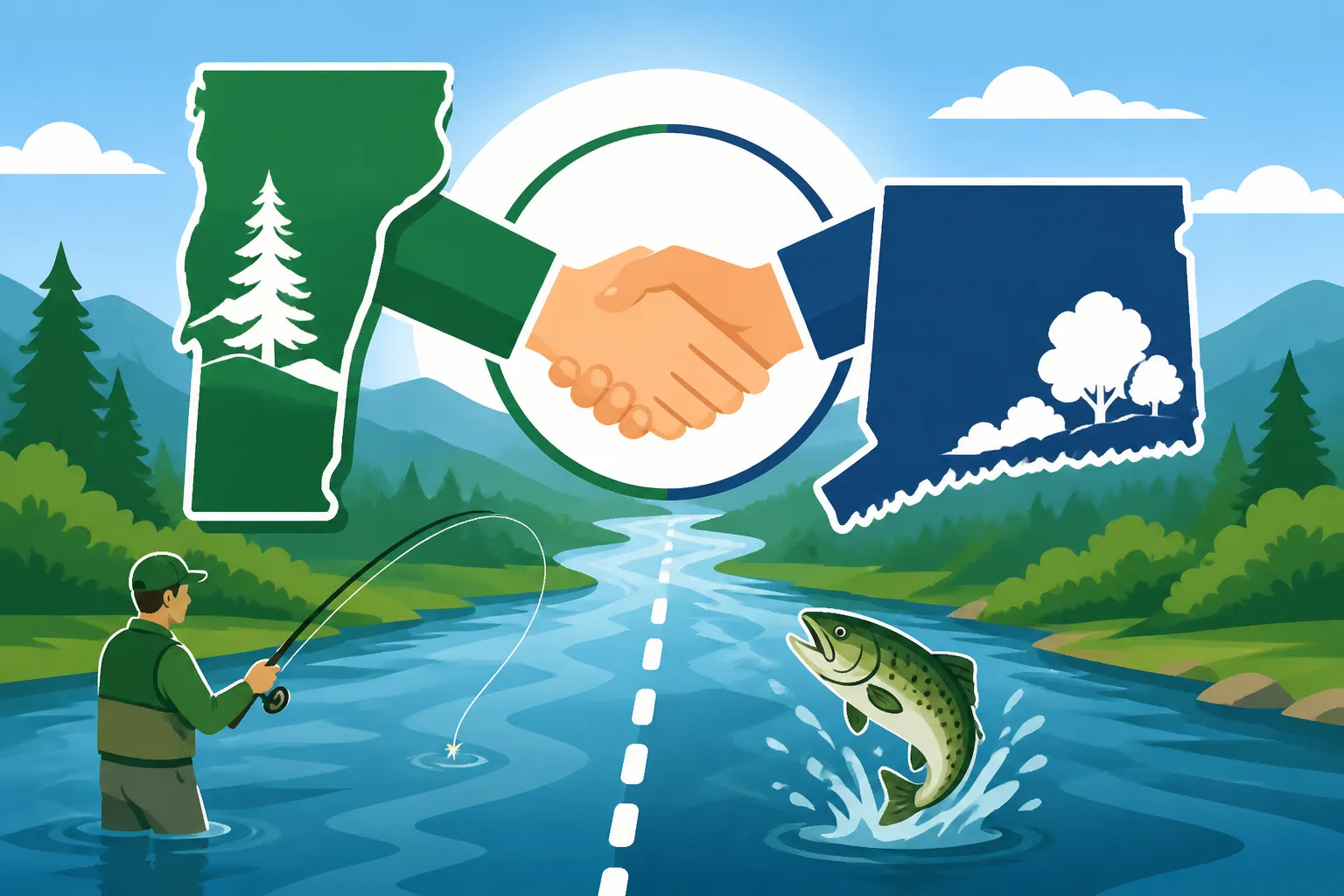
At its heart, the reciprocity agreement between Vermont and New Hampshire for the Connecticut River means that if you possess a valid fishing license from either state, you are legally permitted to fish the main stem of the river. This applies whether you're casting from the shore, wading into the shallows, or fishing from a boat. It's truly a fantastic benefit for anyone who loves exploring both sides of this majestic waterway, removing a layer of administrative hassle.
This agreement is a testament to the collaborative spirit between the Vermont Fish and Wildlife Department and the New Hampshire Fish and Game Department, recognizing that a shared resource like the Connecticut River deserves a shared approach to access. It saves anglers the expense and complexity of buying two separate annual licenses just to fish one river. Imagine planning a trip where you launch from a boat ramp in Vermont, motor across the river, and then decide to fish a prime spot closer to the New Hampshire bank. Without reciprocity, that could be a serious legal issue. Thanks to this foresight, you can move freely within the main channel, pursuing your quarry without constantly checking your GPS for state lines. However, as with anything involving regulations, the devil's often in the details, and understanding the nuances is key to truly stress-free angling.
Understanding the Physical Boundary
One of the biggest sources of confusion, even with reciprocity in place, is knowing exactly where the "main stem" of the Connecticut River begins and ends, and where the actual state line lies. Unlike a marked hiking trail, there aren't signs in the middle of the river telling you which state you're in. This can lead to a lot of second-guessing, especially for newer anglers or those unfamiliar with the river's unique legal geography.
Historically, the boundary between Vermont and New Hampshire along the Connecticut River has been defined by the western bank of the river, specifically the low-water mark on the Vermont side. This means, legally speaking, the entire riverbed and water column of the Connecticut River belong to New Hampshire. However, the reciprocity agreement overrides this for fishing purposes, allowing Vermont-licensed anglers to fish New Hampshire's waters within the main stem, and vice-versa. This is why you can launch a boat from, say, the Vermont side near Brattleboro or the Massachusetts border, and legally fish the entire width of the river, all the way to the New Hampshire bank. It's a crucial distinction, as it prevents undue penalties for simply crossing an invisible line while pursuing a fish. Just remember, this specific legal quirk doesn't mean New Hampshire owns the fish; rather, it simplifies the regulatory framework for access.
Navigating the Nuances: What Reciprocity Doesn't Cover
While the reciprocal agreement is a huge win for anglers on the Connecticut River, it's absolutely vital to understand its limitations. Thinking that a Vermont or New Hampshire license covers everything connected to the river is a common misconception that can lead to unexpected fines or legal trouble.
Tributaries and Impoundments are Separate
This is perhaps the most important caveat to remember: the reciprocity agreement applies only to the main stem of the Connecticut River itself. It does not extend to any of the tributaries that flow into it, nor to any impoundments or oxbow lakes that are entirely within one state's borders, even if they're directly adjacent to the main river.
For example, if you're fishing the Connecticut River with your valid New Hampshire license, and you decide to follow a school of smallmouth bass up the White River, a major Vermont tributary, you would immediately be fishing in Vermont waters that are not covered by the reciprocity agreement. To legally fish the White River, or any other Vermont tributary like the West River or the Ottauquechee River, you absolutely need a valid Vermont fishing license. The same goes for the other side: a Vermont license won't cover you if you venture into a New Hampshire tributary like the Mascoma River or the Sugar River. These smaller waterways are distinct ecological zones, managed by their respective state's fish and wildlife agencies, and they fall under those specific state's regulations and licensing requirements. It's a key distinction that catches many anglers off guard, so always be mindful of where you're casting your line when leaving the main channel.
State-Specific Regulations Still Apply
Another critical point that often causes confusion is about the actual fishing regulations. While your license from either state allows you to access the main stem of the Connecticut River, it doesn't automatically mean that all regulations are unified across both states. This can be particularly frustrating when you're targeting specific species.
Generally, the regulations (like daily bag limits, minimum length limits, and season dates) that apply to your specific license are the ones you must adhere to. So, if you hold a Vermont fishing license, you are expected to follow Vermont's Vermont Fishing Regulations Explained while fishing the Connecticut River. Conversely, if you're fishing with a New Hampshire license, you should follow New Hampshire's regulations. This can create a scenario where, hypothetically, the daily limit for a certain fish species might be slightly different between the two states. Imagine the bewilderment if you've caught what you believe is a legal limit under your Vermont license, only to discover it's technically over the limit according to New Hampshire's rules, which an enforcement officer might argue apply based on your physical location in the river or the specific species in question. To avoid any potential misunderstandings or penalties for Fishing Without a License in Vermont: Penalties or violating regulations, it's always prudent to check the current Vermont Fishing Season Dates and Closures and New Hampshire's equivalent, especially for popular game fish like trout, bass, or walleye. This "belt and suspenders" approach ensures you're never caught off guard.
Practical Advice for Anglers on the Connecticut River
Fishing the Connecticut River should be an enjoyable experience, not a source of anxiety over regulations. By taking a few proactive steps and understanding the nuances, you can ensure your trips are always legal and hassle-free.
Essential Checks Before You Go
Before you even tie on your first lure, a little preparation can go a long way. The regulatory landscape can shift, even subtly, from year to year, so relying on old information is never a good idea. Always make checking the most current regulations a part of your pre-trip ritual.
Your absolute best resources are the official websites of the Vermont Fish and Wildlife Department and the New Hampshire Fish and Game Department. They publish annual guides that detail all the license requirements, season dates, and bag and possession limits. For Vermont, you can easily find information on How Much Does a Vermont Fishing License Cost and specific rules for residents and non-residents. I'd even suggest printing out a copy of the relevant sections or, at the very least, downloading the digital version to your phone. Modern phones are great, but sometimes service is spotty in remote areas, so having it readily available can be a lifesaver. You can also explore options like a waterproof document holder, often found on Amazon, to keep your printed regulations safe and sound in your tackle box. This way, if a question arises, you have the authoritative answer right at your fingertips. Local tackle shops, particularly those near the Connecticut River, are also invaluable sources of up-to-date local information, as their livelihoods depend on knowing these details.
Best Practices for Peace of Mind
Even with the reciprocity agreement, a little extra caution can eliminate all doubt and let you focus purely on the joy of fishing. Think of it as investing in your peace of mind.
If you know you'll be primarily launching your boat from a Vermont access point, or if you'll be fishing mostly from the Vermont side of the river (e.g., from Connecticut River Fishing Access in Vermont spots), securing a Vermont fishing license is often the most straightforward approach. Similarly, if your primary access is from New Hampshire, a New Hampshire license makes the most sense. For those who frequently bounce between both states' waters, or venture into tributaries, it might be worth considering purchasing both licenses. While this means a double investment, it completely removes any ambiguity about where you can legally fish, especially when dealing with differing state-specific regulations. You can often purchase these licenses conveniently online, making the process much smoother. For example, knowing How to Buy a Fishing License Online in Vermont can save you a trip to a vendor.
Always, and I mean always, carry your valid fishing license with you, whether it's a physical copy or a digital one on your phone. Vermont allows for Printing or Carrying a Digital Fishing License in Vermont, which is incredibly convenient. Having a robust, waterproof case, perhaps one you picked up from Amazon, to protect your phone or paper license is a smart move. Should a game warden approach you, presenting your license promptly and clearly demonstrates your compliance and respect for the regulations. It's also wise to be familiar with general Vermont Boating Laws for Anglers if you're on the river in a watercraft, as these apply regardless of your fishing license. Being prepared and respectful goes a long way in ensuring a pleasant interaction, and more importantly, a legal and enjoyable day on the water.
Here's a quick comparison of general license details to help you plan:
| Feature / State | Vermont Fishing License | New Hampshire Fishing License |
|---|---|---|
| Allows Fishing On… | Main stem CT River, VT interior waters (lakes, ponds, rivers, streams). | Main stem CT River, NH interior waters (lakes, ponds, rivers, streams). |
| Tributaries? | No. Requires a VT license for VT tributaries. Does NOT cover NH tributaries. | No. Requires an NH license for NH tributaries. Does NOT cover VT tributaries. |
| Resident Annual Cost (Approx. 2024) | $28.00 (See Vermont resident fishing license cost 2026 for potential updates, typically similar yearly) | $35.00 |
| Non-Resident Annual Cost (Approx. 2024) | $55.00 (See Vermont nonresident fishing license cost 2026 for potential updates, typically similar yearly) | $68.00 |
| Where to Buy Online | Vermont Fish & Wildlife Department website (or through vendors). | New Hampshire Fish & Game Department website (or through vendors). |
| Recommended if… | You primarily fish from VT shores, launch from VT, or fish VT's interior waters. | You primarily fish from NH shores, launch from NH, or fish NH's interior waters. |
| Relevant Internal Links | Vermont Fishing License Guide for 2026, Resident vs Nonresident Fishing License Costs in Vermont | (No NH-specific links in this hub, but general advice applies) |
Note: All costs are approximate for 2024 and are subject to change annually. Always check official state websites for the most current information.
Disclaimer
The information provided in this guide is for general informational purposes only and does not constitute legal advice. Fishing regulations can change frequently. Always consult the official Vermont Fish and Wildlife Department and New Hampshire Fish and Game Department websites or publications for the most current and accurate regulations before you go fishing.