Best bobber stopper setup for suspending bait
There’s nothing quite as frustrating as trying to fish a specific depth in Vermont’s beautiful waters, only to have your bait either sink too far, snagging on the bottom, or float uselessly above where the fish are actually feeding. You cast out, hopeful, but your carefully chosen bait isn't presenting quite right, and those hungry bass or feisty trout are just ignoring it. This guide is here to walk you through mastering the simple yet crucial bobber stopper setup, ensuring your bait hovers perfectly in the strike zone, whether you're chasing walleye on Lake Champlain or panfish in a quiet pond.
Understanding the Importance of a Bobber Stopper System
Before we dive into the nitty-gritty of rigging, let's chat about why a bobber stopper system is such a game-changer. Many anglers start with fixed bobbers – those red and white plastic balls that clip onto your line. They're fine for shallow water or when you just want a visual indicator, but what if the fish are sitting 10 feet down in 15 feet of water? A fixed bobber won't get your bait there, plain and simple.
A bobber stopper system, which works hand-in-hand with a slip bobber, allows your line to slide freely through the bobber until it hits a small, adjustable stopper. This means you can reel your rig all the way to your rod tip for easy casting, but once it hits the water, your bait sinks to the exact depth you've set. This precision is invaluable, especially when fish are suspended at a specific depth, which happens more often than you might think in Vermont's diverse lakes and rivers. It helps you avoid snags in deeper areas and keeps your bait visible to fish that aren't hugging the bottom.
Types of Bobber Stoppers and Their Best Uses
Not all bobber stoppers are created equal, and knowing the differences can make a big impact on your fishing success. Each type has its own strengths and weaknesses, especially depending on the kind of fishing you're doing and the species you're targeting in Vermont.
Thread or String Bobber Stoppers
These are probably the most common and versatile bobber stoppers you'll encounter. They consist of a small knot tied from special thread or string, often pre-tied onto a plastic tube or loop for easy threading onto your main line. Once on your line, you just slide the knot off the tube and tighten it.
Why They're Great: Thread stoppers are fantastic because they're very small and don't impede casting, even with light setups. They also cinch down tightly, making them less prone to slipping, which is crucial when you've finally dialed in that perfect depth. They're gentle on your line and tend to pass through rod guides smoothly, which is a real plus if you're making long casts. For delicate presentations, perhaps when Fly Fishing for Trout in Vermont or trying to tempt wary panfish, their minimal profile is a distinct advantage.
Considerations: While generally reliable, they can sometimes be a little finicky to tie onto your line, especially if your fingers are cold or wet. They also wear down over time, particularly if you're frequently adjusting your depth or reeling them through tiny rod guides. It's always a good idea to carry a few spares.
Rubber Bobber Stoppers
Rubber stoppers are small, cylindrical pieces of rubber, sometimes tapered, that also come on a wire loop for easy rigging. You slide your line through the loop, then pull the rubber stopper off the loop and onto your main line.
Why They're Great: These stoppers are incredibly easy and quick to install and adjust. They provide a firm grip on the line, usually more so than thread stoppers, and are less prone to breaking or fraying. If you're someone who likes to experiment with different depths frequently, or if you're fishing with younger anglers who need a simple setup, these are a top choice. They're durable and can withstand a lot of abuse, making them great for general-purpose fishing on a variety of Vermont lakes and ponds.
Considerations: The main drawback with rubber stoppers is that they can sometimes catch on smaller rod guides, especially if you're using a very small diameter line or have tiny guides. In some cases, if you pull them too hard, they might also slightly crimp or weaken your fishing line over time, so be mindful when tightening them down. For Best Tackle for Vermont Smallmouth Bass where you might be using heavier braid, they generally work quite well.
Plastic Sleeve Bobber Stoppers
Less common but highly effective in certain situations, plastic sleeve stoppers are essentially small, rigid plastic tubes that slide onto your line. They often have a small rubber insert to help them grip.
Why They're Great: These stoppers offer extreme durability and are very resistant to wear and tear. They provide a very secure hold on the line, making them ideal for heavier setups or when you absolutely need your depth to stay consistent, even with aggressive casting or retrieving. If you're targeting larger fish with heavier tackle, perhaps walleye on Lake Champlain or even small muskellunge, these can be a robust option.
Considerations: The biggest con is their size. Being more rigid and often larger, they don't pass through rod guides as smoothly as thread or even some rubber stoppers. This means you might be limited in how far up your line you can set your depth without interfering with your casting distance. They also can be a bit more challenging to adjust precisely, requiring a bit more effort to slide them up or down the line.
Here's a quick comparison of these types:
| Stopper Type | Pros | Cons | Best Use Case (Vermont Context) |
|---|---|---|---|
| Thread/String | Low profile, smooth casting, secure hold | Can be tricky to rig, wears over time | Finesse trout fishing, panfish in clear ponds, light line setups. |
| Rubber | Easy to rig/adjust, durable, good grip | Can snag on small guides, may crimp line | General bass & panfish, faster depth changes, heavier mono/fluoro. |
| Plastic Sleeve | Extremely durable, very secure hold | Bulkier, can impede casting, harder to adjust | Heavy tackle applications, deep water walleye, situations needing fixed depth. |
Building the Perfect Bobber Stopper Rig
Now that we understand the different components, let's put it all together. A truly effective bobber stopper setup involves more than just the stopper itself; it's a careful arrangement of elements that work in harmony. This system will serve you well whether you're fishing a quiet local stream or going after How to Catch Landlocked Salmon in Vermont.
Step-by-Step Rigging Instructions
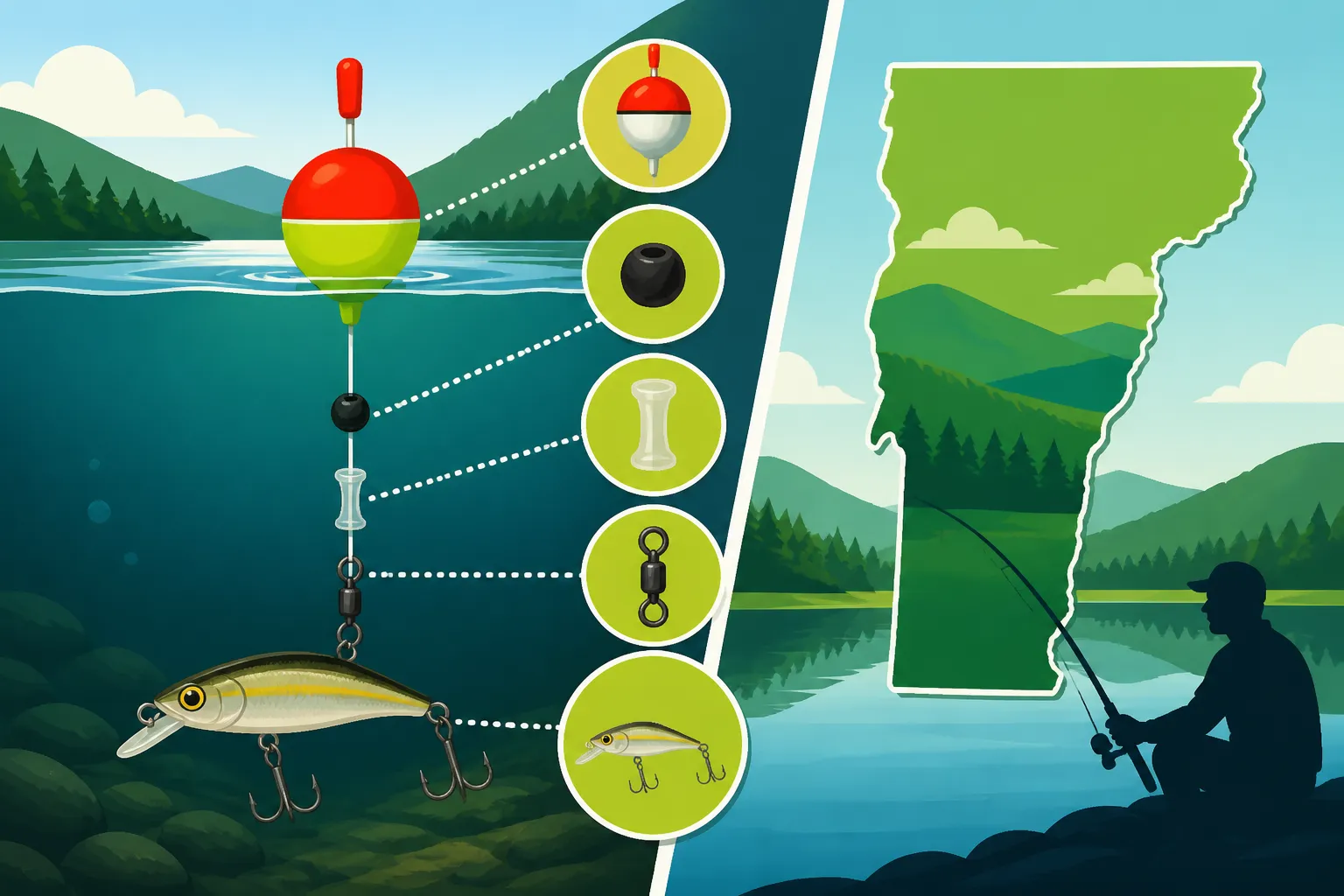
Here’s the order of operations for assembling your bobber stopper rig:
-
Bobber Stopper First: Take your chosen bobber stopper (thread, rubber, or plastic sleeve) and carefully slide it onto your main fishing line. For thread or rubber stoppers that come on a wire loop, thread your main line through the loop, then slide the stopper off the loop and onto your line. Wetting your line can sometimes help with this. Don't cinch it down tightly yet; just get it on there.
-
Add a Small Bead: This is a crucial step that many beginners miss! Immediately after the bobber stopper, slide a small plastic or glass bead onto your main line. The bead acts as a buffer between your bobber stopper and your slip bobber. Without it, the bobber stopper could slip into the top eyelet of your slip bobber, rendering it useless. Make sure the bead is larger than the hole in your slip bobber. You can often find great beads at Bass Pro Shops or even on Amazon.
-
Thread Your Slip Bobber: Next, thread your main line through the slip bobber. Slip bobbers are designed with a small eyelet at the top and bottom (or sometimes just the bottom, with an open channel). Your line should pass freely through it. Ensure it's oriented correctly so that the line slides easily.
-
Optional Second Bead: Some anglers like to add a second bead below the slip bobber, particularly if they are using a weight that might snag on the bottom eyelet of the bobber, or simply for added protection. It's not always necessary, but it's a good habit to consider.
-
Add Your Weight: Now it’s time for your weight. This could be a few small split-shot sinkers crimped onto the line, or a sliding egg sinker or bullet weight. The key is to use enough weight to properly present your bait and allow your bobber to sit upright, but not so much that it pulls the bobber completely under. If you’re using a sliding weight, you’ll also want a small swivel next.
-
Attach a Swivel (if using sliding weight): If you're using a sliding sinker, tie a barrel swivel or a snap swivel to the end of your main line, after your weight. This prevents the sliding weight from slipping down to your hook and helps reduce line twist, especially important when How to Fish a River for Smallmouth Bass.
-
Add a Leader: Tie a short leader (usually 18-36 inches) of monofilament or fluorocarbon to the other end of your swivel (or directly to your main line if you’re not using a sliding weight and swivel). The leader provides a more subtle presentation and can be replaced easily if it gets nicked or frayed.
-
Tie on Your Hook: Finally, tie your hook (or jig) to the end of your leader. The size and type of hook will depend entirely on your target species and bait.
-
Add Your Bait: And of course, the final, crucial step: bait your hook! Live worms, minnows, corn, powerbait, or small jigs all work wonderfully with this setup depending on what you're trying to catch.
Adjusting Your Depth for Optimal Presentation
The beauty of the bobber stopper system is its adjustability. Once your rig is assembled, you can easily change the depth your bait fishes at.
- Initial Setup: Start by setting your bobber stopper about 2-3 feet deeper than you estimate the fish are holding, or 2-3 feet off the bottom if you're targeting bottom feeders.
- Sliding the Stopper: To adjust, simply slide the bobber stopper up your main line to make your bait fish deeper, or slide it down to make it fish shallower. Always do this gently to avoid damaging your line, especially with rubber stoppers.
- Testing and Observation: Cast your rig out and watch how the bobber sits. If it's lying flat, you might not have enough weight or your bait is too heavy. If it’s standing upright but disappears too quickly, your bait might be hitting bottom. If it's just sitting there without any action, try adjusting the depth in small increments (6-12 inches) until you start seeing bites or your bobber indicates a more natural presentation.
- Consider the Species: For trout in a stocked pond, they might be cruising just a few feet below the surface. For walleye in deeper sections of Lake Champlain, they could be suspended 20 feet down over 40 feet of water. Walleye Fishing on Lake Champlain often benefits from precise depth control. For Best Techniques for Panfish in Vermont, shallower depths around weeds or structure are usually key.
Considerations for Vermont Fishing Conditions
Vermont offers a huge variety of fishing environments, from vast Lake Champlain to tiny mountain streams and serene farm ponds. Tailoring your bobber stopper setup to these conditions will significantly boost your success.
Targeting Different Species
Different fish species often prefer different depths and presentations, meaning your bobber stopper setup might vary slightly.
- Trout (Brook, Brown, Rainbow): For brook trout in clear, small streams, you might use a very light thread stopper with a tiny slip bobber and a small bead, allowing your bait (like a worm or corn) to drift naturally in slower pools or eddies. For stocked rainbow trout in ponds, they often congregate near the bottom or cruise shallower depths, so experiment from 2-10 feet. Best Gear for Vermont Trout Fishing often emphasizes lighter tackle and sensitive indicators.
- Smallmouth Bass: On bigger lakes like Champlain, smallmouth bass love structure and often suspend over rocky points or drop-offs. A rubber stopper might be ideal here, paired with a medium-sized slip bobber and a live minnow or soft plastic jerkbait. Being able to quickly adjust your depth to match their feeding zone is critical. You might even find them suspended in rivers, so check out Smallmouth Bass Fishing in Vermont for more tips.
- Largemouth Bass: These fish are often found in shallower, weedy areas, but can also suspend around submerged timber. A rubber or thread stopper with a durable slip bobber, perhaps rigged with a plastic worm or a shiner, allows you to drop your bait precisely into cover without getting snagged on the cast.
- Panfish (Perch, Crappie, Bluegill): For these fun-to-catch species, finesse is often key. A tiny thread stopper, small bead, and very light slip bobber are perfect for presenting small baits like a piece of worm, a tiny jig, or wax worms. They often school up in specific depth ranges, so adjust until you find the sweet spot.
Adapting to Water Conditions and Environment
Vermont's waterways present various challenges and opportunities for bobber fishing.
- Still Water (Ponds and Calm Lakes): In still water, your bobber stopper system is incredibly forgiving. You can use lighter weights and smaller bobbers, as there's no current to contend with. The main goal is to simply get your bait to the desired depth and keep it there. Best Fishing Lakes in Vermont offers many such calm spots.
- Moving Water (Rivers and Streams): This is where a bobber stopper really shines. In rivers, fish often sit in seams or eddies, and your bait needs to drift naturally at their level. A well-set slip bobber and stopper allow your bait to tumble downstream at the right depth, mimicking natural forage. However, a strong current can make a thread stopper slip, so consider a rubber one that grips more firmly. In faster currents, you might need a heavier bobber and weight to keep your line taut and prevent it from getting dragged too far off course.
- Deep Water vs. Shallow Water: For very deep water (like the depths of Lake Champlain), a slip bobber is almost mandatory. You simply can't cast a fixed bobber rig with 20+ feet of line out. The bobber stopper lets you reel it down, cast, and let it sink. In shallow water, the system still offers advantages in presenting your bait subtly at a specific depth, especially around submerged weeds or structure. Lake Champlain Fishing Guide often covers strategies for various depths.
Line Type Considerations
The type of fishing line you use can also influence your bobber stopper choice.
- Monofilament: This is the most common line for bobber fishing. Both thread and rubber stoppers work very well on monofilament. Monofilament stretches, which can be forgiving, and its neutral buoyancy allows bait to sink naturally.
- Fluorocarbon: Known for its low visibility and minimal stretch, fluorocarbon is excellent for clear water. Rubber stoppers grip fluorocarbon very well, but thread stoppers might need to be cinched a bit tighter due to fluorocarbon's slicker surface.
- Braided Line: Braided line is incredibly strong and sensitive, but its slick, thin nature can be a challenge for some bobber stoppers. If using braid, a robust rubber stopper or a properly tied thread stopper (with extra turns) will be essential to prevent slippage. Some anglers even use a small piece of dental floss tied with a double uni-knot as a stopper on braid for superior grip.
No matter your preferred line or target species, mastering the bobber stopper setup will open up a whole new world of bait presentation. Take the time to practice rigging it correctly, and experiment with different stopper types and depths. You'll quickly find that perfectly suspended bait can be the difference between a frustrating day and a fantastic fishing adventure in Vermont!
Disclaimer
This article is for general informational purposes only and does not constitute professional advice. Laws, prices and regulations vary by location and change over time. Consult a qualified professional for guidance on your specific situation.