Best livewell aerator for a small boat
There's nothing quite as heartbreaking as looking into your livewell after a great day on the water, only to find your hard-won catch looking a little… lifeless. You want to release those fish strong and healthy, or bring them home fresh for the table, but it's tough in a small boat where space is at a premium and water conditions can vary wildly. This guide is all about helping you understand why a quality livewell aerator isn't just a luxury, but a necessity, and how to choose the very best one to keep your catches thriving on your small Vermont boat.
Why a Livewell Aerator is a Must-Have for Small Boats in Vermont
Fishing on Vermont's beautiful lakes and rivers offers incredible opportunities, but it also comes with unique challenges. Whether you're chasing trophy smallmouth on Lake Champlain or panfish on a quiet pond, keeping your fish in prime condition until release or weigh-in is paramount. A good livewell aerator is the unsung hero of any small fishing boat, ensuring your aquatic companions stay lively and stress-free.
The Struggle of Keeping Fish Alive in Small Spaces
Let's be real, a small boat means limited space. You might not have the built-in, massive livewell systems that bigger bass boats boast. This often translates to smaller livewells or even just a cooler acting as a makeshift holding tank. In these confined spaces, oxygen depletes rapidly, especially with multiple fish or on warmer days. Imagine being crammed into a tiny room – you'd quickly feel the air thinning! Fish experience the same stress when their water quality declines.
Without proper aeration, water quickly becomes stagnant, and vital oxygen levels plummet. Ammonia, a byproduct of fish waste, also begins to build up, poisoning the water. This combination creates a toxic environment that severely stresses fish, making them lethargic, prone to disease, and significantly reducing their chances of survival upon release. It's a frustrating situation that every angler has likely faced at some point, feeling the disappointment of a fish that just couldn't make it. The goal is always to keep them spry, whether for a tournament or just to ensure a successful catch-and-release.
Beyond Just Tournaments: Ethical Angling
While tournament anglers rely heavily on aerators to keep their fish viable for weigh-ins, the benefits extend far beyond competitive fishing. For many of us, fishing is about respect for the resource. If you're practicing catch and release – which is common in many Vermont Catch and Release Fly Fishing Only Waters or during specific seasons like the Vermont Bass Catch-and-Release Season, Explained – a healthy release is the ultimate goal. Releasing a stressed or injured fish means it has a much lower chance of surviving and thriving in its natural habitat. An aerator helps minimize that stress, allowing the fish to regain its strength before swimming off.
Even if you're keeping your catch for the dinner table, a well-aerated livewell makes a difference. Fish kept in clean, oxygenated water will taste better and have firmer flesh than those that have been stressed in stagnant conditions. It's about maintaining the quality of your harvest, showing respect not just for the fish, but for your own efforts. It's part of being a responsible angler on any of Vermont's stunning waterways.
Meeting Vermont's Regulations and Promoting Fish Health
While Vermont's specific regulations mostly focus on limits and seasons, the underlying principle is often conservation and the health of the fish populations. When you're fishing on large bodies of water like Lake Champlain Fishing Guide or Lake Memphremagog Fishing Guide, you might be transporting fish for longer periods. Keeping them healthy during transport, especially if you plan to release them later or if specific species like muskellunge require careful handling as per Muskellunge catch and release survival tips, aligns perfectly with sound angling practices.
A properly aerated livewell demonstrates your commitment to the resource. It ensures that if a fish needs to be measured, identified, or held briefly before release, it's done in the most humane way possible. This proactive approach to fish care not only benefits the individual fish but also contributes to the overall health and sustainability of Vermont's fisheries, which is something all of us Vermonters value deeply.
Understanding Livewell Aerator Types for Your Small Vermont Boat
When you're trying to figure out the best way to keep your fish happy in a small boat, you'll quickly discover there isn't a one-size-fits-all solution. Different aerator types offer distinct advantages and disadvantages, especially when you're working with limited space and power in a smaller craft. Understanding these differences is key to making the right choice for your specific angling needs on Vermont's diverse waters.
Portable vs. Permanent Systems
This is often the first major decision for small boat owners.
Portable Aerator Systems:
These are fantastic for small boats, kayaks, canoes, or even if you're just using a cooler as your livewell. They are typically self-contained units that drop into your livewell or cooler, drawing water and aerating it.
- Pros for Small Boats:
- Flexibility: You can move them between boats or use them on shore. If you mostly fish from a kayak and occasionally use a small jon boat, a portable unit is perfect. Best Kayaks for Vermont Fishing often don't have built-in systems.
- Easy Setup: No complicated wiring or through-hull fittings required. You just drop it in, connect power, and you're good to go.
- Cost-Effective: Generally less expensive than permanent installations.
- No Permanent Alterations: You don't have to drill holes in your beloved small craft.
- Cons for Small Boats:
- Battery Dependent: Most portable units rely on D-cell batteries or a small 12V portable power source, which means limited run time. You'll want spare batteries or a backup plan.
- Less Powerful: May not circulate or aerate as vigorously as a dedicated permanent system.
- Space Usage: While small, they still take up valuable space in your livewell/cooler.
Permanent Aerator Systems:
These are built directly into your boat's livewell. They involve pumps mounted to the hull, plumbing, and switches on your console.
- Pros for Small Boats (if applicable):
- Reliability: Wired directly to your boat's battery, providing continuous power.
- Efficiency: Designed to circulate and aerate the entire livewell effectively.
- Out of the Way: Once installed, they are discreet and don't take up livewell space.
- Cons for Small Boats:
- Installation Complexity: Requires drilling holes, running wiring, and plumbing – a significant undertaking for a small boat, and potentially not something you want to do to a brand new craft.
- Cost: Higher initial cost for the system and potential professional installation.
- Less Flexible: Tied to that specific boat. If you switch boats, you can't take it with you.
- Space Requirement: Even though they're out of the way in the livewell, the pumps and plumbing still require space on the boat, which can be an issue in truly tiny craft.
For most small Vermont boat owners, a high-quality portable system is often the most practical and efficient choice, offering great performance without the hassle of a full-scale installation.
Air Pump vs. Water Pump Systems
This distinction refers to how the oxygen gets into your livewell water.
Air Pump Systems (Bubbler Systems):
These systems typically use an air pump to push air through an airstone or diffuser placed in the livewell. This creates a stream of fine bubbles, which allows oxygen to dissolve into the water.
- How They Work: An electric pump (often 12V or battery-powered) forces air through a hose to a submerged stone or plate.
- Pros:
- Simple: Fewer moving parts submerged in water, less prone to clogging from debris.
- Less Stress on Fish: Gentle bubbling action is often less turbulent than water pump jets, reducing stress on sensitive fish.
- Temperature Stability: Doesn't introduce new, potentially warmer or colder, water into the livewell. This is crucial when fishing in cold water conditions or during summer on a warm lake.
- Good for Small Livewells: The fine bubbles can efficiently oxygenate smaller volumes of water.
- Cons:
- Doesn't Circulate Water: While it oxygenates, it doesn't actively circulate the water or filter out ammonia and waste. You still might need to refresh water manually.
- Bubble Noise: Some pumps can be a bit noisy, which might disturb you or the fish.
Water Pump Systems (Recirculating/Aerating Pumps):
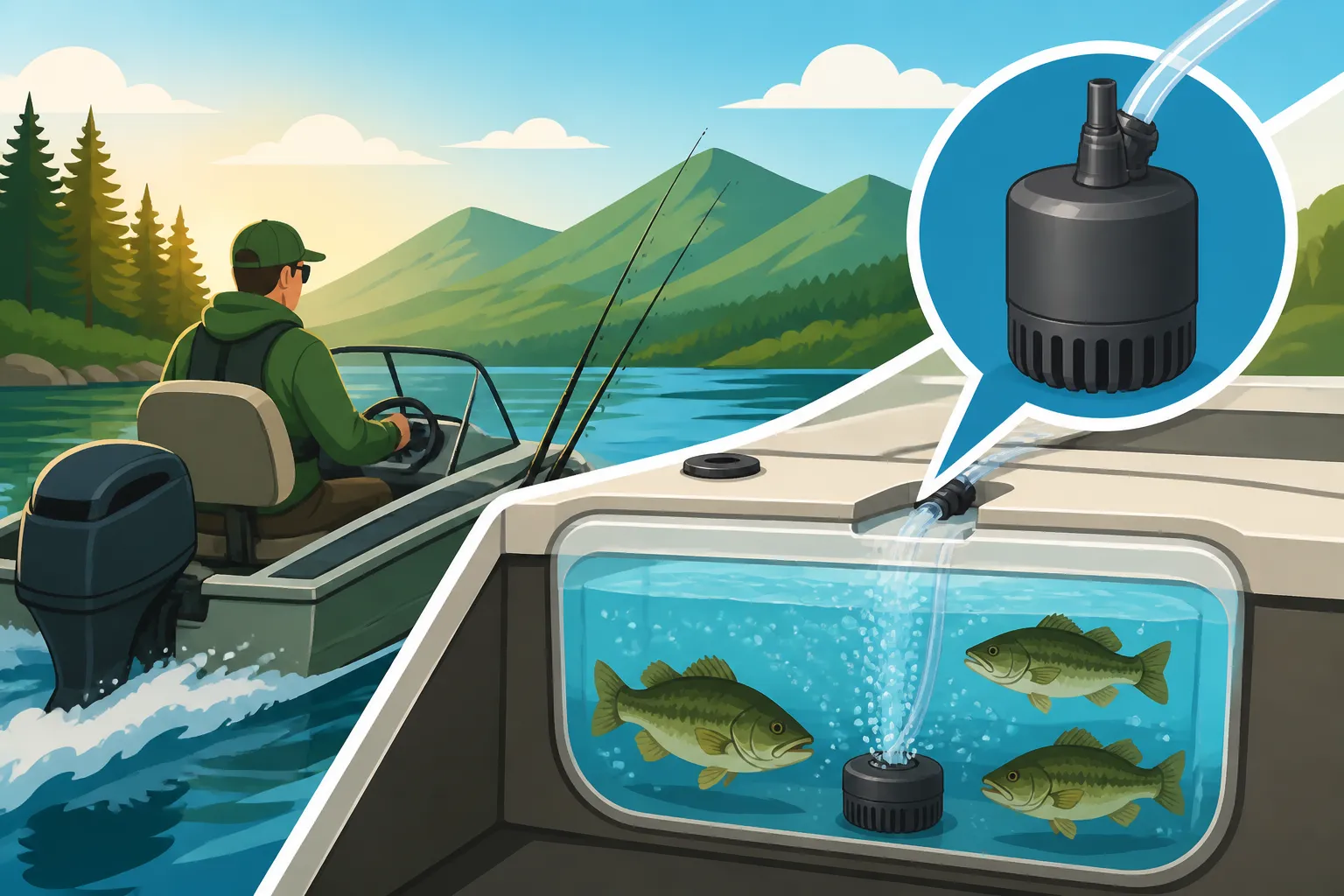
These systems pump water from the livewell, spray it back in, or draw fresh water from outside the boat and introduce it to the livewell. The act of spraying or moving the water helps oxygenate it.
- How They Work: A submersible pump draws water (either from the livewell itself or from outside the boat) and forcefully sprays it back into the livewell, creating a current and surface agitation, which increases oxygen transfer.
- Pros:
- Excellent Circulation: Actively moves water around, helping to distribute oxygen and remove hot spots.
- Filtration Potential: Some systems can be combined with filters to remove ammonia and debris.
- Temperature Control (if fresh water is drawn): If drawing fresh, cooler water from the lake, it can help regulate livewell temperature on hot days.
- Cons:
- More Complex: Can involve more plumbing and through-hull fittings for external intake.
- Potential for Clogging: Submersible pumps can get clogged with weeds or debris.
- Temperature Fluctuation Risk: If drawing water from outside, you must be mindful of significant temperature differences which can shock fish. This is a real concern in Vermont where water temperatures can vary significantly from the surface to deeper layers, or from morning to afternoon.
- More Turbulent: The forceful spray can sometimes stress delicate fish.
For small boats, a portable air pump system is often the most straightforward and effective for pure oxygenation, especially if your primary concern is keeping fish alive without major modifications. However, if you have a slightly larger "small boat" with a built-in livewell, a recirculating water pump might offer better overall water management.
Powering Your Aerator: Battery Life and Options
The heart of any portable aerator system is its power source. For small boats, you're usually looking at 12-volt DC power, but the delivery method varies.
- D-Cell or C-Cell Batteries: Many smaller, super-portable bubbler units run on standard alkaline batteries. These are incredibly convenient for minimalist setups like a canoe or a simple cooler livewell. The downside? Battery life. You'll want to carry spares, especially for a full day on the water. Think about a long day fishing for perch or crappie, you don't want your aerator dying mid-trip.
- 12V Marine Battery: This is the most common power source for more robust portable or permanent aerators.
- Direct Connection: If your small boat has a dedicated 12V marine battery for a trolling motor or electronics, many aerators can clip directly to its terminals. This offers much longer run times than D-cells. Just make sure you're not draining your trolling motor battery too much!
- Portable 12V Power Packs: If your boat doesn't have a large marine battery, or you want to keep your aerator separate, a small, portable 12V power pack (often rechargeable with a wall charger) is an excellent solution. These are typically smaller than a full marine battery and designed for portability. They can power an aerator for many hours.
- Solar Chargers: For extended trips or ultralight setups, some anglers integrate small solar panels to trickle-charge a 12V battery or portable power pack. This is less common for day-to-day use but can be a game-changer for multi-day excursions or remote fishing where you can't easily recharge.
When considering power, always think about the duration of your typical fishing trip. A few hours of fishing on a local pond is different from a full day chasing walleye on Lake Champlain Walleye Fishing. Ensure your power source can reliably last the entire time you need it.
Key Features to Look for in a Small Boat Livewell Aerator
Choosing the right livewell aerator for your small Vermont boat means looking beyond just the basic function of bubbling water. You need a unit that fits your specific needs, can withstand the rigors of fishing, and ultimately, keeps your fish as healthy as possible. Let's dive into some of the crucial features to consider.
Size and Portability
For small boats, size truly matters. Every inch of space, especially in the livewell or cooler, is precious.
- Compact Design: Look for aerators that are designed to be as small and unobtrusive as possible. If it's a submersible air stone, ensure the pump itself is compact and can be mounted or placed out of the way. If it's a self-contained portable unit, check its footprint. You don't want it constantly bumping against your fish or interfering with your ability to easily access them.
- Ease of Deployment and Retrieval: Can you easily drop it in and pull it out? For portable units, this is key. You might want to remove it for transport or cleaning. Units with simple clip attachments for battery terminals are often preferred over those requiring more intricate wiring.
- Weight: While most aerators aren't heavy, for smaller boats like canoes or kayaks, every ounce counts, especially if you're portaging or loading and unloading frequently. Consider a lightweight yet durable unit.
A unit that is too bulky or awkward will quickly become more of a nuisance than a help, no matter how well it aerates.
Aeration Method and Efficiency
The core purpose of an aerator is to add oxygen to the water. How effectively it does this is paramount.
- Fine vs. Coarse Bubbles: Generally, finer bubbles are more efficient at transferring oxygen into the water because they have a greater surface area. Look for airstones that produce a steady stream of very small bubbles rather than large, sporadic ones.
- GPH (Gallons Per Hour) or LPM (Liters Per Minute) Rating: While more common for water pumps, some air pumps will have a rating indicating the volume of air they can push. This gives you an idea of its power. Match this to your livewell's volume. A general rule of thumb is that you want to turn over the water volume in your livewell several times an hour for optimal oxygenation.
- Adjustable Airflow: Some advanced units allow you to adjust the amount of air being pumped. This can be beneficial. On a warm day with many fish, you might crank it up. On a cooler day with fewer fish, you might dial it back to conserve battery life. This flexibility gives you more control over the livewell environment.
- Water Circulation (for water pump systems): If you opt for a water pump system, how effectively does it circulate the entire livewell? Does it create dead spots, or is the flow consistent throughout? Look for spray bars or adjustable nozzles that distribute water evenly.
Ultimately, the goal is to create a constant supply of dissolved oxygen that mimics a natural, healthy environment for the fish. The more efficient the aeration, the better off your catch will be.
Durability for Vermont Waters
Vermont's fishing environment can be tough on gear. From rocky riverbanks to chilly spring mornings on the lake, your aerator needs to be built to last.
- Corrosion Resistance: Any parts that come into contact with water, especially if you occasionally fish brackish waters or simply deal with constant moisture, should be made of corrosion-resistant materials. Marine-grade plastics and stainless steel components are key.
- Robust Housing: The pump motor and electrical components need to be protected from bumps, drops, and water splashes. Look for sturdy, sealed housings. Fishing gear takes a beating, and your aerator shouldn't be an exception.
- Cold Weather Performance: If you do any early spring or late fall fishing, or even ice fishing (if using a holding tank), consider how the unit performs in colder temperatures. Batteries can be less efficient, and some plastics can become brittle. While you likely won't be running an aerator in freezing water, it needs to survive the climate. For ice fishing, an aerator could be useful for a portable bait bucket.
- Hose and Airstone Quality: The air hose should be flexible but durable, not prone to kinking or cracking. Airstones should be ceramic or a similar robust material that won't easily disintegrate.
Investing in a well-made aerator means you won't be replacing it every season, giving you more time to focus on catching fish on Vermont's Labor Day Mentored Fishing Weekend or pursuing trophy trout.
Ease of Installation and Maintenance
No one wants to spend more time fiddling with gear than actually fishing.
- Simple Setup for Portable Units: This is where portable units shine. Look for units that are truly "plug and play" with alligator clips for battery attachment and a simple drop-in airstone.
- Clear Instructions for Permanent Units: If you do decide to go with a permanent installation, make sure the instructions are comprehensive and easy to follow. Or, budget for professional installation if DIY isn't your strong suit.
- Easy Cleaning: Algae and slime can build up on airstones and in hoses. Can these components be easily disassembled and cleaned? Replaceable airstones are a huge plus.
- Battery Access: For battery-powered units, how easy is it to change the batteries? Are special tools required? Quick, tool-free access is always better.
A low-maintenance aerator means less hassle and more time enjoying the beautiful scenery and productive waters that Vermont has to offer.
Top Considerations for Choosing the Right Aerator
Navigating the world of livewell aerators can feel a bit overwhelming with all the options out there. But by focusing on a few key considerations tailored to your small boat and fishing style in Vermont, you can confidently choose a system that truly enhances your angling experience.
Matching Aerator to Your Boat Size and Livewell Volume
This is perhaps the most critical step. A massive aerator on a tiny livewell is overkill and a waste of power, while a small unit in a large livewell will be ineffective.
1. Measure Your Livewell (or Cooler):
Grab a tape measure! Figure out the length, width, and depth of your livewell or the cooler you plan to use. Multiply these figures (in inches, then divide by 231) to get the approximate gallon capacity. Most small boat livewells are anywhere from 5 to 20 gallons.
2. Consider Fish Load:
How many fish do you typically keep in your livewell, and for how long? A few panfish for a couple of hours will need less oxygen than a limit of feisty smallmouth bass held all day on a warm summer afternoon. The more fish, and the longer the holding time, the more robust an aeration system you'll need. If you're targeting Vermont Bass Minimum Length Limits, you want to ensure any fish you keep or release are in top condition.
3. Smallest Boats (Kayaks, Canoes, Jon Boats without dedicated livewells):
For these, portable, battery-operated air pump systems are almost always the way to go. They're compact, require no installation, and can be used with a simple cooler. Look for units like the those offered by Marine Metal Products (often found at retailers like Bass Pro Shops) or similar brands that provide a strong, quiet air pump and an efficient airstone. Carrying a spare power pack or a few extra D-cell batteries will be your best friend.
4. Small Boats with Integrated (but small) Livewells:
If your boat has a tiny built-in livewell, you might have the option for a small, permanent recirculating pump, but a portable air pump unit is still often the easiest and most effective solution. If you go permanent, ensure the pump's GPH rating matches your livewell volume. You'll likely want something in the 300-500 GPH range for effective water turnover.
Remember, the goal is not just to keep water moving, but to keep it oxygenated. A continuous stream of fine bubbles from an air pump is often more effective for pure oxygenation in small, static livewells than just splashing water around.
Budget-Friendly vs. Premium Options
Just like any other piece of fishing gear, livewell aerators come in a range of prices. Your budget will inevitably play a role, but it's important to understand what you're getting for your money.
Budget-Friendly Options (Typically under $50-70):
- What you get: These are usually basic, battery-powered portable air pumps. They often come with a small airstone and a simple hose.
- Pros: Inexpensive, very portable, simple to operate. Perfect for casual anglers, occasional use, or as a backup.
- Cons: Shorter battery life, potentially less powerful aeration, less durable construction. You might find yourself replacing them more frequently.
- Where to find them: Many generic brands or entry-level models are widely available online through Amazon or at local sporting goods stores.
Mid-Range Options (Typically $70-150):
- What you get: You'll start to see more robust portable air pumps, some with rechargeable 12V power packs, or entry-level permanent recirculating water pumps. These often feature better build quality, quieter operation, and more efficient aeration.
- Pros: Better durability, longer run times, more efficient oxygen transfer, potentially quieter operation. A good balance of features and cost.
- Cons: Still might have limitations compared to high-end units, but generally provide excellent value.
- Where to find them: Reputable brands like Marine Metal Products, Attwood, or Rule often have excellent options in this range, available at larger outdoor retailers like Bass Pro Shops or specialty marine supply stores.
Premium Options (Typically $150+):
- What you get: These are often advanced permanent systems with integrated timers, filtration capabilities, temperature sensors, or very high-capacity portable systems with long-lasting lithium battery packs. They feature top-tier materials, silent operation, and exceptional efficiency.
- Pros: Maximum reliability, superior fish care, advanced features, extreme durability, and often a longer warranty.
- Cons: Significant investment, potentially overkill for a very small, simple boat.
- Where to find them: High-end marine electronics shops or specialized fishing outfitters are good places to look.
Consider how often you fish, the value of your catch (both monetary and sentimental), and your overall commitment to fish health when deciding how much to invest. For many small boat anglers in Vermont, a solid mid-range portable unit offers the best bang for your buck.
Where to Find Them
Once you have a good idea of what you're looking for, the next step is finding it! Thankfully, you have several excellent avenues to explore.
Online Retailers:
Websites like Amazon offer an incredible selection of livewell aerators, from the most basic portable bubblers to more complex systems. The convenience of browsing countless options, reading user reviews, and having it shipped directly to your door is hard to beat. Just be sure to read the product descriptions carefully to ensure the unit meets your needs, especially regarding power source and capacity. It's a great place to compare different models side-by-side.
Specialty Fishing and Outdoor Stores:
For a more hands-on experience, visiting a large outdoor retailer like Bass Pro Shops can be invaluable. You can see the actual units, feel their construction, and often get advice from knowledgeable staff who understand local fishing conditions in places like Vermont. They can help you compare models and ensure you're getting something appropriate for Vermont Trout Season and Stocking Rules or chasing the big ones on Lake Champlain Lake Trout Fishing. Plus, they'll usually have all the necessary accessories like spare batteries, hoses, and airstones readily available.
Local Marine Supply Shops:
Smaller, independent marine supply stores can also be a hidden gem. While their selection might not be as vast as the big box stores, they often cater to the specific needs of local boaters and can offer personalized recommendations based on the types of boats and fishing prevalent in Vermont's lakes and rivers.
When you're ready to buy, remember to factor in any additional items you might need, like spare batteries, extra tubing, or a small scoop net for handling fish in the livewell.
Aerator Type Comparison for Small Boats
To help you visualize the differences, here's a quick comparison of the two primary aerator types you'll consider for a small boat in Vermont:
| Feature | Portable Air Pump System (Bubbler) | Permanent Recirculating Water Pump System |
|---|---|---|
| Best For | Kayaks, canoes, small jon boats, cooler livewells, simple setups | Small boats with existing integrated livewells, more dedicated setups |
| Oxygenation Method | Air pump creates fine bubbles via airstone, dissolving oxygen into water | Pumps water from livewell (or outside) and sprays it back in, creating surface agitation |
| Installation | Drop-in, clips to power source; no boat modifications needed | Requires drilling holes, plumbing, wiring to boat's electrical system |
| Power Source | D-cell batteries, C-cell batteries, portable 12V power packs, boat battery | Primarily boat's 12V marine battery |
| Cost (Typical) | Budget to Mid-range | Mid-range to Premium |
| Water Quality | Primarily adds oxygen; limited circulation/filtration; maintains water temperature | Adds oxygen, circulates water, can filter, can change water temperature if external intake |
| Maintenance | Easy cleaning of airstone/hose, simple battery changes | Check pump for clogs, clean intake screens, monitor wiring |
| Portability | Highly portable, can move between boats/coolers | Fixed to one boat |
| Primary Benefit | Simple, effective oxygenation for sensitive fish and limited space | Consistent, high-volume oxygenation and water movement |
Ultimately, the choice depends on your boat, your budget, and how you fish. But for many small boat anglers in Vermont, a well-chosen portable air pump system provides all the benefits without the complications, letting you focus on the joy of the catch.
Disclaimer
This article is for general informational purposes only and does not constitute professional advice. Laws, prices and regulations vary by location and change over time. Consult a qualified professional for guidance on your specific situation.