Best downrigger cable for deep walleye trolling
There’s nothing quite as exciting as the thump-thump of a deep-diving downrigger weight when you're trolling for walleye on a vast lake like Champlain. But when that thump isn't followed by the tell-tale struggle of a fish on the line, or worse, your gear isn't hitting the depths you expect, it's incredibly frustrating. The truth is, your downrigger cable plays a much bigger role in your success than many anglers realize, directly impacting how effectively you present your lures to those finicky deep-water walleye. This comprehensive guide is going to dive deep into the world of downrigger cables, helping you understand the different types, their pros and cons, and how to choose and maintain the best one to maximize your walleye catches in Vermont's deeper waters.
Understanding Downrigger Cables: Why It Matters for Deep Walleye Trolling
When you're trying to coax walleye from the thermocline or off deep structure in Vermont's larger lakes, precision is absolutely key. These fish can be incredibly sensitive to lure presentation, and if your bait isn't exactly where it needs to be, you might as well be fishing in a bathtub. The unsung hero in this precision game is your downrigger cable, the vital link between your downrigger and that heavy cannonball weight. Its properties directly influence everything from how accurately your lure tracks depth to how much effort it takes to get it there.
The Role of Downrigger Cable in Precision Trolling
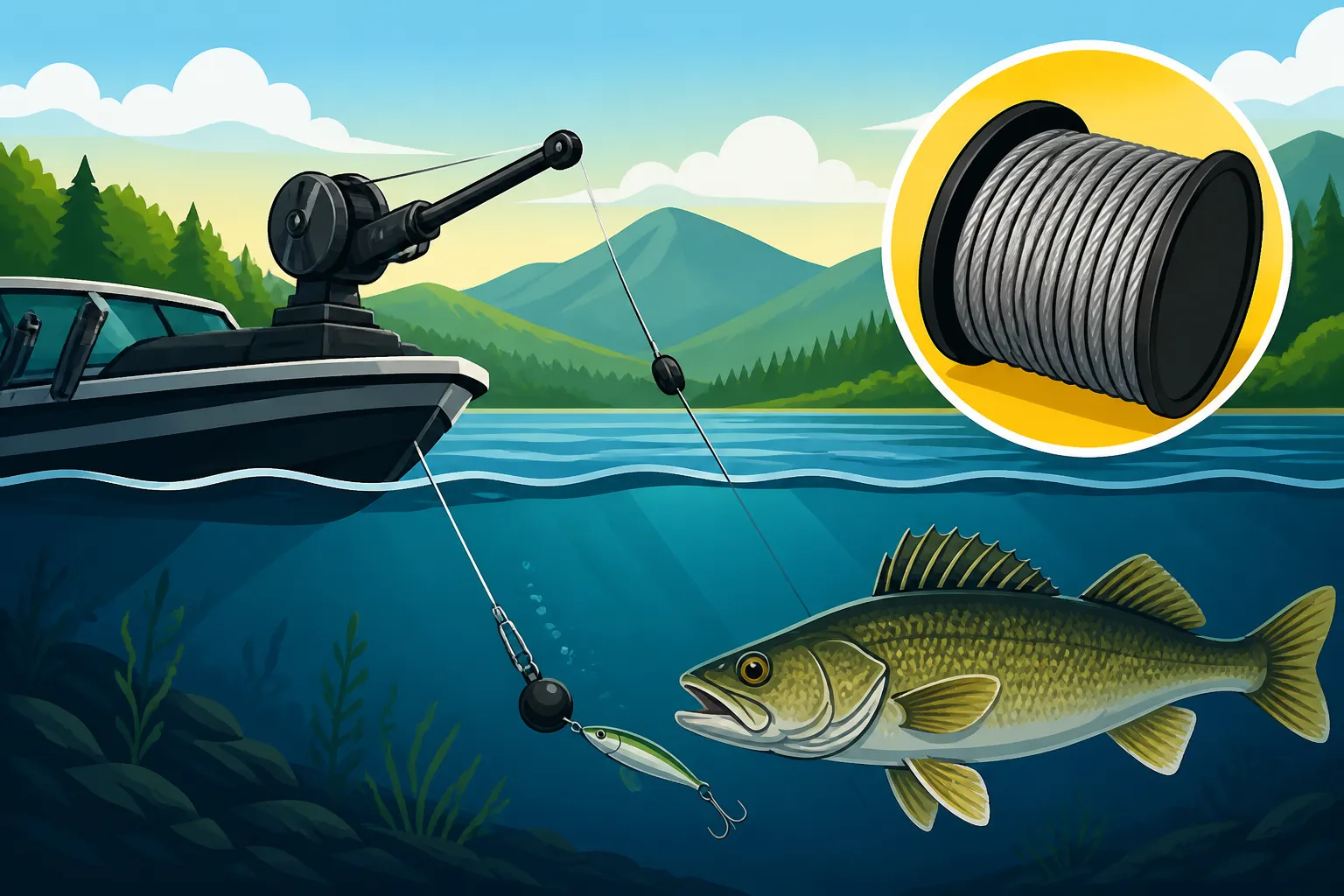
Think of your downrigger cable as the lifeline to your deep-water success. Its primary job is to hold your downrigger weight at a specific depth, which in turn keeps your lure precisely in the strike zone. If you're targeting walleye that are hugging the bottom in 40 feet of water, or suspended at 35 feet over a vast abyss on Lake Champlain, having a cable that allows for consistent, predictable depth control is paramount. Fluctuations in depth due to cable stretch or "blowback" (the angle the cable takes behind the boat due to water resistance) can mean the difference between a productive day and a frustrating one.
A good downrigger cable minimizes blowback, ensuring that the depth you set on your downrigger counter is as close as possible to the actual depth of your weight. This is especially critical when trolling at higher speeds or in stronger currents, both of which can significantly impact how far back and up your weight gets pulled. Without a reliable cable, you're essentially guessing where your lure is, which is not a recipe for consistent walleye success.
Common Cable Materials: Steel vs. Braided
Historically, stainless steel cable has been the standard for downriggers, a tried-and-true workhorse that has served anglers for decades. It's robust, relatively inexpensive, and offers good strength for heavy weights. However, the angling world, including the techniques for How to Catch Walleye on Lake Champlain, is constantly evolving, and a newer player has entered the game: braided superline. This isn't your typical fishing line, but a specially constructed, often high-modulus polyethylene (HPME) fiber braid, designed for the unique demands of downrigger use.
The choice between these two materials isn't just a matter of preference; it's a decision that impacts your trolling strategy, your wallet, and ultimately, your catch rate. Each has distinct characteristics that make it better suited for certain situations, and understanding these differences is crucial for any serious walleye angler. We're talking about things like durability, how much water resistance they create, their sensitivity, and how much maintenance they require to keep performing optimally. You'll find a wide selection of both types of cable available at major outdoor retailers and online, from places like Bass Pro Shops or readily available on Amazon.
Stainless Steel Downrigger Cable: The Traditional Choice
For many anglers, the familiar metallic glint of stainless steel cable spooling off a downrigger evokes a sense of tradition and reliability. It's been the backbone of deep-water trolling for generations, and for good reason. Its inherent strength and durability make it a robust choice, especially when you're dropping heavy weights into the depths of Vermont's lakes.
Advantages of Steel Cable for Walleye Anglers
One of the biggest advantages of stainless steel downrigger cable is its sheer robustness. It's incredibly durable and resistant to abrasion, which is a huge plus when you're fishing areas that might have submerged timber, rock piles, or other abrasive structures that walleye love to hug. If your cannonball occasionally bumps the bottom, a steel cable is much more forgiving than other materials, shrugging off minor scrapes that could severely weaken a braided line. This gives you a certain peace of mind, especially when you're focusing on keeping your lure right in the sweet spot.
Another significant benefit is its minimal stretch. When you're pulling a heavy lead ball, you want that weight to stay put. Steel cable has almost no stretch, meaning that the depth you dial in on your downrigger is the depth your weight is actually running, with less elasticity to contend with. This consistency is invaluable when targeting walleye that might be holding in a very specific depth band. Plus, steel cable is generally more affordable upfront, making it an attractive option for anglers looking for a reliable, budget-friendly setup. It’s a solid choice for Best Trolling Gear for Lake Champlain Walleye.
Potential Drawbacks and Maintenance for Steel Cable
While steel cable is tough, it's not without its quirks. One common frustration is the potential for kinks. If the cable gets twisted or improperly handled, a kink can form, which severely weakens the line and can lead to breakage. It's like a weak link in a chain, and a kinking incident can ruin a perfectly good spool of cable. You also need to be vigilant about rust and corrosion, especially if you're fishing in brackish or even highly mineralized freshwater. While stainless steel is resistant, it's not entirely impervious, and proper rinsing and drying after each trip are crucial to prolong its life.
Some anglers also report a slight "hum" or vibration that steel cable can create in the water, which they theorize might spook wary fish. However, for walleye fishing at deeper depths, this is generally considered a minor concern, as the fish are often less sensitive to such disturbances than, say, shallow-water trout. Regular inspection for fraying, especially near the clip attachment point, is essential. Any signs of wear mean it’s time for a replacement to avoid losing an expensive downrigger weight or, worse, a trophy walleye.
Braided Superline Downrigger Cable: The Modern Alternative
As fishing technology has advanced, so too have the materials we use. Braided superline, often made from high-strength synthetic fibers, has emerged as a formidable alternative to traditional steel cable for downriggers. This modern option brings a different set of advantages to the table, particularly appealing to anglers who prioritize sensitivity and minimal blowback in their deep-water trolling pursuits.
The Benefits of Braided Cable for Sensitive Walleye Bites
The most striking advantage of braided superline for downrigger use is its incredibly thin diameter for its breaking strength. This reduced diameter means significantly less water resistance, which in turn translates to less "blowback." Less blowback means your downrigger weight runs truer to the depth you've set, even when trolling at faster speeds or in strong currents, which is a huge boon for precise walleye presentations on a lake like Champlain. You can often use lighter downrigger weights to achieve the same depth compared to a thicker steel cable, reducing strain on your downrigger system.
Another standout feature is the enhanced sensitivity. Braided lines have virtually no stretch, allowing you to feel even the slightest tap or bump on your downrigger weight. This can be crucial for detecting subtle walleye bites that might go unnoticed with a more elastic steel cable. Imagine feeling the gentle pickup of a wary walleye rather than just seeing a slight twitch on your rod tip – that heightened connection can lead to more hookups. This sensitivity can also help you feel when your weight is subtly ticking the bottom, allowing for incredibly precise depth control over contours, which is a common tactic for Walleye Fishing on Lake Champlain.
Challenges and Considerations for Using Braided Cable
While braided superline offers compelling benefits, it does come with its own set of considerations. The initial cost is typically higher than steel cable, which can be a barrier for some anglers. While its longevity can often justify the investment, it's something to budget for. Another point of concern can be tangles. Because braided line is so limber and has no memory, if it's not spooled correctly or if a slack loop forms, it can tangle more easily than stiff steel cable. However, most modern braided downrigger lines come pre-spooled on downriggers or are designed to resist this.
Abrasion resistance, while good for modern braids, generally isn't quite on par with steel cable. This means you need to be a bit more mindful when your downrigger weight is interacting with sharp rocks or jagged structure. Regular checks of the last few feet of line are paramount, and it's wise to cut back and re-tie the snap swivel periodically to ensure line integrity. If you're using braided line, you'll want to ensure your downrigger's pully system is designed for it, as some older units might have sharp edges that can fray the braid.
Choosing the Right Cable: Factors for Vermont Deep Walleye Trolling
Deciding between steel and braided downrigger cable isn't a simple right or wrong answer; it's about understanding your fishing style, the specific waters you're tackling, and your priorities as an angler. For deep walleye trolling in Vermont, particularly on vast bodies of water, several factors weigh heavily in this decision. Thinking through these points will help you make the most informed choice for your setup.
Depth and Blowback on Lake Champlain
When you're chasing walleye on the massive expanse of Lake Champlain, often at depths of 30, 40, or even 50+ feet, managing "blowback" is critical. Blowback refers to how much the water resistance pushes your downrigger weight (and thus your cable) back and up from directly beneath your boat. A cable with a larger diameter will experience more water resistance, leading to more blowback and requiring a heavier downrigger weight to hold a specific depth, or causing your lure to run shallower than intended. This is where braided superline truly shines.
Its significantly thinner diameter means it slices through the water with less resistance. This translates to less blowback, allowing your cannonball to run closer to vertical and providing a more accurate depth reading on your downrigger. If you're running multiple lines or trying to precisely stack lures at different depths, minimizing blowback is a huge advantage. For anglers who value pinpoint depth control, especially when trolling at a brisk pace or in current, braided cable offers a performance edge that can make all the difference in consistently hitting the walleye's strike zone. Knowing how to precisely control your depth is key to How to Catch Walleye on Lake Champlain.
Strength and Abrasion Resistance for Vermont Waters
Vermont's lakes and rivers can present a variety of underwater challenges. While many walleye spots are relatively clean, you'll inevitably encounter rock piles, old timber, or even scattered debris. Your downrigger cable needs to be tough enough to handle these encounters without snapping. Stainless steel cable, by its nature, offers excellent abrasion resistance. It can take a good scrape against a rock or a submerged branch and often come out unscathed, especially if it's a momentary contact.
Braided superlines, while strong in terms of breaking strength, can be more susceptible to cutting or fraying if they repeatedly rub against sharp edges. This isn't to say they are weak, but rather that their failure mode is different. Steel might bend or fray slowly, while braid can cut relatively quickly. For this reason, if you frequently fish areas with heavy, abrasive structure, or if you find yourself often bumping bottom, the peace of mind offered by steel's toughness might be more appealing. Always consider the recommended breaking strength, typically around 150-200 lbs, which is usually sufficient for handling standard downrigger weights up to 12-15 lbs, plus the pull of a fighting fish.
Cost, Maintenance, and Longevity
The financial aspect and long-term care are also important considerations. As mentioned, stainless steel cable typically has a lower upfront cost. However, it requires diligent maintenance, primarily rinsing with fresh water after every outing to prevent corrosion and regular inspection for kinks and fraying. If neglected, steel cable can degrade surprisingly quickly.
Braided superline, on the other hand, comes with a higher initial price tag. But its maintenance is often simpler: rinse and dry. It doesn't corrode, and it doesn't suffer from kinks in the same way steel does. If cared for properly, avoiding nicks and cuts, a good braided downrigger line can offer excellent longevity, sometimes outlasting multiple spools of steel. When considering which to buy, think about your total cost of ownership, including the time you're willing to dedicate to maintenance and how often you'd anticipate needing to replace the cable. Ultimately, both options are available through various vendors, including on Amazon or at your local Bass Pro Shops.
Installation, Spooling, and Care for Downrigger Cable
Once you've made the crucial decision between steel and braided downrigger cable, the next step is getting it properly installed and taking care of it. A high-quality cable, poorly spooled or neglected, can perform just as badly as a cheap, inferior one. Proper setup and routine maintenance are paramount to ensuring your downrigger system operates flawlessly, giving you the best chance at landing those deep-water walleye in Vermont.
Proper Spooling for Optimal Performance
Whether you're replacing old cable or setting up a brand-new downrigger, correct spooling is fundamental. The goal is to lay the cable onto the downrigger spool with even, consistent tension. If the line is spooled too loosely, it can dig into itself under pressure, leading to tangles, kinks (especially with steel), and even line breaks. If it's spooled too tightly, it can deform the spool or weaken the line itself over time.
For most downriggers, you'll want to attach one end of the cable to the spool's arbor (often through a small hole or clip) and then use a helper or a specialized spooling station to apply consistent pressure as you wind the cable. A good trick is to run the line through a thick glove or a towel in your hand, applying steady tension as you crank the spool. You want the line to lie flat and evenly across the spool, without any gaps or overlaps. A properly spooled downrigger cable will pay out smoothly and retract efficiently, which is exactly what you need when you're busy fighting a fish or making quick depth adjustments. Proper spooling is also important for Best Trolling Gear for Lake Champlain Walleye.
Routine Maintenance for Extended Cable Life
Even the toughest downrigger cable needs a little love to perform its best and last as long as possible. Neglecting maintenance is a surefire way to shorten its lifespan and increase your chances of equipment failure at the worst possible moment.
Here’s a simple routine that can make a huge difference:
- Rinse After Every Trip: This is non-negotiable, especially for steel cable. Freshwater rinsing removes salt (if you've been in brackish water, though less common for most Vermont walleye spots), dirt, and any lake grime that can promote corrosion or wear. Simply run fresh water over the spooled cable, letting it soak briefly, then gently wipe it down.
- Dry Thoroughly: After rinsing, allow the cable to air dry completely before storing your downrigger. Trapped moisture, especially on steel, is the enemy and can quickly lead to rust and degradation.
- Inspect Regularly: Before and after each outing, visually inspect the entire length of the cable you typically deploy. Pay close attention to the last 10-20 feet, as this section sees the most stress from the downrigger weight and line clips. Look for any signs of fraying, kinks, nicks, or discoloration.
- Cut Back and Re-tie: For both steel and braided cable, it’s a good practice to cut off the last few feet of cable and re-tie the snap swivel or attachment point a few times a season, or whenever you notice any wear. This section takes the brunt of the abuse and is the most common point of failure.
- Lubricate (Steel Only): Some anglers choose to occasionally apply a light silicone spray or specialized cable lubricant to steel cables to further reduce friction and inhibit corrosion. Always check product compatibility with your cable material.
By incorporating these simple steps into your routine, you’ll ensure your downrigger cable remains strong, reliable, and ready for whatever deep-water walleye fishing in Vermont throws your way. This level of attention to detail helps you avoid frustrating tangles, unexpected break-offs, and allows you to focus on the thrill of the catch rather than gear malfunctions.
Comparison: Steel vs. Braided Downrigger Cable
To help you make an informed decision for your deep walleye trolling setup in Vermont, here's a quick comparison of the key attributes of stainless steel and braided superline downrigger cables.
| Feature | Stainless Steel Cable | Braided Superline Cable |
|---|---|---|
| Material | Multi-strand stainless steel | High-modulus polyethylene (HPME) fibers |
| Diameter | Thicker for comparable strength | Thinner for comparable strength |
| Blowback | Higher (more water resistance) | Lower (less water resistance) |
| Sensitivity | Lower (some inherent stretch/vibration dampening) | Higher (virtually no stretch, direct feel) |
| Abrasion Res. | Excellent (resists scrapes and cuts) | Good (can be susceptible to sharp cuts/frays) |
| Kinking | Prone to kinks if improperly handled | Not prone to kinking, but can tangle if loose |
| Corrosion | Prone to rust if not rinsed/dried (stainless resistant) | Impervious to rust and corrosion |
| Cost | Generally lower initial cost | Generally higher initial cost |
| Maintenance | Rinse, dry, inspect for kinks/frays, potential lubrication | Rinse, dry, inspect for cuts/frays, less prone to issues |
| Visibility | More visible (metallic sheen, though deep fish may not care) | Less visible (often dark colors, thinner) |
| Best For | Budget-conscious, rougher terrain, reliable workhorse | Precision depth, maximum sensitivity, minimizing weight |
Choosing the right downrigger cable is a nuanced decision that hinges on your personal fishing style, the specific conditions of Vermont's diverse fishing spots like Lake Champlain Fishing Guide or the deep waters where you target walleye. While steel cable remains a venerable and effective choice, the advancements in braided superlines offer compelling performance benefits, particularly for precision-minded anglers who value sensitivity and minimal blowback. Consider your priorities, budget, and the characteristics of your favorite walleye haunts, and you'll be well on your way to a more successful and enjoyable trolling experience. Whether you stick with tradition or embrace the modern, your downrigger cable is a critical piece of the puzzle in deep walleye trolling.
Disclaimer
This article is for general informational purposes only and does not constitute professional advice. Laws, prices and regulations vary by location and change over time. Consult a qualified professional for guidance on your specific situation.