Lake Dunmore best trout fishing spots
It's incredibly frustrating when you arrive at a beautiful spot like Lake Dunmore, gear in hand, full of anticipation, only to realize that finding the best trout fishing spots isn't as simple as just casting a line anywhere. This guide is here to cut through that confusion, offering practical, on-the-water wisdom to help you pinpoint where the trout are biting on Lake Dunmore and how to catch them.
Understanding Lake Dunmore's Trout Fishery
Lake Dunmore, nestled in the scenic heart of Addison County, is a gem for anglers, but it’s not always an open book, especially when it comes to trout. It's a fairly deep lake, reaching over 100 feet in some spots, which immediately tells us that trout here can be found across a wide range of depths and conditions. The lake is regularly stocked with trout, primarily Rainbow Trout and Brown Trout, and it also holds a healthy population of wild Lake Trout. This diversity means you need to be adaptable, but it also means there's almost always a trout biting somewhere.
One of the biggest misconceptions I hear from folks is that you can just toss a worm off the public beach and expect to land a trophy trout. While you might get lucky with a smaller, recently stocked fish, the bigger, warier trout have very specific preferences. They seek out cooler water, especially as the seasons change, and they relate heavily to the lake's unique underwater geography. If you understand these fundamentals, you’re already halfway to a successful day.
Trout Species You'll Find in Lake Dunmore
When you're targeting trout in Lake Dunmore, you're likely aiming for one of three main species, each with its own quirks and preferred hangouts. Knowing your quarry is half the battle, and it helps you choose the right gear and tactics.
First up, the Rainbow Trout. These beauties are a staple of Vermont's stocking program, and Lake Dunmore gets its fair share. Rainbows are often found cruising the shallower waters, especially in spring and fall, but they'll follow baitfish into deeper, cooler zones during the summer months. They’re known for their acrobatic fights and can be enticed by a wide variety of lures and baits. Many anglers start their trout journey with rainbows because they're generally more aggressive and less finicky than their brown or lake trout cousins. You'll often find them near inlets, outlets, and along weed lines where they can ambush smaller baitfish or insects. Understanding the "Vermont Trout Season and Stocking Rules" can give you an edge, as recently stocked fish often hang around the access points for a while.
Then there are the Brown Trout. Browns are a bit more elusive and notoriously cautious. They tend to be more structure-oriented, hiding near rocky drop-offs, submerged timber, or deep weed beds. They’re often nocturnal feeders, especially the larger ones, making dawn, dusk, or even night fishing particularly productive. Unlike rainbows, browns can grow to impressive sizes in Lake Dunmore, feeding on larger baitfish like smelt. Catching a big brown trout here is often considered a true angling achievement. They present a different kind of challenge, requiring more patience and a subtle approach.
Finally, the Lake Trout. These are the true cold-water residents of Lake Dunmore, often dwelling in the deepest, coolest parts of the lake. They are slow-growing and long-lived, and a significant amount of "Lake Trout Fishing in Vermont" takes place in deep, clear waters like Dunmore. While not as common as the stocked rainbows and browns, a lake trout catch is always a thrill. You'll need specialized gear and techniques, like downrigging or vertical jigging, to reach them. They're often found hugging the bottom structure or suspended over deep basins, particularly during the warmer months when surface temperatures send them packing to the chilly depths.
The Lake's Unique Structure and Its Impact on Trout
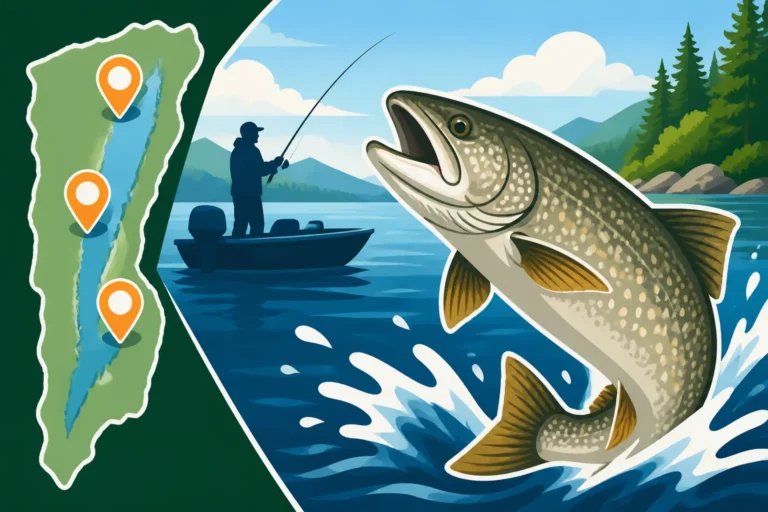
Lake Dunmore isn't just a big bowl of water; it has distinct features that concentrate trout. Its elongated shape, with a northern and southern basin, means different areas will fish differently. The lake is fed by a few small streams and drains into the much smaller Fern Lake. These inlets and outlets, even if minor, are crucial.
The northern basin of Lake Dunmore is generally shallower and has more gradual slopes, with a fair amount of submerged vegetation in certain areas. This makes it prime habitat for baitfish, and consequently, for cruising rainbow and brown trout, especially during the spring and fall when water temperatures are favorable. You'll find a mix of rocky shores and softer bottoms here. As summer progresses and surface waters warm, these trout will either move deeper or shift their activity to cooler periods of the day, like early morning.
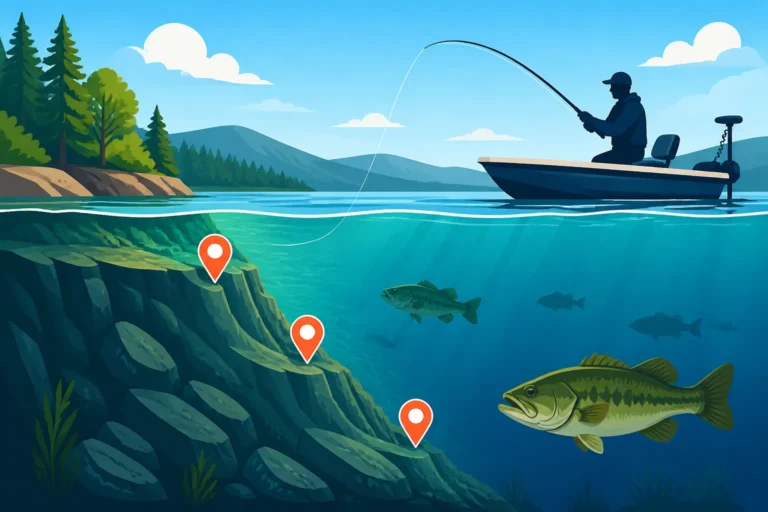
The southern basin, on the other hand, drops off much more dramatically, reaching depths that comfortably house Lake Trout year-round. Here, you'll encounter significant underwater ledges, humps, and abrupt drop-offs. These structural elements provide excellent ambush points and thermal refuge for all trout species, particularly the larger brown and lake trout. During summer, the thermocline – the layer where warm surface water meets cold deep water – becomes a critical zone. Trout will suspend at or just below this layer, where temperatures are ideal, and baitfish are often concentrated. Understanding how to use your electronics to locate these depth changes and temperature breaks is paramount for successful deep-water fishing.
The presence of a few small islands and underwater shoals also creates unique current patterns and structure that can hold fish. For instance, the small island near the northern end provides a natural funnel for baitfish, attracting predatory trout. Areas with submerged boulders or old timber are also magnets for brown trout looking for cover.
Top Shoreline and Shallow Water Trout Hotspots on Lake Dunmore
Let's be real, not everyone has a fancy bass boat with all the bells and whistles. Many of us, myself included, love the simplicity of fishing from shore or paddling a kayak in the shallows. And guess what? Lake Dunmore still offers fantastic opportunities for trout in these accessible areas, especially during the cooler parts of the year. The key is knowing where to focus your efforts.
During the spring, right after ice-out, and again in the fall as water temperatures begin to drop, trout become much more active in the shallower zones. They're looking for warmer water, easy meals, and often congregate near areas where nutrients and baitfish are abundant. This is when shore anglers truly shine.
Accessible Points for Bank Anglers
For those without a boat, Lake Dunmore still has some fantastic spots where you can set up a chair, cast a line, and have a real shot at trout. The trick is to identify areas with a quick drop-off near shore or access to deeper pockets of water without needing to cast a mile.
One popular and relatively easy-to-access spot is around the public boat launch area on the eastern shore, near the Lake Dunmore Road. While it can be busy, especially on weekends, the deeper water off the docks and the gradual slope nearby can hold stocked rainbows and even some opportunistic browns. Early mornings or late evenings are best to avoid the crowds and to hit prime feeding times. You can cast spoons, spinners, or bait a worm or PowerBait on the bottom. The adjacent public access areas often get stocked, making them good bets for freshly introduced fish.
Another promising area for bank anglers is near Branbury State Park. While much of the park's shoreline is designated for swimming and recreation, there are quieter sections, particularly towards the northern and southern edges of the park's boundary, where you can find decent casting points. The park's shoreline has varying depths, and some areas feature submerged rocks and small points that attract baitfish and, consequently, trout. Check with park staff for the best fishing-specific access points. If you're looking for a relaxing day with the family, the accessibility here is a huge plus.
Don't overlook the outlet of Lake Dunmore into Fern Lake. This is often a goldmine, particularly in spring and fall, as trout will stage here, looking for food washed down from the main lake or for an easy migration route. While access might require a bit of walking or asking permission from landowners, the confluence of currents and varied depths makes it a trout magnet. Small spinners, spoons, or natural bait presented in the current can be incredibly effective here.
Early Season Opportunities Near Inlets and Outlets
The spring and fall shoulder seasons are absolutely prime for targeting trout in the shallower reaches of Lake Dunmore, and inlets and outlets are your best friends during these times. Trout, especially rainbows and browns, are far more comfortable and active in these areas when water temperatures are cool.
During early spring, as the ice recedes, the water entering the lake from its small feeder streams is often slightly warmer and carries nutrients, attracting baitfish and insects. Trout will congregate near these inflow points seeking easy meals. Focus on where any small brook or stream enters the main lake. Even a tiny trickle can be a hot spot. Fish will hold in the slightly warmer current breaks or patrol the shallower flats adjacent to these inflows. Small Kastmasters, Phoebe spoons, or classic Mepps spinners in silver or gold are deadly here. Using live bait like worms or minnows suspended under a bobber can also yield excellent results.
Similarly, the main outlet of Lake Dunmore is a consistent producer during these transitional periods. Fish will move to and from this choke point, searching for food or preparing for spawning runs in the connecting waters (though significant natural trout spawning in the outlet is limited, fish still use it for staging). Casting parallel to the shore near the outlet or letting a weighted bait drift into the channel can be very effective. This is an excellent spot for both artificial lures and live bait. Remember that "Vermont Bass Catch-and-Release Season, Explained" is different than trout, so ensure you know the rules for whatever you might hook!
If you're using a kayak or canoe, you can explore the areas around these inlets and outlets more thoroughly, reaching pockets that shore anglers can't. Paddle stealthily and make accurate casts to submerged structure, current seams, and weed edges. The key is to be observant of any signs of baitfish activity – ripples, splashes, or even birds diving – as trout are often not far behind.
Deep Water Strategies for Lake Dunmore's Elusive Trout
While the shallow waters offer great action, especially in cooler weather, Lake Dunmore's true trophy potential for trout often lies in its deeper, cooler recesses. This is where the big brown trout and native lake trout spend their summers, growing large on abundant baitfish like smelt. Don't let the depth intimidate you; with the right approach, these fish are absolutely catchable.
Many anglers shy away from deep water, imagining complicated setups and expensive electronics. While a good fish finder is certainly a bonus, you can still be successful with a bit of knowledge about trout behavior and the lake's topography. The biggest challenge is getting your bait down to where the fish are and keeping it there, which is often 30 to 80 feet, sometimes even deeper.
Targeting Thermoclines and Submerged Structure
During the warmer months, roughly from late May through early October, Lake Dunmore stratifies. This means it develops distinct temperature layers: a warm upper layer (epilimnion), a rapidly changing middle layer (thermocline), and a cold, deep layer (hypolimnion). Trout, especially lake trout and larger brown trout, will almost exclusively inhabit the thermocline or just below it, where the water temperature is ideal for their metabolism and oxygen levels are sufficient.
Your first job is to find the thermocline. Many modern fish finders will show a visible band where the temperature changes rapidly. If you don't have one, you can infer it by paying attention to historical data, or by slowly dropping a thermometer on a line. The depth of the thermocline will vary with the season and even daily conditions, but it's typically between 20-50 feet in mid-summer. Once you've identified this depth range, that's your target zone.
Within this thermocline, trout will often relate to submerged structure. Look for underwater humps, ledges, old creek channels, or even large boulder fields that drop into deeper water. These features concentrate baitfish and provide ambush points for trout. Use your electronics to scan for these structures and any fish arches holding tightly to them. A great way to explore these areas is through slow trolling or vertical jigging. When vertical jigging, position your boat directly over the structure and drop a heavy jig, spoon, or a "How to Catch Lake Trout in Vermont" specific lure, such as a tube jig or a flutter spoon. Work it up and down through the thermocline, paying close attention to any marks on your fish finder. A good resource for finding charter services with the right gear for this is FishingBooker, which lists local captains who know Lake Dunmore like the back of their hand.
Trolling Techniques for Mid-Lake Trout
Trolling is arguably the most effective method for covering water and finding active trout in Lake Dunmore's depths. It allows you to present lures at specific depths over long distances, mimicking baitfish on the move. There are several ways to troll, from simple setups to more advanced techniques.
For starters, you can use weighted lines or planer boards to get your lures down. Lead core line, for instance, allows your lure to sink to a predictable depth based on the amount of colored line you let out and your trolling speed. Generally, one color of lead core (usually 10 yards) will sink a lure about 5 feet at a speed of 2 mph. Experiment with different colors out until you hit your desired depth. Small crankbaits, spoons, or even live bait rigs can be trolled this way.
For even deeper presentations, or to target specific thermocline depths precisely, downriggers are invaluable. These devices allow you to clip your fishing line to a heavy ball that drops to a set depth, holding your lure there until a fish strikes, at which point the line releases. This is especially effective for lake trout and larger brown trout that might be holding 40-80 feet down. You can present various spoons, such as the Sutton spoon or a Doctor spoon, or even live smelt (where legal) behind a Dodger or a large cowbell-type attractor. "Trolling Techniques for Vermont Lake Trout" often involve these setups.
When trolling, pay close attention to your speed. Lake trout and brown trout generally prefer slower trolling speeds, often between 1.5 to 2.5 mph, which gives them time to react to the lure. Rainbows might hit slightly faster speeds. Use a GPS to monitor your speed precisely. Also, vary your trolling pattern. Instead of just going in a straight line, make subtle turns. These changes in direction cause your lure to speed up or slow down and dive or rise, often triggering a strike from following fish. Look for areas where "Best Trolling Gear for Lake Champlain Walleye" might also apply, as many of the same principles transfer to trout on Dunmore.
Essential Gear and Tactics for Lake Dunmore Trout Fishing
Having the right gear isn't about spending a fortune; it's about having the appropriate tools for the job. Lake Dunmore's diverse trout fishery means you might be casting lightweight spinners in the shallows one moment and sending heavy jigs to the abyss the next. Knowing what works best for each scenario will dramatically increase your success rate and overall enjoyment.
Don't fall into the trap of thinking one setup will do it all. While a versatile medium-light spinning combo can certainly catch fish, specialized gear for different techniques will truly unlock Lake Dunmore's potential. And remember, the fish don't care about the brand name as much as the presentation.
Recommended Rods, Reels, and Line
For shallow water and shore casting, a 6 to 7-foot, medium-light action spinning rod is ideal. This length gives you good casting distance without being unwieldy, and the medium-light action provides enough backbone to fight a feisty rainbow while being sensitive enough to detect subtle bites. Pair this with a 2000 or 2500 series spinning reel spooled with 6-8 pound monofilament or fluorocarbon line. Monofilament offers good knot strength and stretch, which can be forgiving. Fluorocarbon, with its low visibility and sensitivity, is excellent, especially in Lake Dunmore's clearer waters. A quality setup like this is perfect for casting small spoons, spinners, and suspending jerkbaits.
When you transition to deeper water trolling or jigging, you'll need something more robust. For trolling with weighted lines or light downriggers, a medium-action casting or spinning rod, around 7 to 8 feet in length, with a slightly stiffer tip, is a good choice. This helps absorb the shock of a big fish strike and handle the heavier weight of the line or downrigger ball. For these applications, a good quality baitcasting reel or a robust spinning reel (3000-4000 series) spooled with 10-15 pound braided line is excellent. Braid has no stretch, offering incredible sensitivity, which is crucial for feeling deep bites or monitoring your lure's action. Always use a 6-10 foot fluorocarbon leader (8-12 lb test) at the end of your braid to provide invisibility to the lure.
For vertical jigging in deep water, a shorter, stiffer rod, perhaps 6 to 6.5 feet, with a fast or extra-fast action, is preferred. This allows you to impart sharp, precise movements to your jig and detect light bites quickly. A baitcasting reel is often favored for jigging due to its control over line release and retrieval. Spool it with 20-30 pound braided line for maximum sensitivity and strength.
Remember to regularly check your line for nicks and abrasions, especially after fishing around rocky areas. A fresh line can make all the difference between landing a fish and telling a "one that got away" story.
Baits and Lures That Get Results
Choosing the right bait or lure is critical, and it often depends on the species you're targeting, the depth you're fishing, and the time of year. Trout in Lake Dunmore are opportunistic feeders, so having a varied tackle box is key.
For rainbow trout, especially freshly stocked ones or those in the shallows during cooler periods, live bait is often unbeatable. Worms (nightcrawlers or garden worms) fished on the bottom with a small weight or suspended under a bobber are classic. PowerBait, in various colors and forms (dough or nuggets), is also highly effective, especially around stocking points. When it comes to artificial lures, small inline spinners like Mepps Aglias or Panther Martins (sizes #1-#3) in silver, gold, or brass are consistent producers. Small spoons such as Thomas Buoyants or Kastmasters (1/8 to 1/4 oz) also work wonders, retrieved steadily or with a stop-and-go action.
Brown trout, particularly larger ones, tend to be more predatory and often key in on baitfish. For these, minnow-imitating crankbaits and jerkbaits are excellent. Brands like Rapala (original floating or husky jerks) in natural baitfish patterns (perch, shiner, smelt) can be trolled or cast effectively. Spoons that mimic smelt, such as a thin, silver flutter spoon, are also highly effective, especially when trolled. Some anglers even use live shiners or smelt (where legal and available) fished on a slip sinker rig near deep structure. For specific Lake Dunmore expertise, a professional guide found on FishingBooker could provide tailored lure recommendations based on current conditions.
For lake trout and very deep-holding brown trout, your options narrow. Heavy jigging spoons like the Luhr Jensen Crippled Herring or Acme Kastmaster (1/2 to 1 oz) in silver or glow patterns are excellent. Drop them to the bottom, then snap them up and let them flutter back down. Tube jigs in white, pearl, or smoke colors, tipped with a small piece of bait (like a piece of smelt or a grub), are also very effective when vertically jigged. Additionally, large trolling spoons like those from Sutton or Michigan Stinger, often used behind attractors like dodgers or flashers, are standard for covering deep water. Don't forget the power of a lively smelt imitation, whether it's a soft plastic or a specifically designed hard bait, especially if Lake Dunmore's smelt population is robust.
| Trout Species | Preferred Depths (Approx.) | Common Baits/Lures | Best Seasons | Tactics Highlight |
|---|---|---|---|---|
| Rainbow Trout | 0-30 feet (seasonal) | Worms, PowerBait, Small Spinners, Spoons | Spring, Fall | Cast & retrieve, still fishing, light trolling |
| Brown Trout | 10-60 feet (structure) | Minnow Imitations, Spoons, Live Bait | Spring, Fall, Night | Trolling near drop-offs, casting to structure, jigging |
| Lake Trout | 40-100+ feet (thermocline) | Heavy Jigs, Spoons, Large Minnow Imitations | Summer, Winter Ice | Downrigging, vertical jigging, deep trolling |
Keep an eye on what baitfish are active in the lake – if you see small minnows jumping, try to match their size and color. Adaptability is your greatest asset on Lake Dunmore.
Disclaimer
Fishing conditions and regulations in Vermont can change. Always consult the latest Vermont Fish and Wildlife Department regulations before heading out. This guide provides general information and recommendations, not legal advice. Always prioritize safety on the water.