Best trolling pattern for muskellunge on Lake Memphremagog
Trying to dial in that perfect trolling pattern for muskellunge on a vast, complex body of water like Lake Memphremagog can feel like an impossible puzzle. You spend hours dragging expensive lures, wondering if you're too fast or too slow, too deep or too shallow, or if you're even in the right spot. It's frustrating to know these apex predators are out there but not know how to consistently get them to commit. This guide is dedicated to unraveling the mystery, providing you with detailed strategies and practical tips to refine your trolling patterns and increase your chances of landing one of Vermont's elusive giants on Memphremagog.
Understanding Muskellunge Behavior on Lake Memphremagog
Before you even think about dropping a line in, you've got to get inside the head of a muskellunge, especially one living in the unique environment of Lake Memphremagog. These fish aren't just swimming around randomly; they're creatures of habit, driven by water temperature, forage availability, and structural preferences. Understanding these underlying behaviors is the bedrock upon which all successful trolling patterns are built. It's the difference between blindly dragging baits and strategically presenting them where a muskie is likely to ambush.
Seasonal Movement and Depth Preferences
Muskies on Lake Memphremagog are constantly on the move, shifting their locations and depth preferences throughout the year. In the spring, after the ice recedes and water temperatures begin to rise into the low 50s Fahrenheit, muskies often relate to shallower areas, especially rocky points, weed edges, and tributary mouths where they might spawn or seek warmer water. These areas tend to concentrate baitfish, making them prime hunting grounds. As summer progresses and water temperatures climb into the 60s and 70s, muskie will often move to deeper main lake basins, suspending over thermoclines or relating to deep structure like humps, drop-offs, and sunken islands. They’re still looking for comfortable temperatures and abundant food, just in a different vertical column.
Come fall, as the water cools, these fish will again become more active in shallower to mid-depth areas, often exhibiting what's known as "the fall feed." This is a crucial time when they pack on weight for winter, making them incredibly aggressive and susceptible to trolled baits. During this period, you might find them anywhere from 10 to 30 feet deep, hugging contours or cruising the vast open water in search of large schools of bait. Understanding these shifts means you’re not wasting precious trolling time in barren waters. You’re adapting your approach to where the fish are most likely to be, rather than where you hope they are.
Forage Base and Feeding Habits
Muskellunge are opportunistic apex predators, and their diet on Lake Memphremagog is diverse, consisting primarily of larger baitfish. Species like yellow perch, rainbow smelt, cisco (lake herring), and even smaller northern pike or suckers make up a significant portion of their meals. These forage fish often dictate where muskie will be located. For example, if you can locate schools of cisco suspending in the open water, there’s a good chance muskie won't be far behind, shadowing the baitfish from below or from the edges of the school.
Their feeding habits are characterized by short, intense bursts of activity followed by long periods of inactivity. Muskies are ambush predators, often holding near structure or in cover, waiting for an unsuspecting meal to swim by. This means your trolling pattern isn't just about speed and depth; it's about making your lure look like a wounded or easy target that triggers that predatory instinct. Mimicking the size, shape, and swimming action of their natural prey is paramount. Paying attention to what baitfish are prevalent in the areas you're fishing can give you a significant advantage in lure selection, which we’ll dive into next. To delve deeper into the specifics of their diet and how it influences your approach, check out our guide on What muskellunge eat on Lake Memphremagog.
Essential Gear and Setup for Memphremagog Muskie Trolling
When it comes to muskellunge fishing on Lake Memphremagog, "heavy duty" isn't just a suggestion; it's a necessity. These fish are powerful, aggressive, and can easily destroy inadequate tackle. Investing in the right gear isn't just about catching a muskie; it's about safely landing it and ensuring both the fish and your equipment survive the encounter. Don't skimp here – a lost trophy or broken rod is a painful lesson learned.
Heavy-Duty Rods, Reels, and Line
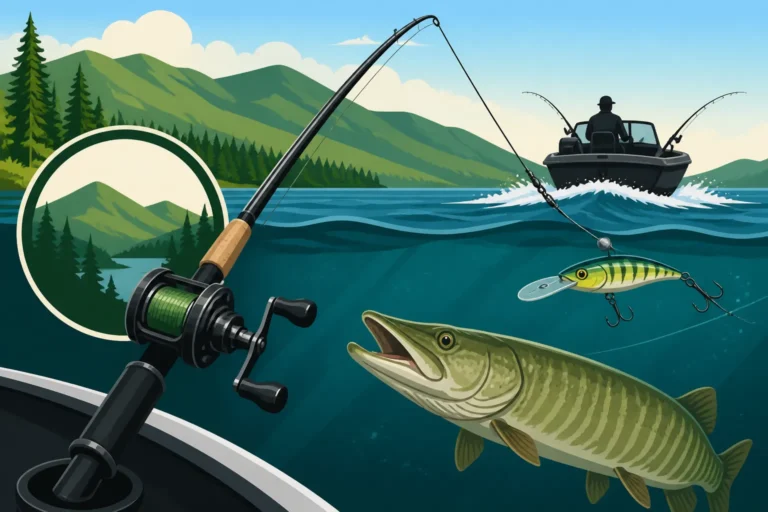
For trolling muskie, you're going to need a robust setup that can handle large lures, heavy resistance, and the violent strike of a big fish. Typically, a heavy to extra-heavy power rod, anywhere from 8 to 10 feet long, is ideal. This length helps spread lines in your trolling spread and provides leverage for fighting big fish. Look for rods with a moderate-fast action, which offers enough backbone to drive hooks home but enough flex to absorb the shock of a strike. For more detailed insights, our article on Best rod power for muskellunge fishing can help guide your selection.
Matching that rod with a high-quality baitcasting reel is critical. You'll want a reel with a robust drag system, a strong retrieve ratio, and a high line capacity – something like a Shimano Tranx or an Abu Garcia Revo Toro Beast is often favored by serious muskie anglers. Spool these reels with a heavy braided line, usually 80 to 100 lb test. Braided line has no stretch, which is crucial for setting hooks on long trolling passes and feeling the action of your lure. To this, you'll attach a heavy fluorocarbon or wire leader, typically 100-200 lb test, to prevent bite-offs. Getting the right leader setup is paramount for success, so be sure to read Best leader for muskellunge on Lake Memphremagog for more specific recommendations. Don't forget, you can find a lot of these specialized items on Amazon, often with reviews from fellow muskie enthusiasts.
Selecting the Right Lures: Size, Color, and Action
Muskie lures are notorious for their size and variety, and selecting the right one for Lake Memphremagog depends on several factors: the season, water conditions, and the specific forage you're trying to imitate. Generally, you'll be looking at large crankbaits, jerkbaits, and even oversized bucktails when trolling. These lures can range from 8 inches to well over 15 inches in length.
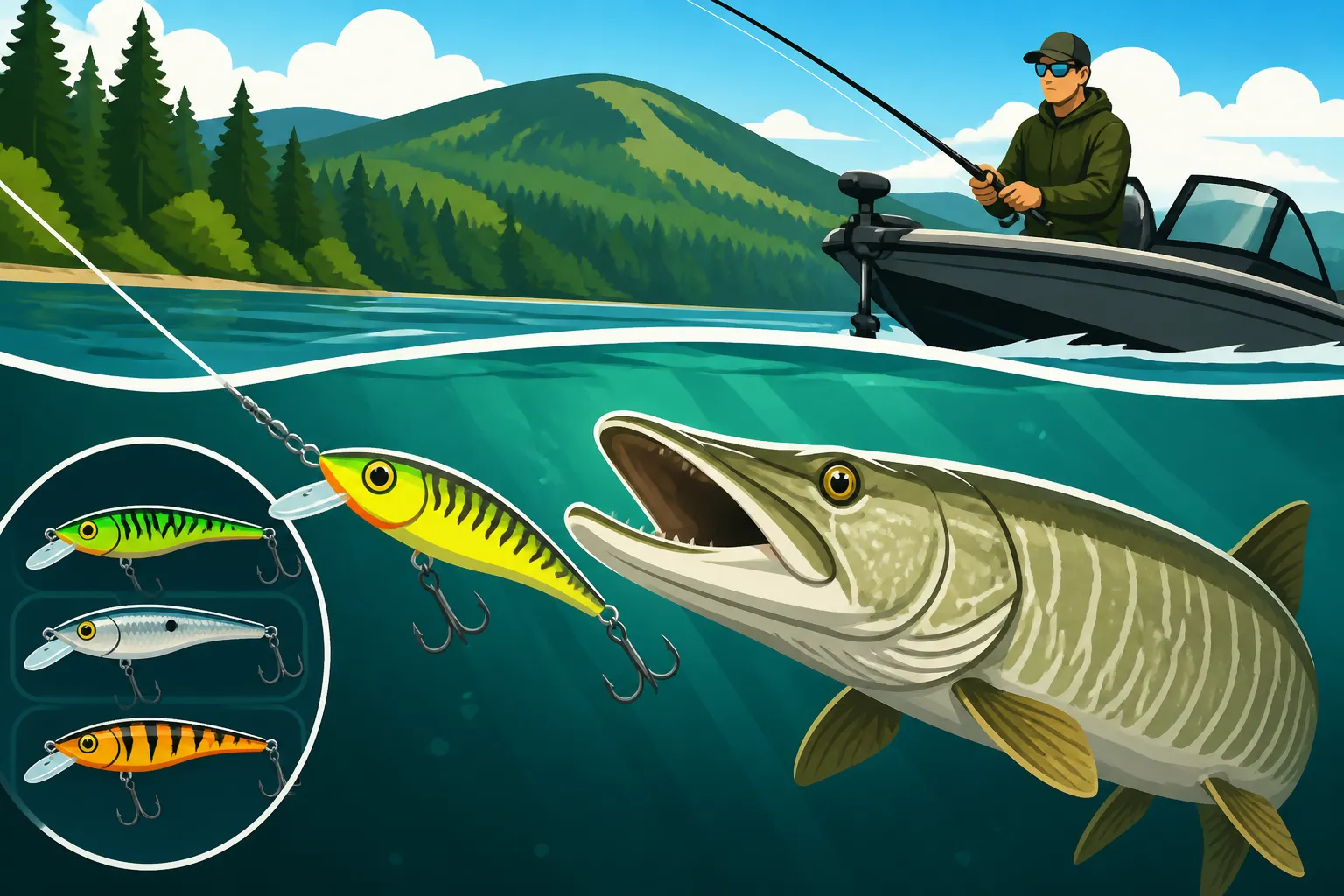
- Crankbaits: These are workhorses for trolling. Look for deep-diving models that can reach depths of 15-30+ feet, like those from Salmo, Grandma, or Bondy Bait Company. Their wobbling action and strong vibration are excellent for attracting muskie.
- Jerkbaits: Larger, suspending jerkbaits can also be trolled effectively, especially in cooler water or when fish are less aggressive. Brands like Rapala or Svartzonker offer excellent options.
- Bucktails/Spinnerbaits: While often cast, heavy-duty inline spinners can be trolled, particularly when fish are actively chasing bait near the surface or along weed lines.
Color selection should mimic natural forage when possible (perch, smelt, cisco patterns), but also consider "attractor" colors like firetiger, chartreuse, or bright oranges for stained or low-light conditions. Always have a variety of dive depths and colors on hand. It's often a game of trial and error on any given day. To help you choose, our article on Best bucktail for muskellunge fishing and Best jerkbait for muskellunge fishing provide excellent starting points for lure selection.
Trolling Motors and Electronics
A reliable trolling motor, whether bow-mounted or transom-mounted, is essential for maintaining precise speeds and making subtle course corrections on Lake Memphremagog. Many modern trolling motors feature GPS integration, allowing you to set a specific speed and track, which is invaluable for replicating productive trolling passes. This frees you up to monitor your lines and electronics.
Speaking of electronics, a high-quality fish finder/chartplotter is your best friend. Look for units with clear side-imaging or down-imaging capabilities, along with detailed Lake Memphremagog mapping (often Navionics or Humminbird LakeMaster). These tools help you identify subtle depth changes, humps, baitfish schools, and even individual muskie holding near structure. Knowing the exact depth of your lures relative to the structure or the fish you're marking is a game-changer. Some anglers even utilize large screens on Amazon tablets to get even more detailed mapping and sonar views, integrating them into their boat's system.
Developing Effective Trolling Patterns: Strategies and Tactics
Now that you've got your gear dialed in and a good understanding of muskie behavior, it's time to put it all together into an effective trolling pattern. This isn't just about driving in a straight line; it's about deliberate movements, varied presentations, and constant adjustments based on what the water and your electronics are telling you.
Speed and Direction: The Crucial Variables
Trolling speed is one of the most critical factors in muskellunge fishing. The "right" speed often varies depending on the lure type, water temperature, and fish activity level. Generally, muskie are trolled anywhere from 2.5 to 6 miles per hour.
- Slower Speeds (2.5-3.5 mph): Best for cooler water (spring and fall), or when fish are lethargic. Slower speeds give lures a wider, more pronounced wobble and keep them in the strike zone longer. This is often effective with larger, slower-moving baits like some crankbaits.
- Medium Speeds (3.5-4.5 mph): A good all-around speed for many conditions, providing a natural swimming action for most lures.
- Faster Speeds (4.5-6+ mph): Can be effective in warmer water when muskie are highly active and chasing prey. Faster speeds can trigger aggressive reaction strikes, especially with lures designed to be retrieved quickly.
Don't be afraid to experiment. Try varying your speed slightly throughout a trolling pass or changing it after a long period of inactivity. Pay close attention to how your lures are performing at different speeds; sometimes a slight uptick or slowdown is all it takes to trigger a strike. Also, consider the direction of your troll relative to wind and current; these can affect your boat's true speed over ground and the action of your lure. If you're looking for more general trolling advice, our guide on Trolling Techniques for Vermont Lake Trout has principles that can be adapted for muskie.
Reading the Water: Structure and Depth Contours
Lake Memphremagog is a deep, complex lake with abundant structure, and understanding how to read it is paramount for successful muskie trolling. Muskies often relate to specific structural elements, using them as ambush points or travel corridors.
- Points and Shoals: These are classic muskie haunts. Troll along the edges of points, especially those that drop off sharply into deeper water. Work over the tops and around the sides of submerged shoals and humps, paying attention to the transition zones where rock meets mud or sand.
- Weed Lines: While deep weed beds can be tricky to troll through, the outside edges of these beds, where they meet open water, are prime muskie territory. Look for healthy, green weeds that attract baitfish.
- Open Water Suspenders: Sometimes, especially in summer and fall, muskie will suspend over deep water, following schools of pelagic baitfish like cisco or smelt. In these situations, your fish finder becomes crucial for locating both the bait and the predators. Troll through these schools at various depths.
Your chartplotter and fish finder are your eyes below the surface. Mark any strikes or follows on your GPS, as muskie often inhabit similar areas year after year. Focus your trolling patterns on repeating passes over productive structure or bait concentrations. Think of it like drawing a detailed map with your boat, constantly refining the lines that lead to fish. For a comprehensive overview of the lake's layout, consult our Lake Memphremagog Fishing Guide.
Spread and Spacing: Covering Water Effectively
A well-executed trolling spread maximizes your chances by presenting multiple lures at varying depths and distances behind the boat, covering a wide swath of water. This is particularly important on a large lake like Memphremagog.
- Number of Lines: Always adhere to Vermont Muskellunge Regulations on Lake Memphremagog regarding the number of lines you can legally fish. Typically, anglers will run 2-4 lines, sometimes more depending on regulations and boat setup.
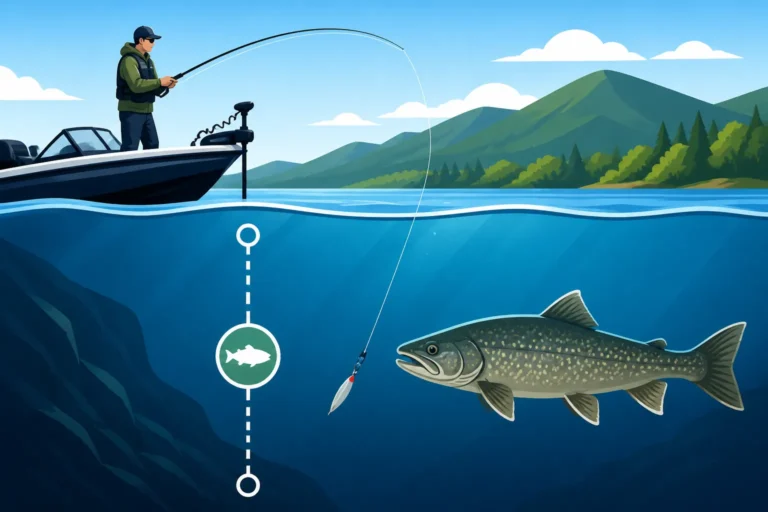
- Depth Control: Use a combination of lead core line, downriggers, or heavy diving lures to achieve different depths. For example, you might have one lure running 15 feet deep, another at 25 feet, and a third at 35 feet. Downriggers are excellent for precise depth control, especially for suspending lures in the open water.
- Lure Placement: Stagger your lures at different distances behind the boat. This helps prevent tangles when turning and allows you to present baits in both the boat's prop wash (which can attract curious fish) and further back in undisturbed water. Longer rods help in creating a wider spread, keeping lures separated.
Consider using planer boards to spread your lines even further out to the sides of the boat, covering an even wider path. This is especially effective in open water or when fish are wary of the boat. Remember, the goal is to present a buffet of options, increasing the likelihood that a hungry muskie will find something to its liking.
Advanced Trolling Considerations and Seasonal Adjustments
Catching trophy muskellunge is often about paying attention to the subtle details and making adjustments on the fly. No two days on Lake Memphremagog are exactly alike, and the most successful anglers are those who can read the conditions and adapt their approach.
Working with Weather and Water Conditions
Weather and water conditions play a huge role in muskie behavior and, consequently, your trolling patterns.
- Cloud Cover and Low Light: Overcast days, dawn, and dusk are often prime muskie times. These conditions reduce light penetration, making fish more comfortable in shallower water and less wary. Use brighter or more contrasting lure colors during these periods.
- Wind and Waves: A good chop on the water can actually improve muskie fishing by breaking up the surface and making your boat and lures less noticeable. It can also create current and oxygenate the water, stirring up baitfish. Troll with or into the waves to maintain better lure action and boat control.
- Water Clarity: Lake Memphremagog generally has good water clarity, but heavy rains or wind can sometimes muddy up certain areas, especially near inflows. In clear water, focus on natural baitfish patterns and be mindful of your boat's presence. In stained water, fluorescent colors or lures with strong vibration can be more effective.
- Barometric Pressure: Many anglers believe falling or stable high barometric pressure can trigger more aggressive feeding behavior. While not always a direct correlation, it's something to keep in mind when planning your outings.
Being prepared for varying conditions, from having a good rain jacket (also available on Amazon) to a diverse tackle box, means you can maximize your time on the water.
Boat Control and Figure Eights
Precision boat control is crucial, especially when fishing specific structure or trying to entice a hesitant muskie.
- "S" Turns and Course Changes: Instead of just straight-lining, incorporate gentle "S" turns into your trolling path. When your boat turns, the lures on the inside of the turn slow down and drop, while those on the outside speed up and rise. This varying action can be a powerful trigger for muskie that might be following but not committing. It simulates a wounded baitfish struggling to keep up.
- Figure Eights: This is a classic muskie tactic that's often thought of for casting, but its principles apply to trolling too. If you spot a muskie following your lure right to the boat (and believe me, it happens!), immediately initiate a wide figure-eight pattern with your boat. The changing speed and direction of your lure can often push that follower into striking. This requires quick thinking and confident boat handling.
Ultimately, successful muskie trolling on Lake Memphremagog is an art form honed through practice and observation. There's no single "best" trolling pattern because conditions and fish moods are constantly changing. It’s about being flexible, paying attention to every detail, and learning from every strike, follow, or empty pass. Keep track of what works, when it works, and where, and you'll be well on your way to hooking into one of Vermont's legendary freshwater giants. Don't forget that if you are lucky enough to land one of these magnificent fish, you should always handle it carefully. You can learn more about proper release techniques in our guide on Muskellunge catch and release survival tips.
| Lure Type | Recommended Trolling Speed (MPH) | Typical Depth Range (feet) | Best Conditions | Mimics Forage |
|---|---|---|---|---|
| Deep Diving Cranks | 3.0 – 5.0 | 15 – 35+ | All-around, structure, open water suspending | Perch, Cisco, Smelt |
| Large Jerkbaits | 2.5 – 4.0 | 10 – 25 | Cooler water, less active fish, subtle action | Pike, Suckers, Large Baitfish |
| Inline Spinners | 4.0 – 6.0+ | 5 – 15 (often with weight) | Active fish, surface, weed edges | Small Baitfish, Fast-moving prey |
| Soft Plastics (Rigged) | 2.5 – 4.0 | 10 – 40+ (with lead/drifters) | Finesse presentation, slow rolls, deep water | Bottom dwellers, injured baitfish |
Disclaimer
Please remember that fishing regulations, seasons, and licensing requirements can change. Always consult the official Vermont Fish and Wildlife Department website or their most current fishing guide before heading out on the water. This information is for general guidance and educational purposes only.