Best handicap-accessible fishing piers in Vermont
Finding truly accessible fishing spots can be a real challenge, even in a state as beautiful and outdoor-friendly as Vermont. Many anglers with mobility limitations, or those accompanying family members who do, often struggle to find accurate, detailed information about piers and platforms that genuinely cater to their needs beyond just having a paved path nearby. This guide aims to clear up some of that confusion, providing comprehensive information on the best handicap-accessible fishing piers and spots across Vermont, ensuring everyone has a chance to enjoy the peace and thrill of a day on the water.
Understanding What Makes a Fishing Spot Truly Accessible
It's easy for a location to be labeled "accessible," but what does that truly mean for an angler with mobility challenges? Often, it's about far more than just a paved parking lot or a short ramp. True accessibility encompasses the entire experience, from arrival to the act of casting and reeling in a catch. When we talk about accessible fishing in Vermont, we're looking for locations that thoughtfully consider a range of needs.
Beyond the Ramp: What Real Accessibility Means for Anglers
For many, accessibility isn't just about avoiding stairs; it's about the fine details that make an outing enjoyable and practical. A truly accessible fishing pier or platform should offer several key features. Firstly, parking must be designated, sufficient, and conveniently located, ideally on a level surface close to the fishing area. The pathway from the parking area to the pier itself needs to be smooth, wide enough for wheelchairs or other mobility devices, and free of significant inclines or obstacles. We're talking about compacted gravel, asphalt, or concrete – no unexpected roots or steep grassy banks.
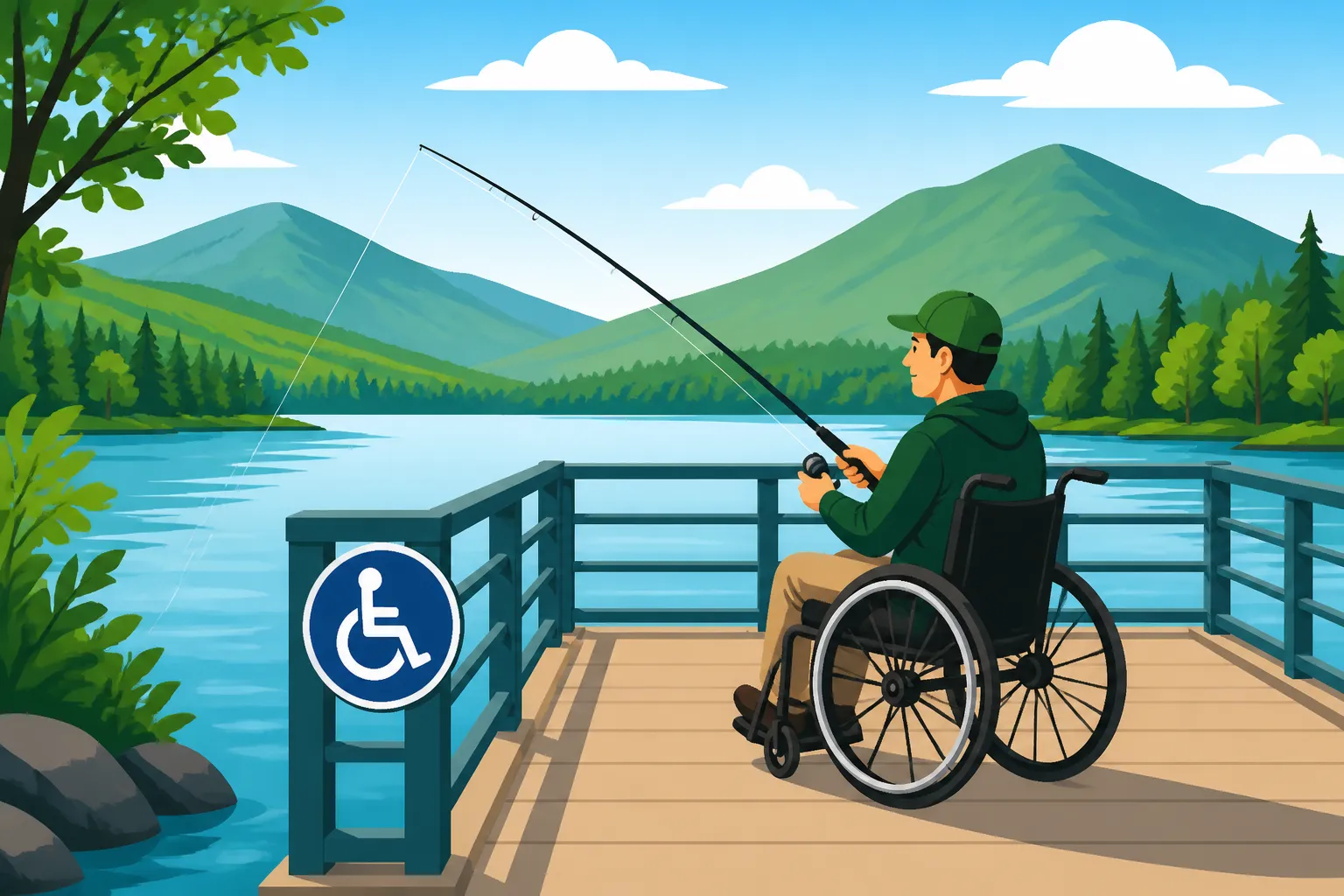
Once on the pier, the surface is critical. It should be non-slip and level, preventing trips and providing a stable base. Railing height is another crucial, yet often overlooked, detail. Standard railings can be too high for someone seated in a wheelchair, obstructing their view or making it impossible to cast effectively. Ideal accessible piers often feature sections with lower railings or cutouts, allowing for comfortable fishing without obstruction. Ample space for maneuvering is also vital, allowing multiple anglers, including those in wheelchairs, to fish comfortably without feeling cramped. Finally, the presence of clean, accessible restrooms nearby is not just a convenience, but a necessity for a full day of fishing. Without these considerations, a fishing spot might be "accessible" on paper, but impractical in reality.
The Vermont Context: Navigating Challenges and Spotting Progress
Vermont's rugged, mountainous terrain and often historic infrastructure can present unique challenges when it comes to creating truly accessible outdoor recreation areas. Many of our most beloved fishing holes were established long before universal design principles became common, and retrofitting can be complex and costly. However, the Vermont Fish & Wildlife Department, along with various state parks and local initiatives, has been making significant strides in recent years.
We're seeing more projects focused on improving access to our beautiful lakes and rivers. This includes everything from installing new, wider fishing platforms with appropriate railings to ensuring parking areas meet ADA standards. While the process is ongoing, there's a clear commitment to making Vermont's fantastic fishing opportunities available to everyone. It's important for anglers to recognize that while some older access points might still present challenges, the newer or recently renovated sites are often exemplary. This focus on inclusive design means more opportunities for anglers of all abilities to experience the thrill of a Vermont fishing adventure.
Top Handicap-Accessible Fishing Piers and Spots in Vermont
Vermont offers a surprising number of excellent fishing locations with thoughtful accessibility features. From the vast waters of Lake Champlain to serene inland ponds, there are spots designed to welcome every angler. Let's dive into some of the best options you'll find across the Green Mountain State.
Lake Champlain's Accessible Gems
Lake Champlain, the largest lake in Vermont, is a prime destination for anglers, and thankfully, it also boasts some of the state's best accessible fishing. The sheer size of the lake means diverse fishing opportunities, from smallmouth bass to walleye and even lake trout.
-
Burlington Waterfront Park, Burlington: This is arguably one of the most accessible and well-regarded spots in the entire state. The park features an extensive, paved promenade right along the shoreline, offering numerous places to fish directly from the bank or utilize several accessible platforms. The fishing pier at the Community Boathouse is particularly popular. It's wide, has sturdy railings, and provides fantastic views of the lake. You'll find plenty of accessible parking close by, and the area is surrounded by other amenities like accessible restrooms and paved paths. Anglers here can target a variety of species, including yellow perch, sunfish, smallmouth bass, and even some walleye during certain times of the year. The vibe is often lively, making it a great spot for families or those who enjoy a bit of urban scenery with their fishing. If you're looking to explore more about this incredible fishery, checking out our comprehensive Lake Champlain Fishing Guide is a must.
-
Sand Bar State Park, Milton: Located just north of Burlington, Sand Bar State Park offers another excellent accessible experience. While known for its swimming beach, the park also provides accessible fishing opportunities. There's an accessible fishing platform that extends into the water, offering a great vantage point for casting. The path to the platform is typically well-maintained, and accessible parking and restrooms are available within the park. This area is fantastic for targeting panfish like bluegill and yellow perch, which are usually plentiful and provide consistent action. Bass are also common here. The calmer, shallower waters make it a relaxing spot, especially for beginners or those seeking less current.
Inland Waters Offering Easy Access
Beyond Lake Champlain, Vermont's interior is dotted with numerous lakes and ponds, many of which now feature improved accessibility. These spots often provide a quieter, more quintessential Vermont fishing experience.
-
Lake Bomoseen, Fair Haven/Castleton: As one of Vermont's largest inland lakes, Lake Bomoseen is a fantastic multi-species fishery, and it's also home to accessible fishing opportunities. The state boat launch on the west side of the lake, managed by the Vermont Fish & Wildlife Department, often features accessible restrooms and a paved approach to the water. More importantly, there are areas near the launch or within designated day-use areas that offer flat, stable ground or platforms for fishing. Anglers can expect to catch largemouth and smallmouth bass, northern pike, yellow perch, and panfish here. Its diverse fish population makes it a rewarding spot for various techniques. For more detailed information on this lake's offerings, consider our Lake Bomoseen Fishing Guide.
-
Lake Dunmore, Salisbury/Leicester: Nestled in the central part of the state, Lake Dunmore is a beautiful deep lake known for its trout and landlocked salmon, as well as bass and panfish. The public access area and some adjacent parks along the shoreline offer accessible routes to the water's edge. Look for designated accessible parking and paved or hardened paths leading to fishing platforms or stable shorelines. These spots provide excellent opportunities for both bait fishing and casting lures. The scenery here is truly breathtaking, making it a wonderful place to spend a day.
-
Silver Lake State Park, Barnard: This charming state park offers a peaceful setting for fishing. Silver Lake has a well-maintained fishing pier that is generally accessible, providing a stable platform to fish from. The park typically offers accessible restrooms and parking, though it’s always a good idea to call ahead to confirm current conditions and amenities. Silver Lake is stocked with trout, and also holds a good population of bass and panfish, offering something for every angler. It's a particularly lovely spot in the fall when the foliage is vibrant.
River Access Points with Considerations
While most rivers present more complex accessibility challenges due to uneven banks and currents, some specific locations offer easier access to river fishing, often through designated fishing platforms or state-managed access areas.
- Connecticut River Access (Various Locations): The mighty Connecticut River forms Vermont's eastern border and offers some incredible fishing, especially for smallmouth bass, northern pike, and occasional walleye or even trout in certain stretches. While full-scale piers are rare on rivers due to changing water levels and currents, many state-managed boat launches and fishing access areas along the Connecticut River feature paved parking, accessible restrooms, and hardened paths that lead to the river's edge, offering stable, level spots to fish from. A good example is the fishing access area near Brattleboro or along the Hartford stretch. These aren't always "piers" in the traditional sense, but they do provide valuable accessible bank fishing opportunities. Always consult the Vermont Fish & Wildlife Department's access area maps for the most up-to-date details on specific site amenities.
Planning Your Accessible Fishing Adventure in Vermont
A successful accessible fishing trip in Vermont involves a bit of thoughtful planning. From checking the latest conditions to considering specialized gear, a little preparation can go a long way in ensuring a smooth and enjoyable outing.
Checking Conditions and Amenities Before You Go
Before heading out, it’s crucial to do a quick check-in. Weather conditions can change rapidly in Vermont, impacting both comfort and safety, especially for those with mobility challenges. A quick phone call to the Vermont Fish & Wildlife Department, a state park office, or a local visitor center can confirm current accessibility status, water levels, and any unexpected closures or construction. They can often provide insights into specific features like accessible restrooms or if a particular section of a pier has been recently maintained. Their official website is also a treasure trove of information, including interactive maps of public fishing access areas where you can often filter for accessibility features. It's always best to be overly prepared than to arrive and find unexpected obstacles.
| Location | Key Fish Species | Main Accessibility Features | Notes |
|---|---|---|---|
| Burlington Waterfront Park | Perch, Sunfish, Smallmouth Bass, Walleye | Paved promenade, accessible pier at Community Boathouse, ample accessible parking, accessible restrooms. | Urban setting, often lively, good for families. |
| Sand Bar State Park | Panfish, Bass | Accessible fishing platform, paved paths to platform, accessible parking and restrooms. | Calmer, shallower water, good for beginners. |
| Lake Bomoseen | Largemouth/Smallmouth Bass, Pike, Perch | State boat launch has paved approach, accessible restrooms, stable bank access near launch. | Diverse fishery, beautiful inland lake. |
| Lake Dunmore | Trout, Landlocked Salmon, Bass, Panfish | Public access points with hardened paths/platforms, accessible parking. | Scenic deep lake, good for various fishing methods. |
| Silver Lake State Park | Trout, Bass, Panfish | Accessible fishing pier, accessible parking and restrooms. | Peaceful setting, great fall foliage, stocked trout. |
| Connecticut River Access (various) | Smallmouth Bass, Pike, Walleye, occasional Trout | State-managed boat launches with paved access, accessible restrooms, hardened bank spots. | River fishing requires more caution, strong currents possible. |
Gear and Techniques for Accessible Angling
Fishing with mobility limitations doesn't mean compromising on the experience; it just means being smart about your gear and approach. Consider lightweight rod and reel combos that are easy to handle for extended periods. Rod holders that attach to wheelchairs or pier railings can be invaluable, allowing you to rest your arms while waiting for a bite or manage multiple lines. Adaptive fishing tools, such as one-handed casting aids or specialized grips, are also available and can make a significant difference.
When it comes to techniques, bait fishing is often a fantastic option from accessible piers, allowing you to relax and enjoy the scenery while waiting for a fish to find your offering. Worms, corn, or power bait are always reliable. For those who prefer artificial lures, jigs, spinners, and small crankbaits are easy to cast and retrieve from a stationary position and are effective for a wide range of species found in Vermont waters, from panfish to smallmouth bass. Understanding the Best Tackle for Panfish or the Best Gear for Vermont Trout Fishing can help you pack wisely for your target species.
Leveraging Local Resources and Guides
Sometimes, the best way to ensure a seamless and enjoyable accessible fishing trip is to tap into local expertise. The Vermont Fish & Wildlife Department is an excellent starting point; their website provides detailed information about all public fishing access areas, often including specifics on amenities like accessible restrooms and parking. They also offer resources like the Vermont Fishing License Guide for 2026, which is essential reading before any trip.
Beyond official channels, local bait shops are goldmines of information, offering up-to-the-minute reports on what's biting and where. Don't hesitate to give them a call! For those looking for an even more tailored experience, consider hiring a local fishing guide. Many guides are experienced in working with anglers of all abilities and can provide specialized equipment or tailor their trips to accessible locations. Services like FishingBooker can be a great starting point for finding charters that specifically cater to accessible needs, especially on larger bodies of water like Lake Champlain. They often list boat features and amenities, making it easier to find a captain who can accommodate your specific requirements. Having a knowledgeable local guide can transform a good trip into an unforgettable one, especially when navigating new waters.
Connecting with local fishing clubs or advocacy groups for anglers with disabilities can also open doors to a supportive community and shared knowledge, helping you discover even more hidden accessible gems across the state. Remember, fishing is about connecting with nature and the joy of the catch, and with a little planning and the right resources, Vermont's waters are truly open to everyone.
Disclaimer
The information provided in this guide is for general informational purposes only and does not constitute official legal advice or comprehensive regulatory instruction. Fishing regulations, accessibility features, and local conditions in Vermont can change frequently. Always consult the most current Vermont Fish & Wildlife Department regulations and maps, and consider contacting specific locations directly to confirm accessibility details before planning your trip.