Best rod setup for muskellunge trolling
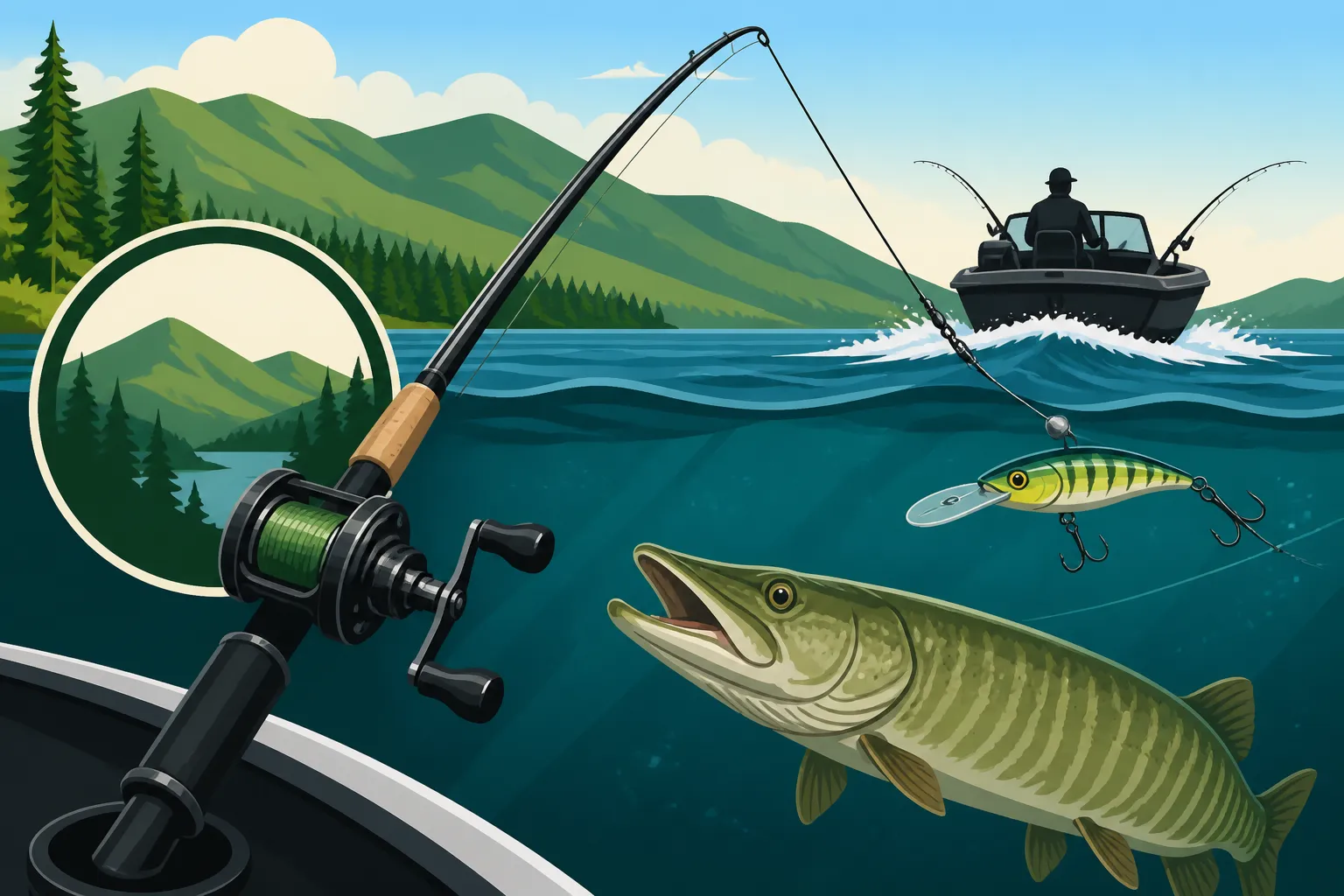
Trolling for muskellunge, especially on a vast lake like Vermont's Lake Memphremagog, is an adrenaline-pumping pursuit that demands specialized gear. Many anglers start out under-gunned, quickly learning that standard heavy-duty bass or pike setups simply won't cut it when a true musky decides to strike a large trolled bait. This comprehensive guide is designed to help you assemble the ideal rod setup for musky trolling, ensuring you're prepared for the fight of a lifetime and can confidently target these elusive giants.
Understanding the Demands of Musky Trolling
Musky trolling isn't just about dragging a big lure behind a boat. It's about presenting substantial baits at specific depths and speeds, often in challenging conditions, and then having the brute strength in your tackle to handle one of freshwater's most powerful predators. The wrong rod setup can lead to missed strikes, pulled hooks, snapped lines, or even broken rods, turning a potentially epic battle into a frustrating failure.
The Power of Heavy Lures and Strong Fish
One of the biggest differences with musky trolling compared to other forms of fishing is the sheer size and weight of the lures involved. We're talking about baits that can be 8 to 15 inches long and weigh several ounces – sometimes even over a pound! These aren't dainty little plugs. Trolling such heavy, often high-resistance baits through the water requires a rod with immense backbone and durability. A rod not designed for this stress will quickly become fatigued, lose its action, and ultimately fail.
Beyond the lure, there's the fish itself. Muskies are not only large, often pushing into the 40, 50, or even 60-inch range, but they are incredibly strong, possessing explosive power and a notorious head-shaking ability. When a musky hits a trolled bait, it's typically an aggressive, high-impact strike. The rod needs to absorb this shock, maintain control, and have enough power to turn the fish's head during intense runs. If your rod is too light, you'll feel every head shake rattling through your arms, and you'll struggle to gain any line, especially with a fish that often shakes its head side-to-side with a wide, flat profile. You want to be able to dictate the fight, not just react to it.
Why a Dedicated Trolling Rod is Crucial
You might think your heavy-action bass rod or even a saltwater setup could pinch-hit for musky trolling. While some might get by in a pinch, a dedicated musky trolling rod offers specific advantages that greatly increase your success and enjoyment. These rods are built with different actions, lengths, and component durability in mind. For instance, the guide rings on a musky trolling rod are typically heavy-duty, designed to withstand the constant friction of braided line under heavy load, and the reel seat is often reinforced to prevent failure.
Furthermore, a proper trolling rod is designed to load up effectively with the resistance of a large lure, transmitting vibration and allowing you to "read" the lure's action even when it's hundreds of feet behind the boat. This sensitivity, combined with the necessary power, is hard to find in a general-purpose heavy rod. It's about efficiency and effectiveness over a long day of grinding out miles on the water, rather than just handling a quick cast and retrieve. For serious anglers targeting giants on Lake Memphremagog, investing in the right tool for the job really pays off. You'll find many suitable options available for purchase on Amazon, offering a convenient way to compare specs and read reviews.
The Heart of the Setup: Rod and Reel Pairings
Getting the rod and reel dialed in for musky trolling is paramount. These two components work in tandem, and a mismatch can lead to poor performance and frustration. You need power, durability, and a reliable system that can withstand the unique stresses of trolling for large, aggressive fish.
Choosing the Right Musky Trolling Rod
When selecting a rod for musky trolling, you're looking for a few key characteristics:
- Length: Musky trolling rods typically range from 8 to 10 feet. Longer rods offer several advantages. They spread out your lines more effectively if you're running multiple rods off rod holders, reducing tangles. They also provide a longer lever arm, which aids in fighting big fish and absorbing their runs, essentially acting as a larger shock absorber. A longer rod can also help keep your line angle higher, which can be useful for certain lure presentations, especially when trying to keep baits out of heavy cover near shore or over shallow reefs.
- Power: This is where you don't skimp. You need a Heavy (H) or Extra Heavy (XH) power rating. This power is essential to cast and retrieve those massive baits without overloading the rod, and crucially, to set hooks firmly into the tough, bony mouth of a musky. Anything less than heavy, and you risk the rod folding over too much when a fish hits, resulting in a poor hookset or an inability to turn the fish. The heavy power allows you to exert maximum pressure when it counts. For more specific guidance, check out our article on Best rod power for muskellunge fishing.
- Action: A Moderate-Fast action is generally preferred for trolling rods. This means the rod bends mostly in the upper third, allowing for some flex to absorb strikes and maintain consistent pressure, but still retains plenty of backbone in the lower two-thirds to handle the fish. A faster action might be too stiff and unforgiving with heavy lures and could rip hooks out. A slower action might be too parabolic, making it harder to set hooks effectively and control a powerful fish. The moderate-fast offers the best of both worlds, providing the sensitivity to know your lure is running correctly and the power to fight the fish.
- Material: Most quality musky trolling rods are made from a blend of fiberglass and graphite, or sometimes pure fiberglass. Fiberglass offers incredible durability and a more parabolic bend under load, which is excellent for absorbing shocks and keeping hooks pinned. Graphite adds sensitivity and reduces weight. A composite blend usually hits the sweet spot, providing the robust strength needed without making the rod overly heavy or prone to snapping under extreme pressure. Look for brands known for their musky-specific offerings; they often have precisely engineered blanks for this purpose.
Essential Features of a Musky Trolling Reel
The reel for musky trolling needs to be just as robust as the rod, if not more so. You'll almost exclusively use a heavy-duty baitcasting reel, often referred to as a "level-wind" reel in the musky world due to its line-laying mechanism.
- Size and Line Capacity: You need a reel with significant line capacity, capable of holding at least 80-100 pounds of braided line (more on line in a moment) and plenty of it. Larger "500" or "600" series baitcasting reels (like Ambassadeur 6500 or equivalent from other brands) are common, but for serious trolling with heavier lines and potentially longer leads, even larger models might be considered. You want enough line that a long musky run won't leave you spooled, and enough buffer to cut off damaged line periodically.
- Gear Ratio: A lower gear ratio, typically in the 4.1:1 to 5.3:1 range, is often preferred for musky trolling. This provides more cranking power, which is invaluable when battling a big fish and when reeling in heavy lures from long distances. While a higher gear ratio might retrieve line faster, it sacrifices torque, making it harder work for both you and the reel's internal gears when under heavy load. A low gear ratio allows you to grind a big fish in steadily and efficiently.
- Drag System: This is non-negotiable: you need a powerful, smooth, and consistently reliable drag system. When a musky charges, the drag must give line without hesitation or stickiness, or you risk snapping your line or tearing the hook out of the fish's mouth. Look for reels with carbon fiber drag washers and a high maximum drag rating. Test the drag regularly to ensure it's functioning optimally.
- Construction: Durability is key. Look for reels with solid aluminum frames and side plates, stainless steel components, and high-quality brass gearing. These materials stand up to the immense forces exerted during musky fishing and provide longevity, especially when exposed to the elements. Corrosion resistance is also a huge plus. You can find many of these heavy-duty reels from reputable brands on Amazon, often with detailed specifications that help you compare their robust construction.
Connecting to the Beast: Line and Leader Systems
Even with the best rod and reel, your setup is only as strong as your weakest link. For musky trolling, that means meticulously selecting your mainline and leader material to ensure you can withstand the punishing fight and the fish's razor-sharp teeth.
Mainline: The Unyielding Power of Braid
For musky trolling, braided line is the undisputed champion. Its characteristics make it perfectly suited for this demanding application:
- Strength: You'll want heavy braided line, typically in the 80 to 100-pound test range. Some anglers even go heavier for extreme situations or very large baits. This immense strength provides the power needed to manage big lures, pull through snags (within reason), and muscle large fish.
- No Stretch: Unlike monofilament, braided line has virtually no stretch. This is incredibly important for several reasons:
- Hooksets: It allows for direct, powerful hooksets, even when hundreds of feet of line are out. Every ounce of force you apply is transmitted directly to the hook, ensuring it penetrates the musky's bony jaw.
- Lure Feel: The lack of stretch provides unparalleled sensitivity. You can feel your lure working, detect subtle changes in its action if it fouls, and immediately know when a fish strikes.
- Depth Control: With minimal stretch, your lure runs truer to its intended depth, which is vital for precise presentations when trolling.
- Durability: Braided line is highly abrasion-resistant, though it's not impervious to musky teeth (which is where the leader comes in). It holds up well to repeated use and exposure to water.
While braided line is fantastic, always check your line for nicks and abrasions, especially after fighting a fish or getting snagged. Even a small imperfection can compromise its strength. For more depth on choosing the right test, refer to Best Line Weight for Muskellunge Fishing.
Leader Material: The Final Defense
The leader is the critical connection between your mainline and your lure, and it's what directly faces the musky's formidable teeth. This is not the place to compromise.
- Material: You generally have two main choices:
- Heavy Fluorocarbon: This is a popular choice for many musky anglers. You'll need very heavy fluorocarbon, typically 100 to 200-pound test. Fluorocarbon is nearly invisible underwater, which can be an advantage in clear water conditions. It's also relatively abrasion-resistant. However, it can still be bitten through by a large musky if the fish gets a bad angle on it. You need to inspect fluorocarbon leaders constantly for nicks and fraying.
- Wire Leader: Many dedicated musky trollers prefer solid wire leaders for maximum bite protection. Options include single-strand wire (like Malin Hard Wire or Piano Wire) or multi-strand wire (like Tyger Leader or American Fishing Wire components). Wire leaders offer the best protection against toothy critters but can sometimes kink or be more visible. For trolling, where lure action is paramount and visibility less of a concern than with casting, wire often provides peace of mind.
- Length: Musky leaders are typically longer than those used for other species, often ranging from 12 to 36 inches. A longer leader provides a buffer between the mainline and the fish, preventing the musky from biting off your expensive braided line if it rolls or gets tangled during the fight.
- Connections: Use heavy-duty, high-quality components. Your leader should be attached to your mainline with a robust connection, often a blood knot or a specialized braid-to-mono knot (like an Albright or FG knot if you're comfortable tying it). At the lure end, use a heavy-duty snap swivel or split ring, rated for high poundage. This allows for quick lure changes and prevents line twist, which can be a major issue with large trolled baits. The snap needs to be strong enough not to bend or break under the pressure of a strike and fight. For further reading, we have a specific article on Best Leader for Muskellunge on Lake Memphremagog.
Enhancing Your Trolling Success: Essential Accessories
While the rod, reel, line, and leader form the core of your musky trolling setup, a few key accessories can significantly improve your efficiency, comfort, and success on the water. These aren't just luxuries; they're often necessities for a safe and productive day of chasing giants.
Secure Rod Holders for Stability and Safety
Musky strikes when trolling can be violent and sudden. If your rod isn't securely mounted, it can easily be ripped from your boat and disappear into the depths before you even realize what happened. High-quality, heavy-duty rod holders are non-negotiable.
- Construction: Look for rod holders made from heavy-gauge stainless steel or robust composite materials. They need to be incredibly strong to withstand the impact of a musky strike and the constant pressure of trolling large baits. Cheap plastic holders will not suffice and are a recipe for disaster.
- Mounting: Ensure your rod holders are securely bolted to your boat's gunwales or a robust mounting system. Through-bolting with backing plates is often the most secure method. Consider the angle and adjustability of the holders; you want to be able to position your rods to achieve the desired lure spread and line angle, and to easily grab the rod when a fish hits. Brands like Berts Custom Tackle, Cannon, and Folbe are well-regarded in the trolling community for their durable and reliable rod holder systems, and you can usually find these on Amazon.
- Placement: If you're running multiple rods, strategic placement of your rod holders is key to prevent tangles and optimize your spread. Consider using various lengths of rods to further separate your lines.
Line Counters for Precision Trolling
Knowing exactly how much line you have out is critical for consistent and precise trolling, especially when trying to replicate a successful depth or pattern. This is where a line counter comes in.
- Integrated Line Counters: Many musky-specific trolling reels come with integrated mechanical line counters. These are generally reliable and convenient, as they are part of the reel itself.
- Aftermarket Line Counters: If your reel doesn't have an integrated counter, you can purchase aftermarket line counters that clip onto your rod. While generally less precise than integrated models, they can still provide a good approximation of line out, which is better than guessing.
- Why They Matter: Muskies often hold at specific depths or relate to certain contour lines or thermoclines. A line counter allows you to consistently hit those productive depths. If you get a strike at 150 feet of line out, you can easily replicate that exact presentation on other passes, drastically increasing your chances of finding more fish. This precision is a major advantage on vast waters like Lake Memphremagog.
Landing Net and Release Tools
This isn't strictly part of the "rod setup," but it's an absolutely crucial extension of it, especially for musky. Landing a musky requires a large, specialized net, and proper release tools are essential for the fish's survival and your safety.
- Musky Net: You need a net with a huge hoop (at least 36" x 36") and a long, stout handle. The netting should be knotless, rubber-coated mesh to protect the fish's slime coat and prevent hooks from getting tangled. This makes for a much easier and safer landing and release. For specific recommendations, check out Best Landing Net for Muskellunge.
- Release Tools: Forceps, long-nose pliers, and bolt cutters (for cutting hooks if necessary) are non-negotiable. Muskies have incredibly sharp teeth, and reaching into their mouth can be dangerous. These tools allow for quick and safe hook removal, minimizing stress on the fish. A jaw spreader can also be helpful, but use it sparingly and carefully. Remember, conservation is key, and getting the fish back in the water quickly and safely is paramount.
By equipping yourself with this full suite of gear, from the powerful rod and reel to the essential accessories, you'll be well-prepared to tackle the challenges and rewards of musky trolling in Vermont.
| Component | Key Feature | Why It Matters | Considerations |
|---|---|---|---|
| Rod | Heavy/Extra Heavy Power | Handles large lures, sets hooks, turns big fish | Length 8-10 ft, Moderate-Fast Action, Composite/Fiberglass material |
| Reel | Large Line Capacity | Holds enough heavy braid, handles long runs | Baitcasting (level-wind), Low Gear Ratio (4.1:1-5.3:1), Strong Drag |
| Mainline | 80-100lb Braided Line | No stretch for hooksets, sensitive, powerful | Check for abrasions regularly, high quality braid |
| Leader | 100-200lb Fluorocarbon / Wire | Bite protection, abrasion resistance | Fluorocarbon for stealth, wire for ultimate protection, 12-36 inches long |
| Rod Holders | Heavy-Duty Construction | Securely holds rod during strikes, prevents loss | Through-bolt mounting, adjustable angles |
| Line Counter | Accurate Line Out | Replicates successful depths, improves precision | Integrated reel counter or quality aftermarket clip-on |
| Net | Large, Rubberized Mesh | Safe and easy landing/release for big, toothy fish | At least 36×36 inch hoop, long handle |
| Tools | Long Pliers, Bolt Cutters | Safe and quick hook removal, essential for fish survival and angler safety | Forceps, jaw spreaders (use with caution) |
Disclaimer
This article is for general informational purposes only and does not constitute professional advice. Laws, prices and regulations vary by location and change over time. Consult a qualified professional for guidance on your specific situation.