Best topwater lure for dawn bass fishing
There's nothing quite like the anticipation of a new day breaking over a glassy Vermont lake, especially when you know the bass are ready to explode on the surface. Many anglers struggle to pick the perfect topwater lure for those magical dawn hours, often missing out on some of the most exciting bites of the day. This guide will walk you through the essential topwater lures that consistently entice Vermont's bass during the early morning, helping you choose the right one for the conditions and retrieve it like a pro.
Why Dawn is the Golden Hour for Topwater Bass in Vermont
Picture this: the mist is still clinging to the water, the air has that crisp chill, and the first rays of sun are just starting to peek over the Green Mountains. This isn't just a beautiful scene; it's prime time for topwater bass fishing in Vermont. Understanding why these conditions are so ideal is key to maximizing your success.
The Magic of Low Light and Cooler Temps
Bass, particularly smallmouth and largemouth, are ambush predators, and low light conditions give them a significant advantage. At dawn, the sun hasn't climbed high enough to penetrate the water deeply, creating shadows and reducing visibility. This makes it harder for their prey – be it baitfish, frogs, or insects – to spot an approaching predator. For a bass, it's like hunting under the cover of darkness but with enough ambient light to accurately target their meal.
Beyond light, temperature plays a huge role. Throughout the warmer months, lake and pond surfaces heat up during the day. As night falls, these surface waters cool down. Dawn brings with it the coolest surface temperatures of the 24-hour cycle, before the sun begins to warm things up again. Bass, being cold-blooded, are often more active and willing to chase in these cooler conditions, especially after a long night of rest. They're looking to feed and restore energy before the heat of the day drives them deeper or into dense cover. This metabolic boost combined with reduced visibility creates a perfect storm for aggressive topwater strikes.
Ambush Predators and Surface Feeding
Both largemouth and smallmouth bass are opportunists. While they'll certainly feed on baitfish, crayfish, and insects throughout the water column, dawn often presents unique surface feeding opportunities. Terrestrial insects, frogs, and even small rodents might fall into the water overnight or during the first light hours, making them easy pickings on the surface. Bass learn quickly that the surface, especially near cover like lily pads, fallen trees, or rocky points, can be a buffet.
The low light also emboldens bass to cruise closer to the surface without feeling as exposed to aerial predators like ospreys or eagles. They can patrol weed lines, rocky banks, or submerged structures, ready to rocket upwards at any disturbance. When you cast a topwater lure, you're mimicking this vulnerable prey struggling on the surface, triggering an instinctive predatory response that's hard for a hungry bass to resist. This is particularly true in many of Vermont's clear lakes and ponds where bass can be warier during bright daylight hours.
The Thrill of the Exploding Strike
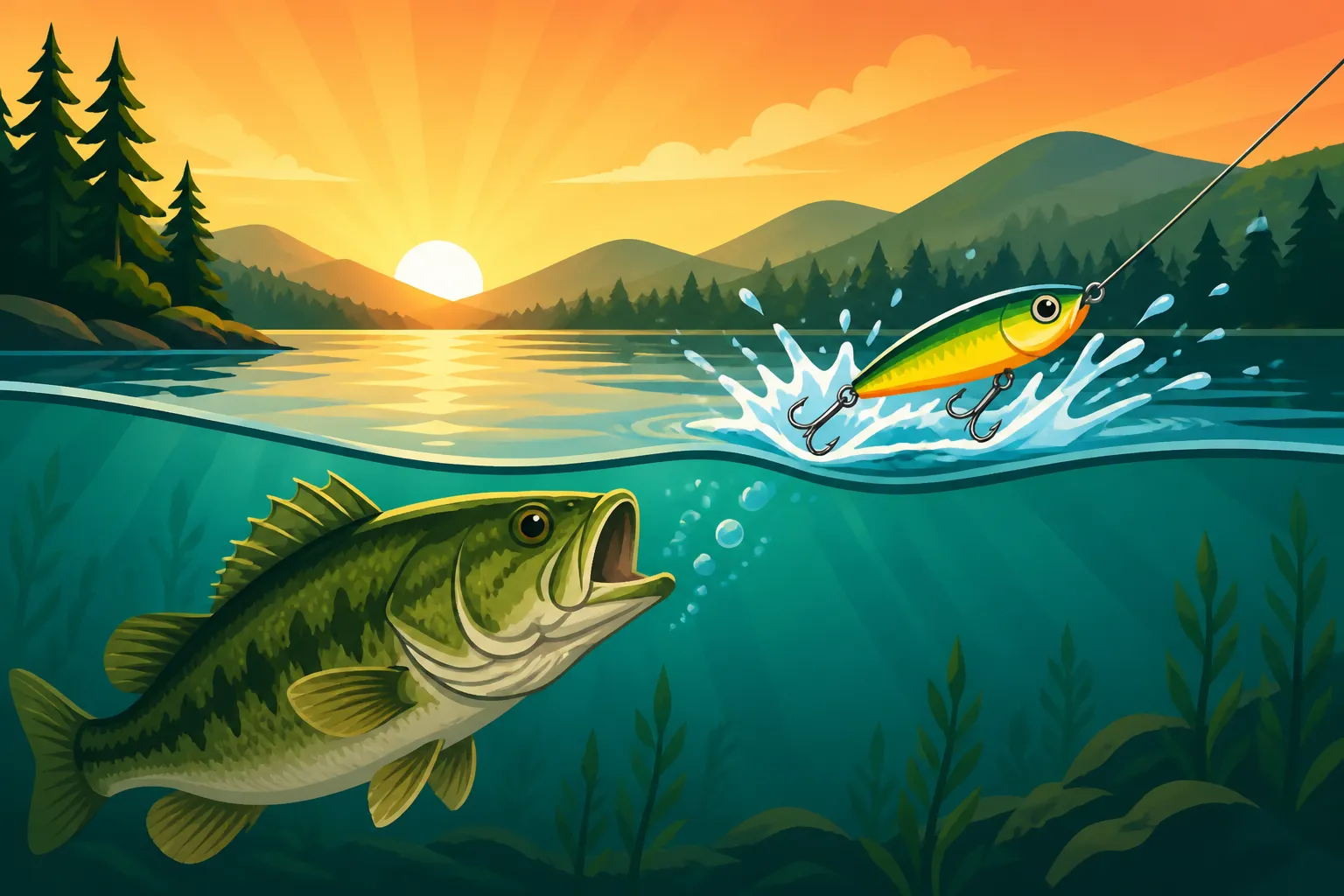
Let's be honest, part of the allure of topwater fishing at dawn is the sheer excitement. There’s nothing quite like watching your lure glide across the water, then suddenly, the surface erupts in a violent splash as a bass slams it. It’s an incredibly visual and visceral experience that often hooks anglers for life. This isn't just a random occurrence; the conditions at dawn amplify this aggressive behavior.
When bass are active and feeding in low light, they tend to strike with more ferocity. They're less hesitant and more committed to their attack, often engulfing the lure entirely. This can lead to stronger hooksets and more memorable battles. If you've ever felt the heart-stopping jolt of a big smallmouth annihilating a popper in the early morning fog on Lake Champlain, you know exactly what I'm talking about. It's a wake-up call for both you and the fish, promising an exhilarating start to your fishing day. Many seasoned anglers consider these explosive dawn strikes to be the pinnacle of bass fishing.
Essential Topwater Lure Types for Vermont's Dawn Bass
Choosing the right topwater lure can feel overwhelming with all the options out there, but for Vermont's dawn bass fishing, a few key types consistently deliver. Each has a unique action and sound profile designed to appeal to bass under specific conditions.
Poppers: The Classic Surface Disturber
Poppers are arguably the most iconic topwater lure, and for good reason. Their cupped face creates a distinct "pop" or "chug" sound when retrieved, pushing water and creating a commotion that mimics a struggling baitfish or a frog. This noise, combined with the splash, is an irresistible call to any bass within earshot, especially in low light when sound travels effectively through the water.
When to Use Them: Poppers shine when you want to call fish from a distance, or when bass are holding tight to cover like docks, submerged timber, or weed edges. They're excellent for targeting individual pockets in lily pads or near rocky outcrops on How to fish rocky points for smallmouth. The stop-and-go retrieve allows the lure to sit tantalizingly still on the surface, inviting a wary bass to commit. Sizes vary, but a medium-sized popper (around 2-3 inches) is a great all-around choice for both smallmouth and largemouth. Colors can range from natural baitfish patterns to bright frog imitations. Brands like Heddon's Pop'R or Rebel Pop-R are long-standing favorites you can find at any Bass Pro Shops or on Amazon.
Walk-the-Dog Lures: The Subtle Gliders
Walk-the-Dog lures, like the iconic Zara Spook, are characterized by their cigar-shaped bodies and the distinctive side-to-side "walking" action they create when retrieved with a rhythmic twitch of the rod tip. This action perfectly imitates a wounded baitfish swimming erratically on the surface, making them incredibly effective for more subtle, wary bass. Unlike poppers, they create less splash and more of a slithering, gliding movement.
When to Use Them: These lures are fantastic when bass are actively chasing baitfish in open water or along sparse weed lines. They excel on clearer lakes or larger bodies of water like Lake Champlain where bass might be patrolling vast flats or offshore humps. The rhythmic, almost hypnotic, walk can entice strikes from bass that might ignore a more aggressive presentation. Learning the "walk" takes a bit of practice, but once you get it down, it's a devastating technique. Try starting with a continuous, steady cadence, pausing occasionally to let the lure sit for a few seconds. For more information on fishing bass in different conditions, check out How to Catch Smallmouth Bass in Vermont Lakes.
Prop Baits: The Splashing Attractors
Prop baits, featuring one or two small propellers on the front, back, or both, create a unique churning, bubbling action on the surface. This effect is a fantastic imitation of a frantic baitfish struggling or a fleeing insect. The sound and vibration they produce can be surprisingly effective in drawing strikes from aggressive bass.
When to Use Them: These lures are excellent for when you want a little more commotion than a walk-the-dog lure, but not as much concentrated "pop" as a popper. They're great for covering water quickly over shallow flats, along weed edges, or near submerged timber. The continuous splash and gurgle can trigger reaction strikes, especially when bass are feeling competitive or when visibility is slightly reduced due to chop or dingy water. Some anglers prefer a faster, steady retrieve, while others like a stop-and-go approach, letting the propellers twitch briefly before a pause.
Buzzbaits: The Early Morning Alarm Clock
Buzzbaits are distinct for their large, single propeller blade that churns on the surface, creating a loud, gurgling "buzz" as they are reeled in. This persistent commotion and the shiny blade flashing through the water can be incredibly irritating and enticing to bass, especially in low light conditions or when they're hiding in heavy cover.
When to Use Them: If you want to wake up some bass, a buzzbait is your go-to. They are particularly effective right at dawn, often before the sun even fully breaks the horizon. They excel in stained or murky water where sound and vibration are key, or over expansive shallow flats with scattered cover. The key is to retrieve them fast enough so the blade stays on the surface, creating that signature buzz. Many anglers consider buzzbaits a power fishing tool for covering a lot of water quickly, trying to draw a reaction strike from an aggressive fish. For details on gear setups, you might find Best Tackle for Vermont Smallmouth Bass useful.
Hollow-Body Frogs: For Those Weedy Haunts
When the water starts to warm up in Vermont and the lily pads and thick vegetation grow dense, that's when the hollow-body frog becomes king. These soft, pliable lures are designed to be completely weedless, allowing you to cast them directly into the nastiest, thickest cover where other lures would snag instantly. The hollow body allows them to float and collapse on a strike, exposing the hooks.
When to Use Them: These are your secret weapon for largemouth bass hiding deep within matted vegetation, lily pad fields, or thick grass beds that are common in many of Vermont's smaller ponds and river backwaters. At dawn, bass will often move into these heavy cover areas to ambush prey as the day warms up. You can "walk" them across the top of pads, let them sit in open pockets, and twitch them tantalizingly. The key is to wait a second or two after the strike before setting the hook, giving the bass time to fully engulf the lure. You can find a huge selection of these at outfitters like Bass Pro Shops or various options on Amazon.
Here's a quick comparison of these top topwater lures:
| Lure Type | Primary Action | Noise/Splash Level | Ideal Conditions | Best for |
|---|---|---|---|---|
| Popper | Pop, Chug, Sit | High | Low light, calm to light chop, near cover | Calling fish, targeting specific spots, wary bass |
| Walk-the-Dog | Gliding side-to-side | Medium (slithering) | Calm to light chop, open water, clear water | Mimicking wounded baitfish, covering open water |
| Prop Bait | Churning, Splashing | Medium-High | Calm to moderate chop, shallow flats, cover | Active fish, covering water, reaction strikes |
| Buzzbait | Loud Gurgle/Buzz | High | Low light, stained water, heavy cover | Aggressive fish, covering water quickly, early dawn |
| Hollow-Body Frog | Walking, Resting | Low-Medium | Heavy matted vegetation, lily pads, thick grass | Largemouth in dense cover, weedless presentation |
Choosing the Right Topwater Lure for Vermont's Diverse Waters
Vermont offers an incredible variety of fishing environments, from the vast expanse of Lake Champlain to countless smaller ponds and winding rivers. Matching your topwater lure choice to these specific conditions can dramatically increase your success at dawn.
Lake Champlain and Large Lake Strategies
Lake Champlain is a behemoth, known for its diverse structure and often impressive smallmouth and largemouth bass populations. At dawn, the sheer size of the lake means you'll often be dealing with varying wind conditions, water clarity, and depth profiles. On calmer mornings, especially around rocky points, shallow reefs, or isolated shoals, a Topwater Fishing for Smallmouth Bass in Vermont strategy with a walk-the-dog lure like a Zara Spook is absolutely deadly for smallmouth. The subtle glide can draw them up from deeper water or entice them from rock piles. When the wind kicks up a bit, creating a chop on the surface, a popper or a prop bait with more splash and commotion can be more effective at cutting through the noise and calling fish in.
For largemouth bass on Lake Champlain, focus on the shallower, weedy bays and protected coves. Here, hollow-body frogs skipped over lily pads or thick mats are phenomenal as the sun just begins to filter through the canopy. If you're fishing expansive shallow flats with scattered weeds and timber, a buzzbait retrieved at a steady clip can cover a lot of water and draw explosive strikes. Remember, Lake Champlain can have remarkably clear water, so stealthy presentations and natural color patterns often work best. You might want to consider Best smallmouth bass lures for Lake Champlain in summer for more ideas.
Smaller Lakes, Ponds, and River Backwaters
Vermont's smaller lakes, countless ponds, and river backwaters often feature more consistent depths, denser vegetation, and quieter, more intimate settings. These are prime playgrounds for both largemouth and smallmouth bass, especially during the early morning bite. In these waters, bass are often more concentrated near specific features.
Poppers are almost universally effective here. Their ability to sit and twitch in small pockets of open water within lily pads or next to emergent weeds makes them ideal for dissecting cover. If you know bass are holding in thick slop, a hollow-body frog is essential. Cast it onto a mat of weeds, let it sit for a moment, then twitch it across the surface. For rivers, focus on slower-moving sections, oxbows, and backwater eddies where bass won't have to fight strong currents. A walk-the-dog lure can be very effective along undercut banks or around fallen trees, mimicking an injured baitfish struggling against the current. Pay attention to Best time to fish Lake Champlain in summer principles, as many smaller lakes also experience similar seasonal patterns.
Considerations for Water Clarity and Cover
Water clarity is a huge factor when choosing a topwater lure. In crystal clear waters, typical of many Vermont lakes and streams, bass rely heavily on their eyesight. More natural colors (greens, browns, clear, chrome) and subtle actions are often more productive. Walk-the-dog lures and smaller poppers tend to shine here. Conversely, in stained or murky waters, where visibility is limited, sound and vibration become paramount. Loud buzzbaits and chugging poppers in brighter colors (chartreuse, white) or dark silhouettes (black) can be more effective at getting a bass's attention.
Cover provides bass with ambush points and shelter. At dawn, bass will often be positioned near cover, waiting for an easy meal.
- Heavy Vegetation (Lily Pads, Grass Mats): Hollow-body frogs are king. Buzzbaits can also be fished over sparse mats.
- Wood (Fallen Trees, Docks, Stumps): Poppers and prop baits worked slowly and deliberately around these structures can draw strikes. Walk-the-dog lures can be effective along the edges.
- Rocks (Ledges, Boulders, Riprap): Smallmouth bass absolutely love rocky structures. Walk-the-dog lures and poppers are excellent choices for working these areas, especially near drop-offs. If you are targeting areas near Lake Champlain, Best rod length for Champlain smallmouth bass might be a useful read.
By taking a moment to assess the specific water conditions and available cover at your chosen dawn fishing spot, you can make a more informed lure choice and significantly increase your chances of a memorable topwater strike.
Mastering the Presentation: Techniques for Dawn Topwater Success
Having the right lure is only half the battle; knowing how to present it effectively at dawn is what truly leads to consistent success. The subtle nuances of your retrieve, your rod and reel setup, and your ability to "read" the water can make all the difference.
Understanding Cadence and Retrieval Speed
The key to topwater fishing is often finding the right cadence – the rhythm of your retrieve. Bass aren't always looking for a lure retrieved at a consistent, robotic speed. They're looking for something that appears wounded, disoriented, or simply an easy meal.
- Poppers: With poppers, experiment with the pause. A typical retrieve might be: Pop, Pop, Pause (2-5 seconds), Pop, Pause. Sometimes a single, hard pop followed by a long pause is all it takes. Other times, a series of quick, soft pops will trigger a strike. Pay attention to how the bass are reacting. If they're following but not committing, try extending your pauses or changing the intensity of your pops.
- Walk-the-Dog Lures: The "walk" is achieved by twitching your rod tip down towards the water while reeling in slack, then repeating. The key is to find a rhythm that makes the lure glide smoothly from side to side. Some days a fast, continuous walk is best; other days, a slower, more deliberate walk with occasional longer pauses will do the trick. A common mistake is to retrieve too quickly or too erratically. Consistency in the "walk" is crucial before experimenting.
- Prop Baits: These can be fished with a steady retrieve, letting the props churn consistently, or with a stop-and-go method similar to a popper. The pause after a short burst of propeller action can often be when a bass decides to strike.
- Buzzbaits: Typically, buzzbaits are retrieved steadily, just fast enough to keep the blade spinning and the lure on the surface. The sound itself is the attraction. However, don't be afraid to kill the retrieve occasionally, letting the buzzbait briefly sink before restarting – sometimes that change of pace triggers a follow-up strike from a hesitant fish.
- Hollow-Body Frogs: These are best fished with short twitches across the top of matted vegetation, letting them sit in open pockets. Sometimes, after a twitch, a long pause is all it takes to trigger a strike. Imagine a real frog sitting still, then making a short jump. That's the imitation you're going for.
The best advice is to start with a consistent retrieve, then vary it. If no strikes occur, speed it up, slow it down, or change the length of your pauses. Let the fish tell you what they want.
Rod, Reel, and Line Setup for Topwater Action
Your gear choice significantly impacts your ability to present topwater lures effectively and handle the explosive strikes.
- Rod: A medium-heavy power rod with a fast to moderate-fast action is generally ideal. The medium-heavy power provides the backbone needed for strong hooksets and to wrestle bass out of cover, while the fast action tip allows for precise casting and twitching necessary for walk-the-dog lures and poppers. For Best Fishing Rods for Vermont Lakes, a 6'6" to 7'2" length is a great all-around choice. A slightly longer rod can aid in casting distance and line management, especially on larger waters.
- Reel: A baitcasting reel with a moderate gear ratio (6.1:1 to 7.1:1) is often preferred for topwater. This allows for quick retrieves to pick up slack and maintain lure action, but also provides enough power to fight a strong fish. For anglers who prefer spinning gear, a medium-sized spinning reel (2500-3000 series) paired with a medium-heavy rod works well. Consider Best spinning reel size for lake smallmouth for more details.
- Line: This is where things get critical.
- Monofilament (Mono): Many traditional topwater anglers swear by monofilament line, especially for poppers and walk-the-dog lures. It floats, which helps keep your lure on the surface, and its stretch can be forgiving, preventing hooks from tearing out during violent strikes. A 12-17 lb test is common.
- Braided Line: Braided line has no stretch, offering direct contact with your lure and incredible sensitivity. This can be great for working walk-the-dog lures with precision and for powerful hooksets, especially when fishing hollow-body frogs in heavy cover. The lack of stretch also helps when you need to rip bass out of thick weeds. However, braid floats too well sometimes, and its lack of stretch can pull hooks out if you're too aggressive on the hookset. It's often best to tie a monofilament or fluorocarbon leader to your braided mainline. For clarity on clear lake water, consider Best line color for clear lake water.
- Fluorocarbon: Generally, fluorocarbon sinks, making it less ideal as a main line for topwater. However, it can be an excellent leader material when using braided main line, offering abrasion resistance and near invisibility in clear water.
Reading the Water for Prime Strike Zones
Successful dawn topwater fishing isn't just about casting randomly; it's about targeting high-probability areas where bass are likely to be lurking.
- Shadelines: As the sun rises, look for the edges of shadows cast by trees, docks, or tall banks. Bass often patrol these lines, waiting to ambush prey moving from the bright sun into the darker water.
- Transition Areas: These are spots where different types of cover or depth abruptly change. Think a rocky point next to a sand flat, or a weed line meeting open water. Bass use these transitions as travel corridors and ambush points. How to fish rocky points for smallmouth will give you some great intel on these areas.
- Emergent Vegetation: Lily pads, cattails, and rushes offer shade, oxygen, and prime ambush cover. Cast your frog or popper into pockets, along edges, and over sparse mats.
- Submerged Structure: While you can't see them, submerged logs, rock piles, and old foundations are bass magnets. Look for subtle changes on the surface, or use your electronics if you're in a boat. A careful cast of a popper or walk-the-dog lure directly over or beside these structures can draw a fish up.
- Baitfish Activity: Keep an eye out for schooling baitfish near the surface, especially small schools breaking water. This is a clear sign that predators are in the area. Cast your topwater lure around the edges of this activity.
- Current Seams (Rivers): In Vermont's rivers, focus on the edges where faster current meets slower water. Bass will sit in the slower water, waiting for food to be swept by in the current. A well-placed popper or prop bait can be deadly in these spots.
By understanding these techniques and applying them to Vermont's diverse waters, you'll be well on your way to experiencing the thrill of dawn topwater bass fishing.
Disclaimer
This article is for general informational purposes only and does not constitute professional advice. Laws, prices and regulations vary by location and change over time. Consult a qualified professional for guidance on your specific situation.