Best two-handed rod for winter steelhead-style swinging
Winter steelhead-style swinging in Vermont can be an incredibly rewarding experience, offering a unique challenge when rivers are cold and fish are often at their most powerful. However, tackling these conditions with standard gear can be downright frustrating, leading to shoulder fatigue, poor casting performance with heavy flies, and ultimately, a less enjoyable day on the water. This guide will help you understand why a two-handed rod is often the best tool for the job in Vermont's winter angling scene, what to look for when choosing one, and how to set it up for success, ensuring you're ready to embrace the chill and connect with some truly impressive fish.
Why a Two-Handed Rod for Vermont Winter Swinging?
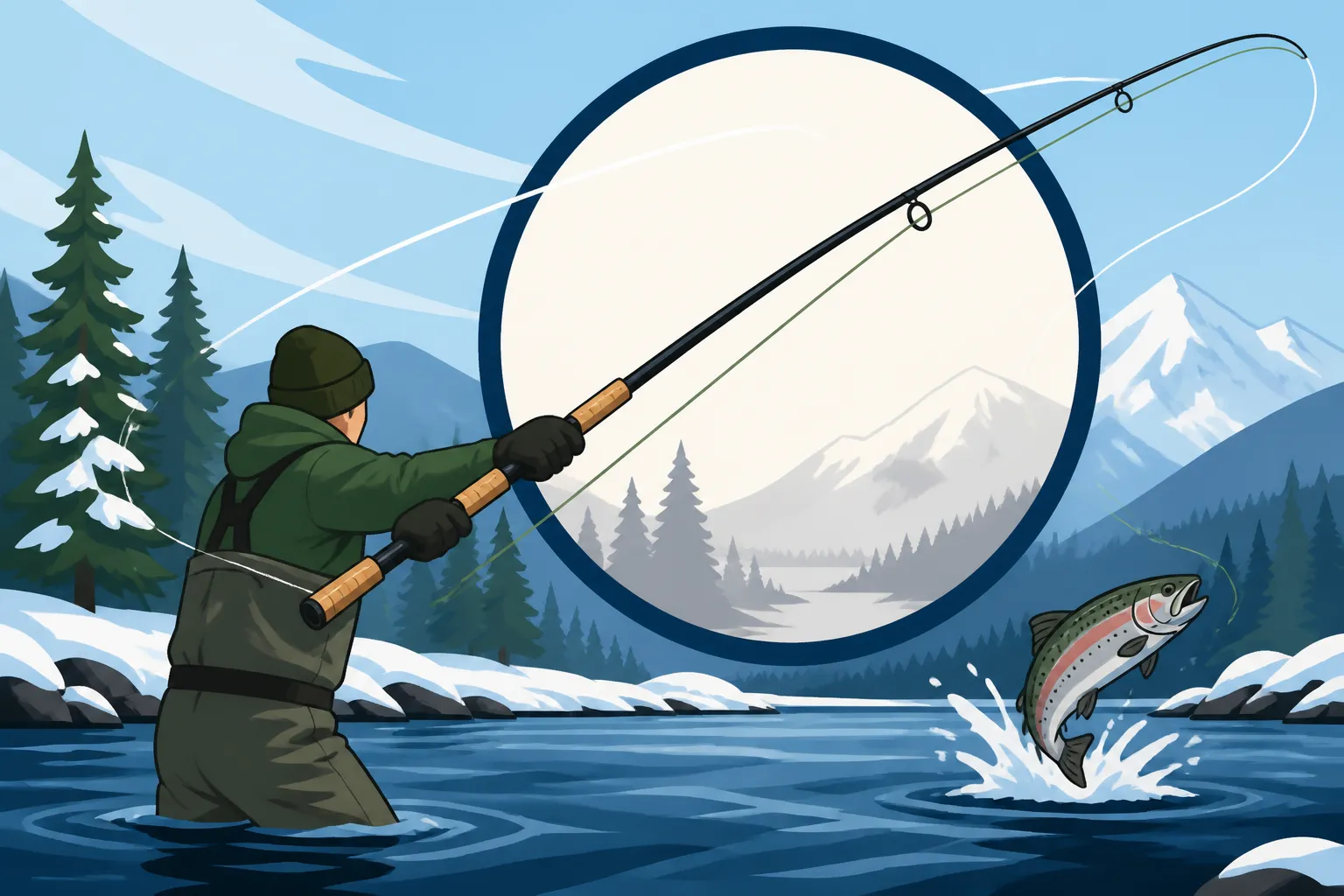
Picture this: it's a crisp Vermont winter morning, the air is sharp, and you're standing on the bank of a robust river, perhaps one of the larger tributaries feeding Lake Champlain or a stretch of the Connecticut River. The water is cold, and the fish you're targeting – be it a beefy brown trout, a holdover rainbow, or even a migrating landlocked salmon – are hugging the bottom, requiring a deep, controlled swing presentation. Trying to accomplish this all day with a single-handed rod, especially when bundled in layers, can quickly turn into a grueling workout. This is precisely where the two-handed rod, often called a Spey rod or switch rod, shines, transforming a difficult task into an elegant dance.
The Power to Punch Through Wind and Current
One of the immediate benefits you'll notice with a two-handed rod is its sheer casting power, even in the face of challenging elements. Vermont winters aren't always still and peaceful; blustery winds can whip down river valleys, making overhead casting a nightmare with a single-handed setup. Two-handed rods, designed for specialized Spey casting techniques, leverage the water's surface tension to load the rod, rather than relying on a long backcast. This means you can launch heavy, weighted flies and dense sinking tips with relative ease, even in tight quarters with trees and brush at your back, which is often the reality on many Vermont riverbanks. You're not fighting the wind so much as you're working with the water, letting the rod do the heavy lifting.
Think about trying to cast a large, weighted streamer or a big "intruder" fly, along with 10 feet of T-14 (heavy tungsten-infused sinking tip material), across a wide river with a strong current. With a traditional single-handed rod, you'd quickly be reaching for ibuprofen. A two-handed rod, however, allows you to pick up and cast this heavy payload with minimal effort, generating the line speed needed to penetrate the wind and put your fly exactly where you want it – deep in the column, swinging through prime holding water. This casting efficiency is paramount when every cast counts in cold conditions.
Managing Heavy Lines and Controlling the Swing
The extended length of two-handed rods, typically ranging from 11 to 14 feet, provides incredible line control that's simply impossible with shorter single-handed rods. When you're "swinging" a fly, the goal is to present it in a broad arc across the current, mimicking a baitfish or insect drifting naturally. To achieve this, you need to be able to mend your line effectively to control the fly's depth and speed throughout its drift. A longer rod allows for much larger, more subtle mends, keeping your fly in the strike zone longer and reducing drag that would pull it out of position too quickly.
Imagine your fly is swinging through a deep pool on the White River, and you notice the current on your side of the river is much faster, causing your line to belly out and drag your fly unnaturally. With a short rod, you'd struggle to reposition your line without moving your fly too much. A long two-handed rod, however, allows you to lift a significant amount of line off the water and make a powerful upstream mend, slowing down your fly's presentation and allowing it to "hang" in the productive current seams for those few extra, crucial seconds. This nuanced control is key to fooling wary winter fish that often require a perfect presentation. This technique is often discussed in guides like Fly Fishing for Trout in Vermont.
Less Fatigue, More Fun in Cold Weather
Let's be honest, winter fishing in Vermont means layers, heavy gloves, and sometimes numb fingers and toes. The last thing you want is to exhaust yourself with constant, powerful overhead casting. Two-handed rods promote a fluid, rhythmic casting style that uses both hands, distributing the effort and significantly reducing strain on your casting arm and shoulder. Instead of brute force, you learn to use the rod's flex and the water's resistance to propel your line.
This means you can make hundreds of casts throughout the day without the debilitating fatigue often associated with single-handed setups, especially when casting big flies and heavy sinking tips. More energy means more casts, more focus, and ultimately, a more enjoyable and productive day on the water. When you're warm and comfortable, you're more attuned to the subtle takes of a cold-water fish. This comfort factor alone is a game-changer for extending your time outdoors when chasing fish during the Best Time of Year to Fish in Vermont colder months.
Key Characteristics of a Vermont Winter Swinging Rod
Choosing the right two-handed rod isn't just about picking the longest one you can find. It's about finding a balance that suits the specific demands of winter swinging in Vermont's rivers. You need a rod that can handle heavy lines and big flies, fight powerful fish, and remain comfortable to cast all day in potentially harsh conditions.
Rod Length and Line Weight Considerations
For winter steelhead-style swinging in Vermont, you'll generally be looking at rods in the 12 to 14-foot range. This length provides the necessary leverage for line control and casting heavy payloads. Anything shorter might sacrifice some mending ability and casting distance, while much longer rods can become unwieldy in brushy areas or on smaller river sections. The ideal length often depends on the size of the rivers you frequent; if you're primarily on larger rivers like sections of the Connecticut, Lamoille, or Winooski, a 13 to 14-foot rod can be fantastic. For smaller, more intimate streams that still hold large fish, an 11 to 12-foot switch rod (which can be cast single-handedly or two-handedly) might offer more versatility.
Regarding line weight, a 7 to 9-weight rod is typically the sweet spot for Vermont winter swinging. A 7-weight is a versatile choice for larger trout and smaller landlocked salmon, offering a good balance of power and finesse. An 8-weight is perhaps the most common choice, providing ample backbone for substantial fish and easily handling heavy sinking tips and large flies. If you're consistently targeting truly massive landlocked salmon in Lake Champlain tributaries or hoping to tangle with big fish on boundary waters where larger species might be present, a 9-weight offers maximum stopping power. Remember, these line weights are for two-handed rods and are much heavier than their single-handed counterparts, designed to cast heavy Spey lines, not delicate dry flies.
Rod Action: Fast vs. Moderate
The action of a two-handed rod refers to how much of the rod bends during a cast and how quickly it recovers. This is a critical factor that influences casting style, feel, and how well the rod handles different line setups.
-
Fast Action Rods: These rods bend primarily in the tip section and have a quick recovery rate. They excel at generating high line speed, which can be advantageous for punching heavy sinking tips and large flies through strong winds. Fast action rods often require more precise timing and a more aggressive casting stroke. Experienced two-handed anglers who value power and efficiency often prefer them. However, for beginners, they can feel less forgiving, as their stiffness can make it harder to feel the rod load effectively. If you're a seasoned Spey caster accustomed to generating your own power, a fast-action rod will deliver the goods.
-
Moderate Action Rods: Also known as "mid-flex" or "progressive" action, these rods bend further down into the blank, closer to the middle section. They offer a smoother, more forgiving casting stroke, making them an excellent choice for anglers who are new to two-handed casting or prefer a more relaxed, "touch-and-go" style. Moderate action rods load more deeply, allowing you to feel the line's weight more effectively, which is crucial for learning the nuances of Spey casting. While they might not generate the absolute highest line speed of a fast action rod, they are often more versatile, handling a wider range of casting styles and line types. For the typical Vermont angler looking to get into winter swinging, a moderate action rod is often the most enjoyable and effective starting point.
Ultimately, the best action for you will depend on your personal preference and casting style. If possible, try to cast a few different actions before committing. Some specialized fly shops or casting clinics often have demo rods available, and this kind of hands-on experience is invaluable.
Handle Design and Comfort for Cold Hands
When you're out swinging flies in Vermont's winter, often with wet hands from releasing fish or dealing with icy line, the comfort and ergonomics of your rod's handle become paramount. A well-designed handle can make a huge difference in your enjoyment and ability to fish effectively all day long.
Look for a rod with a comfortable, high-quality cork handle. The cork should feel dense and smooth, without excessive pitting or fillers. The shape of the upper and lower grips (foregrip and rear grip/butt) is also important. The foregrip, where your top hand will be positioned during casting, should be long enough and contoured to provide a solid, comfortable hold. The rear grip, which acts as a fulcrum and helps leverage the rod, should also be substantial and easy to grip, even with gloves on. A well-designed butt section, often called a fighting butt, provides a secure anchor against your body during a long fight with a strong fish, reducing strain on your arms.
Consider rods with a slightly longer rear grip, as this gives you more leverage and comfort for fighting fish and for different hand positions during casting. Some rods even feature composite cork or EVA foam sections in high-wear areas, which can offer increased durability and warmth in extremely cold conditions. Remember, you'll likely be wearing gloves, so make sure the handle feels good with your preferred winter fishing gloves on. Small details like these can significantly enhance your comfort and overall experience when you're targeting big fish in the frigid waters of Vermont, such as those discussed in Vermont Trophy Trout Program Waters.
Pairing Your Two-Handed Rod with the Right Line and Reel
A two-handed rod is only one part of the equation; to perform effectively, it needs to be matched with the correct line system and a robust reel. This trio works in harmony to deliver your fly and handle whatever the river throws at you.
Skagit, Scandi, or Switch Lines
The line system is arguably the most critical component for two-handed casting, as it dictates how your rod loads and how your fly is presented. For winter steelhead-style swinging in Vermont, you'll generally be looking at three main types of specialized fly lines:
| Line Type | Primary Use Case | Key Characteristics | Pros for Winter Swinging | Cons for Winter Swinging |
|---|---|---|---|---|
| Skagit | Heavy sink tips, large/heavy flies | Short, powerful head; designed to cast heavy tips (T-materials) | Excellent for turning over big, weighted flies; cuts through wind; easier for beginners to learn | Less delicate presentation; more splashy entry; not ideal for small flies |
| Scandi | Lighter sink tips, smaller flies; graceful presentation | Longer, more tapered head; designed for delicate casts and floating/intermediate tips | Excellent for subtle presentations; good in less windy conditions; great for smaller flies | Struggles with very heavy tips/flies; more difficult for beginners to learn; not ideal for strong winds |
| Switch | Versatile; can be cast single or two-handed | Shorter heads than true Spey lines; designed for versatility | Can be cast in tight spots; offers flexibility to adapt to conditions; good for smaller rivers | Not as powerful as Skagit for heavy tips; not as delicate as Scandi for finesse |
-
Skagit Lines: These are the workhorses of winter swinging. Skagit heads are short and heavy, designed specifically to cast large, weighted flies and heavy sinking tips (like those made from T-11 or T-14 material) with minimal effort. They excel at turning over these heavy payloads, getting your fly down quickly and keeping it there in strong currents. If you're primarily fishing deep, fast water with substantial flies, a Skagit setup is your go-to. Most brands offer Skagit heads in various grain weights to match your specific rod. This is a powerful system, often preferred when targeting aggressive fish in cold, deep water. Best Trolling Gear for Lake Champlain Walleye also uses heavy lines, though in a different application.
-
Scandi Lines: While Skagit is about brute force, Scandi lines are about grace and delicate presentation. They have longer, more tapered heads and are excellent for casting smaller, unweighted or lightly weighted flies, often with floating or intermediate poly-leaders. If you find yourself on a river with more moderate flows, or if the fish are particularly spooky and require a softer landing, a Scandi line can be deadly. However, for truly heavy, deeply presented winter flies, a Scandi system can struggle. Many anglers use both Skagit and Scandi setups, switching between them depending on the conditions and the specific water they are fishing.
-
Switch Lines: A switch rod is essentially a shorter two-handed rod (usually 10'6" to 12'6") that can be cast effectively with either one or two hands. Switch lines are designed to complement these rods, offering versatility. They are generally shorter than dedicated Spey lines, making them good for smaller rivers or when wading space is limited. A switch line can often handle both lighter Skagit-style tips and smaller Scandi-style tips, giving you a "best of both worlds" option. If you're unsure about committing to a full-length Spey rod or fish a variety of river sizes, a switch setup might be a great entry point into two-handed casting.
Reels Built for the Task
Your reel for winter steelhead-style swinging needs to be more than just a line holder; it's a critical component for fighting powerful fish and handling heavy lines.
-
Large Arbor Design: A large arbor reel is almost a necessity for two-handed fishing. The large diameter spool reduces line memory, which helps your heavy fly line lay straighter and cast smoother, especially in cold temperatures where line can stiffen. More importantly, it allows for faster line retrieval, which is crucial for picking up slack quickly after a take or when a fish makes a run directly at you. When you have a big fish on, every second counts, and a large arbor helps you gain line efficiently.
-
Ample Backing Capacity: Two-handed setups are often used for larger, stronger fish. You need a reel that can hold not only your heavy Spey line (which itself can be quite voluminous) but also plenty of backing – at least 150-200 yards of 20 or 30-pound braided dacron. There's nothing worse than hooking into a trophy fish on the Battenkill River trophy trout section or a strong landlocked salmon in a Lake Champlain tributary and being spooled because you skimped on backing. Ensure the reel is rated to hold your specific fly line plus the recommended amount of backing.
-
Robust Drag System: The drag system is your brake against a running fish. For winter swinging, you need a smooth, reliable drag that can be finely adjusted and won't stick or hesitate, especially when wet and cold. Disc drag systems are generally preferred for their power and consistency. Make sure the drag knob is large enough and easy to manipulate, even with cold, gloved hands. You'll be setting the drag before you start fishing, but being able to make minor adjustments during a fight can be critical. Look for a reel that's built for saltwater or big game if you want absolute confidence in its durability.
Where to Find and What to Expect
Venturing into two-handed rod setups is an investment, but it's one that can truly elevate your winter fishing experience in Vermont. Knowing where to look and what to anticipate can help you make an informed decision.
Shopping for Your Rod
When it comes to purchasing a two-handed rod, you have a few excellent avenues, each with its own benefits.
-
Local Fly Shops: My absolute top recommendation, if you have one nearby, is to visit a dedicated fly fishing shop. These shops are staffed by passionate experts who not only know the gear but often fish the local waters themselves. They can provide invaluable hands-on advice, help you line match a rod, and potentially even let you cast a few different models on their lawn. This personalized service is priceless, especially for a specialized setup like a two-handed rod. You can feel the rod, understand its action, and get a true sense of whether it's the right fit for you. They can also guide you on where to get Vermont Fishing License Guide for 2026 if you haven't already.
-
Online Retailers: For sheer selection and competitive pricing, online giants like Bass Pro Shops and Amazon are hard to beat. You'll find a vast array of brands, models, and price points. While you miss out on the hands-on experience and personalized advice, online reviews and detailed product descriptions can help you narrow down your choices. Just be sure to do your research, read customer feedback, and verify return policies in case the rod doesn't feel right once it arrives. These platforms are also excellent for finding line systems and reels to complete your setup.
-
Specialty Fly Fishing Websites: Many online retailers specialize exclusively in fly fishing gear, often carrying high-end or niche brands that might not be available everywhere. These sites frequently have expert staff available for phone consultations, detailed product guides, and community forums where you can ask questions. They are often a great resource for technical information and finding specific Spey casting accessories.
Regardless of where you shop, try to compare a few different rods within your chosen length and line weight range. The "feel" of a rod is very personal, and what one angler loves, another might find awkward.
Budgeting for Your Setup
A complete two-handed rod setup—rod, reel, and line—represents a significant investment compared to many single-handed trout setups. It's important to set a realistic budget and understand what you're getting for your money.
-
Entry-Level Options: You can find perfectly functional entry-level two-handed rods that perform well without breaking the bank. These might feature slightly heavier blanks or less refined components, but they are more than capable of getting you started. Often, these rods come as a "combo" with a matched reel and line, which can be a cost-effective way to get into the sport. Expect to invest a few hundred dollars for a decent entry-level setup. Many reputable brands offer these options through retailers like Bass Pro Shops or Amazon.
-
Mid-Range Options: Moving into the mid-range (often several hundred dollars for the rod alone, plus reel and line), you'll start to see improvements in rod blank materials, component quality (guides, reel seat, cork), and refinement in rod action. These rods often offer a better balance of power and feel, making them a joy to cast and fish. A mid-range setup is a fantastic choice for the angler who is committed to two-handed fishing and wants a durable, high-performing system.
-
High-End/Premium Options: At the top tier, you're looking at rods crafted with the most advanced materials, lightest blanks, and finest components, often costing a thousand dollars or more for the rod alone. These rods offer exceptional feel, casting performance, and often come with lifetime warranties. While they are a luxury, for the dedicated angler who spends many days on the water, the enhanced performance and casting efficiency can be worth the investment.
Remember to factor in the cost of a good quality Spey line system, which can range from $100 to $200+, and a reliable large arbor reel, which can easily be another $150 to $400+. Don't skimp on the line and reel to save a few dollars; they are integral to the system's performance. Think of it as investing in a specialized tool for a specialized job. By carefully considering these factors, you can assemble a two-handed rod setup that will bring you many successful and comfortable days of winter swinging on Vermont's beautiful rivers, chasing those elusive, powerful fish.
Disclaimer
This article is for general informational purposes only and does not constitute professional advice. Laws, prices and regulations vary by location and change over time. Consult a qualified professional for guidance on your specific situation.