Best muskellunge spots on Lake Memphremagog
Lake Memphremagog is an incredible fishery, but for many anglers, the sheer size and diverse structure of this international lake can make finding those elusive muskellunge feel like searching for a needle in a very large haystack. It’s tough to know where to start, especially when you’re chasing a fish that demands so much dedication. This guide is here to cut through the guesswork, sharing the most productive muskie haunts on Lake Memphremagog and how to approach them effectively, so you can spend less time searching and more time with a potential trophy on the line.
Understanding Lake Memphremagog's Unique Muskellunge Habitat
Lake Memphremagog is a truly unique body of water, spanning across the Vermont-Quebec border. Its geology and hydrology create a diverse underwater landscape that muskellunge absolutely thrive in. Understanding these underlying characteristics is crucial for any serious muskie hunter, as it helps you predict where these apex predators might be lurking throughout the seasons.
The Lake's Depths and Structure
This magnificent lake boasts impressive depths, dropping over 350 feet in some areas, but it's not uniformly deep. The southern end, particularly around Newport, Vermont, is shallower and more conducive to weed growth, while the northern sections in Canada tend to be deeper and more oligotrophic. Muskellunge are ambush predators, and they rely heavily on structure—anything from submerged timber and rock piles to sharp drop-offs and expansive weed beds—to conceal themselves and surprise their prey. The key is finding the right combination of these elements. Around Newport, for example, the submerged islands and points offer prime real estate. Further north, where the lake is deeper, muskie will relate to offshore humps, deep rock reefs, and transitions where the bottom composition changes dramatically, perhaps from sand to rock or mud. Knowing the contour of the lake bottom, often best done with a good fish finder, can reveal these subtle but critical changes.
Think of it like this: a muskie isn't just swimming aimlessly. It's positioning itself in areas that offer cover, proximity to baitfish, and an easy escape route. This means understanding the lake's structure isn't just about identifying a spot, but understanding why a muskie would be there. Steep breaks that fall into deeper water are often overlooked but can be goldmines, especially as the water temperatures fluctuate. These transitional areas allow muskie to move up into shallower feeding grounds quickly and retreat to comfort zones just as fast.
Forage and Muskellunge Movement Patterns
Muskellunge are at the top of the food chain in Lake Memphremagog, and their movements are inextricably linked to the availability and movement of their primary food sources. Cisco, yellow perch, suckers, and various shiners make up a significant portion of their diet. Where the baitfish go, the muskie often follow. For instance, large schools of cisco might suspend over deep water, drawing muskie with them. Conversely, during certain times of the year, perch might gather in extensive weed flats, and you can bet muskie will be patrolling the edges of those same weed lines.
Observing or researching the habits of these forage species can give you a significant advantage. If you know that perch are schooling up in specific bays during the spring, those bays become prime muskie territory. Later in the summer, when pelagic baitfish like cisco move to deeper, cooler waters, the muskie will shift their patterns accordingly. Pay close attention to current information on fish activity, perhaps even asking local bait shops or guides for insights on what baitfish are active. This ecological connection is vital; it transforms your search from random casting into a calculated hunt. Moreover, understanding these patterns helps you anticipate where they'll be, not just where they were last week.
Top Productive Muskellunge Spots on Lake Memphremagog
Lake Memphremagog offers a variety of habitats that are known to hold muskellunge. While these fish are notorious for being challenging, concentrating your efforts on historically productive areas significantly increases your chances. Remember, muskie don't just appear anywhere; they favor specific types of cover and structure.
The Eastern Shoreline and Inlets
The eastern shoreline of Lake Memphremagog, particularly the Vermont side, offers a fantastic blend of structure that muskie find irresistible. Areas with rocky points, submerged humps, and gradual drop-offs that transition into deeper water are key. Take, for instance, the stretch north of Newport towards the Canadian border. Here, you'll find a series of inlets and coves that often feature weed beds, fallen timber, and rocky ledges. These areas serve as ideal ambush points for muskie, especially during periods of low light or when baitfish are concentrated.
One particularly promising area is near the mouth of the Clyde River. This river, flowing into the southern end of the lake, introduces cooler, oxygenated water and often carries nutrients that attract baitfish, which in turn draws in muskie. The current created at the river mouth also provides a natural funnel for bait and a consistent ambush point for larger predators. Anglers often find success by casting large baits along the current seams and the edges of any weed beds that form there. This area, along with the adjacent rocky shores and transitions, is consistently mentioned as a hotspot by seasoned local anglers. If you're looking to plan a trip and want to pinpoint guides familiar with this shoreline, services like FishingBooker can connect you with local experts who know these specific nuances.
The Newport Area and Clyde River Mouth
The immediate Newport area, especially the expansive bay and the very productive Clyde River mouth, is arguably one of the most consistent muskie-producing zones on the entire lake. The bay itself is shallower than much of Memphremagog, fostering healthy weed growth and providing an ideal nursery and feeding ground for various baitfish species. Muskellunge will patrol the outer edges of these weed beds, particularly where they meet a sharp drop-off or deeper water. The numerous points and coves within the bay also offer critical structure.
As mentioned, the confluence of the Clyde River with the main lake creates a dynamic environment. Not only does it attract forage, but it also provides a unique current that muskie use to their advantage. You'll often find muskie holding just outside the primary flow, waiting for an easy meal to be swept past. This area is particularly productive during the spring and fall, when water temperatures are favorable, and baitfish are highly active. However, don't overlook it in summer, especially during low-light conditions. While focusing on the river mouth, remember to also check out the nearby Lake Memphremagog Fishing Guide for general strategies that apply to the broader Newport area. Exploring these inshore areas thoroughly, making sure to work around any visible or subsurface structure, is key.
Deep Water Structure and Offshore Humps
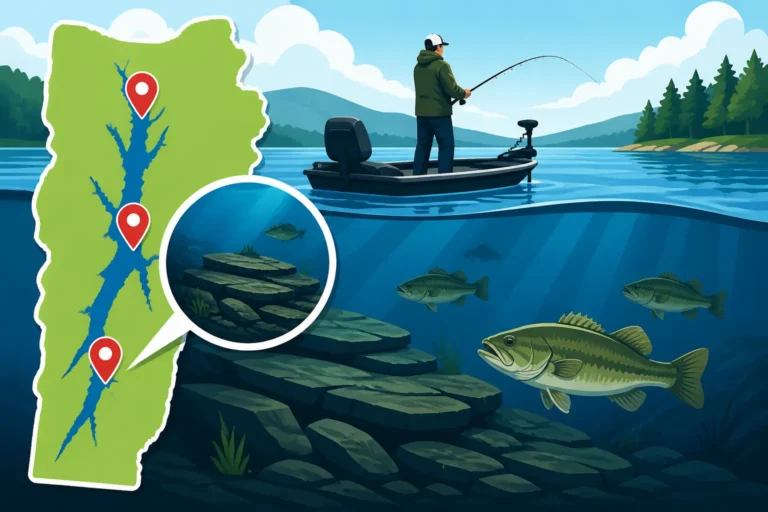
While many focus on visible shoreline structure, some of the biggest muskellunge in Lake Memphremagog reside in deeper, more open water, relating to offshore structures that aren't visible from the surface. These can include submerged humps, deep rock reefs, and sudden depth changes in the main lake basin. These features often act as magnets for pelagic baitfish like cisco, which in turn attract large muskie looking for a substantial meal. Targeting these deep-water haunts often requires specialized electronics, such as a quality fish finder, to locate the structure and mark any baitfish or predator activity.
Trolling large crankbaits or swimbaits over and around these deep structures is a highly effective technique. The "hump-and-valley" topography of these areas provides prime ambush points in the open water. For example, a large, sunken island or a long, tapering ridge that rises from 80 feet to 30 feet of water can hold multiple trophy muskie. These spots are particularly productive during the summer months when the shallower waters warm up, forcing both baitfish and muskie to seek cooler, deeper sanctuaries. Understanding How deep to troll for lake trout on Lake Champlain can provide some transferable knowledge for targeting muskie in similar deep-water scenarios. Persistence is key when working these offshore spots, as you might need to make multiple passes to trigger a strike, but the rewards can be truly immense.
Seasonal Strategies for Memphremagog Muskies
Muskellunge, like most cold-blooded predators, are highly influenced by water temperature and seasonal changes. Their behavior, preferred locations, and even their willingness to strike a lure can vary dramatically throughout the year on Lake Memphremagog. Tailoring your approach to the season is paramount for consistent success.
Spring and Early Summer: Shallow Water Ambush Points
As the ice recedes and water temperatures begin to climb in late spring, muskellunge become incredibly active and often move into shallower areas to feed and spawn. Post-spawn muskie, in particular, will be looking to recover and will aggressively feed on any available baitfish. This period, from late May through June, is an excellent time to target them in relatively shallow bays, along emerging weed lines, and near warmer river inlets like the Clyde. The water temperature will be in their comfort zone, typically from the high 40s to low 60s Fahrenheit.
During this time, focus on casting or slow-trolling bucktails, spinnerbaits, and medium-sized crankbaits along the edges of new weed growth, around submerged timber, and near rocky points that warm up quickly. These shallow areas provide ample cover for ambush and are often teeming with panfish and other forage species that muskie will eagerly devour. Remember that these fish are still recovering from the rigors of spawning, so while they may be aggressive, handling them with care for a quick release is crucial. Always be aware of the Vermont Muskellunge Regulations on Lake Memphremagog to ensure you're fishing legally and responsibly.
Mid-Summer: Seeking Deeper, Cooler Waters
As the Vermont summer heats up and water temperatures in the shallower areas of Lake Memphremagog climb into the 70s, muskie will generally retreat to deeper, cooler water. This doesn't mean they stop feeding; it just means you have to adjust your tactics and find them in their summer haunts. Look for them holding over deep structure, like offshore humps, rock piles, or steep breaklines that drop into the main lake basin. They'll often suspend at depths where the water temperature is more comfortable, usually in the 60s.
Trolling becomes a highly effective method during mid-summer. Employ large crankbaits, spoons, or even live bait on quick-strike rigs, running them at depths where you're marking baitfish or seeing temperature breaks. Downriggers can be invaluable for presenting baits precisely at the desired depth. Consider exploring the deeper sections of the lake near the Canadian border, or target the main lake basin between Newport and Owls Head. Night fishing can also be surprisingly effective during the summer, as muskie may move into shallower feeding grounds under the cover of darkness when water temperatures cool slightly. If you're looking for guidance, booking a trip with an experienced local guide through a platform like FishingBooker can provide invaluable insights into these summer patterns.
Fall: The Pre-Winter Feeding Frenzy
Autumn on Lake Memphremagog is arguably the most exciting time for muskellunge fishing. As water temperatures begin to drop, muskie enter a hyper-aggressive feeding mode, trying to pack on as much weight as possible before winter. This "fall bite" can be legendary, with fish often putting on weight and becoming even more powerful. Muskie will move back into shallower areas, especially large flats adjacent to deep water, extensive weed beds that haven't died off yet, and rocky points where baitfish are schooling up.
This is the time for big baits and aggressive presentations. Large bucktails, gliders, and oversized crankbaits are the order of the day. Trolling remains highly effective, especially with large plugs that dive deep or cover a lot of water. Casting shorelines with heavy cover, particularly during overcast days or right before a cold front, can yield incredible results. Muskellunge are often found in concentrations during this time, so if you catch one, it's worth thoroughly working the same area. This period provides an excellent opportunity to land a true trophy, and it's when many anglers dedicate their most intense efforts. Make sure your gear is up to the task; reviewing resources like Best Line Weight for Muskellunge Fishing can help you prepare.
Essential Gear and Techniques for Lake Memphremagog Muskellunge
Chasing muskellunge on Lake Memphremagog isn't for the faint of heart, and it certainly isn't a game for flimsy gear. These fish are apex predators, incredibly powerful, and capable of destroying inadequate tackle in an instant. Having the right rods, reels, lines, and lures is absolutely non-negotiable if you want to land one of these freshwater titans.
Rods, Reels, and Line for Monster Muskie
When it comes to muskie fishing, "heavy duty" is the mantra. You need gear that can withstand immense pressure, both from casting heavy baits all day and from fighting a fish that will fight with every ounce of its being.
Rods: Opt for a heavy or extra-heavy power baitcasting rod, typically between 8 to 9.5 feet long. The longer length provides better casting distance for those large lures and offers more leverage during the fight. A fast action tip is usually preferred, allowing for quick hook sets, but with enough backbone to really put the hurt on a big fish. Brands like St. Croix, Shimano, and Daiwa offer excellent muskie-specific rods that can handle the abuse. Choosing the right rod power is critical; you can learn more about Best rod power for muskellunge fishing to ensure your setup is adequate.
Reels: A robust baitcasting reel is essential. Look for models with a high line capacity, a strong drag system, and durable gears. Low-profile baitcasters designed for muskie or saltwater use, or round baitcasting reels like the Abu Garcia Ambassadeur series, are popular choices. A fast gear ratio (6.0:1 or higher) helps with retrieving line quickly after a long cast or when a muskie makes a powerful run towards the boat. Smoothness and reliability under pressure are more important than sheer speed.
Line: Braided line is the only way to go for muskie. Its zero-stretch properties allow for powerful hook sets and transmit every twitch and bump of your lure. A minimum of 80 lb test, but often 100 lb test, is recommended. Fluorocarbon leaders are crucial to prevent bite-offs from their razor-sharp teeth. A heavy fluorocarbon leader, typically 100-150 lb test, tied to a strong swivel and a robust snap is necessary. The leader should be at least 18-24 inches long. Avoid monofilament or lighter lines; they simply won't stand a chance against a determined Memphremagog muskie.
Baits and Lures That Trigger Strikes
Muskie are opportunistic feeders, but they do have preferences, and certain lure types consistently produce strikes on Lake Memphremagog. Having a diverse tackle box is key to adapting to different conditions and fish moods.
Bucktails: These are classic muskie killers. The flash and vibration of the blades, combined with the pulsating hair or skirt, are incredibly enticing. Large bucktails, often with double blades, are effective year-round. Vary your retrieve speed and add pauses to mimic erratic baitfish.
Crankbaits and Jerkbaits: Deep-diving crankbaits are excellent for trolling over deep structure, especially in summer and fall. Jointed models that create more action can be particularly effective. Large jerkbaits, which you work with a "rip-pause" retrieve, are fantastic for probing weed edges and rocky points. Some popular choices might include models from Livingston Lures or Rapala. The specific Best jerkbait for muskellunge fishing will depend on your desired depth and action.
Soft Plastics and Swimbaits: Oversized soft plastic baits, often rigged on heavy jig heads or as large swimbaits, can imitate the substantial forage fish found in Memphremagog. These are great for casting and slow-rolling near cover, or even for vertical jigging on deep humps. Their realistic profile and subtle action can entice wary muskie.
Topwater Lures: While perhaps not as universally used as bucktails or crankbaits, topwater lures can provide some of the most exhilarating muskie strikes, especially during low light conditions or over shallow, weedy areas. Large "walk-the-dog" style baits or prop baits create a commotion on the surface that can bring muskie up from surprising depths.
Other Considerations: Don't forget the importance of a massive landing net, specifically designed for muskie. A long-handled net with a wide, rubberized mesh is crucial for safe handling and release, protecting both the fish and the angler. You can find out more in our guide on the Best Landing Net for Muskellunge. Tools for unhooking, like long-nosed pliers or jaw spreaders, are also absolute necessities. Remember that handling these powerful fish requires caution and respect for their well-being.
Responsible Angling and Conservation on Lake Memphremagog
Landing a muskellunge on Lake Memphremagog is an unforgettable experience, but it comes with a significant responsibility to the fishery. Muskie are a prized species, and their long lifespan and relatively slow growth rate mean that every fish released successfully contributes to the health and future of the population. Practicing ethical angling is not just a recommendation; it's a necessity.
Always prioritize the fish's well-being. Keep handling to a minimum, and if possible, release the fish while it's still in the water. Use a large, rubberized net to minimize scale damage. Have your camera ready before the fish is landed to get a quick photo, and avoid long photo sessions. Make sure you're familiar with Muskellunge catch and release survival tips to ensure the best outcome for the fish. Being prepared with the right tools—long-nosed pliers, jaw spreaders, and bolt cutters for hooks if necessary—is crucial for a quick and safe release.
Lake Memphremagog is a truly special fishery, and by understanding its unique characteristics, targeting the most productive spots, adapting to seasonal changes, and using the right gear, you significantly increase your chances of connecting with one of its magnificent muskellunge. More importantly, by practicing responsible catch-and-release, you help ensure that this incredible resource remains healthy for generations of anglers to come. Good luck out there, and may your next muskie encounter be one for the record books!
Disclaimer
Fishing regulations can change frequently. Always consult the latest Vermont Fish & Wildlife Department regulations before heading out on the water. This guide is for informational purposes only and does not supersede official regulations.