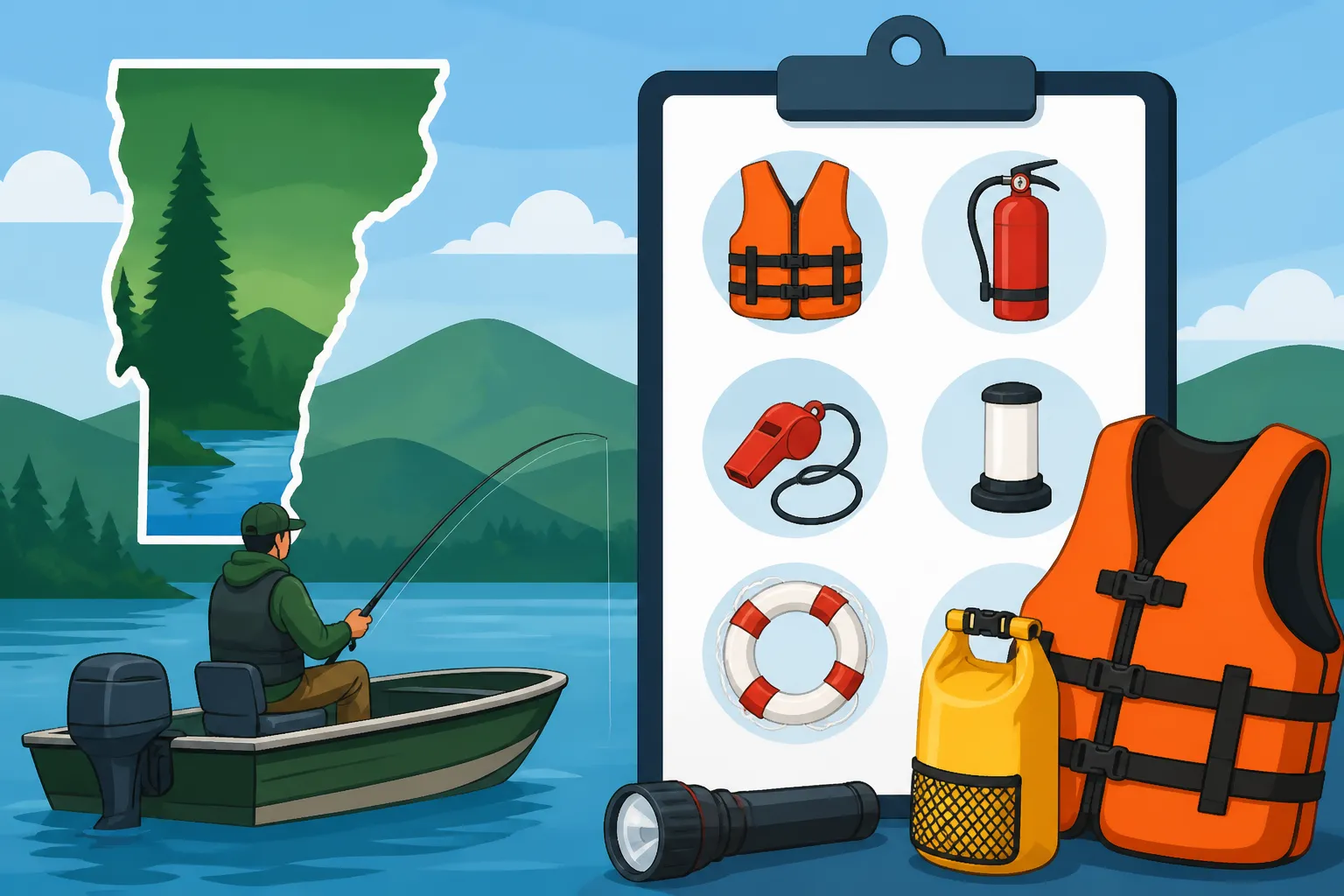
Vermont required boat safety equipment checklist
It can be incredibly confusing to figure out exactly what safety gear you actually need on your boat in Vermont, especially with different rules for various vessel types and sizes. No one wants to get caught unprepared, risking safety or an unnecessary fine. This comprehensive guide will walk you through all the required boat safety equipment in Vermont, ensuring you're compliant and ready for a safe day on the water.
Why Vermont Boat Safety Equipment Matters
Taking to Vermont's beautiful lakes and rivers without proper safety gear isn't just a minor oversight; it can have serious repercussions. We're talking about everything from a sunny afternoon turning into a dangerous situation to facing stiff penalties from law enforcement. Understanding and implementing these requirements isn't just about following rules; it's about protecting yourself, your loved ones, and everyone else who shares the water.
Protecting Yourself and Your Passengers
Imagine a sudden squall rolling in on Lake Champlain, or a hidden rock popping up on the Lamoille River. These aren't just hypothetical scenarios; they happen. Having the right safety equipment on board can literally be the difference between a close call and a catastrophic event. Personal Flotation Devices (PFDs) are paramount, for instance. If someone unexpectedly goes overboard, especially in cold water or with an injury, a PFD can buy critical time. Beyond that, tools like sound-producing devices or visual distress signals become lifelines when you need to alert others to your presence or call for help in an emergency. It's not about being overly cautious; it's about being prepared for the unpredictable nature of open water, even on a seemingly calm day.
Avoiding Fines and Legal Issues
Vermont's marine law enforcement, including the Vermont Fish & Wildlife Department, takes boating safety very seriously. Their job is to ensure everyone adheres to the regulations that keep our waters safe. If you're stopped for a routine safety check and found to be missing required equipment, you could be looking at a hefty fine, and your day on the water might be cut short. These aren't just minor tickets; they can range from hundreds of dollars for certain infractions. Furthermore, in the event of an accident, failing to have mandated safety gear could expose you to significant legal liability, impacting insurance claims and potentially leading to more severe charges. It truly pays to understand the full scope of Vermont Boating Laws for Anglers before you launch.
Essential Safety Equipment for All Vermont Boats
Regardless of whether you're paddling a canoe on a quiet pond or cruising in a powerboat on Lake Memphremagog, certain pieces of safety equipment are universally required. These are the absolute basics that every boater needs to have on board, readily accessible, and in good working order.
Personal Flotation Devices PFDs
This is perhaps the most critical item on any boat. You must have a U.S. Coast Guard-approved Personal Flotation Device (PFD), commonly known as a life jacket, for every single person on board your vessel. This includes children, adults, and even infants. While adults are generally not required to wear PFDs at all times (though it's always recommended, especially for non-swimmers or during rough conditions), children under 12 years old must wear a PFD when the vessel is underway. It's a non-negotiable rule, and for good reason. Make sure your PFDs are in serviceable condition, meaning no rips, tears, or broken straps, and that they fit properly for each individual. A PFD that doesn't fit correctly won't do its job in an emergency. You can find more details on specific sizing and type requirements in our guide to Life Jacket Requirements for Vermont Boaters.
Visual Distress Signals
While not strictly required for boats operating only during daylight hours on inland waters (like many smaller ponds or lakes), visual distress signals become mandatory for vessels operating on coastal waters (like portions of Lake Champlain, which is considered a U.S. navigable waterway) or at night. These signals are designed to attract attention in an emergency. Common types include:
- Flares: Red flares (handheld, aerial, or parachute) are standard. They have expiration dates, so always check them before each season.
- Flags: A distress flag (orange square and black circle) can be effective during daylight hours.
- Electric Lights: A non-pyrotechnic signal like an electric distress light, which flashes an S.O.S. pattern, is also an option, especially if you're concerned about expired flares.
The specific type and number of visual distress signals depend on your boat's size and where you'll be operating. For example, larger vessels on Lake Champlain should consider both day and night signals.
Sound Producing Devices
Every boat in Vermont, regardless of size, must carry some form of sound-producing device. This is crucial for signaling intentions (like passing another boat) or warning other vessels of danger, especially in fog or low visibility.
- Whistles: A simple, powerful whistle is sufficient for smaller boats like kayaks, canoes, and paddleboards. It must be audible for at least half a nautical mile.
- Horns: Larger vessels typically have a horn (manual or power-operated) that can produce a sustained blast for at least two seconds.
Make sure your device is easily accessible and in good working order. A small, inexpensive plastic whistle from a brand like Fox 40, often found on Amazon, is a common and effective choice for many anglers in smaller craft.
Fire Extinguishers
Fire extinguishers are a must-have for any motorized vessel with an enclosed engine compartment, permanent fuel tanks, or other fire hazards like cooking appliances. Even if your boat doesn't have an engine, but you carry a portable gas tank for a small outboard, a fire extinguisher is a very smart idea, and often legally required.
- Type B-I or B-II: These are the types designated for flammable liquids and electrical fires, which are common boat fire risks.
- Accessibility and Condition: The extinguisher must be U.S. Coast Guard-approved, readily accessible, and charged. Check the pressure gauge and ensure the seal isn't broken.
A good rule of thumb: if you have an engine or any kind of fuel storage on board, have an extinguisher. Even if not legally mandated for your specific setup (like a tiny jon boat with a small portable tank), it's a critical safety item.
Ventilation Systems for Enclosed Engine Compartments
For any motorized vessel that has an enclosed engine compartment, a proper ventilation system is absolutely essential. This isn't optional; it's a crucial safety measure to prevent the buildup of explosive gasoline fumes.
- Blowers: Most boats with enclosed engines are equipped with exhaust blowers that must be run for at least four minutes before starting the engine and whenever refueling.
- Natural Ventilation: Older boats might rely on natural ventilation, which involves vents and ducts designed to prevent vapor accumulation. However, active blowers are often more reliable and, in many cases, legally required for newer vessels.
Always inspect your ventilation system before each outing. Ensure that the blowers are functioning correctly and that all vents and ducts are clear of obstructions. A properly ventilated engine compartment dramatically reduces the risk of a disastrous explosion.
| Safety Equipment Category | Requirement | Notes |
|---|---|---|
| Personal Flotation Devices (PFDs) | 1 USCG-approved PFD for every person on board | Must be in serviceable condition and properly sized. Children under 12 must wear a PFD when underway. |
| Visual Distress Signals | Required for coastal waters (e.g., Lake Champlain) & night operation. | Options include flares (day/night), distress flag (day), or electric distress light (night). Flares expire. |
| Sound Producing Device | All vessels must carry | Whistle (audible for 0.5 NM) for small boats; horn for larger vessels. |
| Fire Extinguisher | Required for motorized vessels with enclosed engines/fuel/fire hazards. | USCG-approved Type B-I or B-II. Must be accessible and charged. |
| Ventilation System | Required for motorized vessels with enclosed engine compartments. | Exhaust blowers (run before starting/refueling) or natural ventilation. Critical to prevent fume buildup. |
| Navigation Lights | Required for operation between sunset and sunrise or in restricted visibility. | Specific configurations depending on boat type and size. |
| Oars/Paddles | Required for all vessels under 16 feet, unless propelled by motor. | Or any other means of propulsion if the main engine fails. |
| Anchor | Required for vessels with an engine, 16 feet or longer. | Must be sufficient to hold the vessel in expected conditions, with appropriate rode. |
Additional Requirements Based on Boat Type and Size
Beyond the universal requirements, Vermont's regulations often add specific items based on the size and propulsion method of your vessel. What's perfectly legal for a small rowboat might not cut it for a larger powerboat.
Lights for Night Operation
If you plan to be out on the water between sunset and sunrise, or during periods of restricted visibility (like fog or heavy rain), your boat must display proper navigation lights. These lights are crucial for preventing collisions and ensuring other boaters can see you.
- Powerboats: Typically require a masthead light (white, 360-degree visibility), sidelights (red for port, green for starboard), and a stern light (white, 135-degree visibility). The exact configuration depends on your boat's length.
- Sailboats: When under sail alone, they use sidelights and a stern light. When under power (even with sails up), they must display the lights of a power-driven vessel.
- Manually Propelled Vessels: Canoes, kayaks, and paddleboards generally need to display a white light (like a flashlight or lantern) in time to prevent a collision, but they are not required to have fixed navigation lights. However, many paddlers opt for a 360-degree white light for better visibility.
Always double-check your lights before heading out after dark. A quick trip to a local marine supply store or searching on Amazon will reveal many reliable LED navigation light options that draw minimal power and last a long time.
Oars or Paddles
This one often catches people off guard. For any vessel under 16 feet in length, including small fishing boats, canoes, kayaks, and rowboats, you are required to carry an oar, paddle, or other means of propulsion (like an electric trolling motor if you have extra battery power). This is a fallback in case your primary propulsion method fails. Imagine being miles from the ramp on Lake Dunmore and your outboard motor suddenly sputters out. Having a pair of sturdy oars means you can still get back to shore safely, rather than drifting helplessly. It's a simple, low-tech item that can save your day, or even your life.
Anchoring Systems
If your vessel is 16 feet or longer and is equipped with an engine, you are required to carry an anchor and anchor line (known as "rode") suitable for the size of your vessel and the conditions you expect to encounter. The anchor must be capable of holding your boat securely.
- Anchor Type: From lightweight grapnel anchors for kayaks to heavy fluke anchors for larger boats, choose one appropriate for the bottom type you'll encounter (mud, sand, rock).
- Rode Length: A general rule of thumb is to have 7:1 scope, meaning seven feet of rode for every one foot of water depth, plus the height of your bow above the water. So, if you're in 10 feet of water, you'd want at least 70 feet of line.
An anchor is invaluable for holding your position while fishing, waiting out rough weather, or making repairs. For those interested in deeper insights, you might want to look into Boat size that requires a throwable device in Vermont as that often goes hand-in-hand with anchoring requirements.
Specifics for Canoes, Kayaks, and Stand-Up Paddleboards
While often perceived as simpler vessels, canoes, kayaks, and stand-up paddleboards (SUPs) still have important safety requirements. Many paddlers mistakenly believe they are exempt from most rules, which is a dangerous assumption.
- PFDs: As mentioned, a U.S. Coast Guard-approved PFD must be on board for each person, and children under 12 must wear theirs. Many paddlers choose to wear their PFDs for continuous safety, especially on larger bodies of water or in cooler temperatures.
- Sound Device: A whistle is mandatory. Attach it to your PFD so it's always accessible.
- Visual Distress Signal (at night): A white light (flashlight, lantern, or headlamp) is required for night operation to show other vessels in time to prevent a collision.
- Registration: While Are Kayaks Required to Be Registered in Vermont? clarifies that non-motorized kayaks and canoes don't need registration, if you add even a small electric motor, your vessel becomes motorized and does require registration. This changes your safety requirements significantly, often bringing you under the same umbrella as small powerboats.
Always paddle with a buddy, file a float plan with someone on shore, and dress for the water temperature, not just the air temperature.
Important Vermont-Specific Considerations
Beyond the physical equipment, there are crucial legal and operational aspects specific to Vermont boating that every operator needs to understand. These regulations ensure responsible boating and contribute to overall safety on our beautiful waterways.
Boater Education Requirements
Vermont takes boater education seriously, recognizing that an informed operator is a safer operator. For certain age groups, completing an approved boater safety course is not just recommended, it's mandatory.
- Minimum Age for Operation: No one under 12 years old can legally operate a motorized vessel with a motor greater than 6 horsepower, unless accompanied by a person 18 years or older who holds a valid boater education card.
- Boater Education Card Requirement: If you were born after January 1, 1983, you are required to have a Vermont Boater Education Card (or an approved equivalent from another state) to operate any motorized vessel. This means many adult boaters need to get certified.
These courses cover everything from navigation rules and buoy systems to emergency procedures and environmental protection. It’s an investment in your safety and the safety of others. You can find more information about Vermont required boater education certificate rules to ensure you meet the necessary qualifications.
Vessel Registration and Documentation
Just like cars, most motorized boats in Vermont need to be registered with the Vermont Department of Motor Vehicles (DMV). This includes everything from a small fishing boat with an outboard to a large cruiser on Lake Champlain.
- Registration Decals: Once registered, you'll receive registration numbers and decals that must be properly displayed on your hull. These decals are generally valid for two years, and it's essential to keep your registration current. You'll want to check Vermont boat registration renewal period to stay on top of it.
- Documentation: For larger, federally documented vessels, the process is different, involving the U.S. Coast Guard. However, for most recreational anglers in Vermont, state registration is the primary concern.
- Proof of Ownership: Always carry your vessel's registration certificate on board. Law enforcement officers will ask for it during safety checks. You can learn more about the specifics of the process and fees in our guide on Vermont Boat Registration Requirements and the Vermont boat registration cost.
BUI Laws Boating Under the Influence
Operating a boat under the influence of alcohol or drugs (BUI) carries severe penalties in Vermont, similar to those for operating a motor vehicle while intoxicated. It’s not just illegal; it's incredibly dangerous, impairing judgment, coordination, and reaction time, dramatically increasing the risk of accidents.
- Legal Limit: The legal blood alcohol content (BAC) limit for operating a vessel is 0.08%, the same as for driving a car.
- Penalties: Penalties for BUI can include significant fines, loss of boating privileges, and even jail time. Your driver's license can also be affected.
The message is clear: if you plan to drink, don't operate a boat. Designate a sober operator, or save the celebratory beverages for when you're safely on shore. It's a fundamental part of responsible boating. Understanding the full implications of Vermont boating under the influence penalties is crucial for any boater.
Disclaimer
The information provided in this guide is for general informational purposes only and does not constitute legal advice. While we strive to be accurate, boating regulations can change, and specific situations may require unique interpretations. Always consult the most current Vermont Fish & Wildlife Department regulations and U.S. Coast Guard requirements, or speak with a legal professional, to ensure full compliance. Safe boating practices are ultimately the responsibility of the vessel operator.